
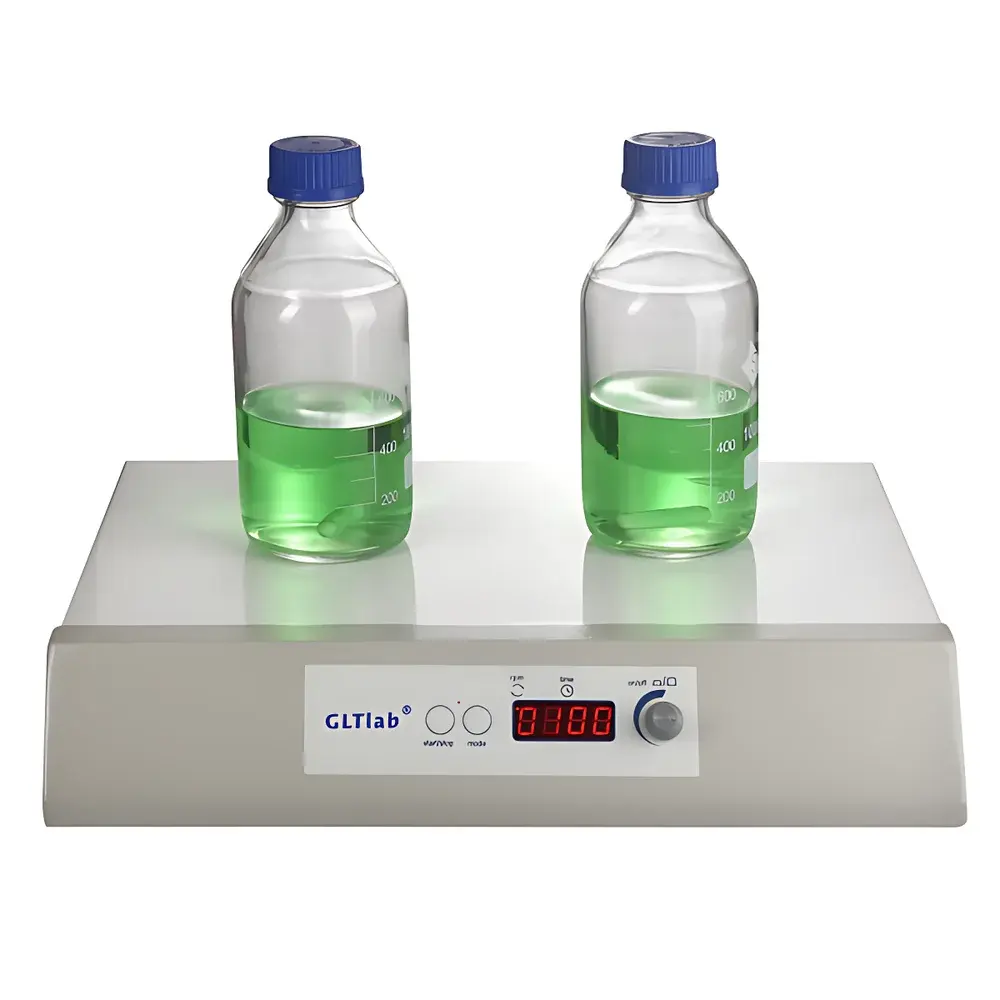
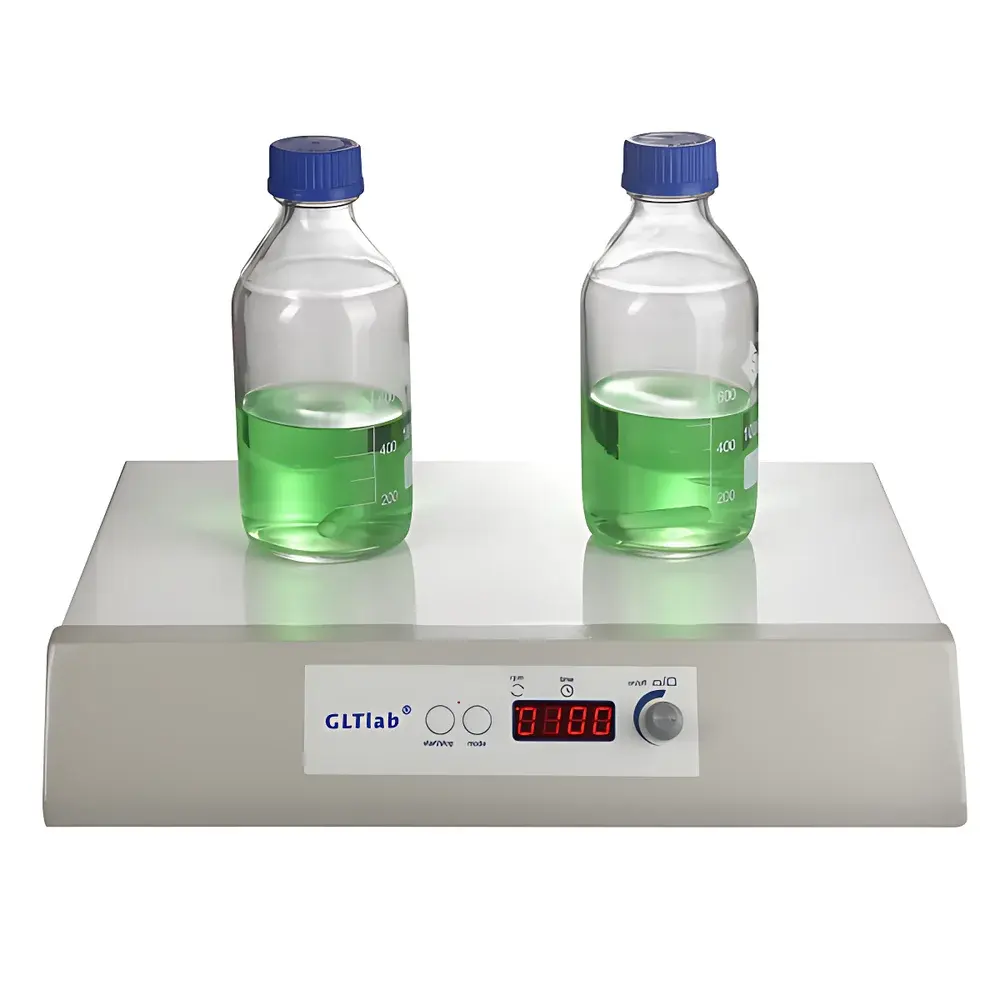
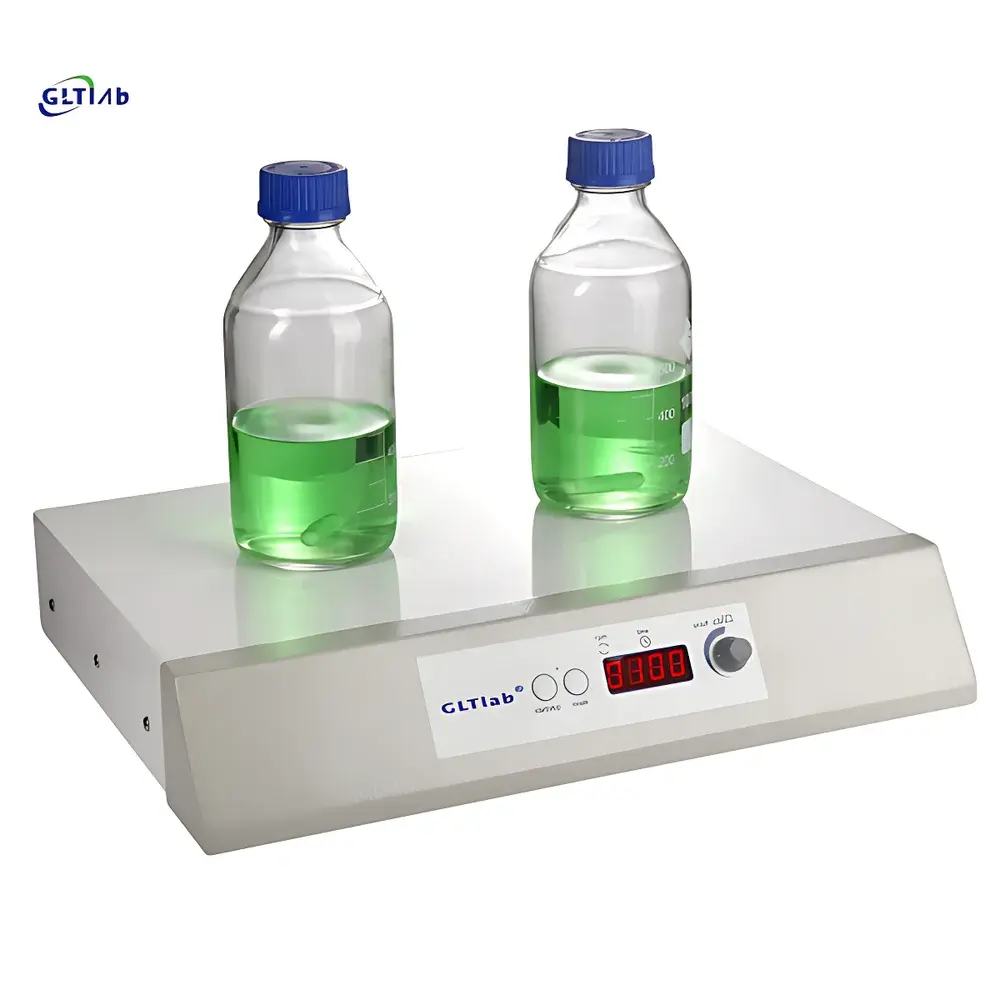
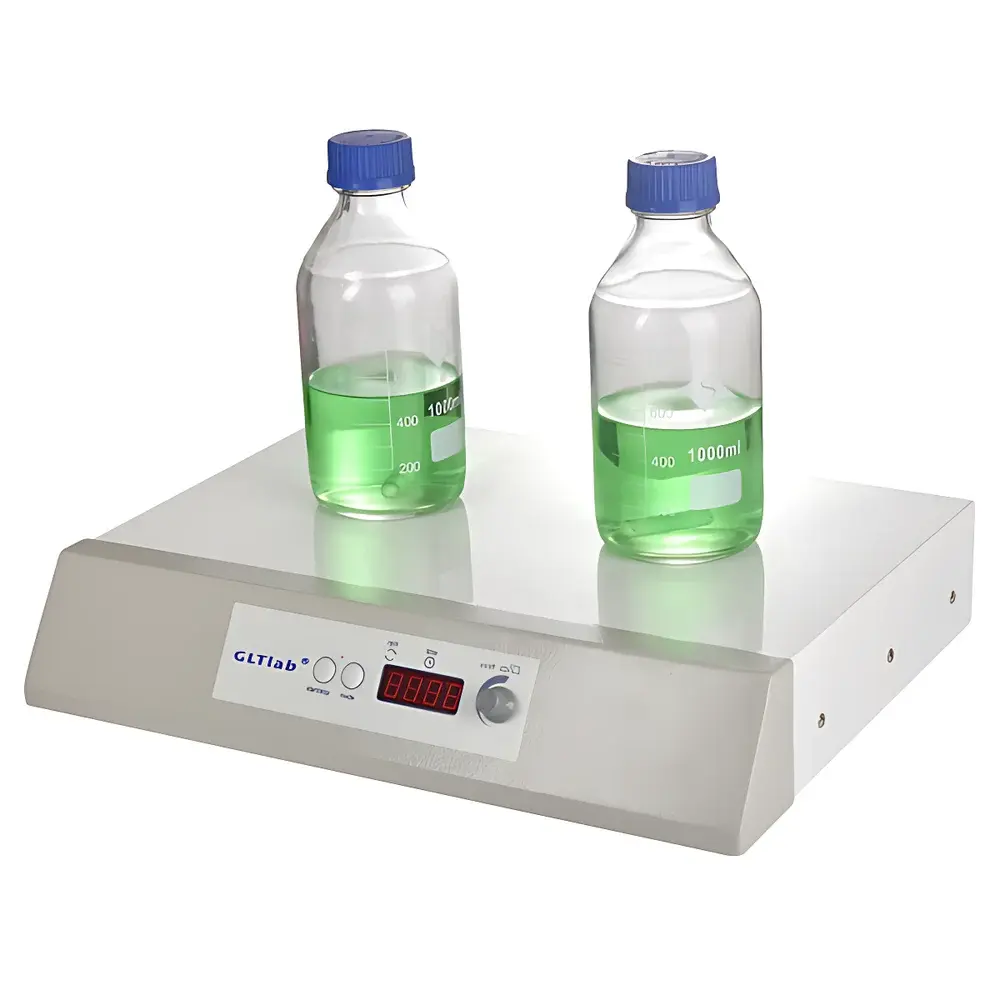
GLTlab BSS-2 Low-Speed Magnetic Stirrer for Bacterial Culture and Biological Laboratories
| Brand | GLTlab |
|---|---|
| Origin | Guangdong, China |
| Manufacturer Type | Direct Manufacturer |
| Product Category | Domestic |
| Model | BSS-2 |
| Instrument Type | Magnetic Stirrer |
| Maximum Stirring Volume | 3 L × 2 (dual-position) |
| Speed Range | 1–100 rpm |
| Temperature Control | Ambient Only |
Overview
The GLTlab BSS-2 is a dual-position, low-speed magnetic stirrer engineered specifically for sensitive biological applications—particularly bacterial culture preparation, media dissolution, and gentle suspension of cell-based reagents in academic, clinical, and industrial microbiology laboratories. Unlike high-torque or high-RPM stirrers designed for chemical synthesis or viscous polymer mixing, the BSS-2 operates within a precisely regulated 1–100 rpm range to minimize shear stress on fragile microbial cells, plasmid-containing competent cells, or temperature-sensitive enzymatic solutions. Its operation relies on permanent magnet coupling: a rotating external magnet beneath the ceramic-coated stainless-steel platform induces synchronous rotation of PTFE-coated stir bars placed inside non-magnetic vessels (e.g., glass flasks, polypropylene bottles, or sterile bioreactor bags). No mechanical shafts or seals are involved—eliminating contamination pathways and enabling seamless integration into laminar flow hoods or biosafety cabinets.
Key Features
- Dual independent stirring stations with synchronized or isolated speed control—enabling parallel processing of two culture flasks or media batches without cross-interference.
- Ultra-low-speed precision drive system delivering stable rotational output from 1 rpm (±0.5 rpm repeatability) up to 100 rpm, calibrated via internal encoder feedback.
- Ceramic-coated 304 stainless-steel top plate offering high thermal stability, chemical resistance to common sterilants (e.g., 70% ethanol, 1% sodium hypochlorite), and non-porous surface for easy decontamination.
- Compact footprint (220 × 160 × 85 mm) optimized for benchtop use under biosafety cabinets or inside incubators with limited clearance.
- Passive ambient-temperature operation—no integrated heating element—ensuring compatibility with temperature-sensitive protocols requiring strict thermal neutrality (e.g., anaerobic culture setup, phage propagation, or cold-chain reagent equilibration).
- CE-compliant power supply (100–240 VAC, 50/60 Hz) with overcurrent and thermal shutdown protection.
Sample Compatibility & Compliance
The BSS-2 accommodates standard laboratory vessels including Erlenmeyer flasks (50–1000 mL), screw-cap bottles, and sterile disposable bioprocess containers. Stir bar compatibility spans 10–40 mm lengths with PTFE or PTFE-glass composite coatings—ensuring inertness toward antibiotics, growth factors, and trace metal supplements. The device meets IEC 61010-1:2010 safety requirements for laboratory electrical equipment and is validated for use in environments adhering to ISO 14644-1 Class 5 cleanroom practices when operated inside certified laminar flow enclosures. While not equipped for GLP/GMP audit-ready data logging, its mechanical simplicity supports routine verification per internal SOPs (e.g., speed calibration using optical tachometer at start-of-shift checks).
Software & Data Management
The BSS-2 is a standalone analog-digital hybrid instrument with no embedded firmware, network interface, or proprietary software dependency. Speed setting is adjusted via a calibrated rotary encoder with LED digital readout (00–99 rpm), eliminating drift associated with potentiometer-based controls. All operational parameters are manually recorded; for laboratories requiring electronic traceability, integration with external lab information management systems (LIMS) is achieved via optional RS-232 or USB-to-serial adapters (sold separately), enabling timestamped speed logs compatible with 21 CFR Part 11–compliant audit trail configurations when paired with validated third-party acquisition software.
Applications
- Rehydration and homogenization of lyophilized bacterial culture media (e.g., LB, TSB, M9 minimal medium) without foaming or nutrient degradation.
- Gentle agitation during antibiotic susceptibility testing (AST) broth microdilution assays to maintain uniform cell distribution without inducing clumping.
- Preparation of agarose or gelatin-based semi-solid overlays for plaque assays or soft-agar colony formation studies.
- Stirring of serum-supplemented media prior to filtration sterilization to prevent protein precipitation.
- Low-shear mixing of cryopreservation solutions containing DMSO or glycerol for bacterial glycerol stocks.
FAQ
Is the BSS-2 suitable for use inside a CO₂ incubator?
Yes—its passive thermal design and absence of heat-generating components allow safe operation in standard humidified CO₂ incubators (37 °C, 5% CO₂), provided the unit is placed on a level, non-vibrating shelf and ambient humidity remains below 80% RH.
Can it accommodate stir bars larger than 40 mm?
Mechanically yes, but performance beyond 40 mm is not validated; torque transmission efficiency decreases significantly above this length due to magnetic coupling limits at sub-10 rpm speeds.
Does the device support timer functionality?
No—timing must be managed externally using laboratory timers or LIMS-controlled workflows; the BSS-2 prioritizes mechanical reliability over programmable features.
What maintenance is required?
Annual verification of speed accuracy using a handheld optical tachometer and visual inspection of the ceramic coating for microcracks or abrasion—no lubrication or internal servicing is needed.
Is the unit compatible with magnetic stir bars containing rare-earth magnets?
Yes—standard NdFeB-coated stir bars operate reliably; however, samarium-cobalt variants are unnecessary and offer no functional advantage at these speed ranges.
Related Products



