
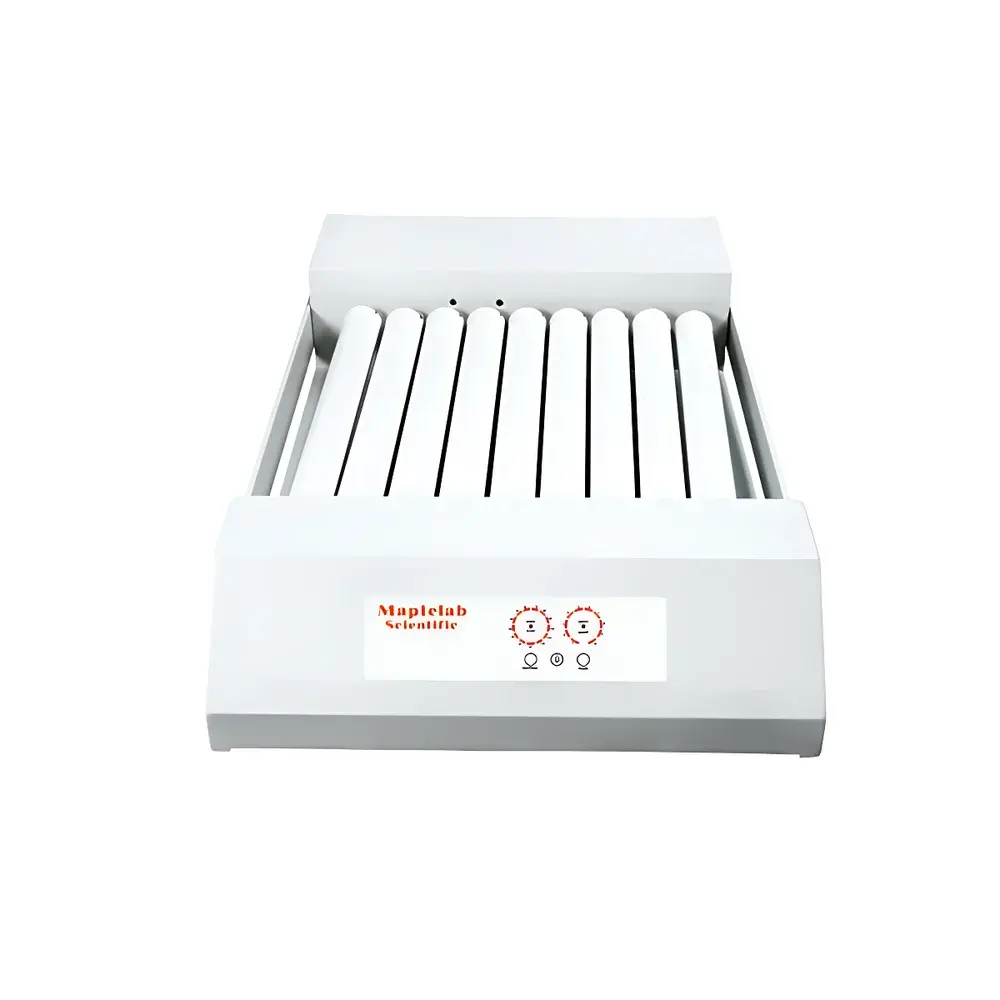
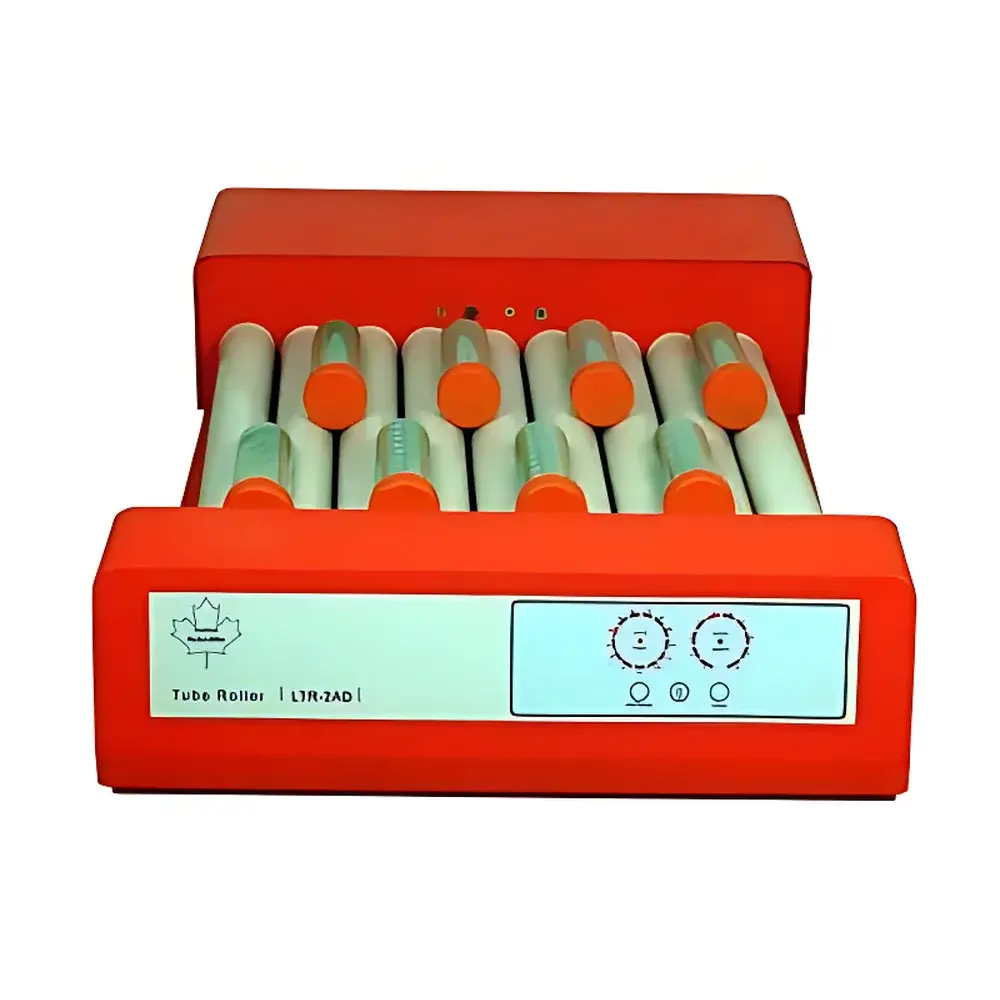
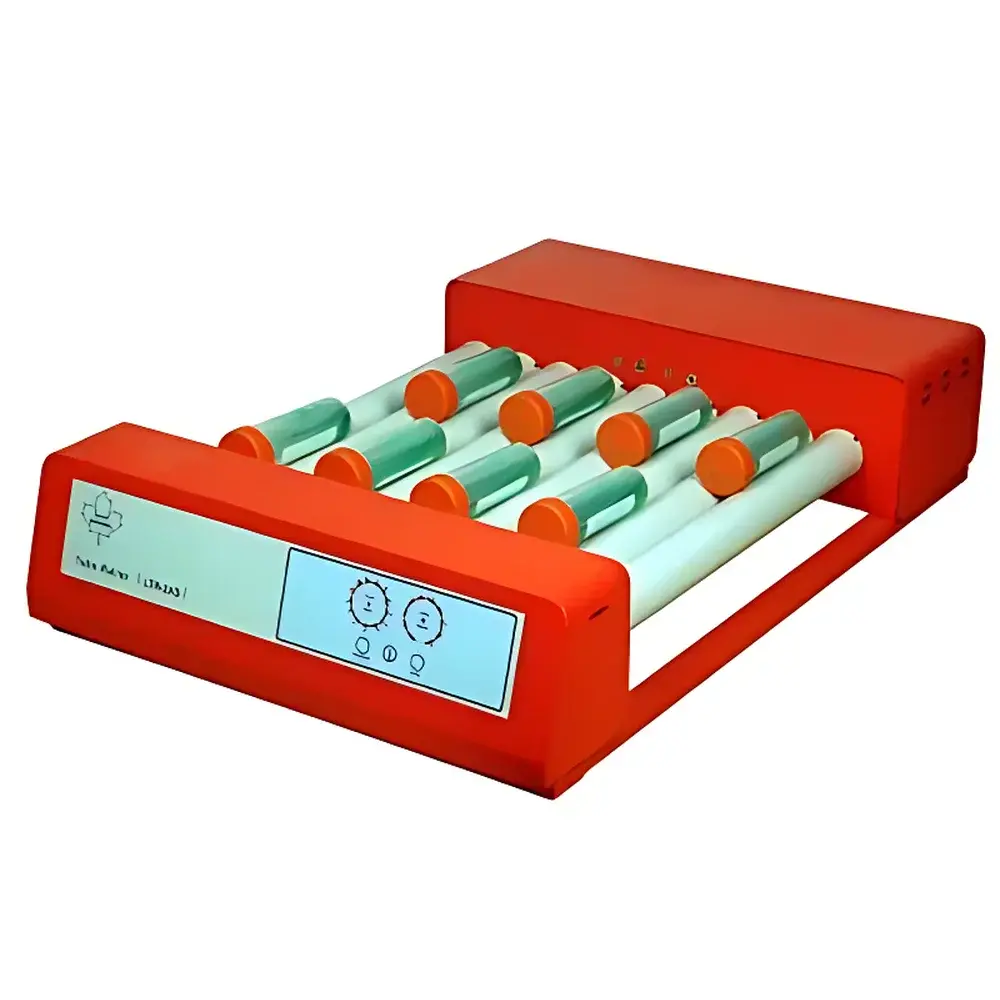
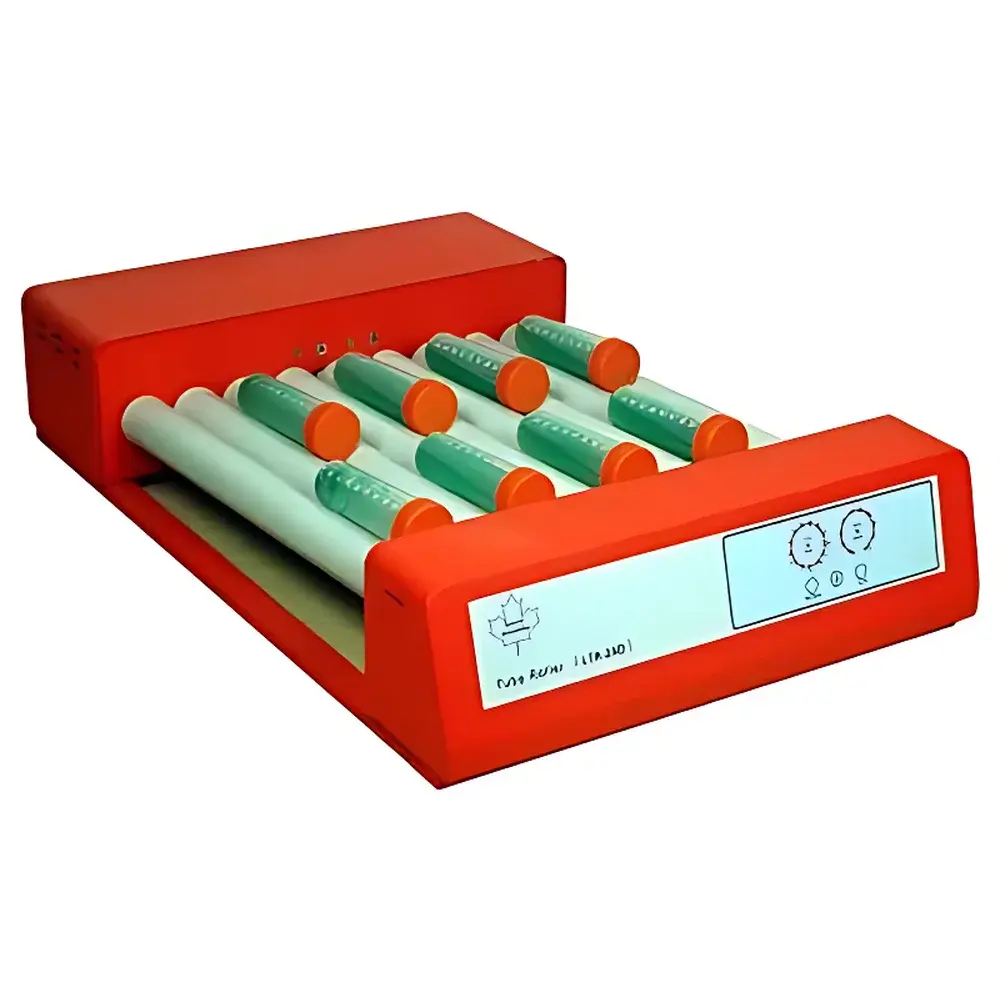
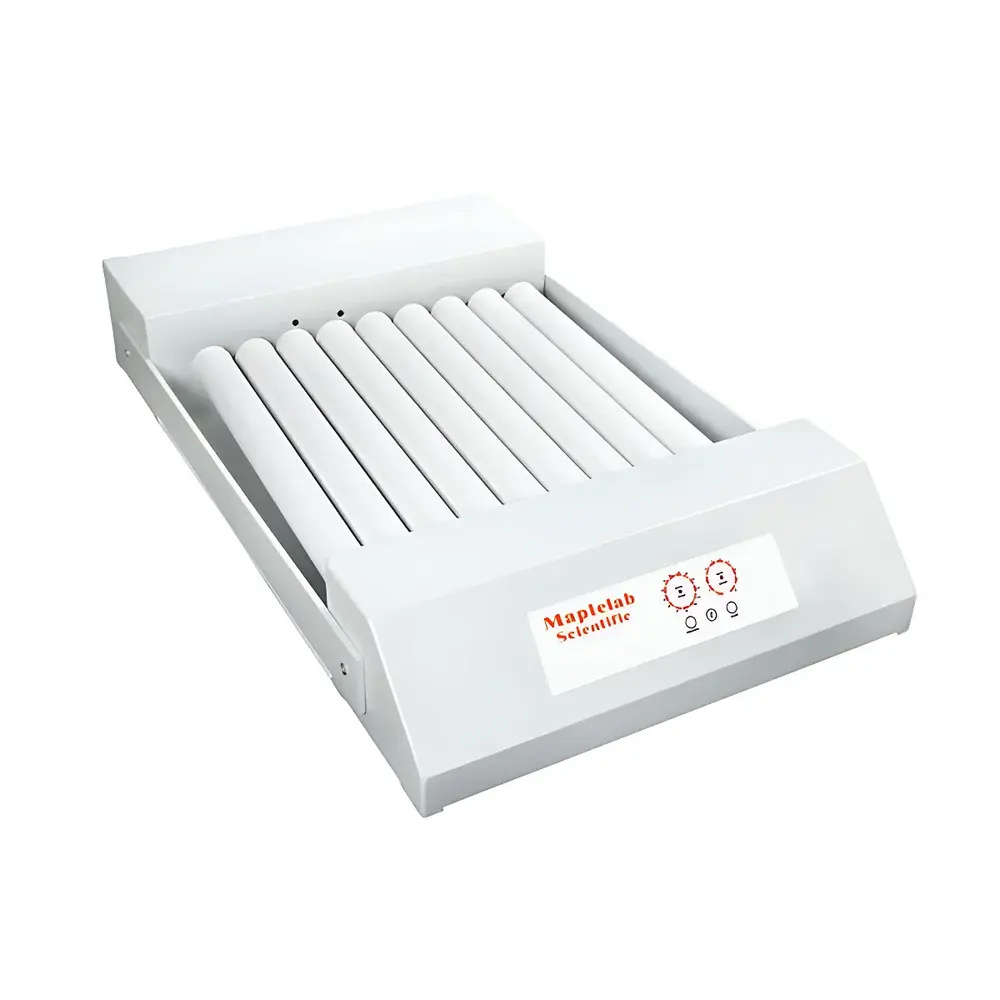
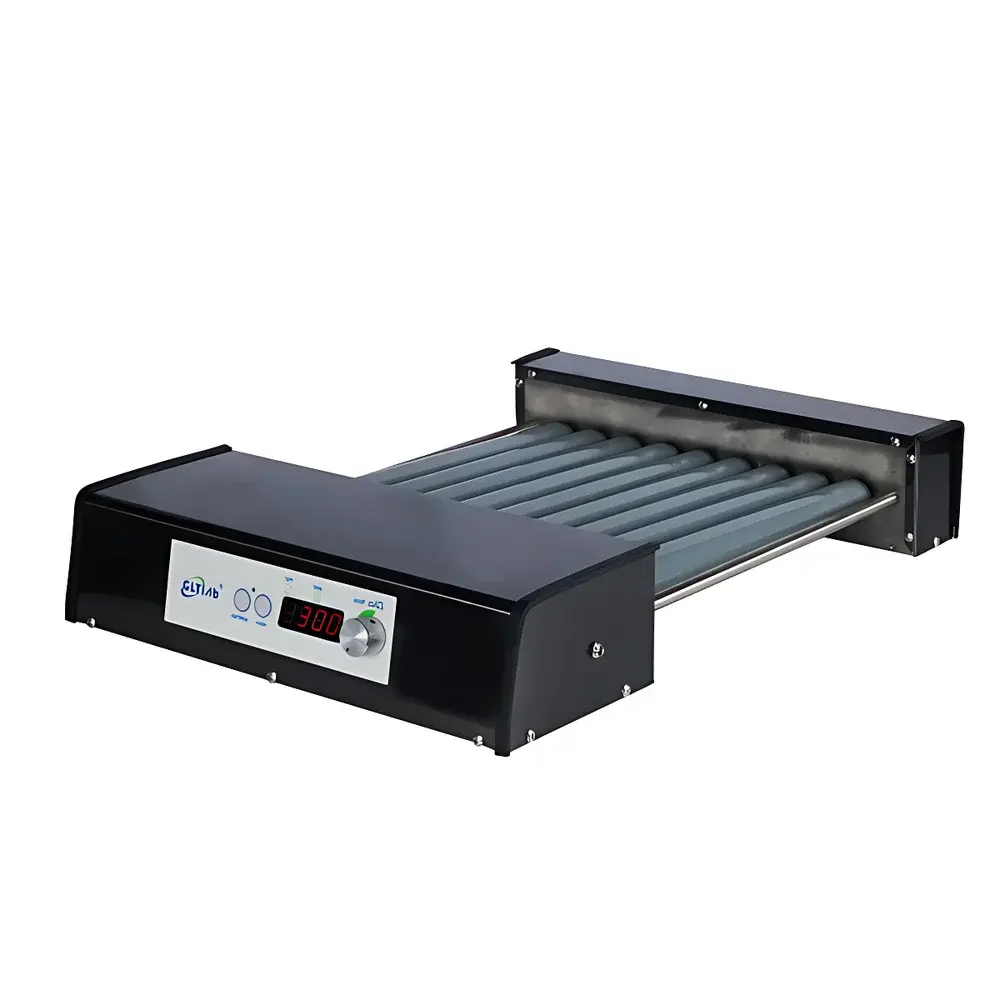
Maplelab LTR-2AD Programmable Roller Mixer
| Brand | Maplelab |
|---|---|
| Origin | Guangdong, China |
| Model | LTR-2AD |
| Instrument Type | Roller Mixer |
| Timing Range | 0–200 h (programmable in 10-min increments) |
| Speed Control | 10-step discrete adjustment (5–60 rpm) |
| Roller Count | 9 |
| Max Load Capacity | 10 kg |
| Roller Dimensions | 340 × 30 mm (L × Ø) |
| External Dimensions | 565 × 360 × 110 mm (W × D × H) |
| Net Weight | 7.0 kg |
| Power Supply | 12 V DC, 50 Hz, 60 W |
| Operating Environment | 4 °C to 60 °C, ≤80% RH |
| Compliance | Designed for GLP-compliant labs |
Overview
The Maplelab LTR-2AD Programmable Roller Mixer is an engineered solution for gentle, continuous, and reproducible mixing of biological and viscous samples in life science laboratories. Unlike orbital shakers or vortex mixers, the LTR-2AD employs a true roller-based mixing principle: nine parallel cylindrical rollers rotate synchronously, inducing coaxial rolling motion in placed vessels—tubes, bottles, or irregularly shaped containers—without requiring clamps, adapters, or sample-specific fixtures. This design ensures uniform shear-free agitation ideal for sensitive applications such as blood sample homogenization, anaerobic suspension re-suspension, cryopreserved cell thawing, and long-term incubation-compatible mixing. The unit operates in two distinct mechanical modes: (1) offset-axis rotation—where the roller shaft is angled relative to the central drive axis—to introduce subtle vertical oscillation for enhanced dispersion of high-viscosity or particle-laden suspensions; and (2) coaxial rotation—where the roller and drive axes align—delivering pure rolling motion optimized for consistent, low-shear mixing over extended durations. Its robust aluminum-alloy frame, sealed DC motor, and thermally stable electronics enable uninterrupted operation inside refrigerated chambers (4 °C), environmental incubators (up to 60 °C), and high-humidity enclosures (≤80% RH), making it suitable for integration into controlled bioprocessing workflows.
Key Features
- Gentle, low-shear mixing via synchronized 9-roller architecture—ideal for fragile cells, coagulated blood, and anaerobic cultures
- Two operational modes: coaxial rolling (pure rotation) and offset-axis rolling (with mild vertical oscillation)
- 10-step programmable speed control (5–60 rpm), calibrated per IEC 61000-4-3 for electromagnetic compatibility
- Extended timing capability: 0–200 hours, adjustable in precise 10-minute increments for unattended overnight or multi-day protocols
- No-clamp universal sample accommodation—accepts standard 12–18 mm test tubes, 50 mL conical tubes, serum bottles, and custom-shaped vials without accessories
- Compact footprint (565 × 360 × 110 mm) with lightweight yet rigid construction (7.0 kg net weight) for benchtop or incubator-integrated deployment
- Low-voltage DC power (12 V, 60 W) ensures intrinsic electrical safety and thermal efficiency—no external transformer required
- IP20-rated enclosure compliant with IEC 61010-1 for laboratory equipment safety under normal ambient conditions
Sample Compatibility & Compliance
The LTR-2AD accommodates heterogeneous vessel geometries—including round-bottom tubes, flat-sided bottles, and tapered centrifuge tubes—without mechanical adaptation. Its 340 mm roller length and 30 mm diameter support both vertical and horizontal orientation of containers up to 10 kg total load. The mixer is routinely deployed in clinical diagnostics labs handling EDTA-anticoagulated whole blood, microbiology labs maintaining strict anaerobic culture suspensions, and biobanking facilities performing controlled-rate thawing of cryovials. From a regulatory standpoint, its design supports adherence to Good Laboratory Practice (GLP) documentation requirements: all time/speed settings are manually entered and non-volatile; no software-based audit trail is embedded, but manual log entries remain fully traceable per ISO/IEC 17025 Clause 7.7. It is not certified for FDA 21 CFR Part 11 compliance due to absence of electronic signature or automated data export functionality—users implementing digital record-keeping must integrate external logging systems.
Software & Data Management
The LTR-2AD features a dedicated microcontroller-based interface with tactile push-button controls and LED status indicators—no PC connectivity, firmware updates, or proprietary software required. All parameters (speed step, elapsed time, remaining time) are displayed on a dual-digit LED screen. Timing and speed are set independently and retained across power cycles. While the device lacks USB/Ethernet ports or cloud synchronization, its deterministic behavior and fixed-step resolution ensure full repeatability across operators and shifts. For laboratories requiring electronic data capture, third-party environmental monitoring systems (e.g., DicksonOne, SensiML) may be used to log ambient temperature/humidity alongside mixer runtime via external relay triggers.
Applications
- Homogenization of anticoagulated blood specimens prior to hematocrit or coagulation assays (CLSI H20-A3 compliant handling)
- Re-suspension of sedimented bacterial or yeast pellets in anaerobic media without introducing oxygen ingress
- Controlled thawing of frozen cell lines, stem cell preparations, and tissue lysates to minimize thermal shock
- Long-duration mixing of antibody-conjugated beads, ELISA coating buffers, and immunoassay reagents
- Preparation of uniform particulate suspensions for particle size analysis or filtration validation studies
- Incubator-integrated mixing of enzymatic reaction mixtures requiring constant agitation at 37 °C or 4 °C
FAQ
What is the difference between the LTR-2AD and LTR-2D models?
The LTR-2AD uses 10-step discrete speed control (5–60 rpm) and offers 200-hour timing in 10-minute increments; the LTR-2D provides continuous 1-rpm resolution (5–120 rpm) and a 9-hour digital timer.
Can the LTR-2AD operate inside a CO₂ incubator?
Yes—it is rated for continuous use at 60 °C and ≤80% RH; however, CO₂ exposure is not specified, so verify material compatibility with your incubator’s gas composition before installation.
Is the unit suitable for mixing viscous hydrogels or polymer solutions?
Yes—its offset-axis mode enhances mixing efficiency for viscosities exceeding 10,000 mPa·s when using appropriately sized containers with sufficient headspace.
Does the mixer include overload or stall protection?
No—the LTR-2AD lacks motor fault detection circuitry; the LTR-2D model includes automatic shutdown on stall or overcurrent, but this feature is absent in the AD variant.
Are replacement rollers or custom roller sleeves available?
Standard rollers are field-replaceable; OEM roller sleeves (silicone or PTFE-coated) can be ordered separately under part number ROL-LTR-SIL-01.






