
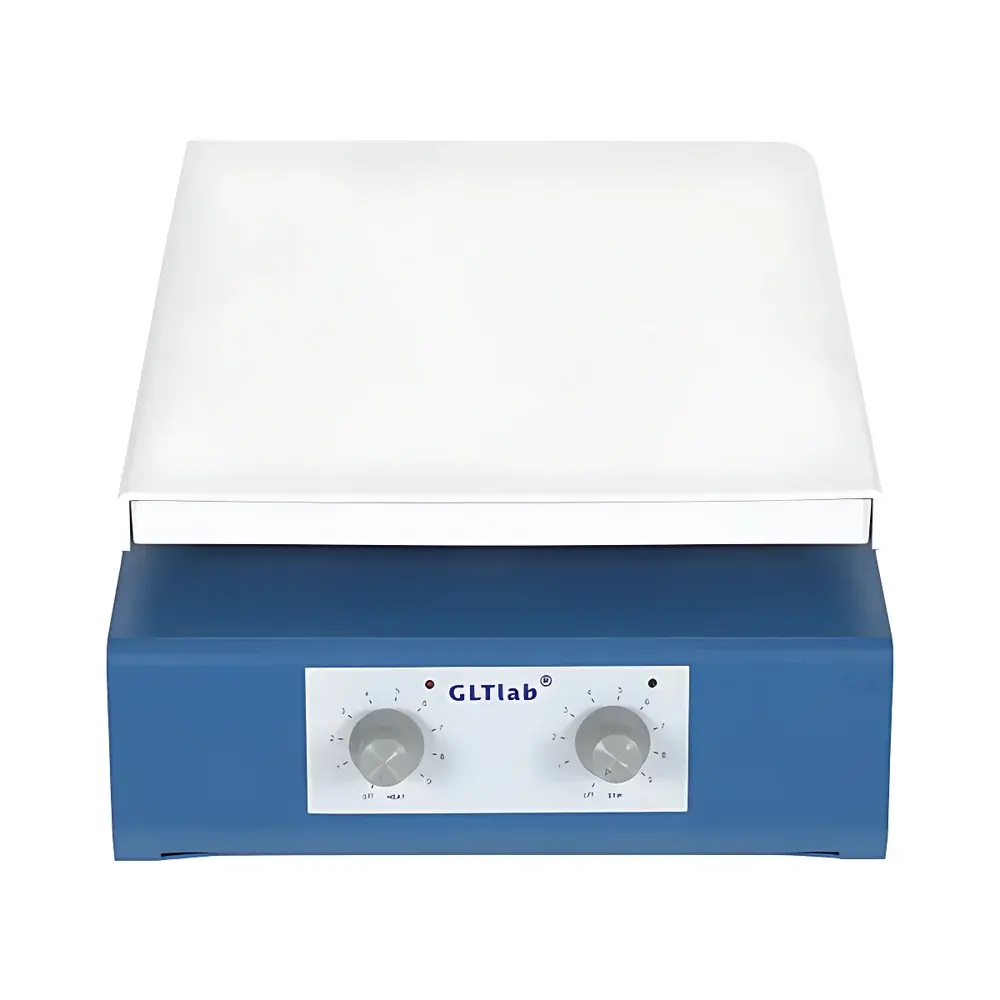
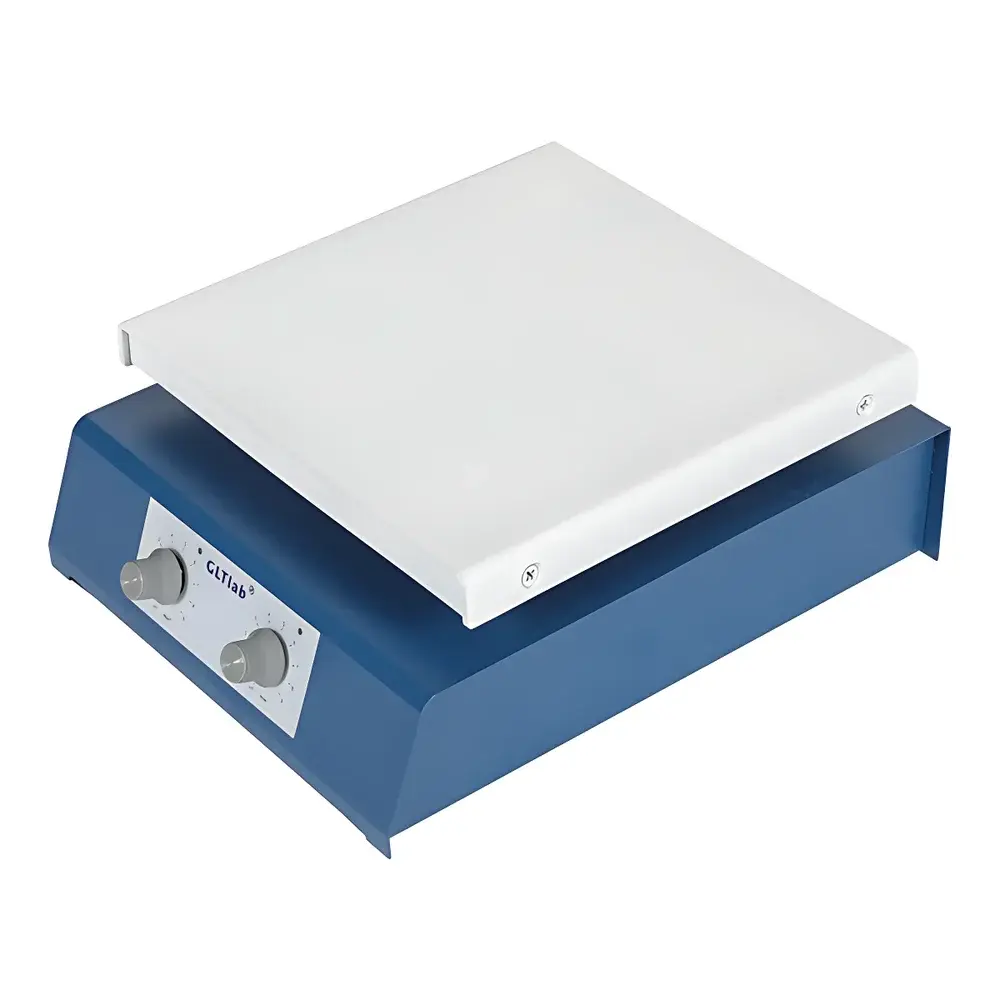
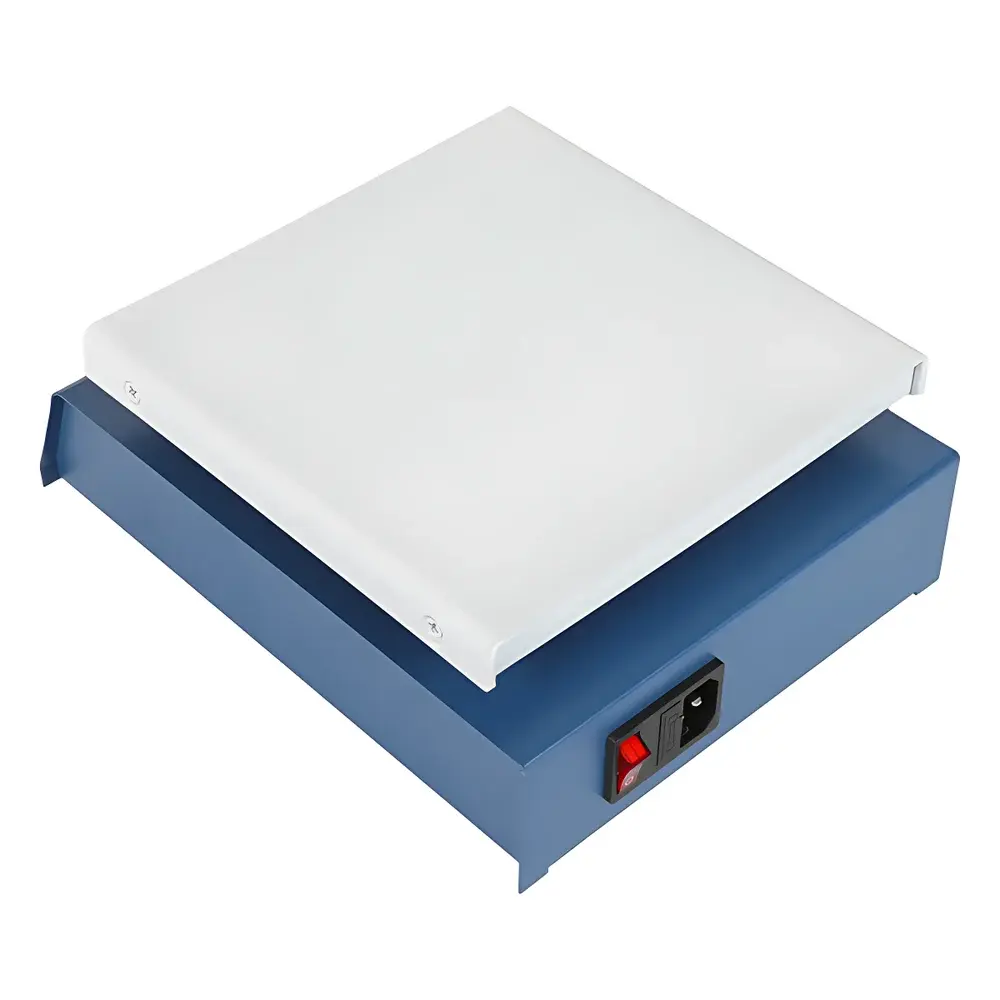
GLTlab S-2A Digital Magnetic Stirrer with Integrated Heating Plate
| Brand | GLTlab |
|---|---|
| Model | S-2A |
| Type | Magnetic Stirrer with Heated Ceramic Plate |
| Max Stirring Volume | 15 L (H₂O) |
| Speed Range | 150–1500 rpm |
| Heating Temperature Range | 35–350 °C (plate surface) |
| Temperature Setting Resolution | 1 °C (plate), 0.1 °C (solution) |
| Temp. Stability | ±1 °C |
| PT1000 Sensor Accuracy | ±0.5 °C |
| External Probe Calibration | Yes |
| Panel | 7-inch LED-displayed aluminum housing with ceramic coating |
| Dimensions (W×D×H) | 230 × 330 × 110 mm |
| Weight | 5 kg |
| Power Supply | 100–130 V / 200–240 V, 50/60 Hz |
| Rated Power | 750 W |
| Operating Ambient | 5–40 °C, ≤80% RH |
| Ingress Protection | IP21 |
Overview
The GLTlab S-2A Digital Magnetic Stirrer with Integrated Heating Plate is an engineered solution for precise, reproducible mixing and temperature-controlled sample preparation in analytical, quality control, and synthetic laboratories. Designed around a robust Couette-flow principle, the device employs a rotating magnetic field to drive PTFE- or glass-coated stir bars within vessels, enabling homogeneous dispersion without mechanical shaft penetration. Its integrated high-power ceramic heating plate delivers uniform thermal distribution across the surface—critical for applications requiring stable thermal profiles during extended reaction or dissolution protocols. Unlike basic stir-only units, the S-2A supports dual-mode operation: independent speed control and programmable plate heating, with real-time feedback via a calibrated PT1000 sensor embedded beneath the ceramic surface. This architecture ensures traceable thermal performance aligned with ISO/IEC 17025 laboratory management requirements for equipment validation.
Key Features
- 7-inch LED display with intuitive menu navigation for simultaneous monitoring of speed (rpm), setpoint temperature, and actual plate/solution temperature (when external probe is connected)
- Ceramic-coated aluminum heating surface offering chemical resistance, rapid thermal response, and long-term stability under repeated thermal cycling
- Dual-resolution temperature control: 1 °C resolution for plate setpoint; 0.1 °C resolution for solution temperature when using optional external PT100 probe
- Thermal safety system including overtemperature cutoff, hot-surface warning indicator, and automatic shutdown upon sensor fault detection
- Wide speed range (150–1500 rpm) with closed-loop motor control ensuring consistent torque delivery up to 15 L aqueous loads
- Universal power input (100–130 V / 200–240 V, 50/60 Hz) and IP21-rated enclosure suitable for standard laboratory environments (5–40 °C, ≤80% RH)
Sample Compatibility & Compliance
The S-2A accommodates round-bottom flasks, beakers, and crystallization dishes up to 15 L capacity—ideal for bulk buffer preparation, polymer dissolution, catalyst slurry homogenization, and extraction workflows. Compatible stir bars range from 30 mm to 80 mm in length, supporting both low-viscosity solvents and moderately viscous media (e.g., glycerol-water mixtures up to ~500 mPa·s). The unit complies with IEC 61010-1:2010 for electrical safety in laboratory equipment and meets CE marking requirements for EMC and low-voltage directives. While not intrinsically rated for hazardous locations, its design aligns with GLP-compliant documentation practices—including user-accessible calibration logs and external probe traceability per ISO/IEC 17025 Clause 6.4.2.
Software & Data Management
The S-2A operates as a standalone instrument with no proprietary software dependency. All operational parameters—including speed, temperature setpoints, dwell times, and sensor calibration offsets—are stored in non-volatile memory and retained after power cycling. The front-panel interface supports manual calibration of external PT100 probes against NIST-traceable reference standards, generating timestamped calibration records accessible via on-screen navigation. For laboratories operating under FDA 21 CFR Part 11 requirements, optional RS-232 or USB-to-serial adapters enable integration with validated LIMS or ELN platforms for audit-trail capture of critical process parameters.
Applications
- Preparation of standardized reagent solutions and mobile phases in HPLC and GC laboratories
- Controlled heating and stirring during Karl Fischer titration solvent conditioning
- Homogenization of nanoparticle suspensions prior to DLS or TEM sample mounting
- Accelerated stability testing of pharmaceutical formulations under defined thermal agitation conditions
- Supporting ASTM D2196 (viscosity of paints) and ISO 3219 (rheological behavior of dispersions) sample conditioning protocols
FAQ
Can the S-2A maintain temperature accuracy when heating viscous samples?
Yes—the PT1000 sensor provides direct plate-surface feedback, and the 0.1 °C solution temperature resolution (with external probe) enables close thermal monitoring even in high-viscosity media.
Is the ceramic surface resistant to strong acids or bases?
The alumina-based ceramic coating exhibits excellent resistance to common laboratory chemicals including 6 M HCl, 5 M NaOH, and organic solvents; however, prolonged exposure to hydrofluoric acid or molten alkalis is not recommended.
Does the unit support multi-step temperature ramping?
No—the S-2A is designed for single-setpoint operation. For programmable ramp/soak profiles, consider the GLTlab S-4R series with integrated PID controller and PC interface.
What stir bar size is optimal for 15 L mixing?
A 70–80 mm elliptical or cross-shaped PTFE-coated stir bar is recommended for full-volume homogeneity at speeds ≥800 rpm.
How often should external probe calibration be performed?
Per ISO/IEC 17025, calibration should occur before critical experiments, after physical impact, and at least daily in regulated QC environments—using a certified dry-block calibrator or precision bath.



