
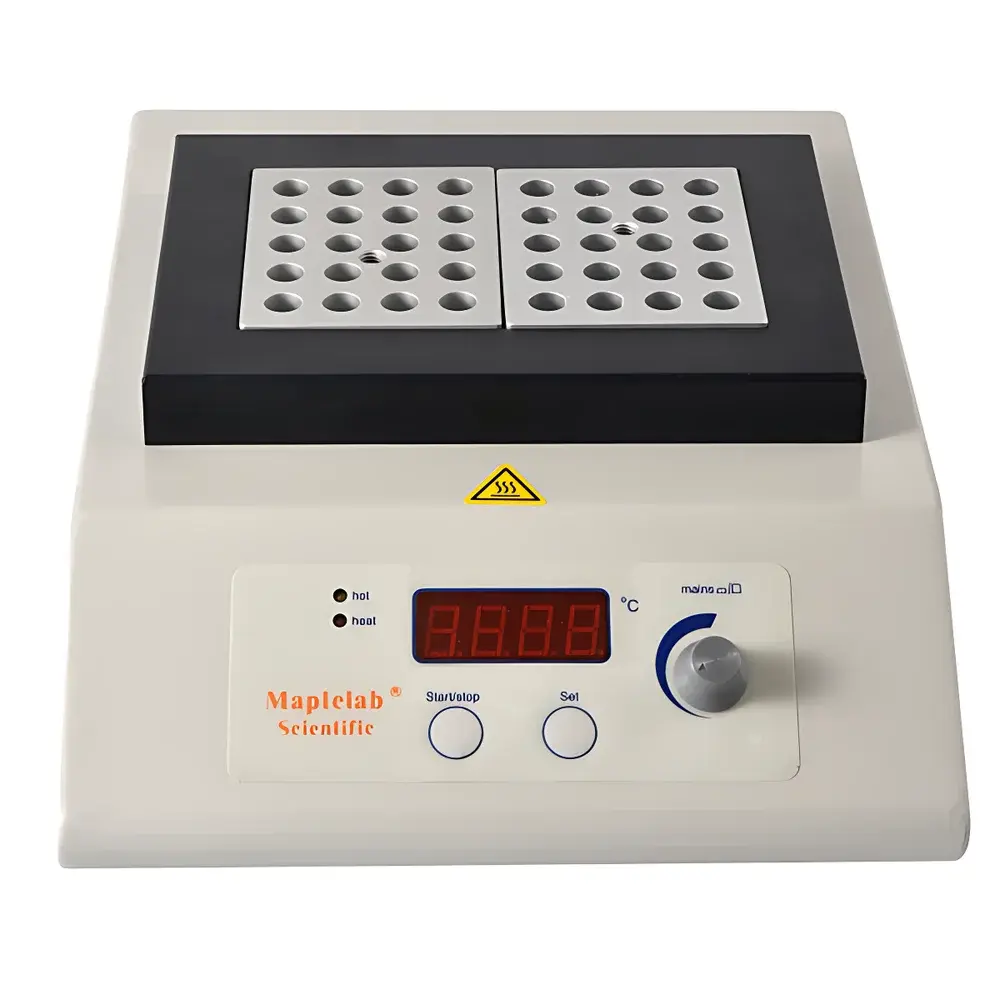
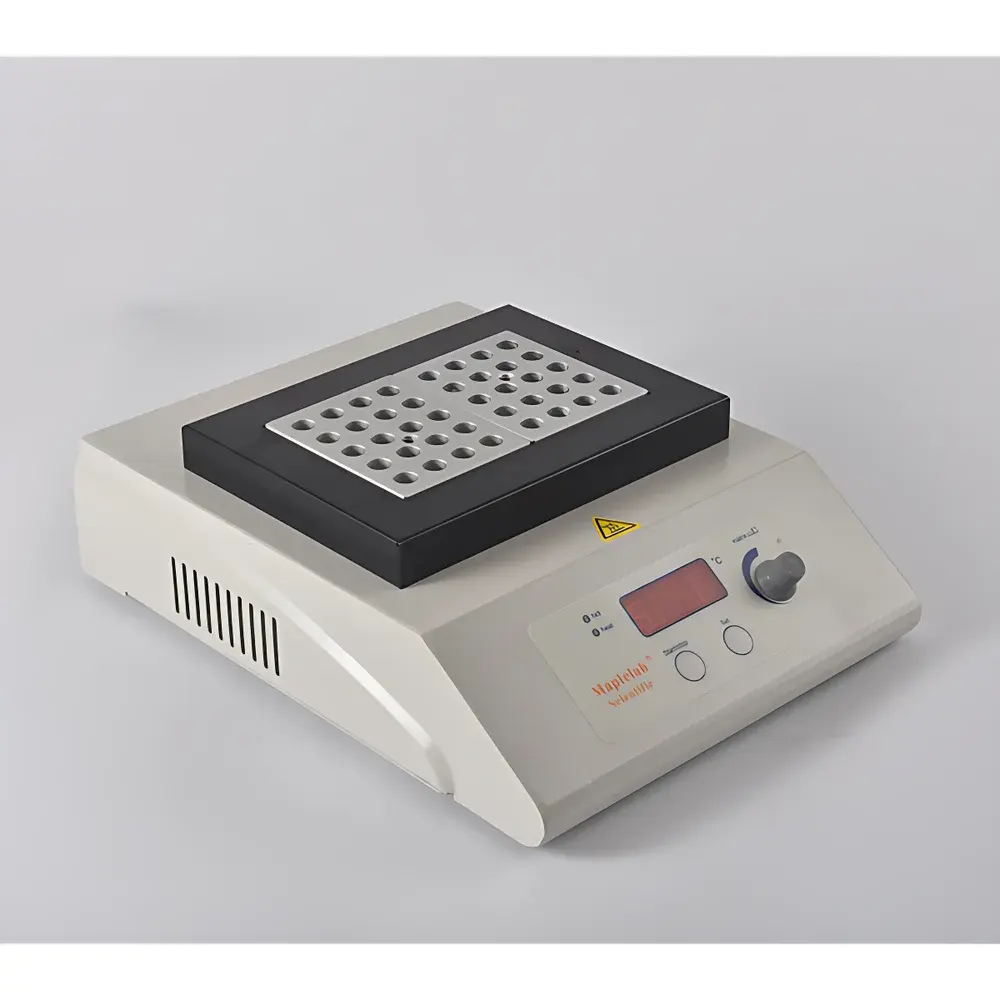
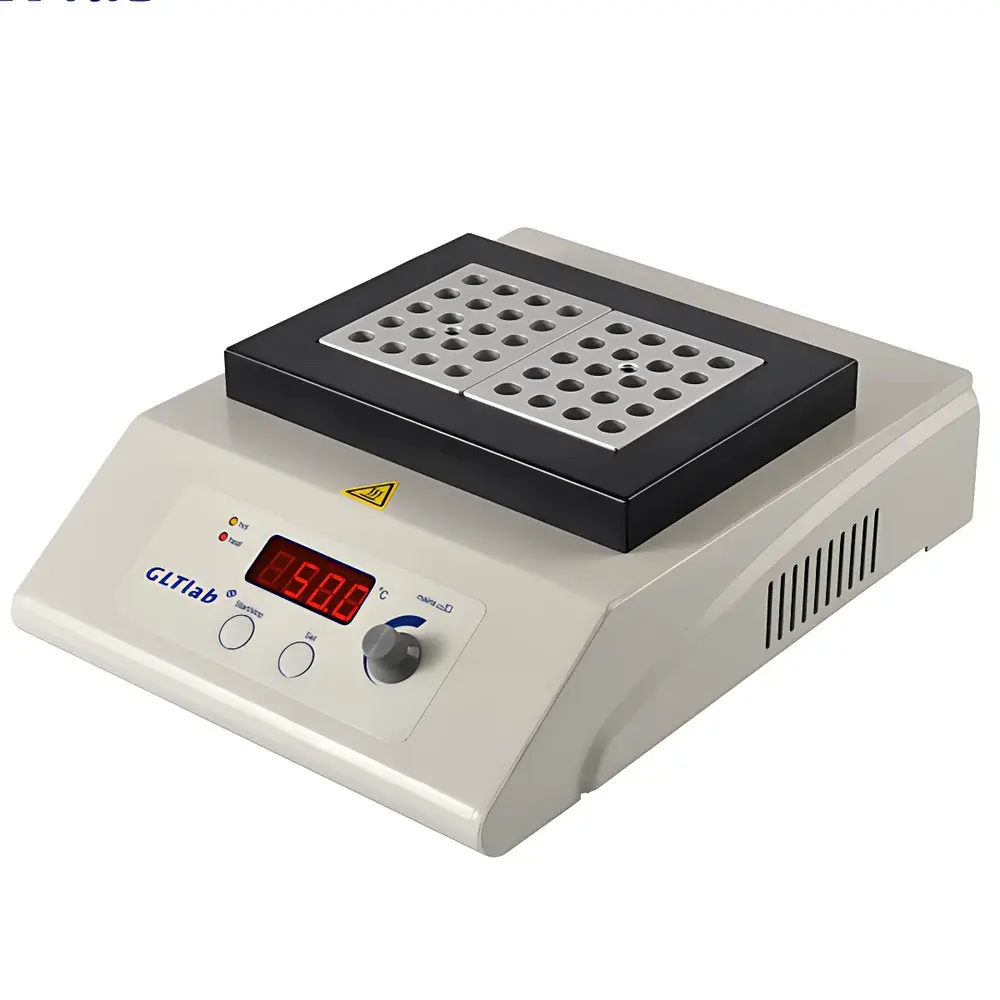
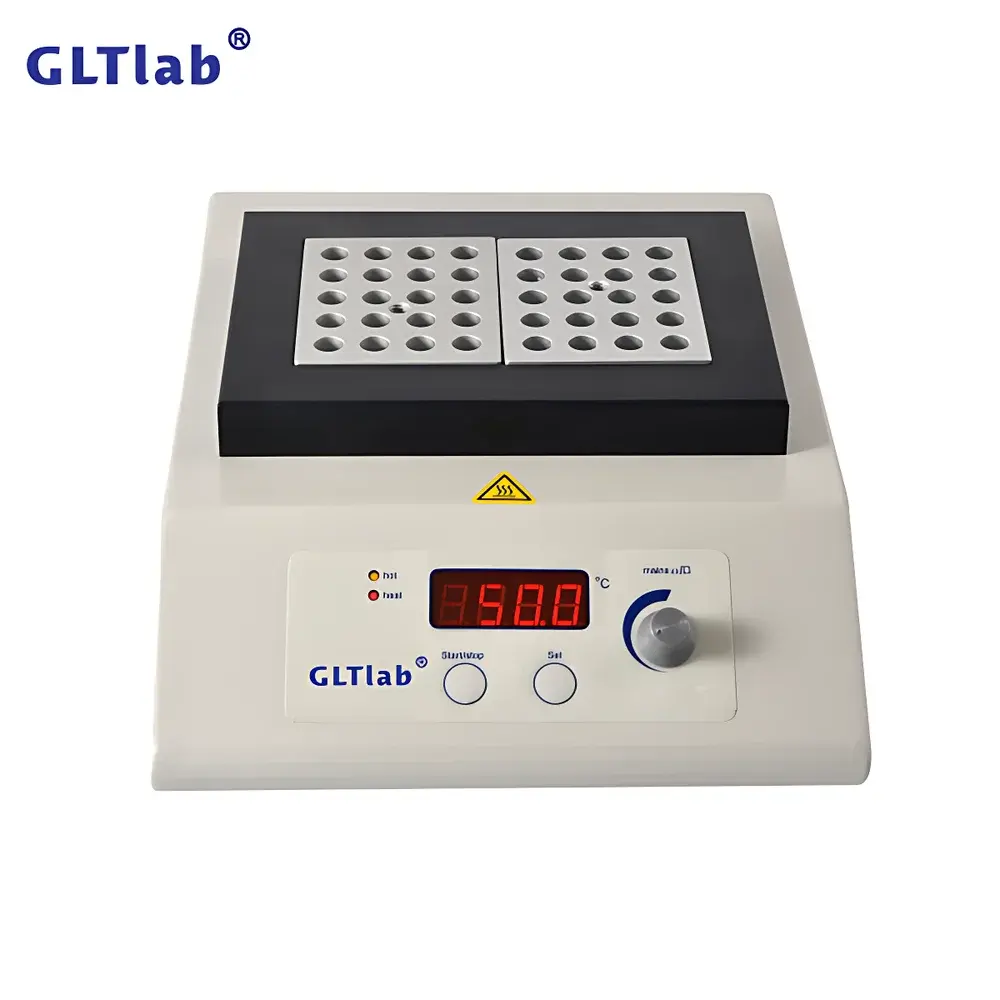
GLTLab BH602D Digital Metal Bath Heater
| Brand | GLTLab |
|---|---|
| Model | BH602D |
| Temperature Range | Ambient +10 °C to 200 °C |
| Temperature Accuracy | ±0.1 °C |
| Dimensions (W×D×H) | 305 mm × 230 mm × 110 mm |
| Net Weight | 6 kg |
| Power Supply | Standard AC Input (Region-Specific Voltage Compliance) |
| Control System | Digital PID with Built-in Calibration Function |
| Timer | 0–10 h adjustable or continuous operation mode |
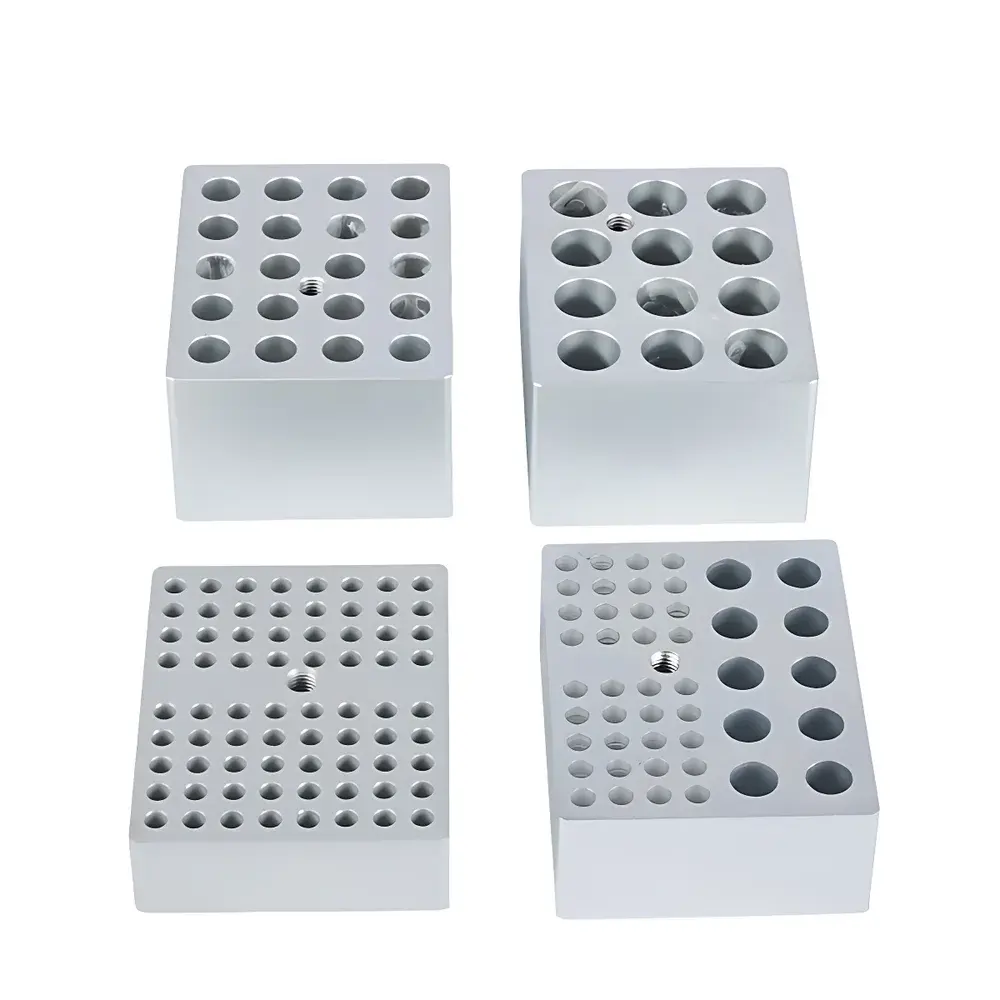
| Module Compatibility | Interchangeable aluminum heating blocks (sold separately) |
| Safety Features | Over-temperature protection, auto-shutdown on fault detection |
Overview
The GLTLab BH602D Digital Metal Bath Heater is a precision-engineered dry block heater designed for consistent, uniform thermal control in analytical, biochemical, clinical, and general research laboratories. Unlike water baths, this metal bath utilizes solid-state aluminum heating blocks to deliver rapid thermal response, minimal evaporation risk, and superior temperature stability across sample vessels. Its operational principle relies on conductive heat transfer from a thermally optimized aluminum block—machined to precise tolerances—to sample tubes or microplates placed directly within the block’s wells. The device operates over a wide temperature range of ambient +10 °C to 200 °C, making it suitable for applications ranging from enzyme incubation and DNA denaturation to solvent evaporation and sample digestion. Engineered for reproducibility, the BH602D integrates a high-resolution digital display, real-time temperature feedback, and advanced PID (Proportional-Integral-Derivative) control logic to minimize overshoot and maintain setpoint stability within ±0.1 °C under steady-state conditions.
Key Features
- Digital PID temperature control with auto-tuning capability for optimal dynamic response and long-term stability
- Built-in calibration function accessible via front-panel adjustment screw—enables traceable offset correction against reference thermometer readings
- Programmable timer supporting 1-minute increments from 0 to 10 hours, plus continuous (infinite) mode for unattended operation
- Compact footprint (305 × 230 × 110 mm) optimized for benchtop space efficiency without compromising thermal mass or uniformity
- Modular design supporting interchangeable aluminum heating blocks—compatible with common tube formats including 0.2 mL, 0.5 mL, 1.5 mL, 2.0 mL, 15 mL, and 50 mL conical tubes, as well as 96-well microplates (blocks sold separately)
- Included block removal tool ensures rapid, non-damaging module exchange—critical for workflow flexibility between protocols
- Integrated over-temperature safety cutoff and fault-detection circuitry compliant with IEC 61010-1 requirements for laboratory electrical equipment
Sample Compatibility & Compliance
The BH602D accommodates a broad spectrum of sample containers through its modular heating block system. Each block is CNC-machined from high-purity anodized aluminum to ensure uniform thermal conductivity and chemical resistance. Blocks are validated for thermal homogeneity—typically ≤±0.3 °C across all wells at 100 °C—per internal validation protocols aligned with ISO/IEC 17025 guidance for equipment qualification. While not certified to specific ISO standards out-of-box, the instrument supports laboratory qualification processes (IQ/OQ/PQ) required under GLP and GMP environments. Its digital interface and stable control architecture facilitate documentation of temperature profiles for audit readiness, and the calibration function supports traceability to NIST-traceable references when used with certified thermometers.
Software & Data Management
The BH602D operates as a standalone benchtop instrument with no embedded software or connectivity interfaces (e.g., USB, RS-232, or Ethernet). All settings—including target temperature, timer duration, and calibration offset—are configured locally via intuitive membrane keypad and LCD display. This architecture eliminates firmware dependencies, reduces cybersecurity exposure, and ensures uninterrupted operation in regulated settings where networked devices require additional validation. For laboratories requiring electronic recordkeeping, external data loggers compatible with PT100 or thermistor probes may be employed to capture time-stamped temperature traces, satisfying FDA 21 CFR Part 11 requirements when paired with appropriate audit-trail-enabled software platforms.
Applications
- Enzyme kinetics assays requiring precise incubation at 37 °C, 65 °C, or other defined temperatures
- Nucleic acid processing steps including PCR pre-heating, restriction digest activation, and plasmid miniprep elution
- Chemical synthesis reactions involving controlled thermal initiation or reflux alternatives
- Clinical specimen preparation such as serum separation, antigen retrieval, and reagent warming prior to immunoassay execution
- Pharmaceutical QC workflows including dissolution media conditioning and standard solution equilibration
- Environmental and food testing protocols involving heavy metal digestion or solvent concentration steps
FAQ
What heating modules are compatible with the BH602D?
The BH602D accepts all GLTLab-branded aluminum heating blocks designed for the BH600-series platform, including models for 0.2 mL PCR tubes, 1.5/2.0 mL microcentrifuge tubes, 15 mL and 50 mL conical tubes, and 96-well plates. Modules must be ordered separately.
Does the BH602D support external temperature probe input?
No—the unit relies on internal Pt100 sensor feedback and does not provide analog or digital inputs for external probe integration.
Is calibration documentation provided with the instrument?
The BH602D includes a factory calibration certificate indicating initial verification at 37 °C, 70 °C, and 100 °C. Full calibration records and SOP templates for user-performed recalibration are available upon request.
Can two different heating modules be installed simultaneously?
No—the BH602D features a single-block cavity; only one heating module may be installed at a time. Dual-module operation (e.g., BH601D/BH602D configurations) refers to separate units operating in parallel—not simultaneous dual-block use.
What maintenance is required for long-term reliability?
Routine cleaning of the block cavity with isopropyl alcohol and lint-free cloth is recommended after each use. Annual verification of temperature accuracy using a calibrated reference thermometer is advised per laboratory quality management systems.



