
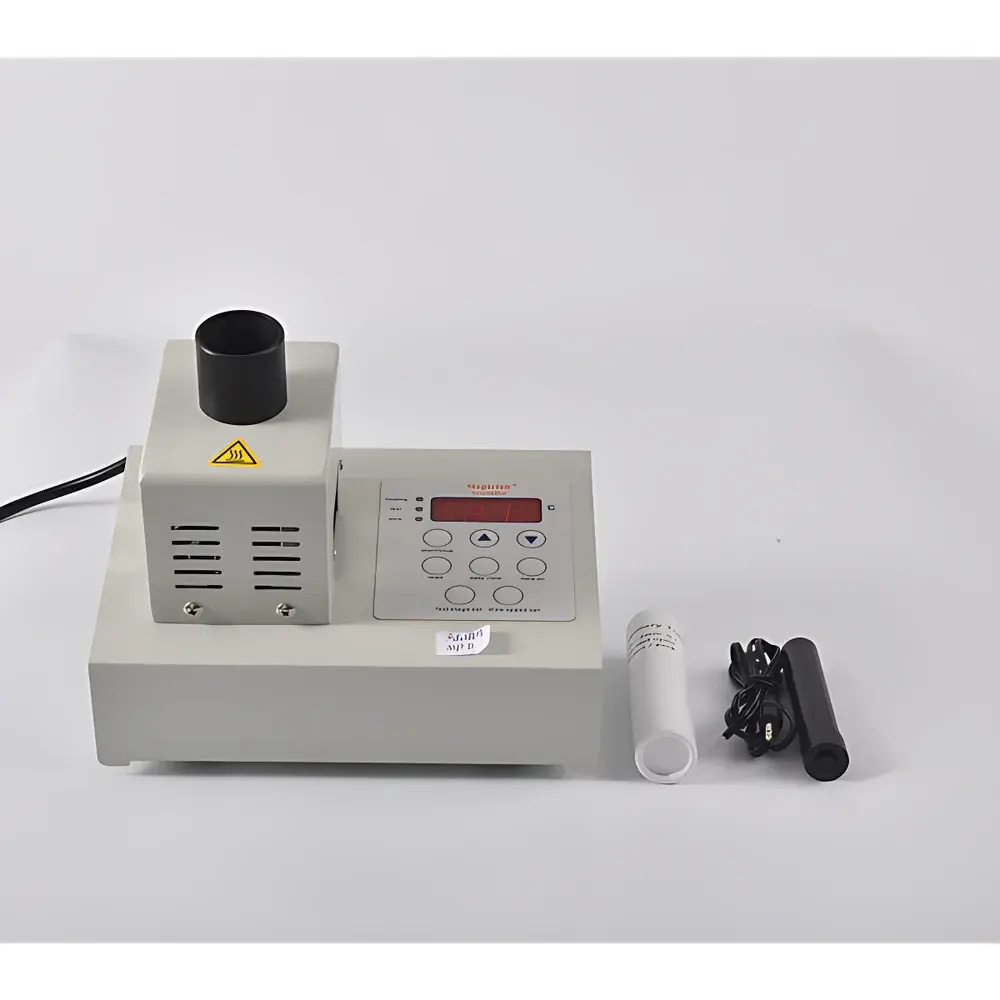
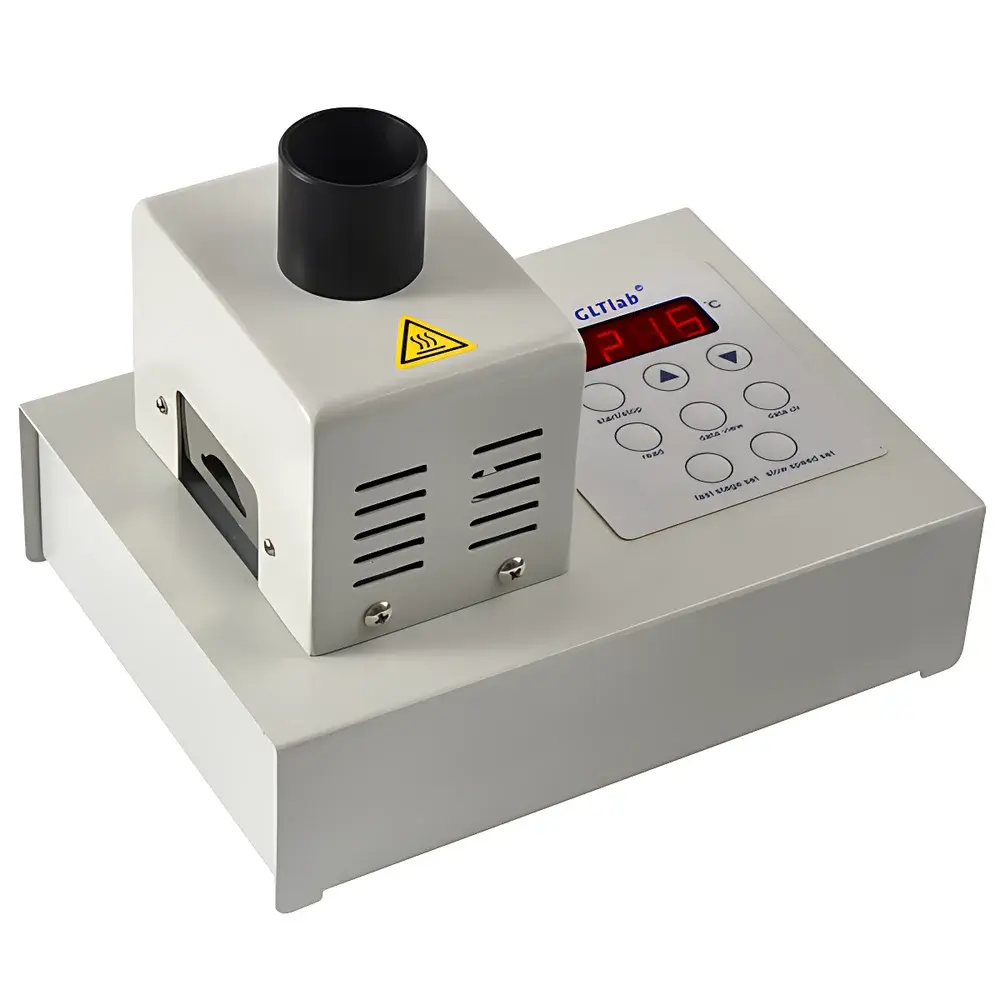
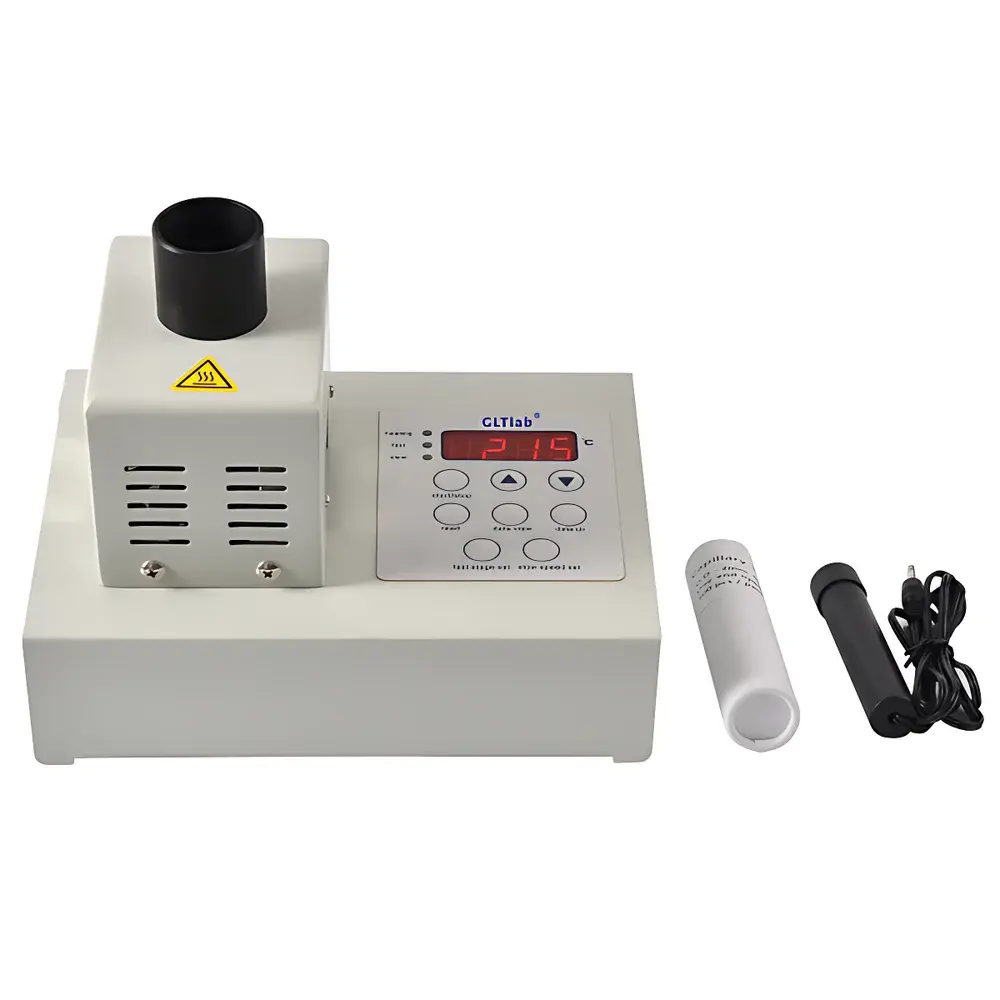
GLTLab MPD-02 Economical Digital Melting Point Apparatus
| Brand | GLTLab |
|---|---|
| Origin | Guangdong, China |
| Manufacturer Type | Direct Manufacturer |
| Model | MPD-02 |
| Temperature Range | Ambient to 400 °C |
| Heating Rate | 20 °C/min |
| Temperature Repeatability | ±0.5 °C |
| Temperature Accuracy | ±0.1 °C |
| Capillary Diameter | 2 mm |
| Sample Capacity | 3 samples per run |
| Temperature Resolution | 0.1 °C |
| Power Supply | 120/230 V AC, 50 Hz, 75 W |
| Dimensions (W×D×H) | 160 × 220 × 170 mm |
| Net Weight | 1.8 kg |
| Display | 4-digit LED |
| Calibration Function | Yes |
| Visual Observation System | Integrated LED illumination, adjustable magnifier with inclined viewing stage |
Overview
The GLTLab MPD-02 Economical Digital Melting Point Apparatus is a compact, benchtop thermal analysis instrument engineered for precise and reproducible determination of solid-phase transition temperatures in crystalline organic compounds, pharmaceutical intermediates, polymers, and reference standards. It operates on the classical capillary tube method—compliant with pharmacopoeial standards including USP <741>, EP 2.2.14, and JP 2.60—wherein a small sample is loaded into a standard 2 mm outer-diameter glass capillary, heated under controlled conditions, and visually observed for onset and completion of melting. The device employs a high-stability thermistor-based temperature sensing and feedback loop, ensuring linear ramp control and minimal thermal lag across its full operating range (ambient to 400 °C). With a certified accuracy of ±0.1 °C and repeatability of ±0.5 °C, the MPD-02 delivers measurement consistency suitable for routine QC testing in GMP-aligned laboratories, academic teaching labs, and contract research organizations requiring traceable, cost-effective thermal characterization.
Key Features
- Triple-sample capacity: Simultaneous analysis of up to three independently loaded capillaries—enabling comparative testing, replicate runs, or multi-batch screening without sequential repositioning.
- High-resolution thermal control: Programmable heating rate of 20 °C/min with fine-grained 0.1 °C temperature resolution, supporting both rapid screening and slow-ramp protocols for narrow-melting-point substances.
- Optimized optical observation system: Integrated cold-white LED illumination paired with a precision-ground 3× magnifier and ergonomically tilted viewing stage ensures consistent visual detection of meniscus formation, sintering, and collapse—critical for identifying onset temperature per ICH Q5C guidelines.
- Dedicated calibration interface: Onboard calibration function supports two-point verification using NIST-traceable reference standards (e.g., pure indium, tin, or caffeine), generating audit-ready calibration logs compatible with internal SOP documentation.
- Robust mechanical architecture: All-metal housing with passive thermal shielding minimizes ambient drift; compact footprint (160 × 220 × 170 mm) and low power draw (75 W) allow deployment in shared lab spaces or mobile QA carts.
Sample Compatibility & Compliance
The MPD-02 accommodates standard 1–2 mm OD thin-wall capillaries (typically 100 mm length), compatible with common sample preparation workflows used in pharmaceutical development and regulatory submission dossiers. It supports solids ranging from highly volatile low-melting organics (e.g., fatty acids, surfactants) to thermally stable APIs (e.g., paracetamol, ibuprofen, sulfonamides). While the instrument does not provide automated data export or electronic signature functionality, its manual observation protocol aligns with USP <741> and EP 2.2.14 requirements for compendial melting point determination. For laboratories operating under GLP or ISO/IEC 17025 frameworks, the device may be integrated into validated methods when paired with documented calibration records, operator training logs, and standardized sample handling SOPs.
Software & Data Management
The MPD-02 operates as a standalone hardware unit with no embedded microprocessor-based software or digital connectivity (e.g., USB, RS-232, or Ethernet). All operational parameters—including setpoint, ramp rate, and hold time—are configured via front-panel push-button controls. Temperature readings are displayed in real time on a four-digit LED screen with 0.1 °C resolution. Data recording is manual: users log results directly into laboratory notebooks or LIMS-compatible spreadsheets. Though lacking FDA 21 CFR Part 11-compliant audit trails or electronic signatures, the instrument’s deterministic thermal behavior and calibrated thermistor output support retrospective verification when used within a documented quality management system.
Applications
- Routine identity testing and purity assessment of raw materials and finished dosage forms in pharmaceutical manufacturing.
- Teaching core thermal analysis principles—including eutectic behavior, polymorphism, and decomposition onset—in undergraduate chemistry and pharmacy curricula.
- Stability-indicating assay development during accelerated stability studies per ICH Q1A(R2).
- Batch release testing of excipients (e.g., stearic acid, glycerol monostearate) where narrow melting ranges correlate with crystallinity and processing suitability.
- Quality control of agrochemical active ingredients and cosmetic-grade waxes where thermal fingerprinting supports specification compliance.
FAQ
Does the MPD-02 support automated video capture or image logging?
No. It relies on direct visual observation through the built-in magnifier and LED-lit stage. Video integration requires external microscopy systems.
Can the instrument be calibrated using third-party reference standards?
Yes. The onboard calibration mode accepts any NIST-traceable or pharmacopoeial reference material with certified melting point values (e.g., USP Reference Standards).
Is the heating block interchangeable for different capillary formats?
No. The MPD-02 uses a fixed geometry heating block optimized for standard 2 mm OD capillaries; alternative diameters require mechanical adaptation not supported by factory design.
What maintenance is required to sustain long-term accuracy?
Annual thermistor verification against reference standards and periodic cleaning of the optical path and capillary chamber with lint-free isopropyl alcohol wipes are recommended.
Does the MPD-02 meet CE or UL safety certification requirements?
As a Class I electrical appliance manufactured in accordance with GB 4793.1–2019 (Chinese equivalent to IEC 61010-1), it complies with general laboratory safety standards; formal CE/UL marking depends on regional import certification by the end-user’s authorized representative.



