
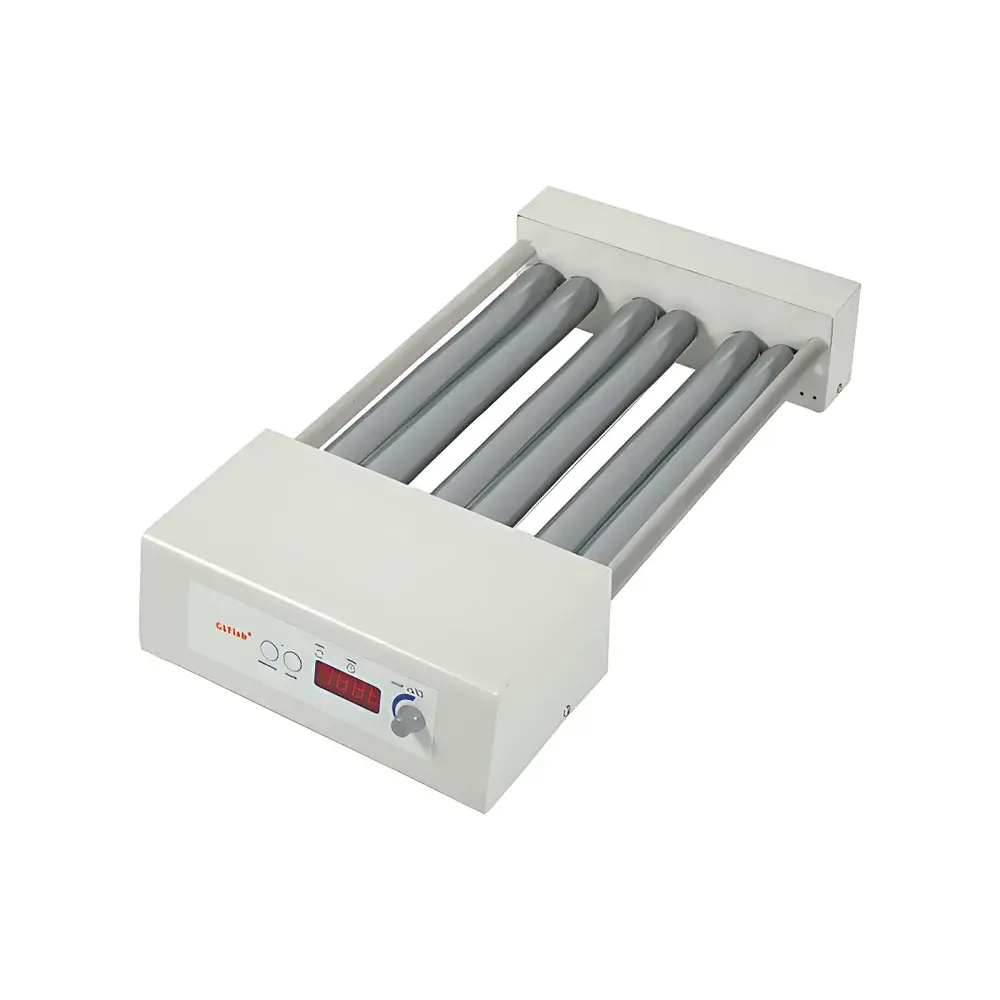
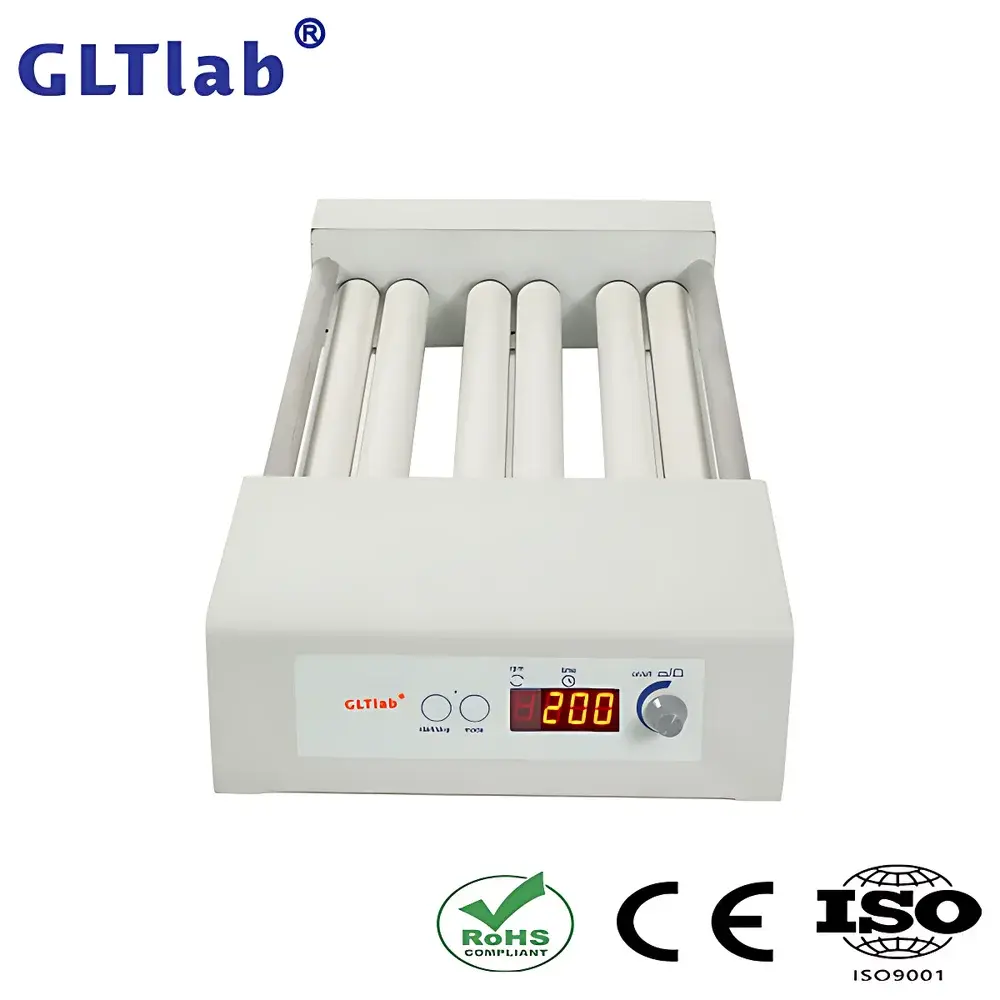
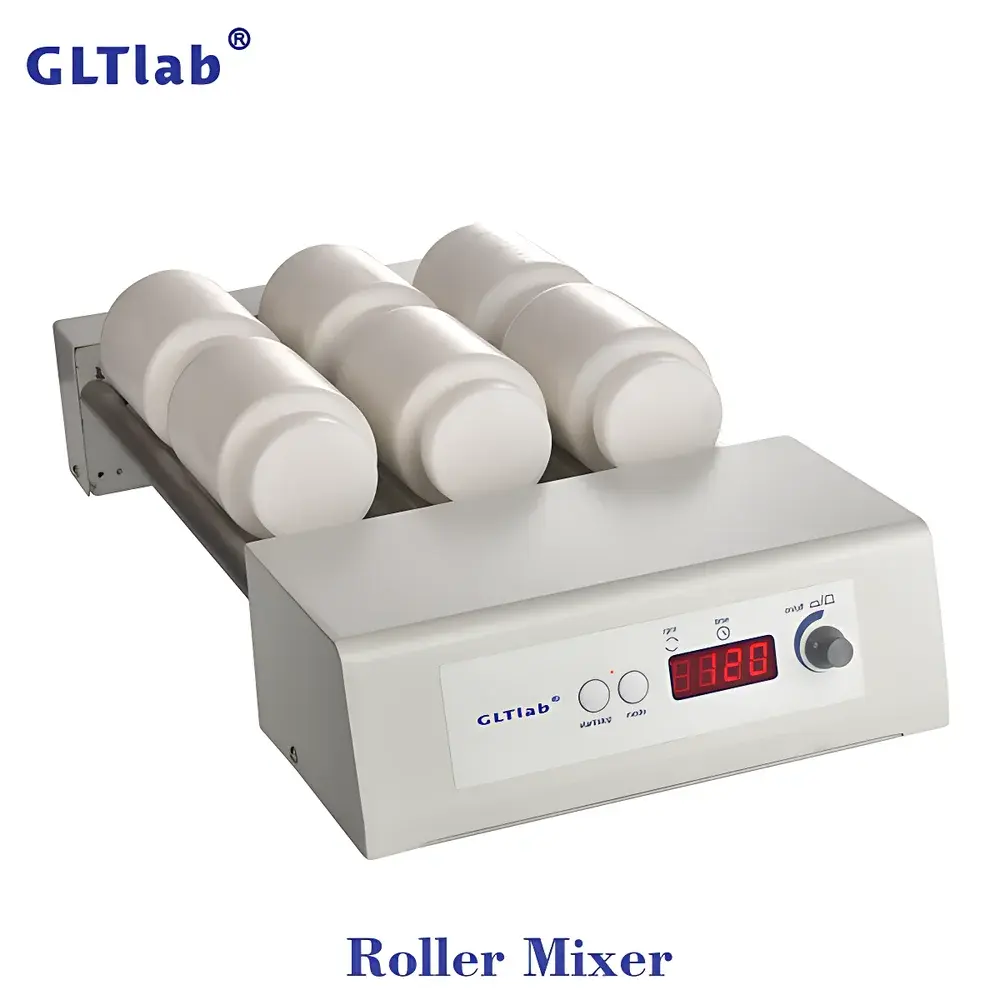
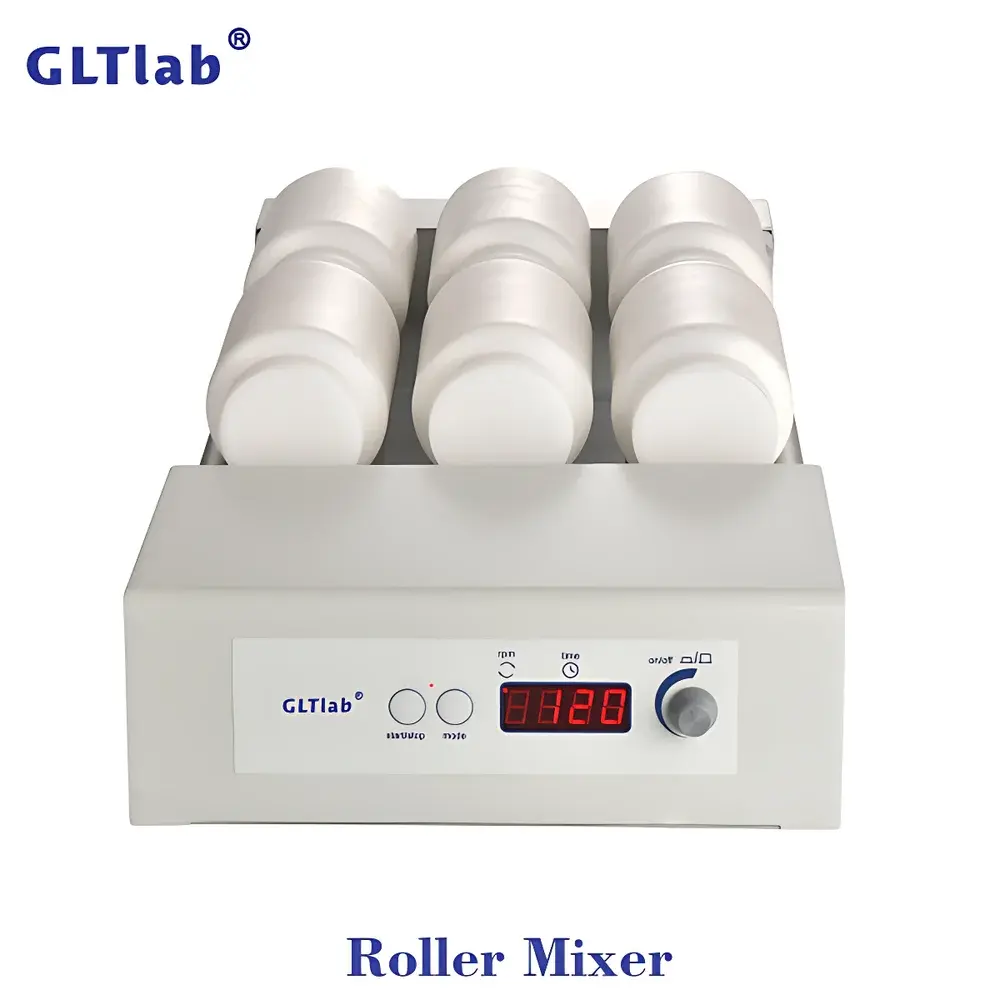
GLTLab TR-6-B Digital 6-Axis Roller Mixer
| Brand | GLTLab (Guoli Tian) |
|---|---|
| Model | TR-6-B |
| Origin | Guangdong, China |
| Manufacturer Type | Direct Manufacturer |
| Country of Origin | China |
| Power Supply | 12 V DC, 5 A |
| Roller Dimensions | 340 × 30 mm |
| Number of Rollers | 6 |
| Control Method | Digital Microprocessor-Based |
| Display | LED |
| Speed Range | 5–1000 rpm |
| Maximum Load Capacity | 10 kg |
| Overall Dimensions (W×D×H) | 556 × 286 × 98 mm |
| Construction Material | Stainless Steel Options Available |
| Application Scope | Solid–solid, solid–liquid, and high-viscosity liquid mixing |
Overview
The GLTLab TR-6-B Digital 6-Axis Roller Mixer is an industrial-grade, microprocessor-controlled laboratory mixing instrument engineered for reproducible, low-shear homogenization of heterogeneous systems. Operating on the principle of synchronous multi-axis rotational motion—where six independently mounted rollers rotate in coordinated, programmable patterns—the device induces gentle yet effective convective displacement across samples without introducing significant shear stress or air entrapment. This mechanism is particularly suited for applications requiring preservation of particle integrity, suspension stability, or chemical activity—such as battery slurry formulation, pharmaceutical suspension preparation, and adhesive stabilization. Unlike vortex or orbital shakers, the TR-6-B’s rolling action ensures uniform mechanical agitation across the full length of tubes, bottles, or custom containers placed horizontally on the rollers, minimizing sedimentation and promoting consistent dispersion over extended durations.
Key Features
- Digital microprocessor control with LED interface for precise speed adjustment (5–1000 rpm) and real-time operational feedback
- Six parallel stainless-steel rollers (340 × 30 mm each), configured for simultaneous bidirectional or unidirectional rotation
- Robust aluminum-alloy frame with optional electropolished stainless-steel roller surfaces for corrosion resistance and cleanability
- Programmable operation modes: continuous run, timed cycle (1 min to 99 hr 59 min), and direction-reversal intervals (configurable pause and reversal timing)
- Low-voltage DC power architecture (12 V, 5 A) ensuring electrical safety and compatibility with uninterruptible power supplies (UPS) in regulated lab environments
- Compact footprint (556 × 286 × 98 mm) optimized for benchtop deployment in QC labs, R&D facilities, and GMP-compliant production support areas
Sample Compatibility & Compliance
The TR-6-B accommodates a wide range of container formats—including 15 mL and 50 mL conical tubes, glass vials (10–100 mL), cylindrical jars (up to Ø60 mm × 120 mm), and custom-molded trays—enabling scalable process development from analytical sample prep to pilot-scale slurry conditioning. Its non-impact rolling motion preserves fragile particulates (e.g., graphite flakes, LiCoO₂ cathode powders, polymer microspheres) and prevents phase separation in shear-thinning suspensions. While not certified to IEC 61010-1 or ISO/IEC 17025 by default, the instrument’s design supports integration into validated workflows compliant with ISO 9001, ASTM D4783 (for pigment dispersion), and USP environmental mixing requirements when operated within documented SOPs. Optional calibration certificates traceable to NIM (National Institute of Metrology, China) are available upon request.
Software & Data Management
The TR-6-B operates via embedded firmware with no external PC dependency; however, its digital controller logs runtime parameters—including total operating time, average speed, and direction-switch count—for manual audit trail reconstruction. For laboratories implementing electronic recordkeeping under FDA 21 CFR Part 11 or EU Annex 11, GLTLab offers optional RS-232 or USB-to-serial interface modules (sold separately), enabling connection to LIMS or ELN platforms for automated timestamped event logging. Firmware updates are performed via micro-USB port using manufacturer-provided configuration utilities, supporting version-controlled revision history and change management protocols required in GLP/GMP settings.
Applications
- Battery manufacturing: Homogenization of cathode/anode slurries (e.g., NMC, LFP, silicon-carbon composites) with PVDF binders and conductive carbon additives
- Chemical synthesis: Blending viscous organosilicon compounds, epoxy resins, and thixotropic gels prior to casting or coating
- Clinical diagnostics: Preventing coagulation in whole-blood collection tubes during transport and storage (CLSI H20-A3 compliant handling)
- Materials science: Dispersing nanocellulose, metal-organic frameworks (MOFs), or ceramic precursors in aqueous/organic media
- Adhesives & coatings: Maintaining rheological consistency of UV-curable acrylates and waterborne acrylic emulsions during shelf-life testing
FAQ
What is the maximum tube diameter supported by the TR-6-B?
Standard roller spacing accommodates containers up to 60 mm in outer diameter; custom roller spacing kits are available for larger vessels.
Can the TR-6-B operate continuously for 72 hours or longer?
Yes—rated for uninterrupted operation at ≤80% of max speed (≤800 rpm) with ambient temperature ≤30°C and adequate ventilation.
Is the unit compatible with glovebox or inert-atmosphere enclosures?
The 12 V DC input and absence of internal fans or vented enclosures permit safe integration into nitrogen- or argon-purged environments.
Does GLTLab provide IQ/OQ documentation templates?
Yes—validated installation and operational qualification templates aligned with ISO/IEC 17025 Annex A.3 are supplied with enterprise orders.
How is maintenance performed on the roller drive system?
Roller shafts utilize sealed ball bearings with lifetime lubrication; routine cleaning with 70% ethanol and visual inspection of belt tension (if equipped with timing belt drive) constitute standard preventive maintenance.



