
Leica Ivesta 3 Stereo Microscope
| Brand | Leica |
|---|---|
| Origin | Germany |
| Model | Leica Ivesta 3 |
| Total Magnification | Up to 55× |
| Zoom Ratio | 9:1 |
| Field Diameter | Adjustable |
| Working Distance | 122 mm |
| Objective Type | Ivesta 3 with Integrated 12 MP Camera |
| Interface | C-mount compatible |
| Optical Technology | FusionOptics™ |
| Software Platform | Leica Enersight |
Overview
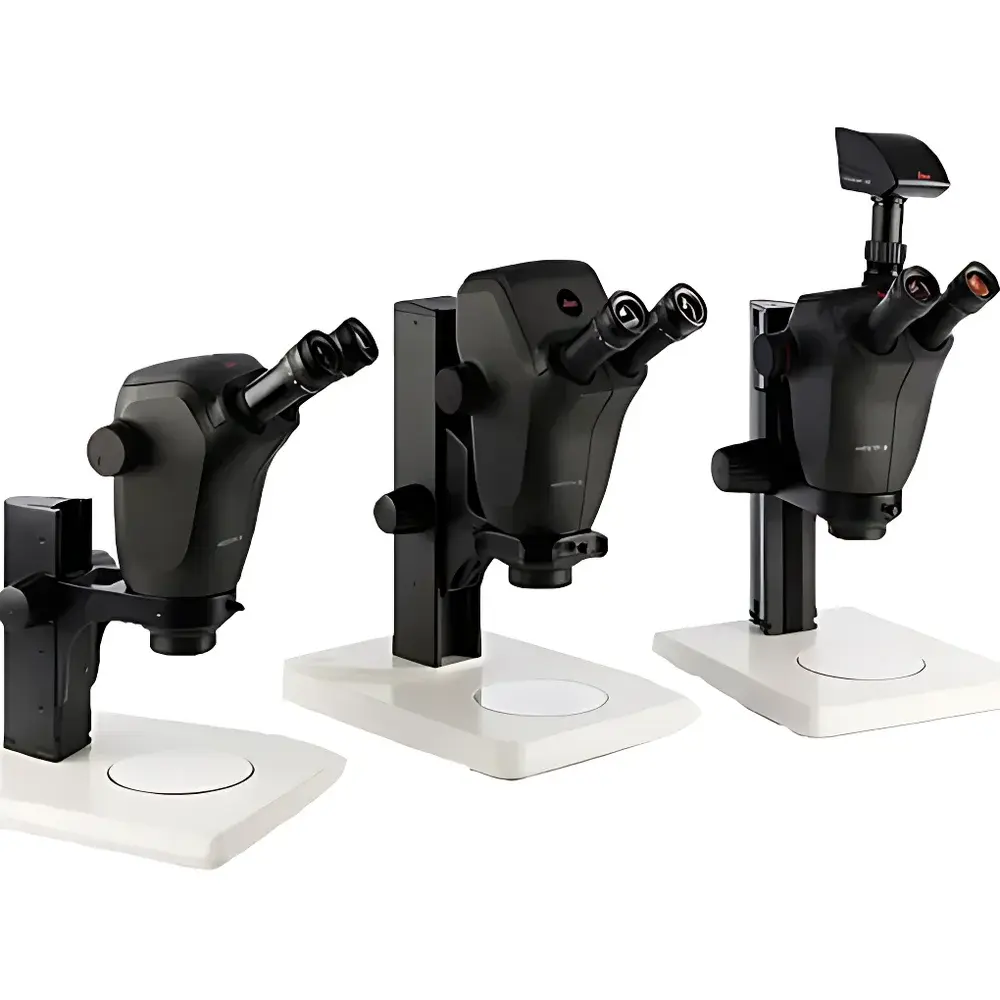
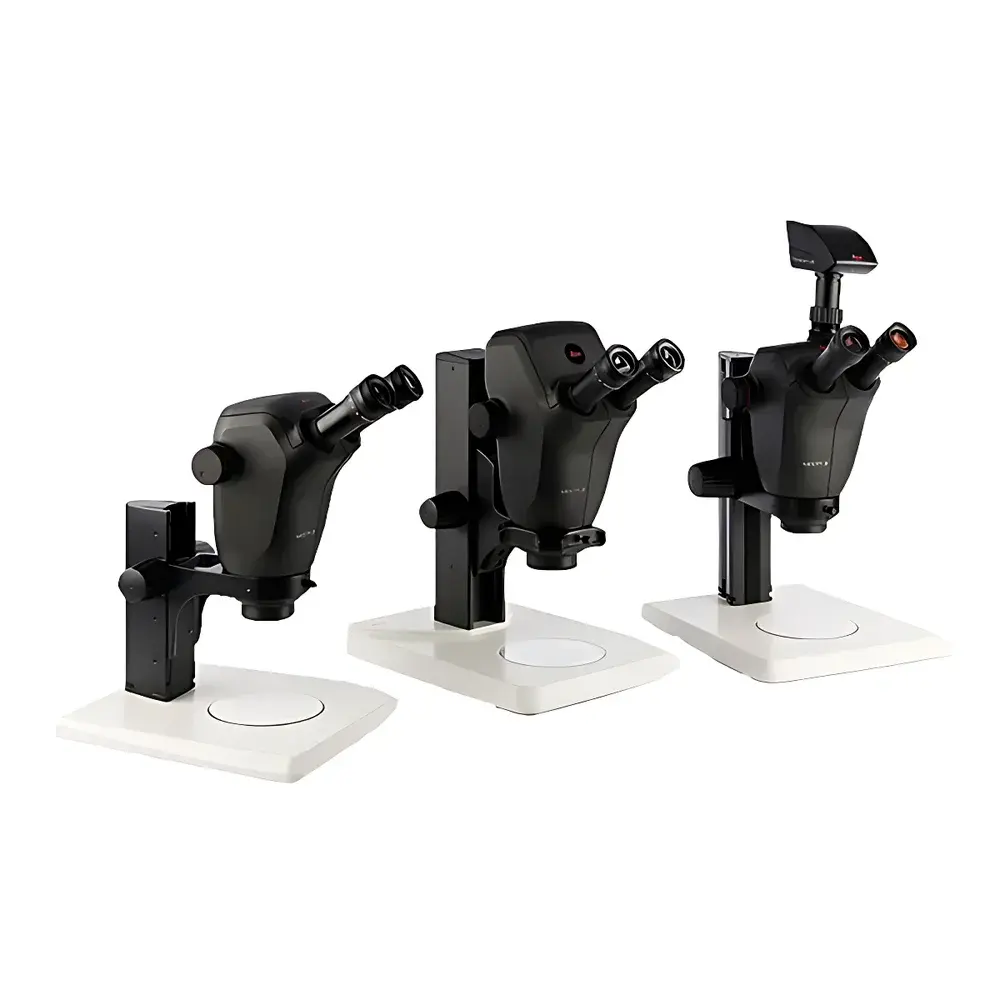
The Leica Ivesta 3 Stereo Microscope is an ergonomically engineered optical instrument designed for routine inspection, quality control, and analytical tasks in industrial, educational, and service laboratory environments. Built on Leica Microsystems’ legacy of precision optics manufacturing in Wetzlar, Germany, the Ivesta 3 employs FusionOptics™ technology—a proprietary dual-path optical design that simultaneously optimizes resolution and depth of field. Unlike conventional stereo microscopes relying on fixed optical compromises, FusionOptics™ delivers up to three times greater depth of field at equivalent magnification while preserving high lateral resolution—enabling operators to perceive critical surface topography and structural relationships in true 3D without repeated refocusing. The system supports total magnifications from 6.3× to 55× via a continuously variable 9:1 zoom body, and incorporates apochromatically corrected optics to minimize chromatic and spherical aberrations across the entire magnification range. Its modular architecture allows seamless integration into both manual inspection workflows and digitally enabled documentation systems.
Key Features
- FusionOptics™ optical engine delivering enhanced depth of field (up to 3× greater) without sacrificing resolution
- 9:1 continuous zoom ratio with encoded magnification detection—automatically records zoom position and magnification factor with every captured image
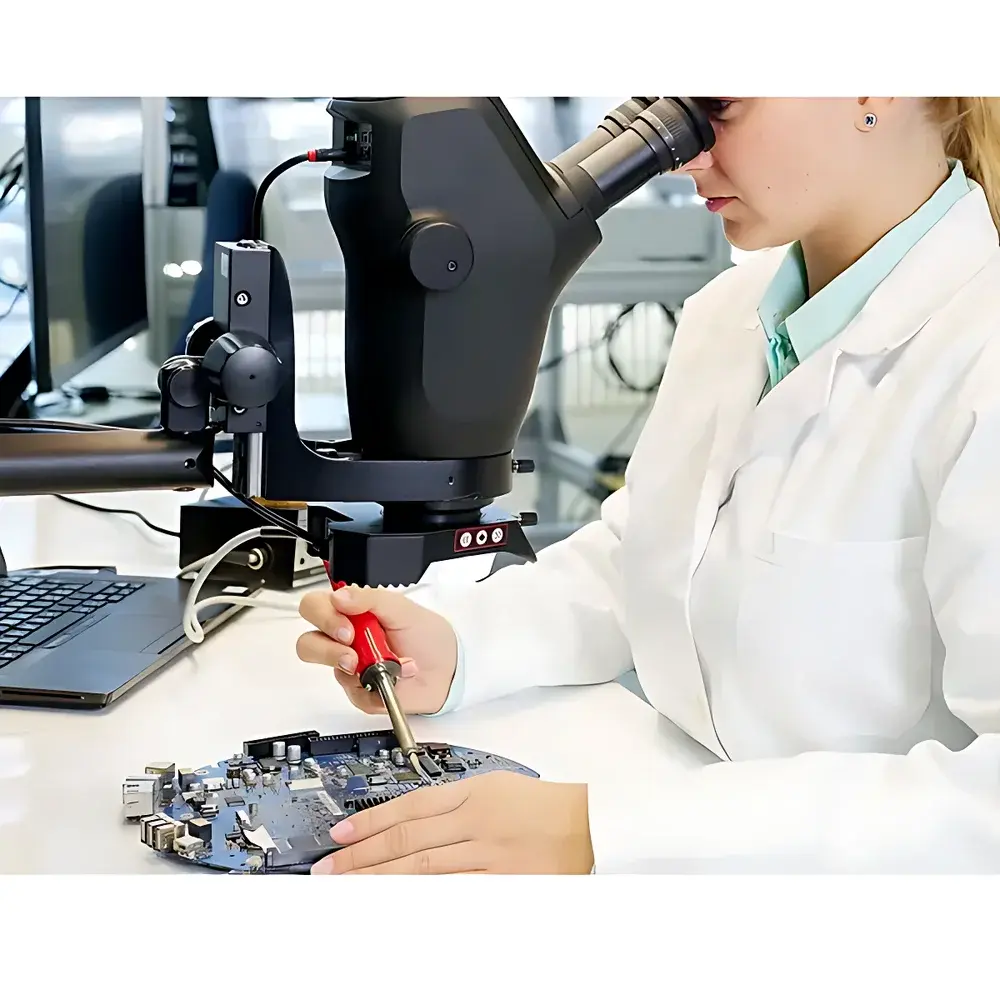
- 122 mm working distance—provides unobstructed access for tool manipulation, soldering, assembly, or sample handling under observation
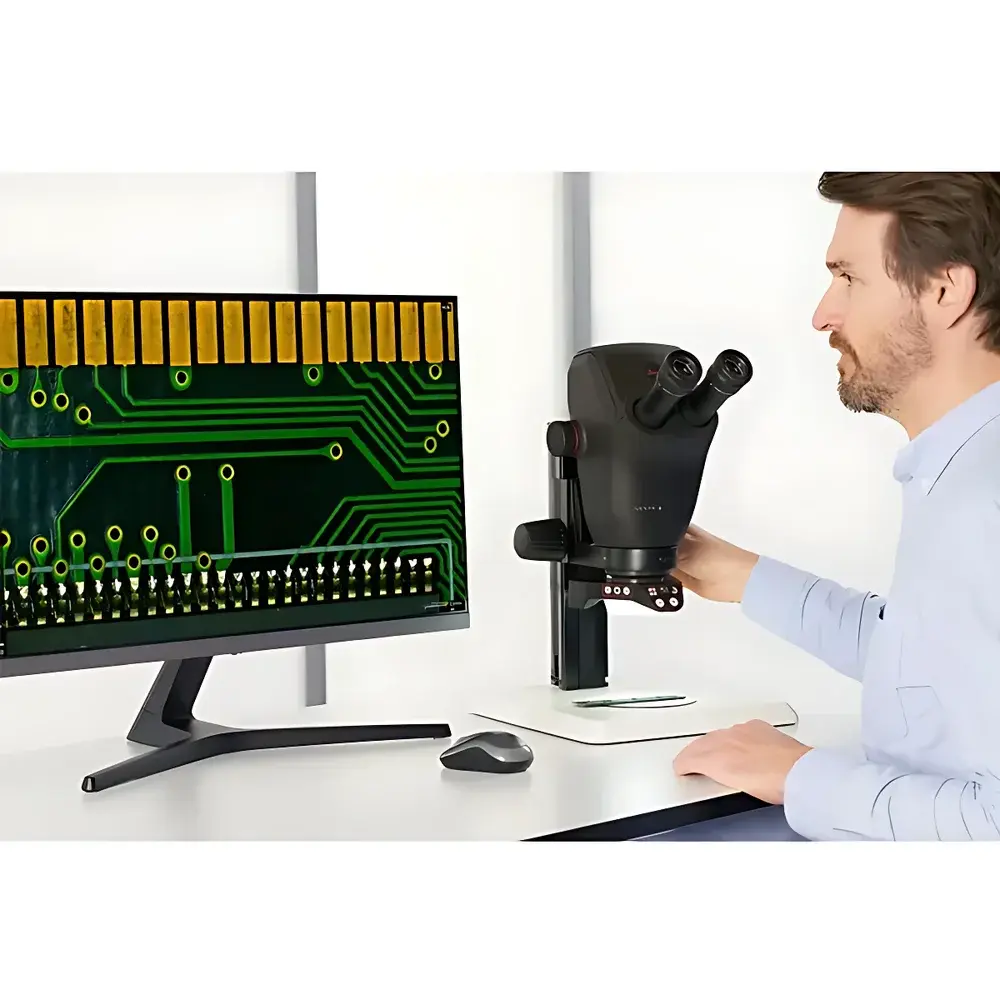
- Integrated 12-megapixel CMOS camera with real-time streaming at up to 60 fps, enabling fluid visualization of dynamic processes
- C-mount interface for optional external imaging devices—supports third-party cameras, spectral sensors, or machine vision modules
- Auto-exposure optimization with dynamic range adaptation—ensures consistent image brightness and contrast across heterogeneous sample reflectivity
- Ergonomic tilting binocular tube and adjustable interpupillary distance for extended operator comfort during repetitive tasks
Sample Compatibility & Compliance
The Leica Ivesta 3 accommodates a broad spectrum of non-encapsulated solid specimens—including printed circuit boards (PCBs), mechanical components, biological tissue sections, mineral samples, and forensic evidence—without requiring coverslips or immersion media. Its long working distance and large object field support macro-to-micro transitions ideal for failure analysis, solder joint evaluation, and dimensional verification per IPC-A-610 or ISO 8549 standards. The microscope’s optical path complies with DIN EN ISO 10993-5 for biocompatibility assessment of medical device surfaces. All electronic subsystems meet CE marking requirements under the EU Electromagnetic Compatibility Directive 2014/30/EU and Low Voltage Directive 2014/35/EU. Firmware and Enersight software are validated for use in GLP-compliant environments where traceability and audit readiness are required.
Software & Data Management
The Ivesta 3 operates exclusively through Leica Enersight—a unified, cross-platform software suite supporting Windows, macOS, and web-based remote access via HTML5. Enersight provides synchronized control of illumination, zoom, focus, and image capture, with embedded metadata logging including timestamp, magnification, objective ID, and user credentials. All image files are saved in TIFF or JPEG format with EXIF-compliant headers; measurement annotations (length, angle, area) are stored as XML sidecar files to ensure data integrity and regulatory compliance. The platform supports FDA 21 CFR Part 11–compliant electronic signatures and audit trail generation when deployed on networked servers with role-based access control. Image export is compatible with LIMS integration via DICOM-SR or CSV protocols, facilitating automated reporting in ISO/IEC 17025-accredited testing laboratories.
Applications
- Electronics manufacturing: PCB defect identification, solder paste inspection, component placement verification
- Automotive and aerospace QA: Surface crack detection, coating thickness estimation, fastener thread analysis
- Academic teaching labs: Comparative morphology studies, dissection guidance, materials science demonstrations
- Maintenance and repair operations: Precision rework of microelectromechanical systems (MEMS), fiber optic connector polishing assessment
- Forensic document examination: Ink differentiation, paper fiber analysis, indented writing recovery
- Medical device servicing: Sterile packaging seal integrity checks, catheter lumen inspection, electrode array alignment
FAQ
Does the Leica Ivesta 3 support calibration traceability to national standards?
Yes—the zoom encoder and camera sensor are factory-calibrated against NIST-traceable reference targets; calibration certificates are available upon request.
Can Enersight software be deployed on virtual desktop infrastructure (VDI)?
Yes—Enersight supports Citrix Virtual Apps and VMware Horizon environments with GPU passthrough enabled for real-time rendering.
Is the integrated camera suitable for quantitative image analysis?
The 12 MP sensor provides sufficient spatial sampling for pixel-based measurements; however, for metrology-grade applications, we recommend pairing with Leica Application Suite X (LAS X) and certified stage encoders.
What illumination options are compatible with the Ivesta 3?
Standard configurations include LED ring light (model IC100) and coaxial illuminator (model IC200); both support intensity modulation and flicker-free operation at 100 kHz PWM frequency.
How is firmware updated, and does it require service engineer intervention?
Firmware updates are delivered via Enersight’s built-in updater module and applied over USB-C—no field service visit is necessary for standard releases.




