
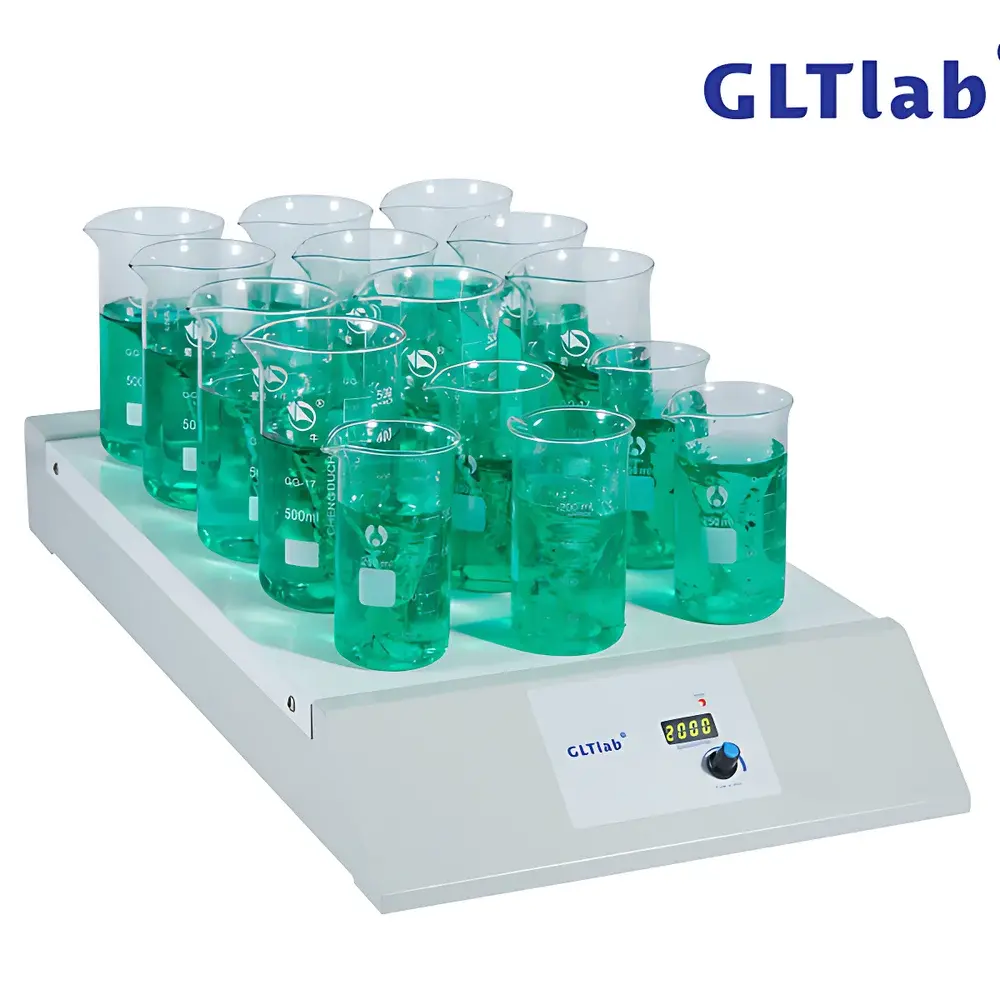
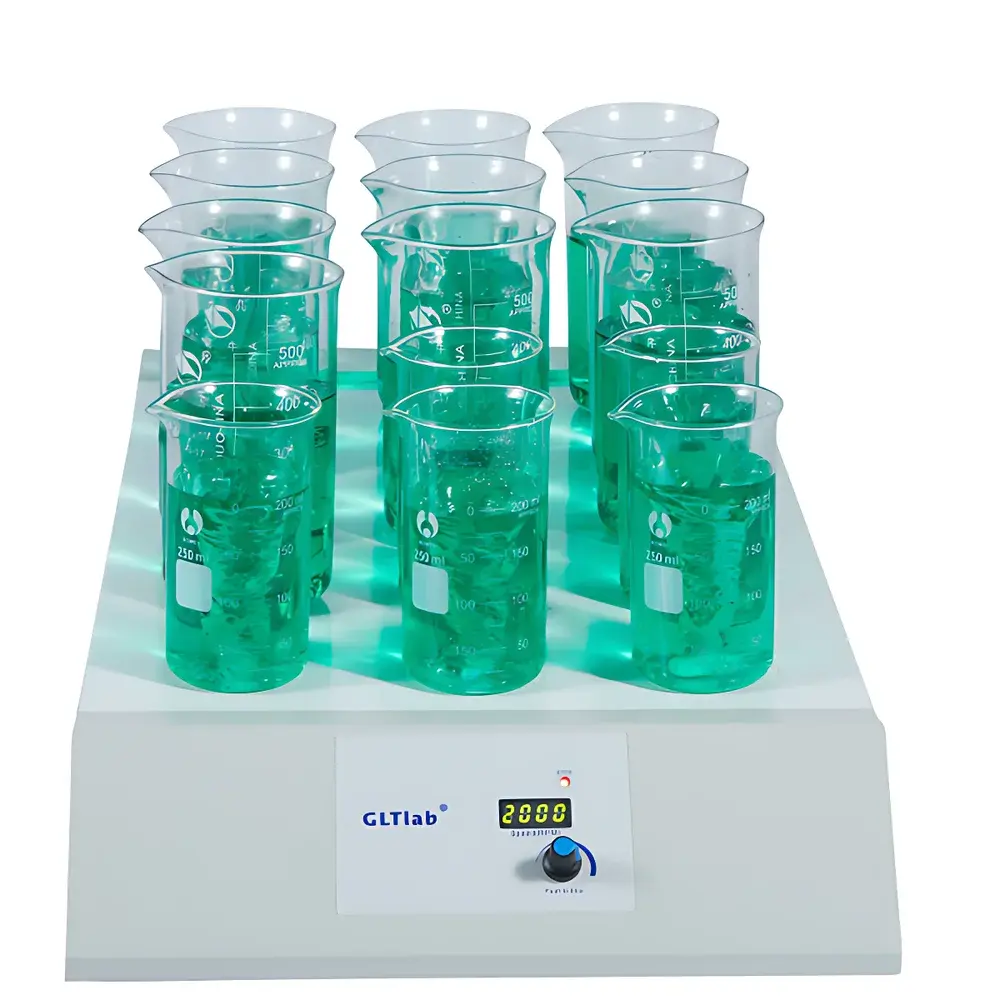
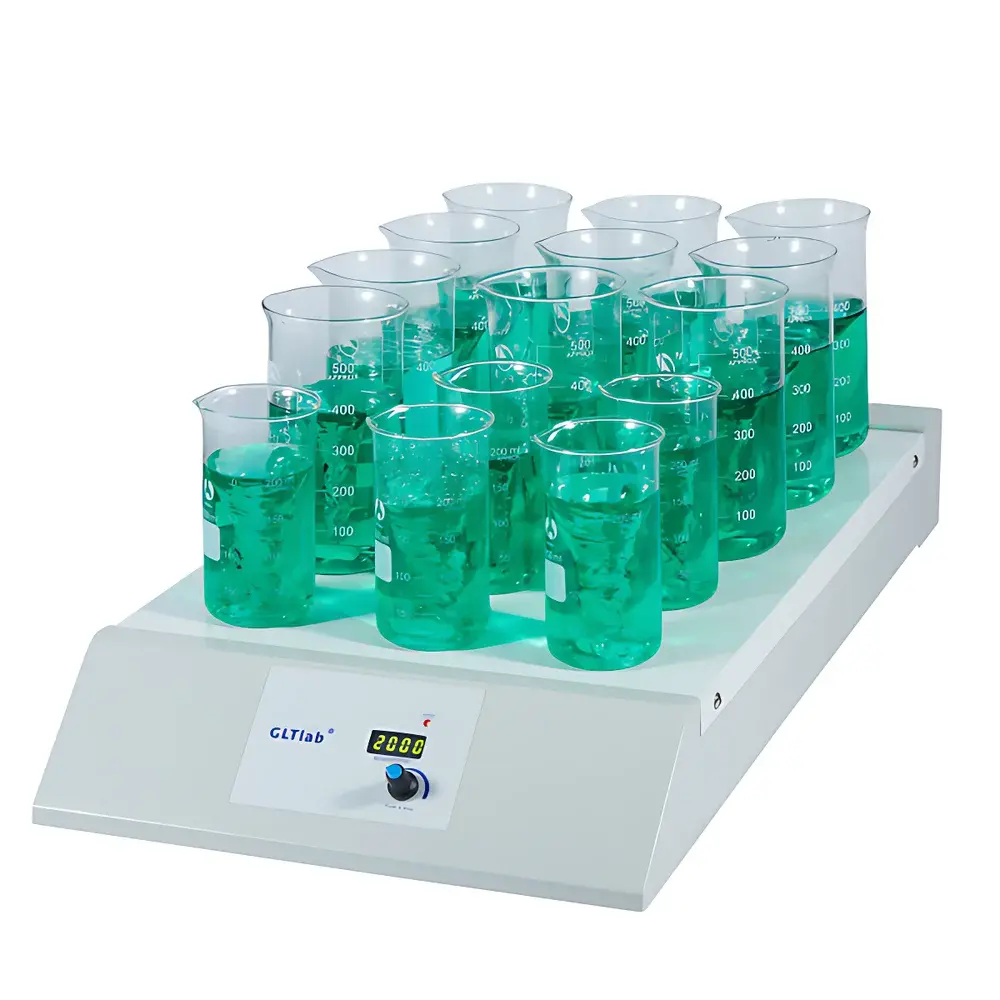
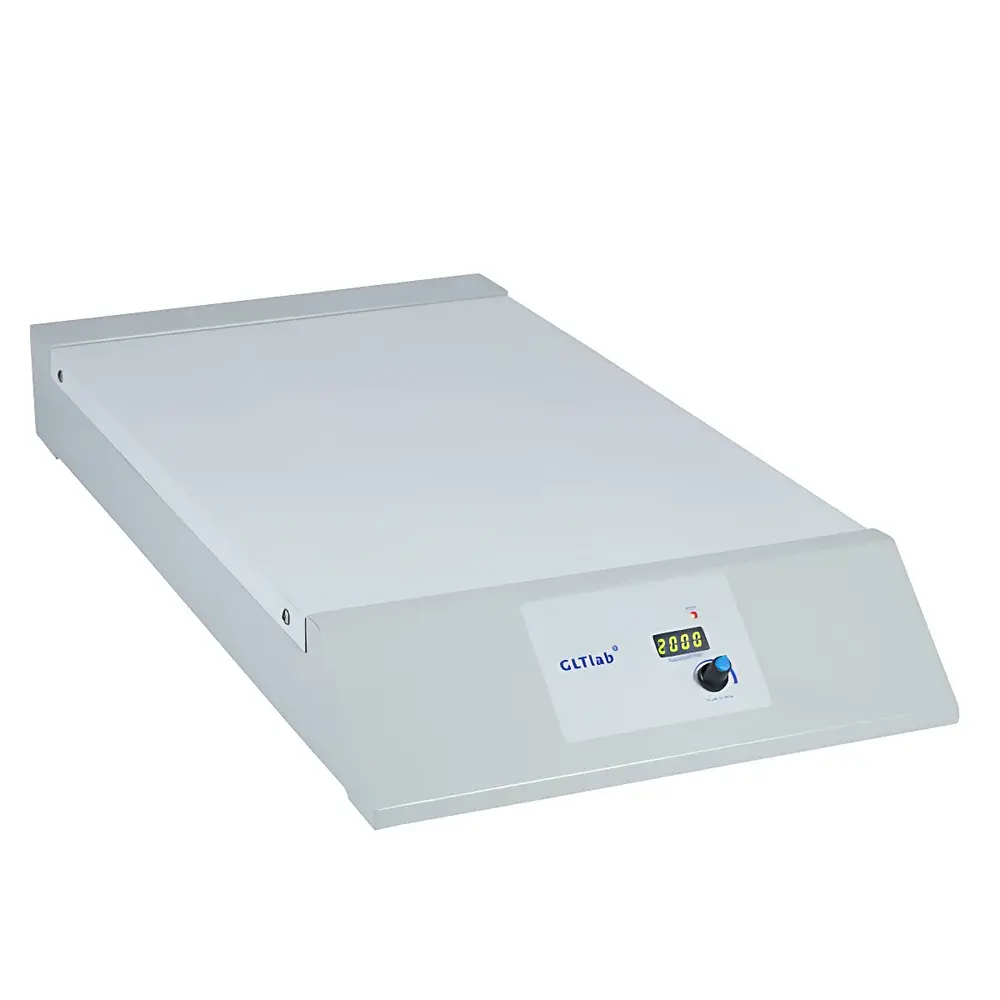
GLTLab SS-15N 15-Position Magnetic Stirrer
| Brand | GLTLab |
|---|---|
| Model | SS-15N |
| Type | Magnetic Stirrer |
| Maximum Stirring Volume per Position | 1 L |
| Total Capacity | 15 × 1 L |
| Speed Range | 100–2000 rpm |
| Plate Material | Stainless Steel with Ceramic Coating |
| Plate Dimensions | 330 × 500 mm |
| Overall Dimensions (W × L × H) | 330 × 540 × 84 mm |
| Weight | 15.5 kg |
| Power Rating | 180 W |
| Operating Temperature | Ambient (No Integrated Heating) |
| Control Options | Manual Speed Adjustment |
Overview
The GLTLab SS-15N is a high-density, multi-position magnetic stirrer engineered for reproducible, parallel sample agitation in quality control laboratories, pharmaceutical development workflows, and academic research settings requiring simultaneous processing of up to 15 independent vessels. Unlike single-station stirrers, the SS-15N employs a precisely arrayed 15-channel permanent magnet drive system beneath a monolithic ceramic-coated stainless steel plate—designed to generate uniform rotating magnetic fields across all positions without cross-talk or torque coupling. Each station operates independently with dedicated speed regulation, enabling heterogeneous experimental protocols (e.g., varying rpm per vessel) when integrated with external control systems. The device functions strictly as a mechanical agitator: it does not incorporate heating elements, making it suitable for temperature-sensitive applications where thermal drift must be excluded from stirring-induced variables. Its ambient-only operation aligns with ISO/IEC 17025-compliant environments where thermal stability of reagents, standards, or biological samples is critical.
Key Features
- 15 isolated stirring positions with individual magnetic field optimization—ensuring consistent vortex formation and suspension stability across all vessels, even at maximum 2000 rpm.
- Ceramic-coated stainless steel top plate (330 × 500 mm) resistant to acids, alkalis, and organic solvents; surface hardness >9H prevents scratching during routine glassware handling.
- Brushless DC motor architecture with closed-loop speed feedback—maintains ±2% speed accuracy over full 100–2000 rpm range under load (1 L aqueous solution, standard PTFE-coated stir bar).
- No “magnet dropout” phenomenon observed during continuous operation—even at 2000 rpm with high-viscosity media (up to 500 mPa·s), due to optimized magnetic flux density distribution and low-reluctance pole geometry.
- Low thermal signature design: 180 W total power draw results in <1.2 °C surface temperature rise after 8 h continuous operation at 2000 rpm—verified per ASTM E2500-13 Annex A4 for equipment qualification.
- Modular expansion interface: Optional timer module supports programmable on/off cycles per position; RS-485/Modbus RTU or USB-C interfaces enable integration into LIMS or automated liquid handling platforms compliant with IEEE 1394-2008 data acquisition standards.
Sample Compatibility & Compliance
The SS-15N accommodates standard laboratory glassware including 100 mL–1000 mL beakers, Erlenmeyer flasks, and cylindrical reaction vessels with flat bottoms. Stir bar compatibility includes standard PTFE-encapsulated magnets (lengths 20–40 mm, diameters 6–10 mm). The unit meets IEC 61010-1:2010 safety requirements for electrical equipment used in laboratory environments and conforms to EMC directive 2014/30/EU. It is validated for use in GLP-regulated settings where audit trails for instrument parameters are maintained externally; no onboard data logging is provided unless paired with optional digital control modules supporting FDA 21 CFR Part 11-compliant electronic records.
Software & Data Management
Standalone operation requires no software. When equipped with the optional RS-485 interface module, the SS-15N supports Modbus RTU register mapping for real-time readback of actual speed (per channel), operational status, and fault codes. Third-party SCADA or LabVIEW-based control systems can execute predefined stirring sequences—including ramp profiles, dwell times, and position-specific setpoints—via ASCII command protocol documented in the GLTLab Instrument Communication Specification v2.1. All firmware updates are delivered via signed binary packages traceable to SHA-256 checksums, satisfying ISO/IEC 17025 clause 5.9.2 on software validation.
Applications
- Parallel dissolution testing of solid dosage forms (USP ) using 15-vessel arrays under identical agitation conditions.
- High-throughput buffer equilibration for chromatography column conditioning in QC labs.
- Simultaneous pH adjustment and mixing of calibration standards in environmental water analysis (EPA Method 300.0).
- Cell culture media preparation with oxygen-sensitive components, where absence of heating eliminates thermal stress artifacts.
- Accelerated stability studies requiring identical mechanical agitation across multiple time-point replicates.
FAQ
Does the SS-15N include a built-in heater or temperature control?
No. The SS-15N is a non-heating magnetic stirrer. Temperature management must be achieved externally (e.g., water baths, climate-controlled rooms).
Can different stirring speeds be set for each of the 15 positions?
In standalone mode, all positions operate at the same user-selected speed. Independent speed control per position is only available when integrated via RS-485/Modbus with an external programmable controller.
What is the maximum viscosity this stirrer can handle reliably?
Verified performance up to 500 mPa·s with 1 L volume and standard 30 mm × 8 mm PTFE stir bars at 1500 rpm; higher viscosities require empirical validation per application.
Is the ceramic coating chemically resistant to hydrofluoric acid?
No. While resistant to common lab acids (HCl, HNO₃, H₂SO₄ ≤ 6 M) and bases (NaOH ≤ 2 M), the ceramic layer is not HF-compatible. Use alternative containment strategies for HF-containing solutions.
Does the unit support GLP audit trail generation?
Not natively. Audit-ready operation requires pairing with a validated external control system that logs commands, timestamps, and execution confirmation per ICH GCP E6(R3) Annex 6 guidelines.



