
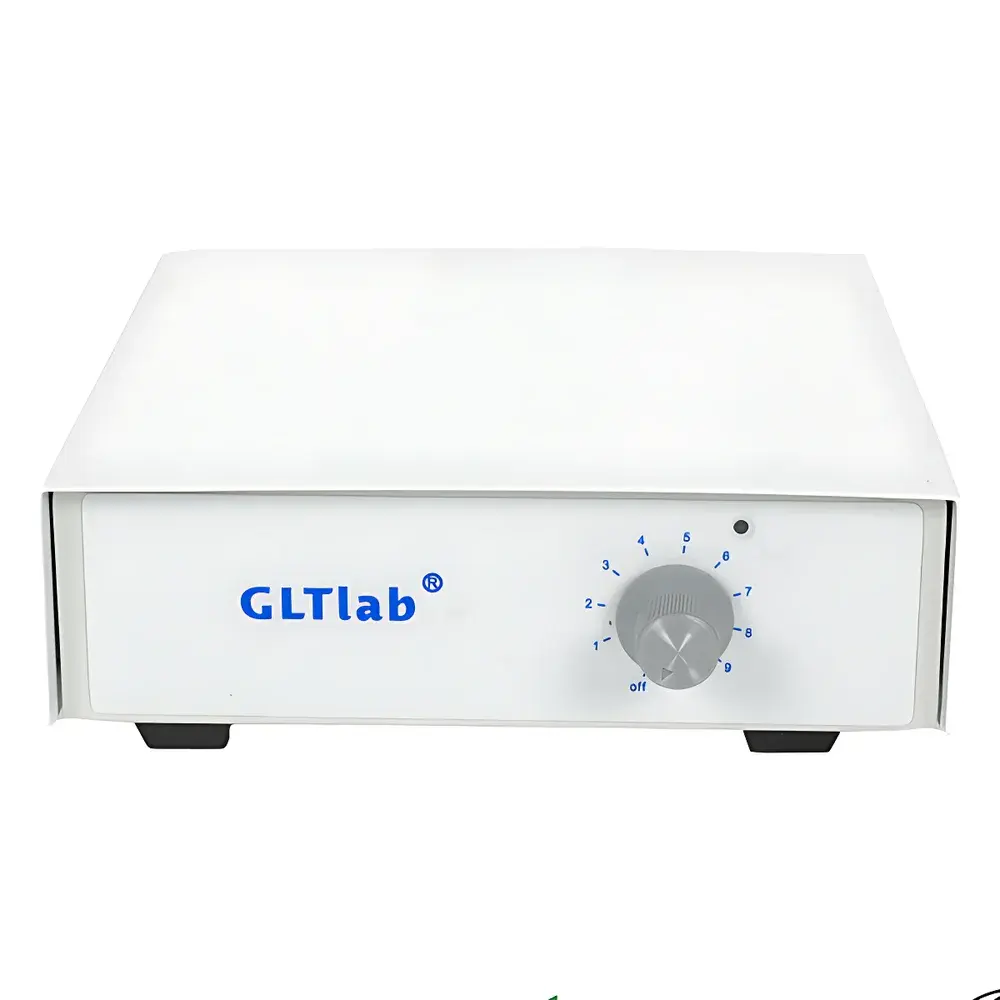
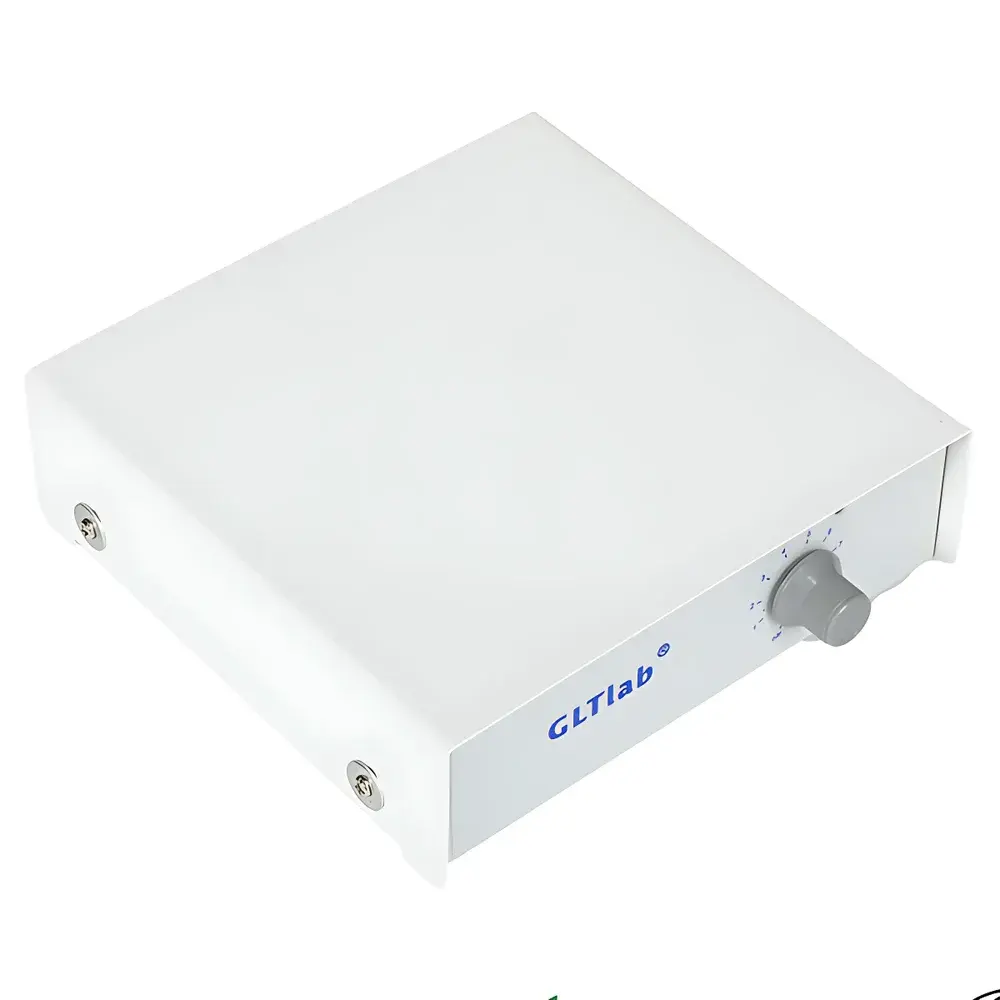
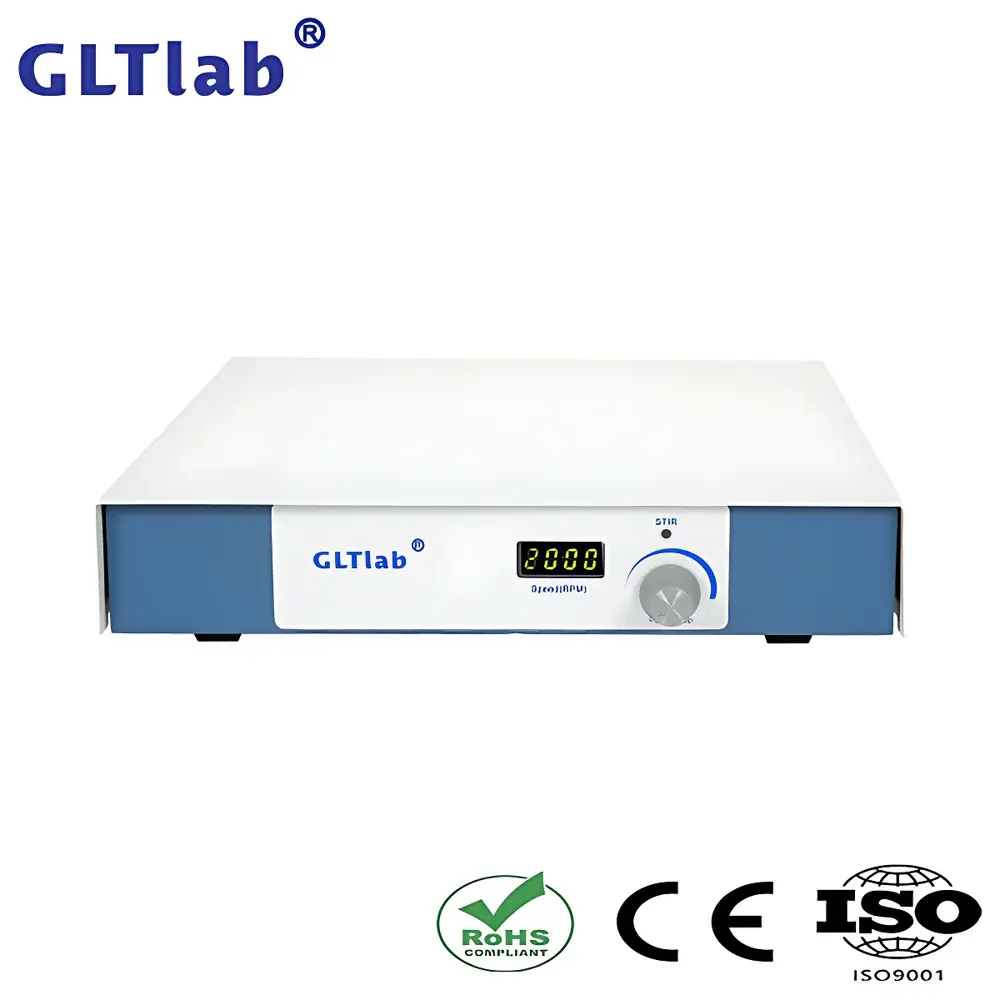
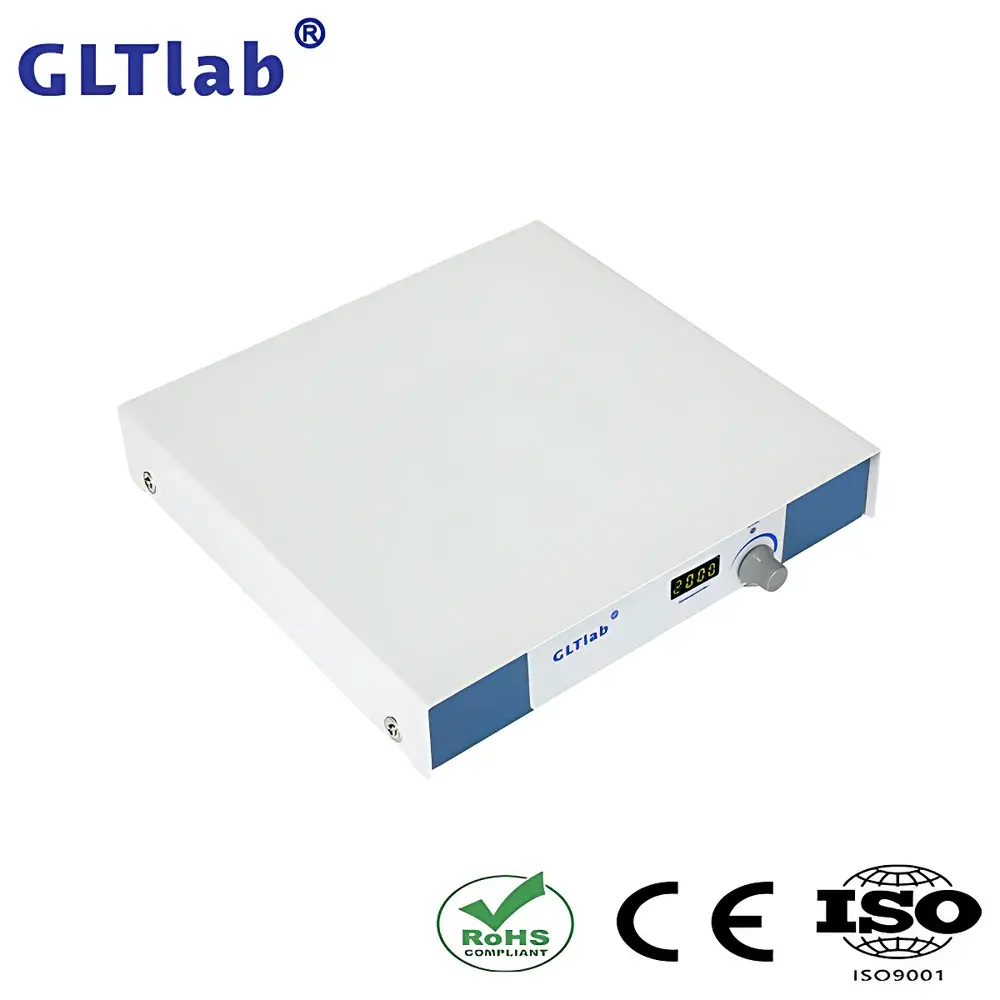
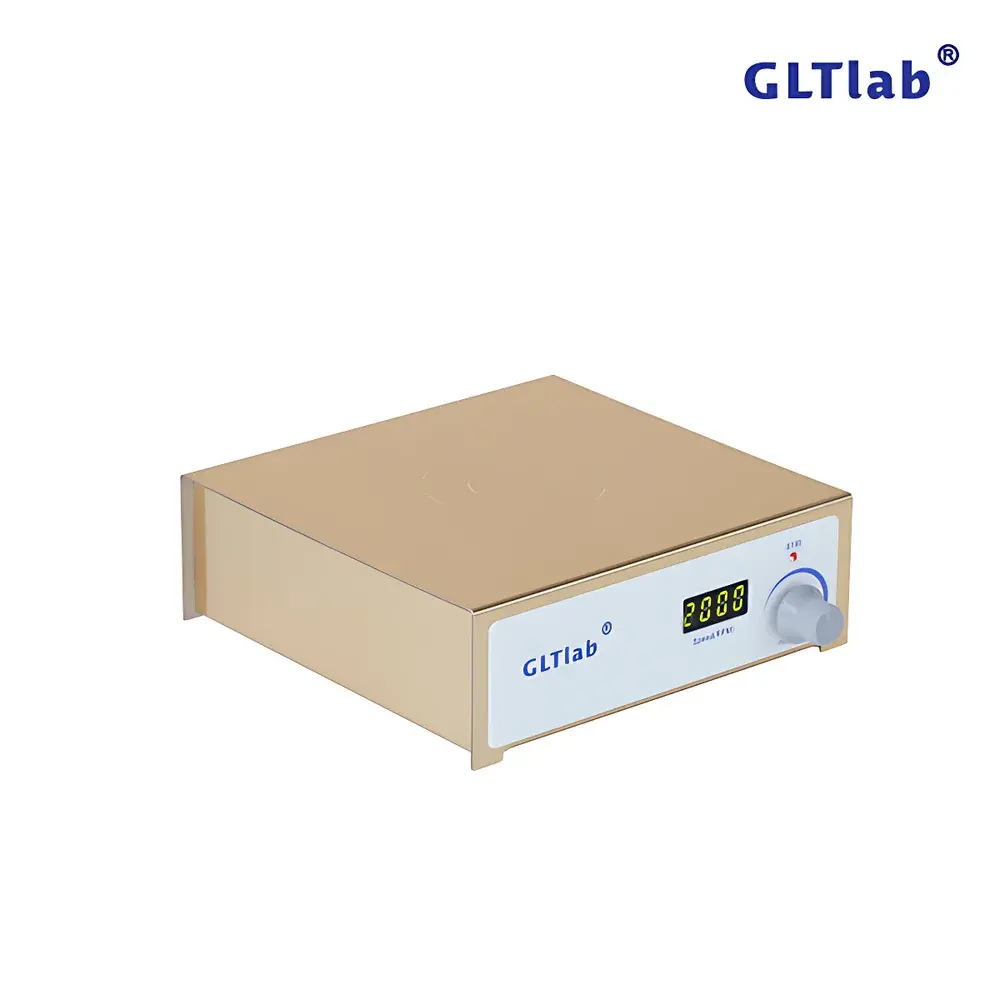
GLTLab S1 Analog Magnetic Stirrer Hot Plate
| Brand | GLTLab |
|---|---|
| Origin | Guangdong, China |
| Manufacturer Type | Manufacturer |
| Product Category | Domestic |
| Model | S1 |
| Instrument Type | Magnetic Stirrer |
| Maximum Stirring Volume | 10 L |
| Speed Range | 150–2000 rpm |
| Temperature Control | Ambient Only |
| Plate Size | 127 × 127 mm |
| Plate Material | Ceramic-Coated Aluminum |
| Stirring Power | 21 W |
| Dimensions (W×D×H) | 179 × 200 × 90 mm |
| Weight | 1.2 kg |
| Electrical Input | 110–120 V, 60 Hz / 220–240 V, 50 Hz |
| Operating Ambient | 4–60 °C |
| Compliance | CE, RoHS, UKCA |
| Warranty | 2 Years |
Overview
The GLTLab S1 Analog Magnetic Stirrer Hot Plate is an entry-level, robust benchtop instrument engineered for reliable mechanical agitation of liquid samples in academic teaching labs, quality control environments, and routine analytical workflows where precise temperature control is not required. Unlike digitally controlled units, the S1 employs analog potentiostat-based proportional power regulation to deliver consistent heating output across its ceramic-coated aluminum plate. Its operation relies on a permanent magnet rotor driven by a synchronous motor beneath the plate—generating rotational torque via magnetic coupling without physical shaft penetration. This design eliminates seal wear and contamination risks associated with mechanical stirrers, making it suitable for sealed-vessel applications and low-to-moderate viscosity solutions up to 10 L volume. The unit operates strictly at ambient temperature; no integrated heating element temperature regulation is provided—users must rely on external thermostatic baths or pre-equilibrated reagents when thermal stability is critical.
Key Features
- Stirring speed continuously adjustable from 150 to 2000 rpm via precision analog dial—enabling fine-tuned control over mixing intensity without digital latency or stepwise increments.
- Ceramic-coated aluminum top plate (127 × 127 mm) offers superior thermal uniformity, chemical resistance against common acids, bases, and organic solvents, and enhanced durability versus standard stainless-steel or bare aluminum surfaces.
- 21 W stirring motor delivers high torque output optimized for viscous media and large-volume beakers (up to 10 L), maintaining stable rotation even under load variations typical in dissolution or suspension preparation.
- Spill-resistant chassis design features raised perimeter edges and internal drainage channels, minimizing risk of liquid ingress into electronics during accidental overflow—critical for unattended overnight operations.
- Universal dual-voltage compatibility (110–120 V / 220–240 V) with auto-sensing frequency detection (50/60 Hz) ensures seamless deployment across North American, European, and APAC laboratory infrastructures without adapter requirements.
- Compact footprint (179 × 200 × 90 mm) and lightweight construction (1.2 kg) facilitate easy relocation between fume hoods, biosafety cabinets, and shared instrumentation benches.
Sample Compatibility & Compliance
The S1 supports standard laboratory glassware including borosilicate beakers (50 mL–10 L), Erlenmeyer flasks, and jacketed reactors equipped with PTFE- or glass-coated magnetic stir bars. It is incompatible with ferromagnetic vessels or containers exceeding 120 mm base diameter due to magnetic field geometry constraints. The unit conforms to EN 61000-6-3 (EMC emission limits), EN 61000-6-2 (immunity), and EN 61010-1 (safety requirements for electrical equipment used in measurement, control, and laboratory use). CE, RoHS, and UKCA markings verify compliance with EU and UK regulatory frameworks governing electromagnetic compatibility, hazardous substance restriction, and product safety. While not validated for GMP/GLP environments requiring audit trails or electronic records, the analog architecture inherently avoids software-related validation burdens—making it appropriate for non-regulated educational or preliminary R&D settings.
Software & Data Management
The GLTLab S1 operates exclusively via manual analog interface—no embedded firmware, USB connectivity, data logging, or PC integration is implemented. This absence of digital subsystems eliminates cybersecurity concerns, firmware update dependencies, and calibration traceability complexities associated with smart instruments. All operational parameters—including speed setting and power-on status—are directly observable and reproducible by human operators without intermediary software layers. For laboratories subject to FDA 21 CFR Part 11 or ISO/IEC 17025 documentation requirements, users may manually record settings in bound logbooks or LIMS-compatible spreadsheets. No electronic signature capability or audit trail functionality is provided, consistent with its classification as a Class A basic utility device per IEC 61508 functional safety guidelines.
Applications
- Preparation of buffer solutions, culture media, and titrant stock solutions in microbiology and biochemistry teaching labs.
- Homogenization of polymer dispersions, nanoparticle suspensions, and colloidal systems prior to filtration or spectroscopic analysis.
- Accelerated dissolution testing of pharmaceutical tablets using USP Apparatus II (paddle method) when paired with external water baths.
- Supporting gravimetric analysis workflows requiring consistent agitation during precipitation or complexometric titration steps.
- Routine sample conditioning in environmental testing labs—e.g., mixing soil leachates or wastewater extracts prior to ICP-MS or HPLC injection.
FAQ
Does the S1 include a built-in temperature sensor or heating control?
No. The S1 provides only magnetic stirring functionality at ambient temperature. It lacks any integrated thermostat, temperature probe, or variable-heating capability.
Can the S1 be used with Teflon-coated stir bars in aggressive solvents like concentrated HNO₃?
Yes—provided the stir bar’s coating integrity is verified. The ceramic-coated aluminum plate resists corrosion from most common lab reagents, but prolonged exposure to hydrofluoric acid or molten alkalis is not recommended.
Is speed calibration traceable to NIST or other national standards?
No formal calibration certificate is supplied. Users may verify rotational speed using an external optical tachometer; factory-set linearity falls within ±3% across the full 150–2000 rpm range per ISO 8573-1 verification protocol.
What maintenance is required for long-term reliability?
Periodic cleaning of the plate surface with isopropyl alcohol and inspection of the motor housing ventilation slots for dust accumulation. No lubrication or internal servicing is necessary under normal operating conditions.
Is the unit suitable for continuous 24/7 operation?
Yes—designed for extended duty cycles. Thermal cut-off protection activates automatically if internal temperature exceeds 95 °C, ensuring safe unattended use.



