
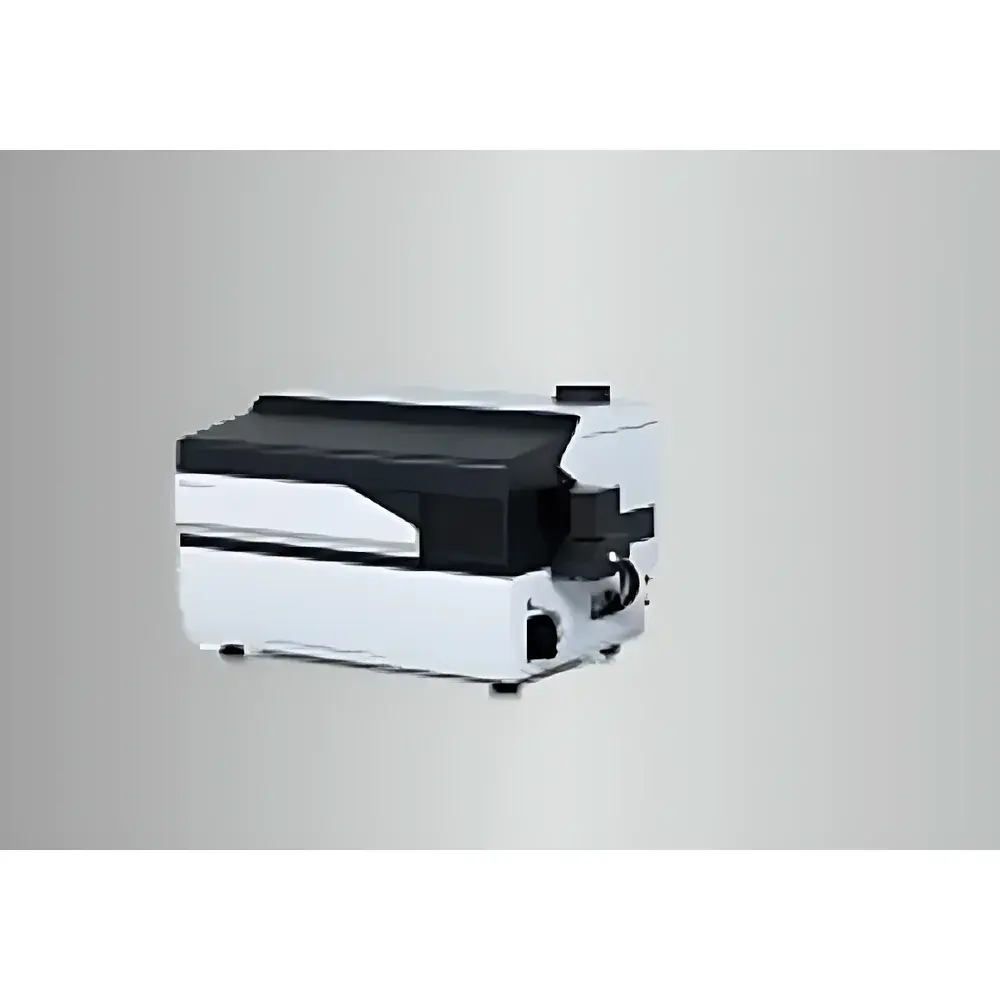
Shimadzu ICPMS-2030 Inductively Coupled Plasma Quadrupole Mass Spectrometer
| Brand | Shimadzu |
|---|---|
| Origin | Japan |
| Model | ICPMS-2030 |
| Mass Analyzer Type | Quadrupole |
| Gas Requirement | Standard-grade Argon (99.95%) |
| Plasma Gas Flow (Eco Mode) | 5 L/min |
| Plasma Gas Flow (Analysis Mode) | 10 L/min |
| Torch Configuration | Mini-torch |
| Software Platform | LabSolution DB/CS ICPMS |
| Regulatory Compliance | FDA 21 CFR Part 11, ERES, GLP/GMP-ready |
| Interface Compatibility | LC-ICP-MS, HPLC, GC, UV, FTIR, TOC, and other lab instruments |
Overview
The Shimadzu ICPMS-2030 is a high-performance inductively coupled plasma quadrupole mass spectrometer engineered for routine multi-element trace analysis in environmental, clinical, geochemical, pharmaceutical, and materials science laboratories. It employs an argon-based ICP source to generate singly charged cations from liquid samples, which are then mass-separated by a robust radiofrequency-driven quadrupole mass filter and detected via a high-gain electron multiplier. Designed with operational efficiency and regulatory readiness at its core, the ICPMS-2030 delivers sub-femtogram-per-liter detection limits for most elements across the periodic table (e.g., <0.1 fg/mL for In, Ce, U), while maintaining exceptional signal stability (<2% RSD over 4 hours) under continuous operation. Its compact plasma interface, low-flow mini-torch architecture, and intelligent Eco-mode power management collectively reduce consumable usage without compromising analytical performance—making it suitable for both high-throughput QA/QC labs and resource-constrained research facilities.
Key Features
- Mini-torch design reduces argon consumption to 10 L/min during analysis and 5 L/min in standby (Eco mode), lowering operational costs by up to 35% compared to conventional ICP-MS systems using standard torches.
- Eco-mode enables automatic transition between low-power standby and full-analysis conditions—no manual gas or RF tuning required—ensuring rapid instrument readiness and reproducible plasma ignition.
- Standard-grade argon (99.95% purity) is fully sufficient for stable plasma operation; elimination of high-purity argon dependency reduces annual gas expenditure by tens of thousands of USD over a three-year lifecycle.
- Collision cell technology with optimized helium or hydrogen gas flow mitigates polyatomic interferences (e.g., 40Ar16O+ on 56Fe+, 40Ar40Ar+ on 80Se+) while preserving transmission efficiency and sensitivity.
- Modular ion optics and simplified sample introduction system (including self-aligning nebulizer and spray chamber) minimize maintenance frequency and downtime—typical cleaning intervals exceed 200 hours per session.
Sample Compatibility & Compliance
The ICPMS-2030 accepts aqueous solutions (0.1–5% HNO3, up to 0.2% total dissolved solids), digested environmental matrices (soil, sediment, biological tissue), diluted clinical specimens (urine, serum), and chromatographic eluents from LC-ICP-MS coupling. It complies with ISO/IEC 17025:2017 requirements for testing laboratories and supports method validation per EPA Method 6020B, ASTM D5673, and USP / for elemental impurities. The integrated hardware and software architecture meet FDA 21 CFR Part 11 criteria for electronic records and signatures, including audit trail logging, user access control, and data integrity safeguards essential for regulated pharmaceutical and clinical labs.
Software & Data Management
LabSolution DB/CS ICPMS serves as the unified acquisition, processing, and reporting platform. It features two intelligent assistants: (1) Method Development Assistant automatically selects optimal isotopes and internal standards based on full-scan survey data from a representative calibration standard; (2) Diagnostic Assistant evaluates all acquired m/z channels in real time to flag spectral interferences, detector saturation, or plasma instability events. Data files are stored in vendor-neutral .csv and .xml formats alongside proprietary .raw archives. The server-based architecture allows centralized deployment across heterogeneous instrument fleets—including HPLC, LCMS, GC, GCMS, UV-Vis, FTIR, TOC analyzers, and EDX systems—enabling cross-platform trend analysis, batch report generation, and LIMS integration via ODBC or RESTful API.
Applications
- Environmental monitoring: quantification of heavy metals (As, Cd, Pb, Hg) and rare earth elements in drinking water, wastewater, and leachates per EPA 1638 and ISO 17294-2.
- Pharmaceutical quality control: elemental impurity screening in APIs and excipients according to ICH Q3D guidelines.
- Clinical toxicology: multi-element profiling in urine and blood for occupational exposure assessment (e.g., Co, Cr, Ni in orthopedic implant patients).
- Geochemical research: isotopic ratio measurements (e.g., Sr, Nd, Pb) with external standard bracketing for provenance studies.
- Materials characterization: detection of trace dopants and contaminants in semiconductor-grade chemicals and battery cathode precursors.
FAQ
Does the ICPMS-2030 require ultra-high-purity argon?
No. It is validated for stable operation using standard-grade argon (99.95% purity), significantly reducing gas procurement and storage costs.
Can the system be integrated into an existing laboratory network?
Yes. LabSolution DB/CS supports centralized server deployment and interoperability with HPLC, LCMS, GC, UV, FTIR, TOC, and other Shimadzu and third-party instruments via standardized communication protocols.
Is collision/reaction cell gas selection automated?
Gas type (He or H2) and flow rate are configurable per method; however, optimization requires initial empirical evaluation based on target analytes and matrix composition.
What regulatory standards does the software satisfy?
LabSolution DB/CS complies with FDA 21 CFR Part 11, EU Annex 11, and ISO/IEC 17025 for electronic records, audit trails, role-based access control, and electronic signature implementation.
How frequently does the interface require maintenance?
Under typical aqueous sample loads (<0.1% TDS), the sampler cone and skimmer cone typically require cleaning every 150–200 hours of operation—enabled by tool-free disassembly and alignment-free reinstallation.






