Auniontech MicroMagnetic Resonance Sensor (MicroMRS-Lab)
| Brand | Auniontech |
|---|---|
| Origin | Shanghai, China |
| Model | MicroMRS-Lab (NMR-based micro-sensor platform) |
| Sample Volume Range | 0.1–500 nL |
| Operating Frequency Range | 120–1000 MHz |
| Effective Sensing Volume | 0.1–500 nL |
| Channel Configurations | 1–14 channels |
| Temperature Control Accuracy | ±0.5 °C |
| Compatibility | Standard NMR spectrometers (5 mm bore, broadband probe interfaces) |
| Biocompatibility | ISO 10993-compliant housing materials |
| Regulatory Context | Designed for GLP-compliant lab environments |
Overview
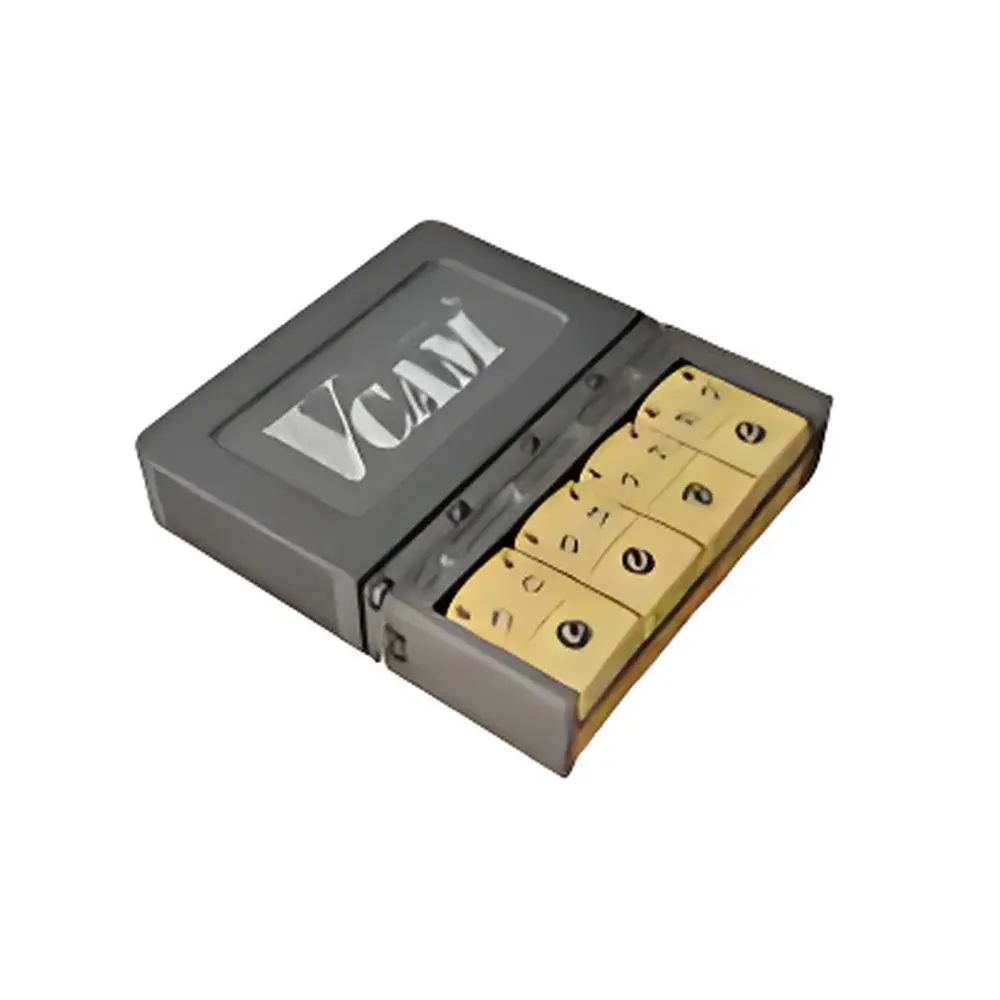
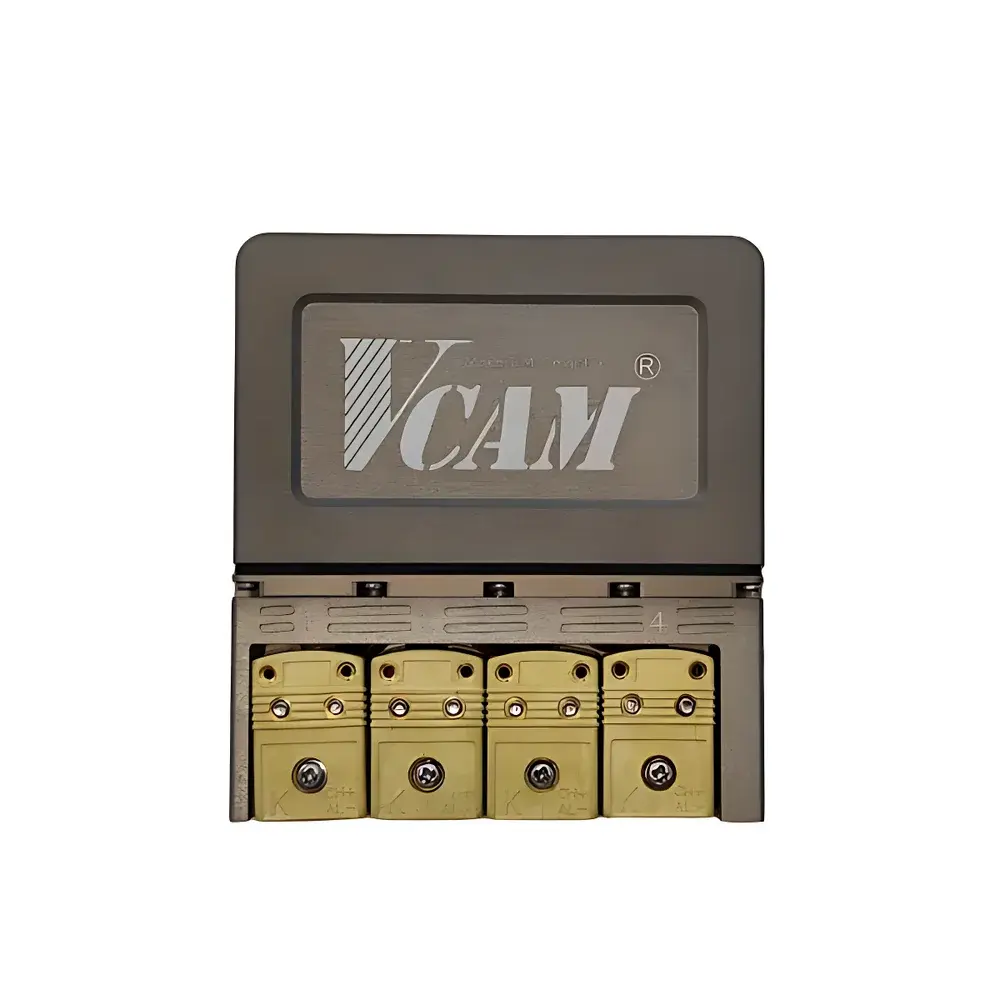
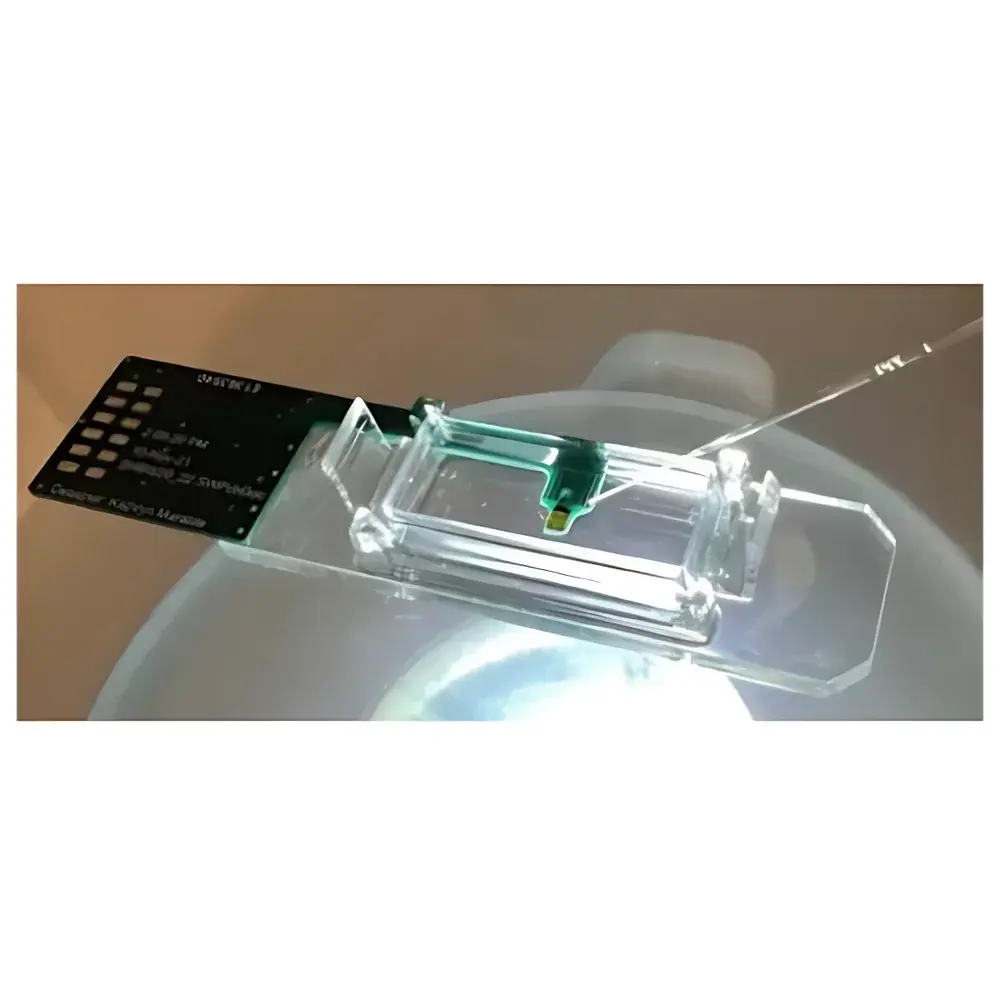
The Auniontech MicroMRS-Lab is a purpose-engineered micro-scale magnetic resonance sensor platform designed for high-sensitivity nuclear magnetic resonance (NMR) detection in ultra-small sample volumes. Unlike conventional benchtop or cryogen-free NMR systems, the MicroMRS-Lab operates on the principle of miniaturized RF coil integration and optimized magnetic field homogeneity within microfluidic-compatible sensing volumes. It leverages inductive coupling to standard NMR spectrometers—requiring no dedicated magnet or console—and delivers quantitative 1D broadband NMR spectra from native-state biological specimens, micro-droplets, or nanoliter-scale chemical reaction mixtures. Its core architecture centers on EmbrySpin sensor modules: planar, low-inductance RF resonators fabricated using photolithographic precision and encapsulated in biocompatible polymer housings. This enables direct interfacing with live-cell cultures, embryonic tissue explants, or microfluidic assay chips—without cryogenic cooling or vacuum requirements.
Key Features
- Fully compatible with commercial NMR spectrometers (Bruker, JEOL, Thermo Fisher platforms) via standard 5 mm probe interfaces and broadband tuning ranges (120–1000 MHz)
- Modular EmbrySpin sensor array architecture supporting single-channel (1 nL), 4-channel (1 nL × 4), 20-channel (20 nL), and 500 nL configurations
- Integrated temperature stabilization system with ±0.5 °C setpoint accuracy over 10–40 °C range—validated for long-duration in vitro physiological monitoring
- Biocompatible housing compliant with ISO 10993-5 (cytotoxicity) and ISO 10993-10 (irritation/sensitization) standards
- Minimal sample preparation: no derivatization, drying, or matrix-assisted concentration required—enabling label-free, non-destructive analysis
- Real-time spectral acquisition mode supporting kinetic NMR studies at sub-minute temporal resolution
- Low-startup-cost entry point with scalable upgrade paths—including multi-channel expansion and custom RF coil geometry design
Sample Compatibility & Compliance
The MicroMRS-Lab accommodates native aqueous, lipid-rich, and viscous biological matrices—including whole blood micro-droplets, zebrafish embryos, organoid spheroids, and synthetic hydrogels—within its 0.1–500 nL sensing volumes. All sensor housings are manufactured from medical-grade cyclic olefin copolymer (COC) and surface-passivated gold RF traces, ensuring minimal paramagnetic interference and electrochemical stability during extended acquisition. Device validation includes ASTM E2821-12 (standard practice for NMR method verification) and alignment with ISO/IEC 17025:2017 clauses for measurement uncertainty estimation. For regulated environments, the system supports electronic signature workflows and data integrity controls when deployed with validated LIMS or ELN integrations—fully traceable under FDA 21 CFR Part 11 and EU Annex 11 requirements.
Software & Data Management
The MicroMRS-Lab operates through Auniontech’s MRS-Control Suite v3.2—a Python-based acquisition and processing environment supporting Bruker TopSpin 4.x and JEOL Delta 5.2 APIs. Core capabilities include automated shimming across multi-channel arrays, real-time linewidth optimization, and baseline-corrected Fourier transformation with zero-filling up to 131k points. Processed FIDs and spectra are exported in standard JCAMP-DX and NMR-Data-Exchange (NMR-DE) formats. Audit trail logging records all parameter changes, user actions, and instrument state transitions—retained for ≥36 months per GLP archival policy. Optional add-ons include machine-learning-assisted peak deconvolution (TensorFlow backend) and RESTful API endpoints for integration into automated lab workflows.
Applications
- Metabolomic profiling of single-cell lysates and micro-dissected tissue regions
- In situ monitoring of enzymatic kinetics in microfluidic bioreactors
- Quality-by-Design (QbD) assessment of mRNA-LNP formulation stability
- Non-invasive developmental biology studies—e.g., real-time lactate/NADH dynamics in avian embryos
- High-throughput screening of small-molecule binding affinities using saturation transfer difference (STD) variants
- Material science applications: crosslink density mapping in photo-polymerized hydrogels at µm-scale spatial resolution
FAQ
Does the MicroMRS-Lab require a dedicated superconducting magnet?
No—it is a probe-integrated sensor platform designed to operate within existing NMR spectrometer bores using standard broadband probe hardware.
Can it be used for in vivo rodent brain imaging?
Not as an imaging device; it is a spectroscopic sensor optimized for localized, volume-restricted NMR detection—not spatial encoding. However, it supports ex vivo slice analysis and intracranial micro-dialysate sampling.
What is the minimum detectable concentration for metabolites like glucose or choline?
Detection limits are sample-volume and field-strength dependent; typical SNR >10 is achieved for 10 mM glucose in 100 nL at 600 MHz with 128 transients.
Is firmware update support included post-purchase?
Yes—Auniontech provides biannual firmware releases with feature enhancements and regulatory compliance updates under standard maintenance agreements.
Are calibration standards provided with shipment?
Each unit ships with NIST-traceable 1% ethylbenzene in CDCl₃ reference vials and a documented calibration report per ISO/IEC 17025.