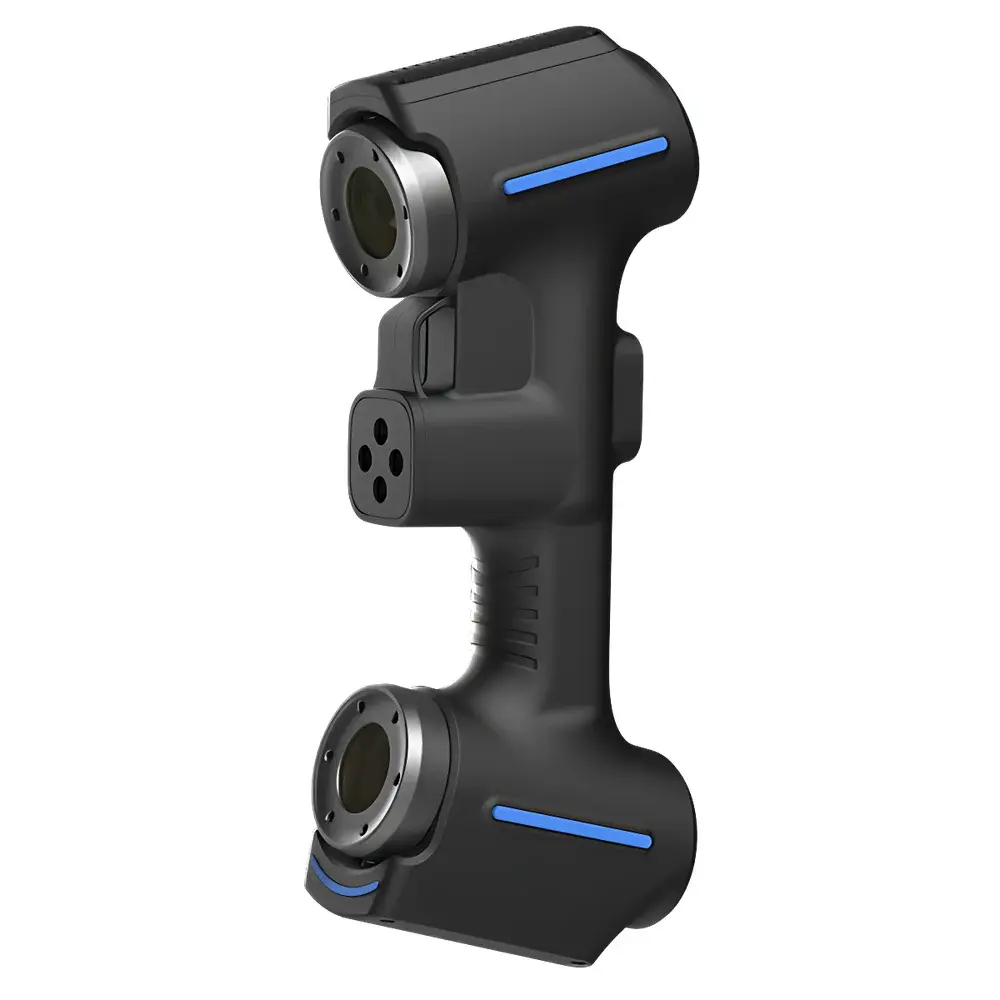
Auniontech Julight Differential Laser Vibrometer System
| Brand | Auniontech |
|---|---|
| Origin | Shanghai, China |
| Manufacturer Type | Authorized Distributor |
| Origin Category | Domestic (PRC) |
| Model | Julight Differential Laser Vibrometer for Engine Valve Dynamics |
| Pricing | Available Upon Request |
Overview
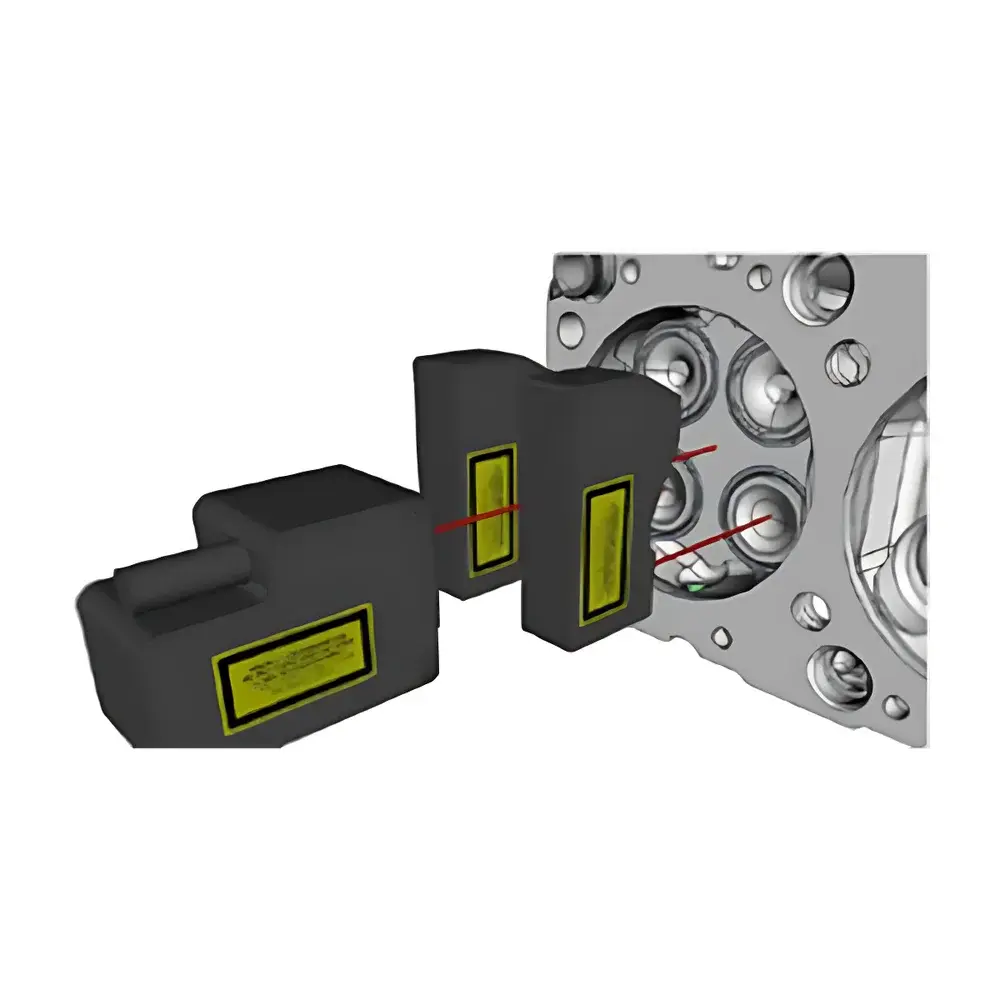
The Auniontech Julight Differential Laser Vibrometer System is a high-precision, non-contact optical measurement platform engineered for dynamic characterization of engine valve motion under real-time combustion-cycle conditions. Based on heterodyne laser interferometry with dual-beam differential configuration, the system enables simultaneous, phase-synchronized acquisition of displacement, velocity, and acceleration waveforms from two spatially distinct but mechanically coupled points—such as intake and exhaust valves within the same cylinder head. Unlike conventional single-point vibrometers, this architecture inherently rejects common-mode vibration (e.g., cylinder head flexure or block resonance), delivering net differential motion data with sub-micron resolution (≤1 µm displacement accuracy) and zero-latency temporal fidelity. The system integrates directly with crankshaft encoder signals to achieve cycle-synchronous triggering at engine speeds up to 10,000 RPM, making it suitable for transient event capture—including valve float, bounce, and lash-induced impacts—under cold-start, misfire, or variable valve timing (VVT) conditions.
Key Features
- Dual-channel heterodyne laser interferometry with independent beam paths and shared reference arm for intrinsic phase coherence
- Real-time, hardware-level differential subtraction: analog signal processing eliminates software-induced latency or phase drift
- Simultaneous triple-output capability: displacement (µm), velocity (mm/s), and acceleration (g) derived from a single interferometric signal chain
- Bandwidth: DC to 100 kHz (flat response), supporting analysis of high-frequency valve train harmonics and impact transients
- Modular architecture: physically separated laser heads and controller unit enable flexible mounting in constrained engine bay environments
- Integrated crankshaft synchronization interface: TTL/HTL-compatible encoder input for precise cycle alignment and order tracking
- Zero-drift calibration traceable to NIST-traceable interferometric standards; factory-certified linearity ≤0.5% FS over full range
Sample Compatibility & Compliance
The system is optimized for metallic and coated valve surfaces (stainless steel, Inconel, nitrided alloys) with reflectivity ≥15% in the 632.8 nm He–Ne wavelength band. It operates without surface preparation and tolerates oil film residues typical in fired engine testing. Compliant with ISO 18436-2 (Condition Monitoring and Diagnostics of Machines – Competence Assessment) for vibration analyst certification requirements. Data acquisition meets GLP audit trail requirements per 21 CFR Part 11 when used with validated third-party DAQ software (e.g., NI LabVIEW with electronic signature modules). All electronics conform to IEC 61326-1 (EMC for laboratory equipment) and IEC 61000-4 series immunity standards.
Software & Data Management
The system interfaces via USB 3.0 or Ethernet to host PCs running Windows 10/11. Included Auniontech VibroView™ software provides time-domain waveform visualization, FFT-based spectral analysis (up to 262k lines), order tracking, waterfall plots, and envelope demodulation for early fault detection. Raw interferometer quadrature signals are saved in HDF5 format with embedded metadata (timestamp, encoder angle, thermal drift compensation flags). Export options include CSV, MATLAB .mat, and UFF58 formats for integration into AVL BOOST, GT-Power, or ANSYS Mechanical workflows. Optional API support (C/C++, Python) enables custom control logic for closed-loop valve timing validation protocols.
Applications
- Valve train dynamics validation during engine development (OEM and Tier-1 powertrain labs)
- Diagnostics of hydraulic lifter collapse, spring surge, and cam lobe wear under load
- Verification of variable valve actuation (VVA) and electro-hydraulic valve train (EHVT) response fidelity
- Correlation of physical test data with multi-body dynamics (MBD) simulations
- Non-repetitive event capture: valve seat impact energy, pre-ignition-induced valve flutter, and knock-triggered resonance modes
- Research on alternative fuels’ effect on valve thermal deformation and seating stability
FAQ
Can this system measure valves through protective heat shields or ceramic coatings?
Yes—provided surface reflectivity remains above 10% at 632.8 nm and surface roughness Ra < 5 µm. Optional 1550 nm fiber-coupled variant available for low-reflectivity or high-temperature applications.
Is phase matching between channels maintained across temperature fluctuations?
Yes—hardware-level differential mode uses thermally compensated optical path lengths and active zero-point stabilization; phase error remains < ±0.5° over −10°C to +60°C ambient range.
Does the system support automated pass/fail criteria based on OEM valve lift specifications?
Yes—VibroView™ includes configurable tolerance envelopes and statistical process control (SPC) charting aligned to ISO 2768 general tolerances and SAE J2412 valve motion limits.
What is the maximum working distance between laser head and valve surface?
Standard configuration: 0.3–1.2 m (adjustable focus); extended-range optics available for up to 3 m with 2× beam expander kit.
Can raw interferometric quadrature signals be streamed to external real-time systems?
Yes—via PCIe digitizer card interface (NI PXIe-5171R) or deterministic Ethernet (TSN-capable), supporting 10 MS/s sustained streaming with hardware timestamping.