
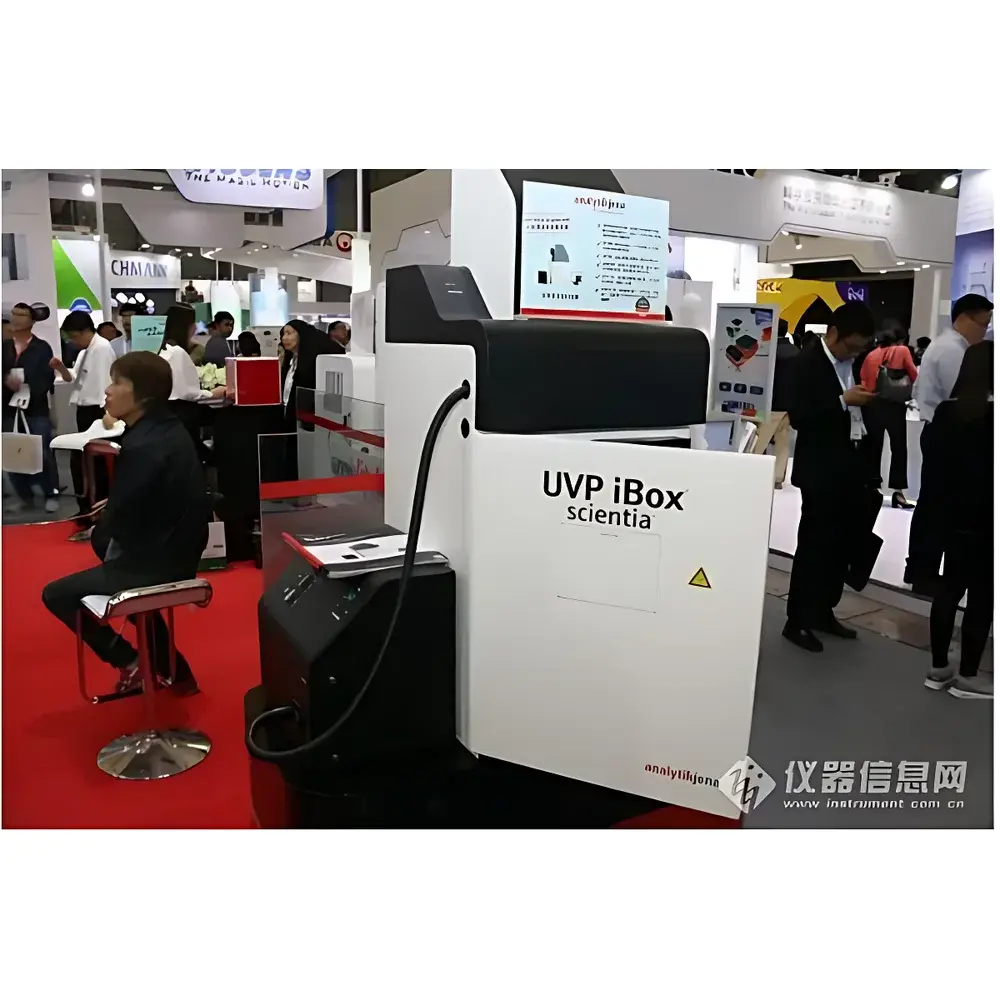
UVP iBOX Scientia Small Animal In Vivo Imaging System
| Brand | Analytik Jena |
|---|---|
| Origin | Germany |
| Model | UVP iBOX Scientia |
| Imaging Modality | Optical (Bioluminescence & Fluorescence) |
| Detector | Cooled CCD Camera |
| Lens | Fixed-focus, High-Aperture |
| Filter Options | 21 Position Motorized Filter Wheel (GFP, RFP, NIR, etc.) |
| Temperature Control | Integrated Heating Stage (37 °C ± 0.5 °C) |
| Anesthesia | Onboard Isoflurane Delivery System |
| Throughput | Up to 5 Mice Simultaneously |
| Compliance | CE, ISO 13485 (as applicable to lab instrumentation), GLP-Compatible Data Management |
Overview
The UVP iBOX Scientia Small Animal In Vivo Imaging System is a high-sensitivity optical imaging platform engineered for non-invasive, longitudinal monitoring of bioluminescent and fluorescent signals in live rodents. Built upon a robust optical architecture developed by Analytik Jena (Germany), the system leverages cooled CCD detection, precision motorized filter positioning, and integrated physiological support to deliver quantitative, reproducible in vivo data across preclinical research domains. Its core measurement principle relies on photon capture from luciferase-expressing or fluorophore-labeled biological targets under controlled illumination (for fluorescence) or substrate-triggered enzymatic emission (for bioluminescence). The system operates within the visible to near-infrared (NIR) spectral range (400–900 nm), enabling deep-tissue signal detection with minimized autofluorescence and scattering—critical for tumor burden assessment, cell trafficking studies, and gene expression kinetics.
Key Features
- Cooled scientific-grade CCD sensor operating at −30 °C, delivering low-noise, high-dynamic-range image acquisition even under ultra-low photon flux conditions.
- Motorized 21-position filter wheel supporting standardized excitation/emission sets—including GFP (470/525 nm), RFP (545/620 nm), Cy5.5 (675/720 nm), and NIR-II compatible filters—ensuring spectral fidelity without manual intervention.
- Fixed-focus f/0.95 lens optimized for maximum light throughput and uniform field illumination, eliminating focus drift during multi-timepoint studies.
- Integrated temperature-regulated stage maintaining animal core body temperature at 37 °C ± 0.5 °C throughout imaging sessions, preserving physiological homeostasis and reducing motion artifacts.
- Onboard isoflurane anesthesia delivery with real-time vapor concentration control and scavenging compatibility, minimizing handling stress and ensuring consistent anesthetic depth across cohorts.
- High-throughput imaging chamber accommodating up to five adult mice simultaneously—each position independently configurable for ROI-based acquisition and dose-matched exposure settings.
Sample Compatibility & Compliance
The iBOX Scientia supports standard murine models (C57BL/6, BALB/c, nude, NSG) as well as larger strains (e.g., Sprague-Dawley rats) with optional staging adapters. It accommodates both transgenic reporter lines and exogenously labeled cells (e.g., DiR-, ICG-, or quantum dot-tagged). All hardware components comply with EU Machinery Directive 2006/42/EC and Electromagnetic Compatibility Directive 2014/30/EU. Software workflows support ALARA (As Low As Reasonably Achievable) exposure protocols and are designed to align with Good Laboratory Practice (GLP) documentation requirements—including audit-trail enabled user logins, timestamped acquisition metadata, and immutable raw file export (TIFF/FITS format). While not a medical device, its data output meets analytical rigor standards referenced in FDA Guidance for Industry: Bioanalytical Method Validation (2018) and ISO/IEC 17025:2017 for testing laboratories.
Software & Data Management
The bundled VisionWorks LS software provides a validated, scriptable interface for acquisition, quantification, and comparative analysis. Users define multi-channel acquisition templates—including exposure time, binning mode, lens aperture, and filter selection—for repeatable experimental runs. Region-of-interest (ROI) drawing tools support automatic background subtraction, radiance calibration (photons/sec/cm²/sr), and kinetic curve generation. Export options include CSV for statistical packages (Prism, R), DICOM-compliant metadata embedding, and batch-processed TIFF stacks compatible with ImageJ/Fiji and MATLAB-based pipelines. Data integrity safeguards include encrypted local storage, role-based access control, and optional integration with LIMS via RESTful API.
Applications
This platform serves as a foundational tool in oncology for tracking orthotopic tumor growth, metastatic dissemination, and therapeutic response to checkpoint inhibitors or ADCs. In immunology, it enables real-time visualization of adoptively transferred T-cell homing, macrophage polarization dynamics, and neutrophil extracellular trap (NET) formation. Stem cell engraftment, lineage tracing, and apoptosis kinetics (via Annexin V–Cy5.5 or Caspase-3–based probes) are routinely quantified. Additional validated use cases include viral vector biodistribution (AAV, lentivirus), CRISPR-Cas9 editing efficiency assessment via dual-reporter systems, pharmacokinetic/pharmacodynamic modeling of fluorescently tagged biologics, and environmental toxicology screening using transgenic zebrafish or murine xenobiotic response models.
FAQ
What is the minimum detectable photon flux for bioluminescent imaging?
System sensitivity is specified at ≤100 photons/sec/cm²/sr (at 1-second exposure, f/0.95, −30 °C), verified using NIST-traceable luminance standards.
Can the system perform spectral unmixing?
Yes—VisionWorks LS supports linear unmixing of up to four spectrally distinct fluorophores using reference spectra acquired from single-labeled controls.
Is FDA 21 CFR Part 11 compliance supported?
Electronic signatures, audit trails, and secure user authentication modules are available as part of the VisionWorks LS Validation Package (IQ/OQ/PQ documentation included).
What maintenance is required for the onboard anesthesia system?
Isoflurane vaporizer calibration is recommended annually; charcoal canisters require replacement every 6 months or after 100 hours of cumulative use.
Does the system support longitudinal co-registration with anatomical imaging modalities?
While not a hybrid modality, fiducial markers and standardized positioning jigs enable post-hoc alignment with MRI/CT datasets using open-source registration tools (e.g., ANTs, Elastix).




