
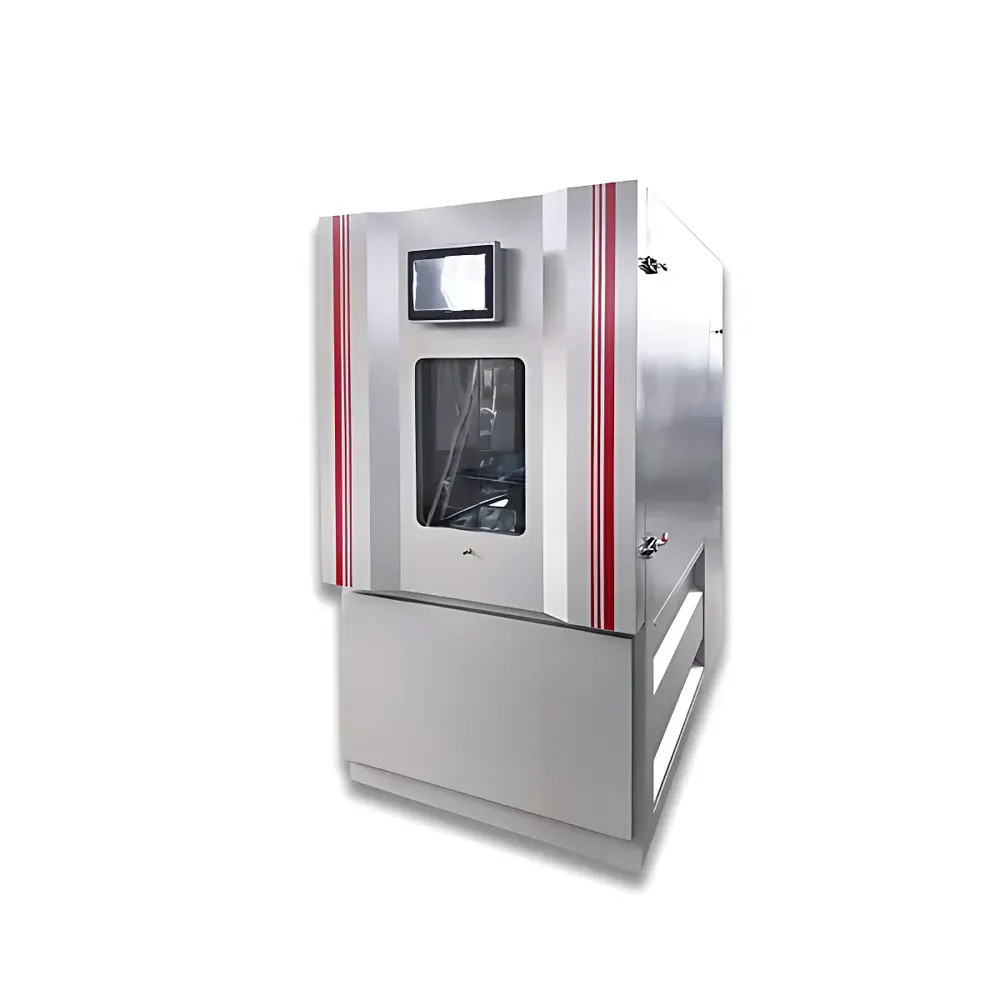
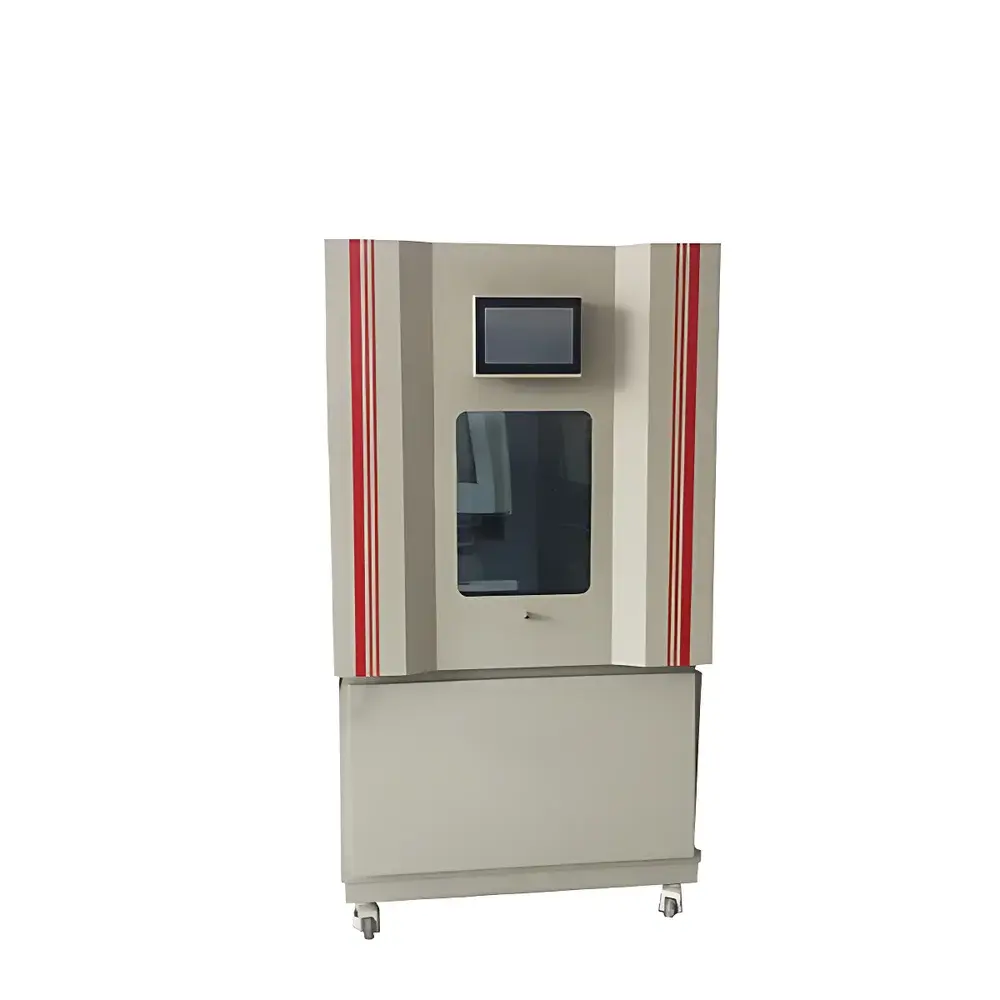
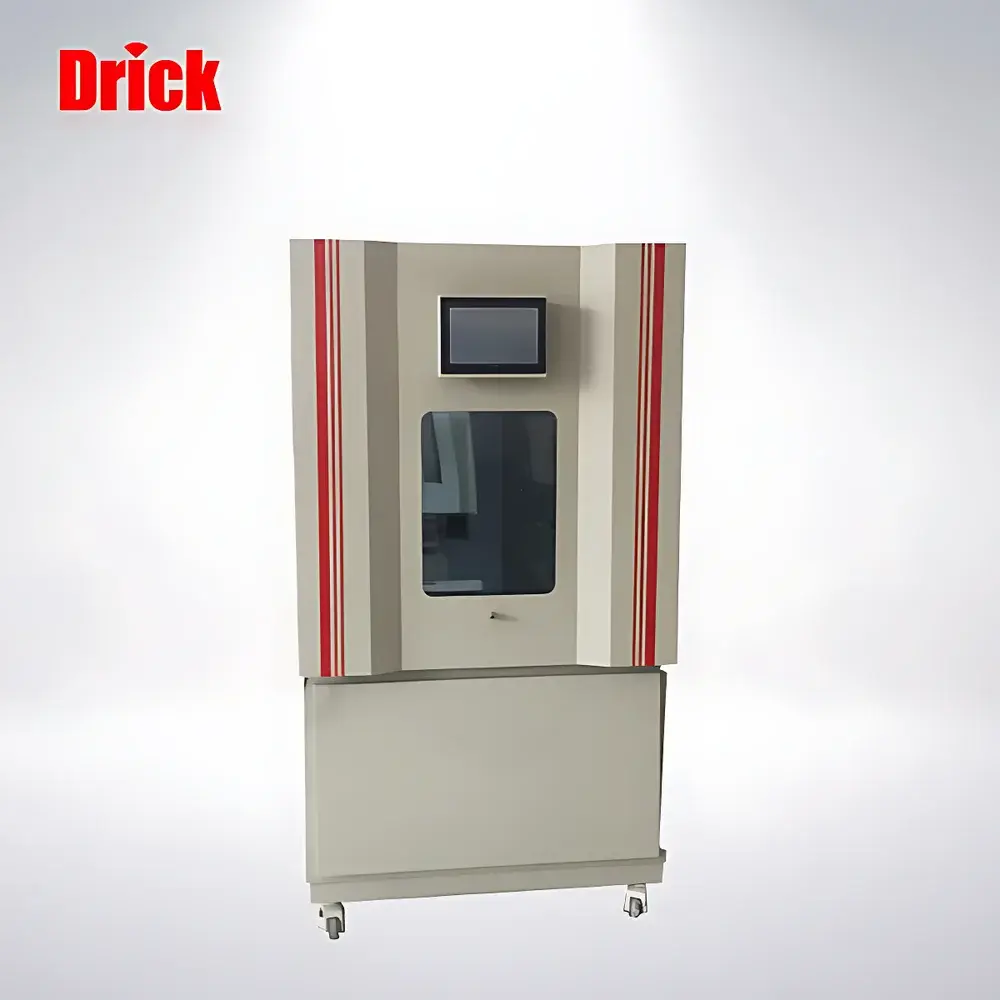
Drick DRK- Formaldehyde Test Specimen Conditioning Chamber (Multi-Chamber Environmental Chamber for Standardized Preconditioning per GB18580–2017 & EN 717–1)
| Brand | Drick |
|---|---|
| Origin | Shandong, China |
| Manufacturer Type | Direct Manufacturer |
| Region Category | Domestic (China) |
| Model | DRK- |
| Instrument Principle | Photometric Method (Optical Absorption at 412 nm) |
| Chamber Configurations | 4-, 6-, or 12-Independent Conditioning Cells |
| Internal Volume per Cell | 0.168 m³ (700 mm × 400 mm × 600 mm) |
| Temperature Range | 15–30 °C (±0.5 °C uniformity) |
| Humidity Range | 30–80 %RH (±3 %RH control accuracy) |
| Air Exchange Rate | 0.2–2.0 h⁻¹ (±0.05 h⁻¹ resolution) |
| Air Velocity | 0.1–1.0 m/s (continuously adjustable) |
| Background Formaldehyde Concentration | ≤0.1 mg/m³ |
| Chamber Airtightness | Leakage <1×10⁻³ m³/min at 1000 Pa overpressure |
| Power Supply | 220 V AC, 50 Hz, 16 A |
| Rated Power | 5 kW |
| Operating Power | 3 kW |
| Overall Dimensions (W×D×H) | 2100 mm × 1100 mm × 1800 mm |
| Compliance Standards | GB 18580–2017, GB 17657–2013, EN 717–1, ASTM D6007–02 |
Overview
The Drick DRK- Formaldehyde Test Specimen Conditioning Chamber is a precision-engineered multi-chamber environmental system designed exclusively for standardized preconditioning of wood-based panels and engineered boards prior to formaldehyde emission testing. It operates in strict accordance with the conditioning requirements specified in GB 18580–2017 (Limitation of Formaldehyde Release from Indoor Decoration and Renovation Materials – Artificial Boards and Products), GB 17657–2013 (Test Methods for Physical and Chemical Properties of Wood-Based Panels), EN 717–1 (Formaldehyde Release Measurement – Chamber Method), and ASTM D6007–02 (Standard Test Method for Formaldehyde Concentration in Air from Small-Scale Emission Chambers). Each independent chamber provides thermally and hygroscopically isolated space—eliminating cross-contamination between specimens and ensuring metrological integrity across parallel tests. The system maintains stable conditions at 23 ± 1 °C and 50 ± 3 %RH for (15 ± 2) days, with air exchange rates ≥1 h⁻¹ and laminar airflow (0.1–1.0 m/s) to guarantee uniform boundary-layer conditions over all specimen surfaces. Its design adheres to the fundamental physical principles underlying chamber-based emission testing: controlled mass transfer, steady-state diffusion kinetics, and validated environmental boundary conditions.
Key Features
- Modular multi-cell architecture: Available in 4-, 6-, or 12-chamber configurations—each cell fully independent in climate control, monitoring, and air handling.
- High-fidelity environmental regulation: Dual PID-controlled heating/cooling and humidification/dehumidification subsystems ensure ±0.5 °C temperature uniformity and ±3 %RH humidity stability across full operational range (15–30 °C / 30–80 %RH).
- Trace-level background control: Integrated activated carbon + HEPA filtration and stainless-steel internal surfaces limit baseline formaldehyde concentration to ≤0.1 mg/m³—verified per ISO 16000-9 and EN 16516 Annex B protocols.
- Precision air management: Mass-flow-controlled ventilation with real-time differential flow monitoring (<1% inlet–outlet deviation) and adjustable exchange rate (0.2–2.0 h⁻¹, resolution ±0.05 h⁻¹).
- Structural integrity & leak-tightness: Welded stainless-steel frame with polyurethane-insulated walls; airtightness certified at <1×10⁻³ m³/min leakage under 1000 Pa overpressure.
- Compliance-ready hardware: Stainless-steel specimen racks (25 mm minimum inter-specimen spacing), non-outgassing internal materials, and EMI-shielded signal processing unit for GLP-aligned operation.
Sample Compatibility & Compliance
The DRK- chamber accommodates standard test specimens defined in GB 17657–2013 Clause 4.11.1 and EN 717–1 Annex A: rectangular boards (e.g., 500 mm × 500 mm × thickness ≤25 mm), particleboard, MDF, plywood, and laminated veneer lumber. All internal wetted surfaces are electropolished 316L stainless steel or PTFE-coated to prevent adsorption/desorption artifacts. The system satisfies the physical validation criteria required for accreditation under ISO/IEC 17025:2017 for emission testing laboratories. It supports full traceability per CNAS-CL01 and aligns with regulatory expectations for formaldehyde testing in CE-marked construction products (EU Construction Products Regulation No. 305/2011) and U.S. EPA TSCA Title VI compliance verification.
Software & Data Management
The embedded control system logs time-synchronized temperature, relative humidity, air exchange rate, and chamber pressure at 1-minute intervals. Data are stored locally on industrial-grade SD card (16 GB) with optional Ethernet/Wi-Fi export to LIMS or laboratory databases. Audit trails include operator ID, parameter change history, calibration timestamps, and alarm events—all compliant with FDA 21 CFR Part 11 requirements when paired with user-defined electronic signatures. Export formats include CSV and PDF reports conforming to GB/T 27417–2017 guidelines for uncertainty reporting in chemical analysis.
Applications
- Preconditioning of composite wood panels prior to 24-h desiccator (GB/T 17657–2013 Method 4.12) or 28-day chamber (EN 717–1) formaldehyde release testing.
- Stability studies of low-emission adhesives and bio-based binders under standardized aging conditions.
- Method validation and inter-laboratory comparison exercises accredited under ISO 5725 series.
- Quality assurance in panel manufacturing facilities requiring in-house conformance to CARB ATCM Phase 2 and JIS A 1460.
- Research on humidity-dependent formaldehyde emission kinetics in phenol-formaldehyde and urea-formaldehyde resin systems.
FAQ
What standards does the DRK- chamber explicitly support?
GB 18580–2017, GB 17657–2013, EN 717–1, ASTM D6007–02, and ISO 12460-1.
Can the chamber be calibrated independently per cell?
Yes—each chamber includes dedicated PT100 sensors and humidity transducers, enabling individual NIST-traceable calibration with documented uncertainty budgets.
Is the system suitable for GLP-compliant testing environments?
Yes—hardware design, data logging architecture, and audit trail functionality meet OECD GLP Principles and Chinese NMPA GLP requirements for environmental testing.
What maintenance is required to sustain ≤0.1 mg/m³ background formaldehyde?
Carbon filter replacement every 6 months (or after 2000 operating hours), annual recalibration of RH/temperature sensors, and quarterly chamber leak verification per EN 16516 Section 6.3.
Does the system support remote monitoring via network interface?
Standard Ethernet port enables Modbus TCP communication; optional cloud dashboard available for real-time parameter visualization and alarm notification via SMTP/SNMP.
Related Products







