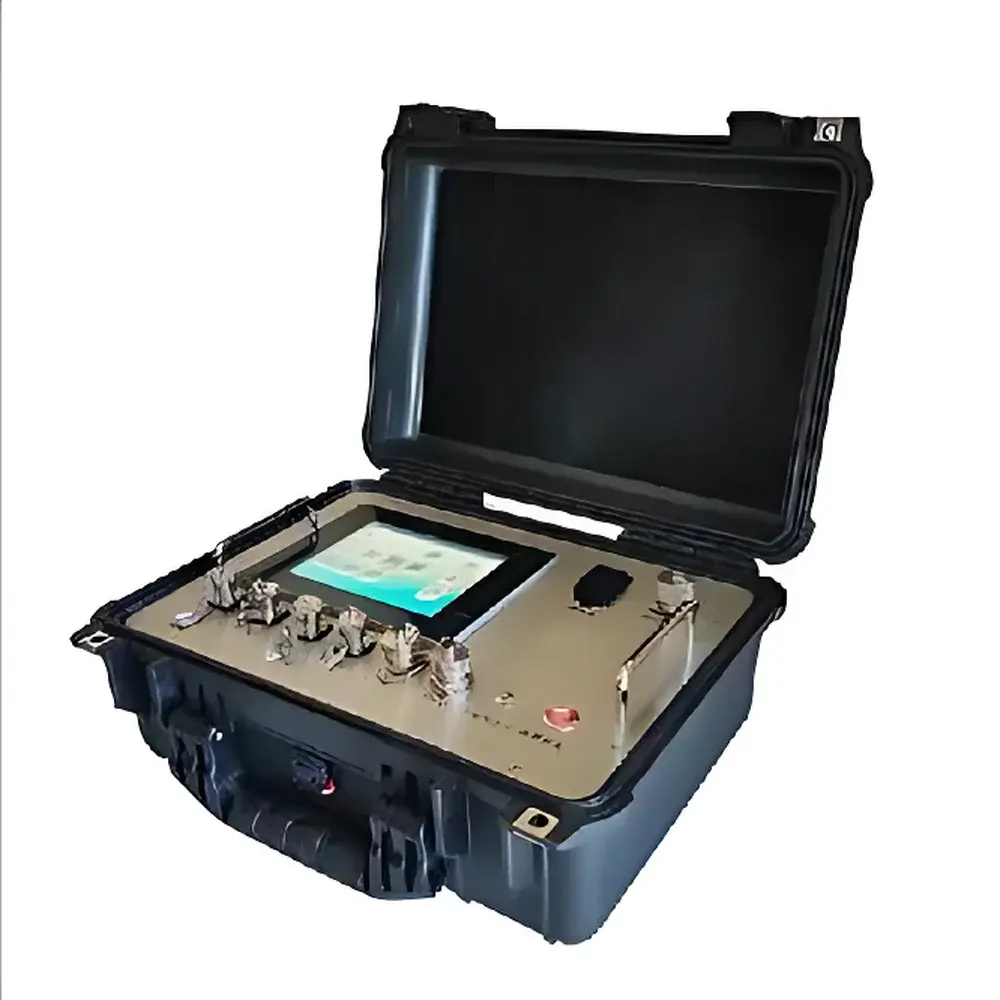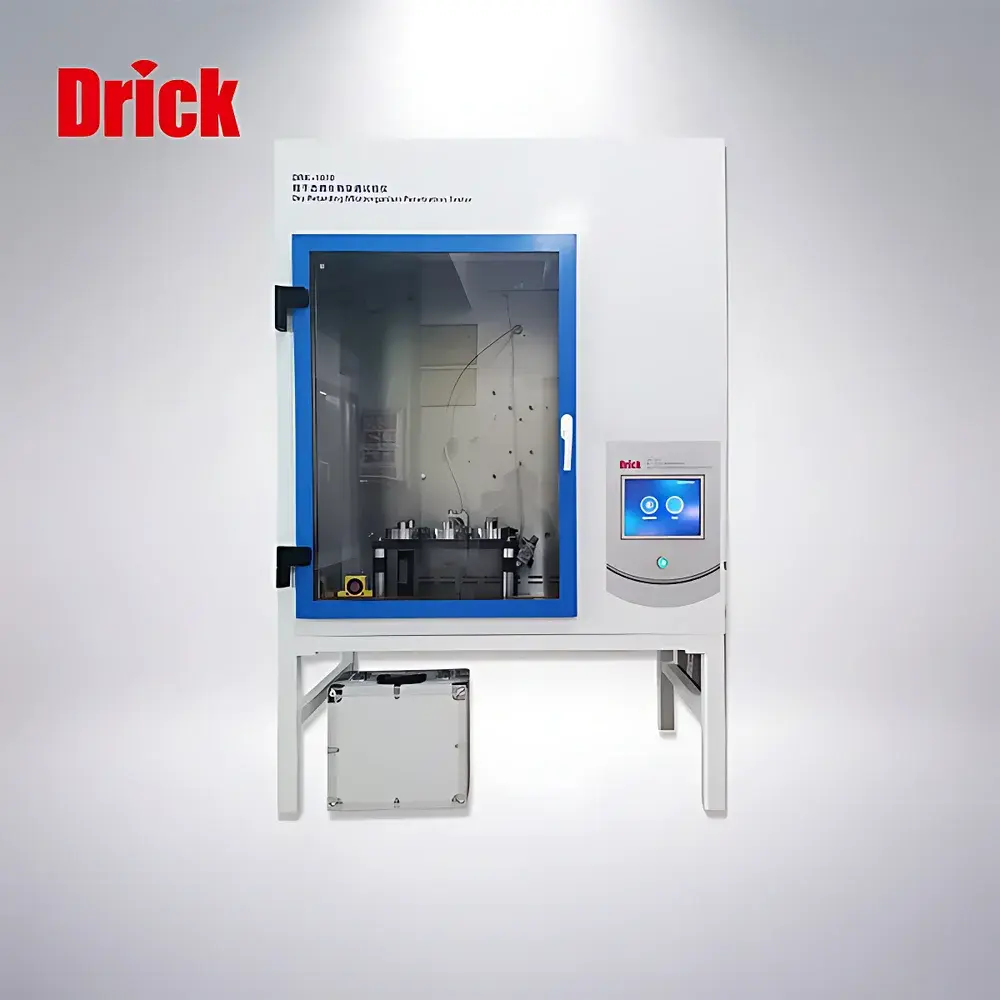
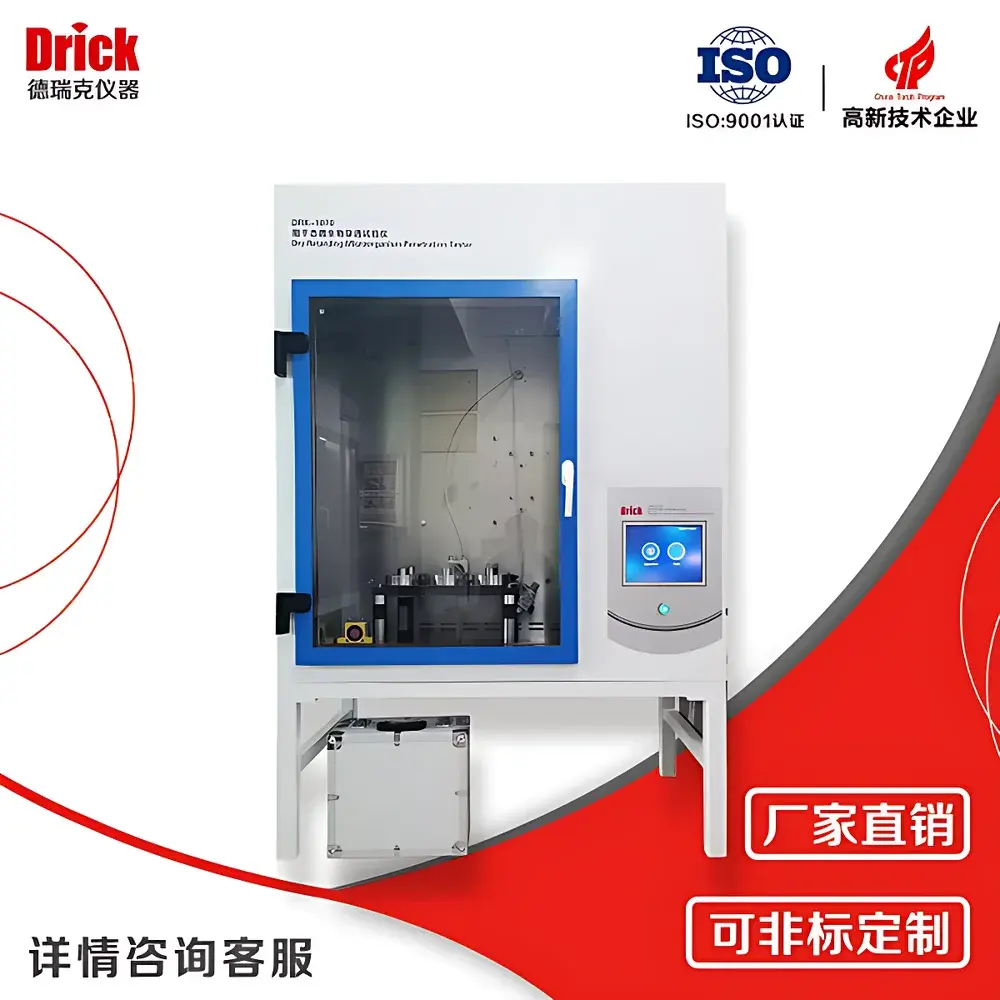
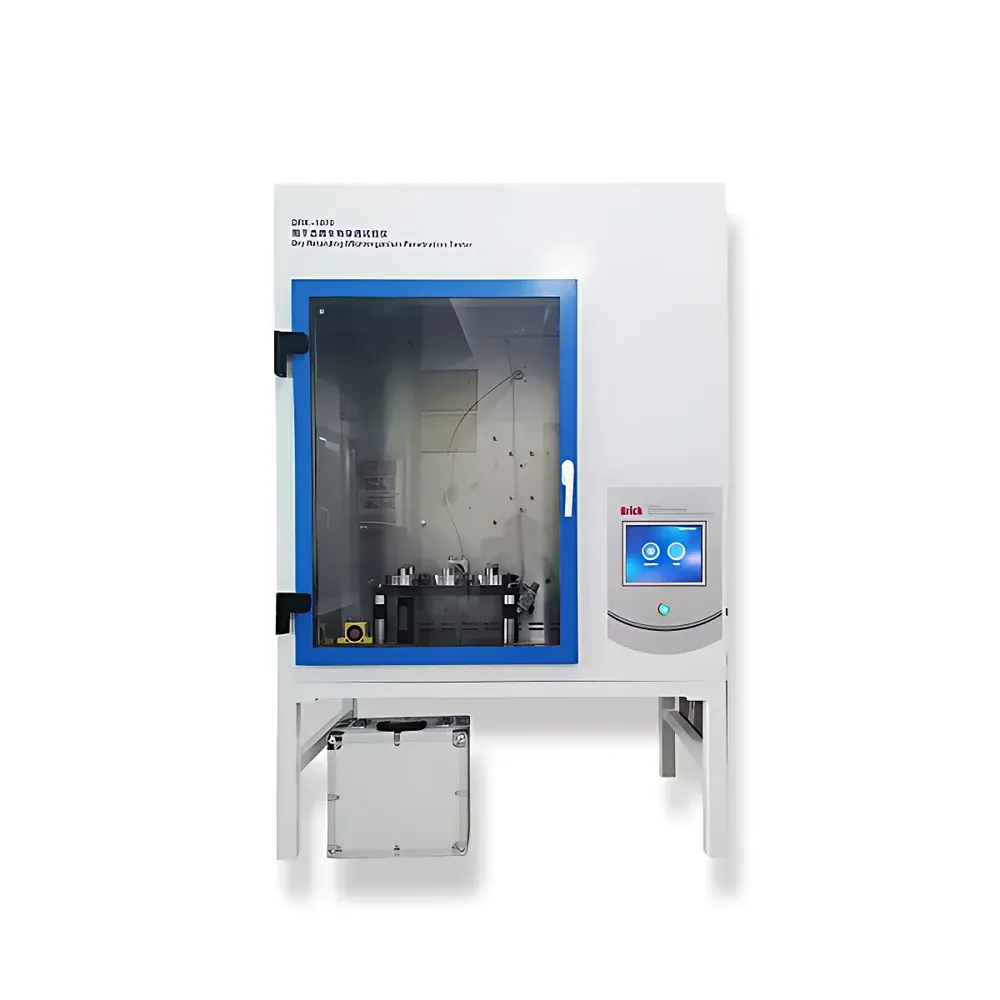
Drick DRK-1070 Dry-State Microbial Penetration Tester for Surgical Gowns
| Brand | Drick |
|---|---|
| Origin | Shandong, China |
| Manufacturer Type | Direct Manufacturer |
| Region Classification | Domestic (China) |
| Model | DRK-1070 |
| Pricing | Upon Request |
| Power Supply | AC 220 V, 50 Hz |
| Max. Power Consumption | < 2000 W |
| Vibration Mechanism | Pneumatic Spherical Vibrator |
| Vibration Frequency | 20,800 cycles/min |
| Applied Vibration Force | 650 N |
| Test Platform Dimensions | 400 mm × 400 mm × 100 mm |
| Stainless Steel Test Vessels | 6 units |
| Negative Pressure Chamber Range | –50 to –200 Pa |
| HEPA Filtration Efficiency | > 99.99% @ 0.3 µm |
| Chamber Airflow Rate | ≥ 5 m³/min |
| Data Storage Capacity | 5000 test records |
| Display | Industrial-grade high-brightness color touchscreen |
| Cabinet Construction | Inner layer — seamless stainless steel |
| Built-in Safety Features | Leakage current protection switch, LED task lighting, automatic fault detection & shutdown |
| Interface | USB port for data export (U-disk compatible) |
| Overall Dimensions (W×D×H) | 1000 mm × 680 mm × 670 mm |
| Net Weight | ~130 kg |
Overview
The Drick DRK-1070 Dry-State Microbial Penetration Tester is an engineered laboratory instrument designed to evaluate the resistance of medical barrier materials—including surgical gowns, drapes, and cleanroom garments—to dry microbial challenge under standardized mechanical stress conditions. It operates on the principle of controlled pneumatic vibration applied to a contaminated test specimen mounted over a sealed agar plate within a negative-pressure containment chamber. This simulates the physical agitation encountered during clinical handling while preventing operator exposure. The system complies strictly with EN ISO 22612:2005 (“Protective clothing — Protection against infectious agents — Test method for resistance to dry microbial penetration”), which specifies the use of Bacillus subtilis spores as the challenge organism and defines pass/fail criteria based on colony-forming unit (CFU) counts recovered on nutrient agar after exposure. Its architecture integrates biosafety engineering, precision mechanical actuation, and regulated airflow dynamics to ensure reproducible, auditable, and GLP-aligned test outcomes.
Key Features
- Negative-pressure containment cabinet with real-time pressure monitoring and adjustable setpoint control (–50 to –200 Pa), certified to maintain operator safety during aerosol-generating procedures.
- Pneumatic spherical vibrator delivering consistent 650 N force at 20,800 cycles per minute—calibrated to replicate clinically relevant mechanical stress without specimen slippage or deformation.
- Six independent stainless-steel test vessels, each accommodating standard 100 mm Petri dishes with nutrient agar, enabling parallel evaluation of multiple material samples or replicates per run.
- Integrated dual-stage HEPA filtration (pre-filter + H14 grade final filter) ensuring >99.99% removal efficiency for particles ≥0.3 µm in both intake and exhaust streams.
- Industrial-grade 10.1-inch color touchscreen interface with role-based access control (user/password authentication), parameter locking, and embedded calibration traceability logs.
- Onboard non-volatile memory storing up to 5000 complete test records—including date/time stamp, vibration duration, pressure profile, user ID, and pass/fail annotation—with USB export capability for LIMS integration.
- Full-spectrum LED interior lighting (≥500 lux at work surface) and reinforced cabinet construction: seamless 304 stainless-steel inner chamber, flame-retardant thermal insulation, and electrostatically coated cold-rolled steel exterior.
Sample Compatibility & Compliance
The DRK-1070 accepts flat, non-stretchable textile specimens measuring up to 150 mm × 150 mm, cut from finished surgical gowns, isolation gowns, or laminated barrier fabrics. Specimens are clamped taut over sterile agar plates using standardized aluminum holders conforming to EN ISO 22612 Annex A. The instrument supports full compliance with ISO 13485 quality management requirements for medical device testing equipment and facilitates audit readiness for FDA 21 CFR Part 820, EU MDR Annex XIV, and ISO 17025-accredited laboratories. All firmware and software operations generate time-stamped, tamper-evident audit trails meeting ALCOA+ principles (Attributable, Legible, Contemporaneous, Original, Accurate, Complete, Consistent, Enduring, Available).
Software & Data Management
The proprietary DRK-TestSuite v3.2 software provides intuitive workflow navigation—from test setup and parameter configuration to real-time vibration monitoring and post-run reporting. Each test session auto-generates a PDF report compliant with ISO/IEC 17025 documentation standards, including environmental conditions (ambient temperature/humidity logged via integrated sensors), operator credentials, calibration status of vibration actuator and pressure transducer, and raw CFU count inputs. Data files are stored in encrypted binary format with SHA-256 checksum validation; USB export yields CSV and XML files compatible with enterprise LIMS platforms (e.g., LabVantage, Thermo Fisher SampleManager). Optional 21 CFR Part 11 module enables electronic signatures, multi-level user permissions, and full revision history for regulated environments.
Applications
- Validation of surgical gown performance per EN ISO 22612 for CE marking and FDA 510(k) submissions.
- Comparative evaluation of fabric laminates, spunbond-meltblown-spunbond (SMS) composites, and fluid-resistant coatings under dry particulate challenge.
- In-process quality control testing in medical textile manufacturing facilities aligned with ISO 9001 and AAMI PB70 Level 4 requirements.
- Research into degradation effects of repeated laundering, sterilization cycles, or chemical exposure on microbial barrier integrity.
- Supporting ISO 14971 risk management files by quantifying failure modes related to dry microbial penetration in protective apparel.
FAQ
What microorganism is required for EN ISO 22612 testing?
Bacillus subtilis var. niger (ATCC 9372) spores suspended in silica dust, prepared per Clause 6.2 of EN ISO 22612:2005.
Can the DRK-1070 be used for wet microbial penetration testing?
No. This instrument is purpose-built for dry-state challenge only. Wet penetration evaluation requires separate apparatus complying with EN ISO 22610 or ASTM F1671.
Is third-party calibration certification available?
Yes. Drick offers optional UKAS-accredited calibration services for vibration force, frequency, and chamber pressure sensors, traceable to NPL standards.
Does the system support automated colony counting integration?
The DRK-1070 outputs standardized agar plate images via HDMI; integration with external automated colony counters (e.g., Synbiosis ProtoCOL) is achievable through API-enabled middleware.
What maintenance intervals are recommended?
HEPA filters require replacement every 12 months or after 2000 operational hours; vibration actuator lubrication and pressure sensor verification are scheduled biannually per the Maintenance Logbook (included).