
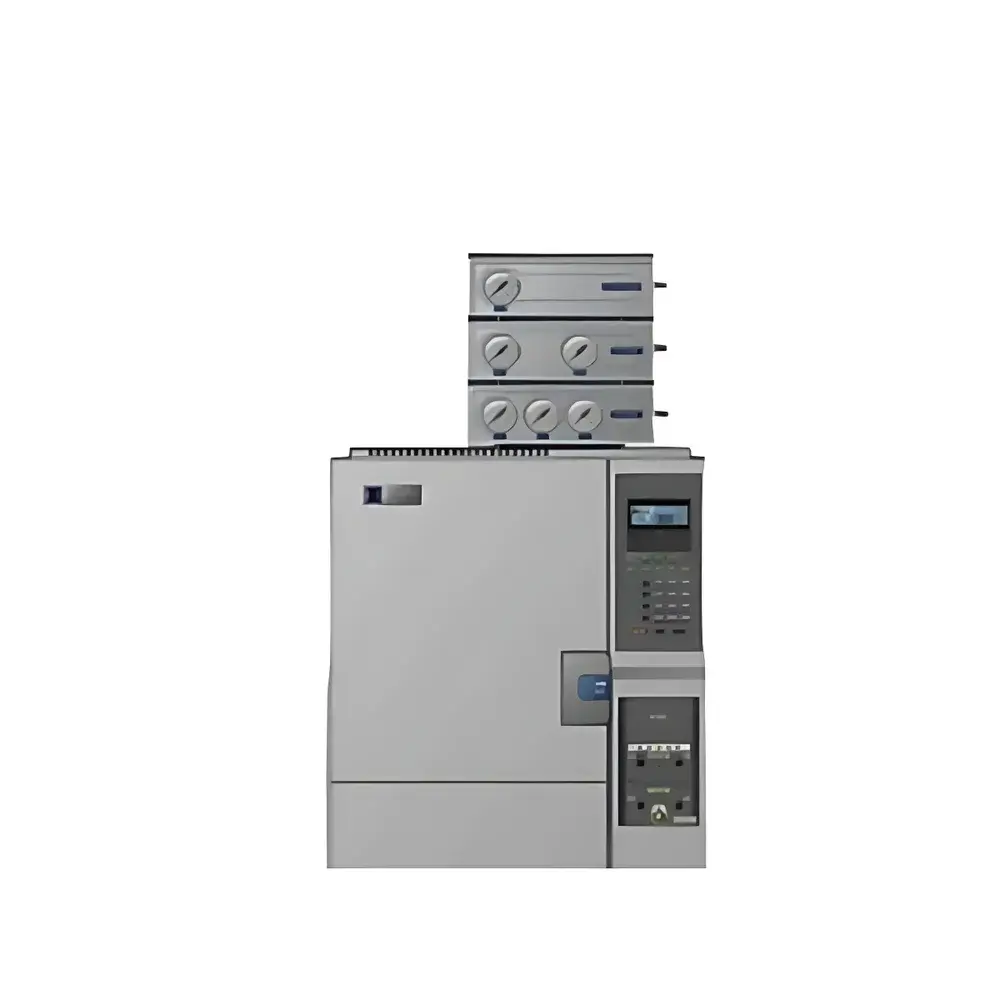
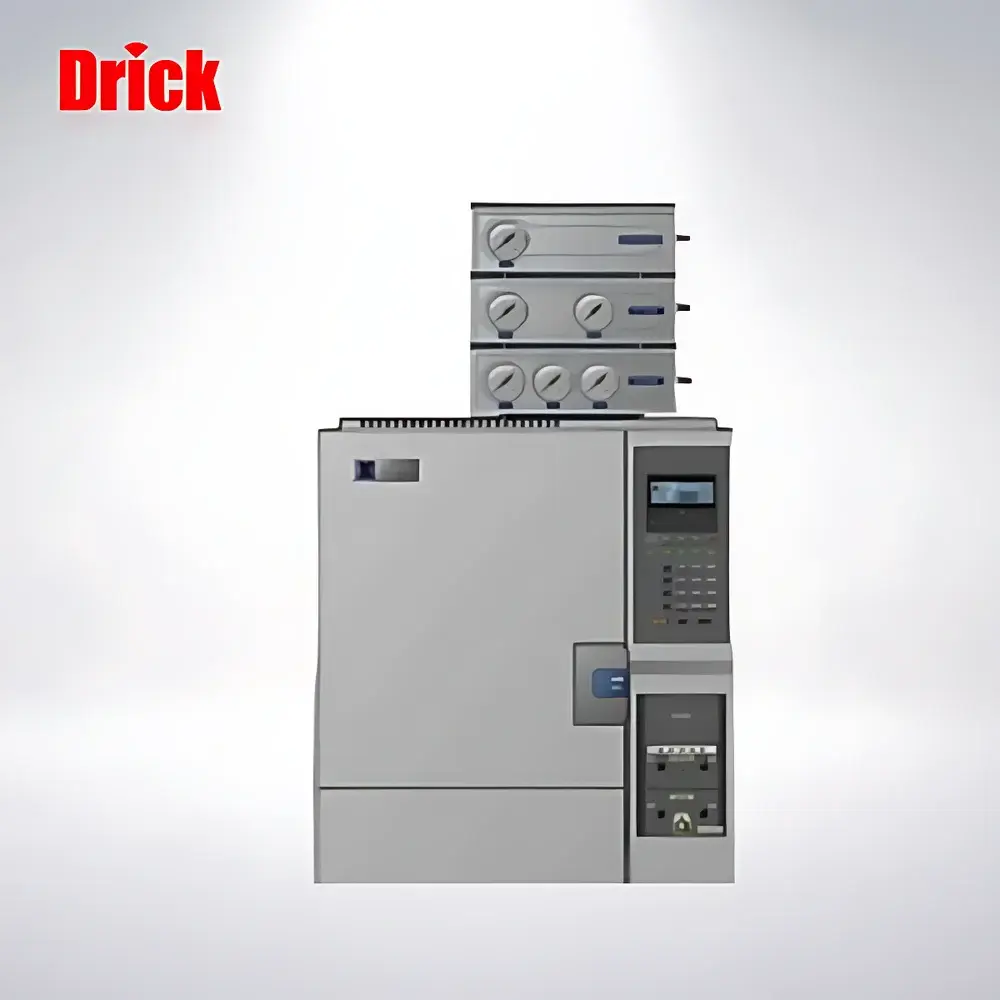
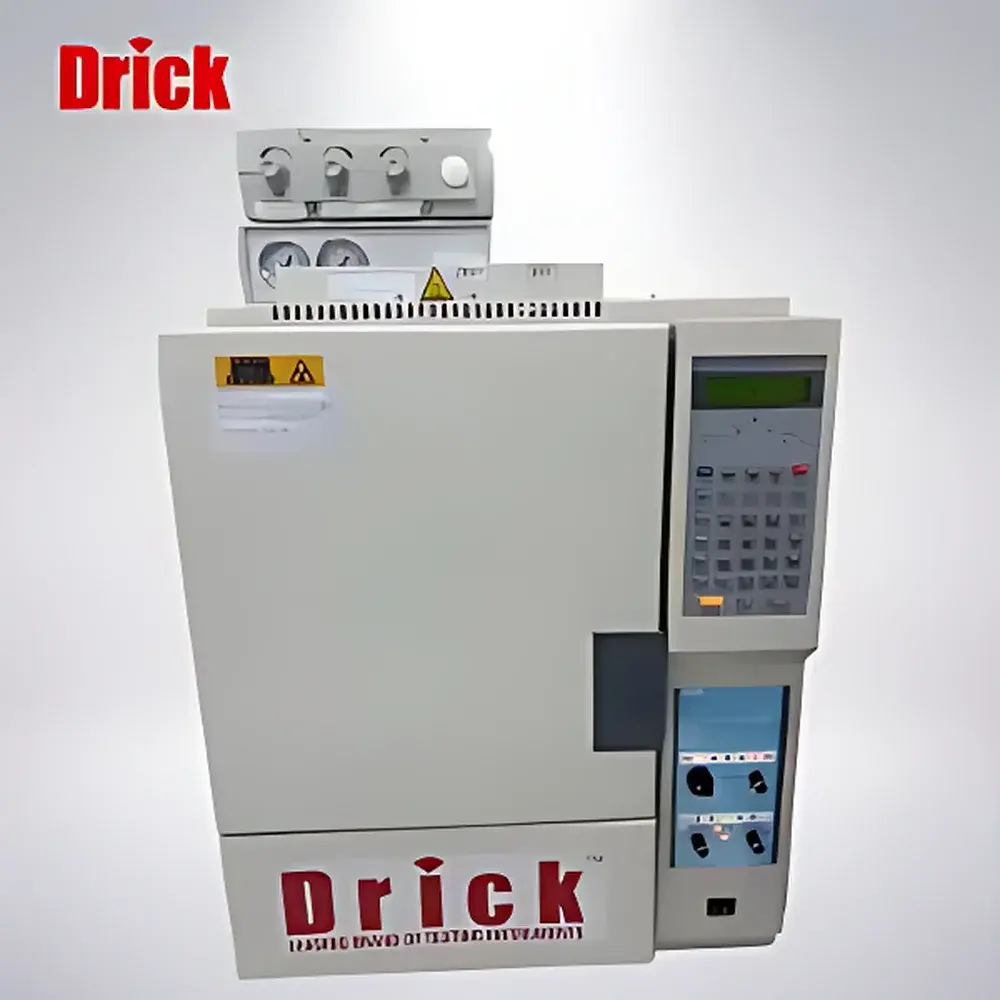
Drick DRK-GC1690 Laboratory Gas Chromatograph
| Brand | Drick |
|---|---|
| Origin | Shandong, China |
| Manufacturer Type | OEM Manufacturer |
| Regional Classification | Domestic (China) |
| Model | DRK-GC1690 |
| Instrument Type | Laboratory Gas Chromatograph |
| Detection Options | FID, TCD, FPD, NPD, ECD |
| Temperature Range | +7 °C to 420 °C (5-Step Programmable Ramp) |
| Column Oven | Vertical High-Performance Design with Auto Back-Door |
| Max Operating Temp | 420 °C |
| Independent Over-Temp Protection | 450 °C Fixed Cut-Off Circuit |
| Injection Modes | Packed Column On-Column, Split/Splitless, Wide-Bore Capillary (WBC), Packed Column Vaporizing, 6-Port Gas Sampling Valve |
| Analyte Boiling Point Limit | ≤399 °C |
| Applications | Petrochemical, Chemical, Pharmaceutical, Food & Beverage, Environmental Monitoring, Fermentation, Metallurgy, Power Generation, Fertilizer Production |
Overview
The Drick DRK-GC1690 is a benchtop laboratory gas chromatograph engineered for precision separation and quantitative analysis of volatile and semi-volatile compounds. Based on classical gas–solid and gas–liquid partition principles, the system separates analytes by differential migration through a temperature-controlled capillary or packed column under carrier gas flow (N₂, H₂, or He). Its modular detector architecture supports interchangeable detection technologies—including Flame Ionization Detection (FID), Thermal Conductivity Detection (TCD), Flame Photometric Detection (FPD), Nitrogen–Phosphorus Detection (NPD), and Electron Capture Detection (ECD)—enabling method flexibility across organic, inorganic, and gaseous species with boiling points up to 399 °C. Designed for routine QC, R&D, and regulatory-compliant testing, the DRK-GC1690 integrates robust thermal management, programmable multi-step temperature gradients, and fail-safe overtemperature protection—making it suitable for ISO/IEC 17025-accredited laboratories and GLP-aligned workflows.
Key Features
- Vertical-column oven architecture minimizes thermal interference from injector and detector zones, ensuring stable baseline performance and improved retention time reproducibility.
- 5-stage programmable temperature ramping (range: +7 °C to 420 °C) with <±0.1 °C setpoint accuracy and <0.05 °C/min ramp rate resolution.
- Dual-layer overtemperature protection: primary control at 420 °C user-configurable limit; secondary hardware cutoff at fixed 450 °C independent circuit.
- Auto-adjusting back-pressure regulated split/splitless inlet compatible with standard 0.1–0.53 mm ID capillaries and packed columns.
- Multiple injection configurations supported: on-column packed column, wide-bore capillary (WBC), vaporizing packed column, and 6-port gas sampling valve for permanent gas analysis.
- Modular detector bay accepts up to three detectors simultaneously (mechanically and electrically isolated), facilitating parallel method development and cross-validation.
Sample Compatibility & Compliance
The DRK-GC1690 accommodates liquid, solid (via thermal desorption or solvent extraction), and gaseous samples. It complies with ASTM D3606 (benzene/toluene in gasoline), USP (chromatography system suitability), and ISO 17025 clause 5.9 (method validation requirements). Detector specifications meet or exceed minimum sensitivity thresholds defined in EPA Method 8021B (FID for halogenated organics), EPA Method 8260C (purge-and-trap GC/MS screening support), and ISO 10301 (TCD for permanent gases). All temperature and flow parameters are logged with timestamped audit trails, supporting FDA 21 CFR Part 11 compliance when paired with validated third-party chromatography data systems (CDS).
Software & Data Management
The instrument operates via RS-232 or USB interface with optional Windows-based acquisition software (sold separately), providing real-time signal monitoring, peak integration using tangent skim or valley-to-valley algorithms, calibration curve generation (linear, quadratic, or weighted), and customizable report templates. Raw data files adhere to ASTM E1947-18 format for long-term archival integrity. Audit trail functionality records all method changes, sequence edits, and manual integrations with operator ID and timestamp—essential for GMP/GLP documentation and internal quality audits. Export options include CSV, PDF, and AIA (.cdf) formats compatible with LIMS integration.
Applications
The DRK-GC1690 serves as a core analytical platform across regulated and industrial sectors. In petrochemical labs, it quantifies hydrocarbon fractions (C₁–C₁₂) and sulfur compounds per ASTM D1319 and D5504. In pharmaceutical manufacturing, it verifies residual solvents (ICH Q3C Class 2/3) in APIs and excipients. Environmental applications include VOC profiling in air/water per EPA TO-17 and TO-15, while food safety labs apply it to pesticide residue screening (EPA 830 series) and flavor compound profiling. Fermentation monitoring leverages its TCD/FID dual-detection capability for ethanol, CO₂, and organic acid quantification. Metallurgical and fertilizer QA departments use it for trace ammonia, phosphine, and hydrazine analysis.
FAQ
What carrier gases are compatible with the DRK-GC1690?
Nitrogen, hydrogen, and helium are supported; optimal choice depends on detector type and column dimensions—hydrogen offers fastest analysis for FID, while nitrogen provides best TCD stability.
Does the system support unattended operation?
Yes—equipped with autosampler-ready electrical interfaces and full sequence programming capability, including automatic column bake-out and detector tuning between runs.
Is method transfer possible from other GC platforms?
Method parameters (oven ramp, inlet pressure, detector settings) are fully configurable; retention time alignment requires column dimension matching and flow calibration verification.
Can the DRK-GC1690 be integrated into an existing LIMS?
Raw data export in ASTM E1947-compliant format and configurable metadata fields enable seamless ingestion into most modern LIMS environments.
What maintenance intervals are recommended for detector longevity?
FID jets should be cleaned quarterly; TCD filaments require annual resistance verification; ECD radioactive sources follow IAEA-regulated replacement schedules (typically 5–10 years depending on usage).
Related Products





