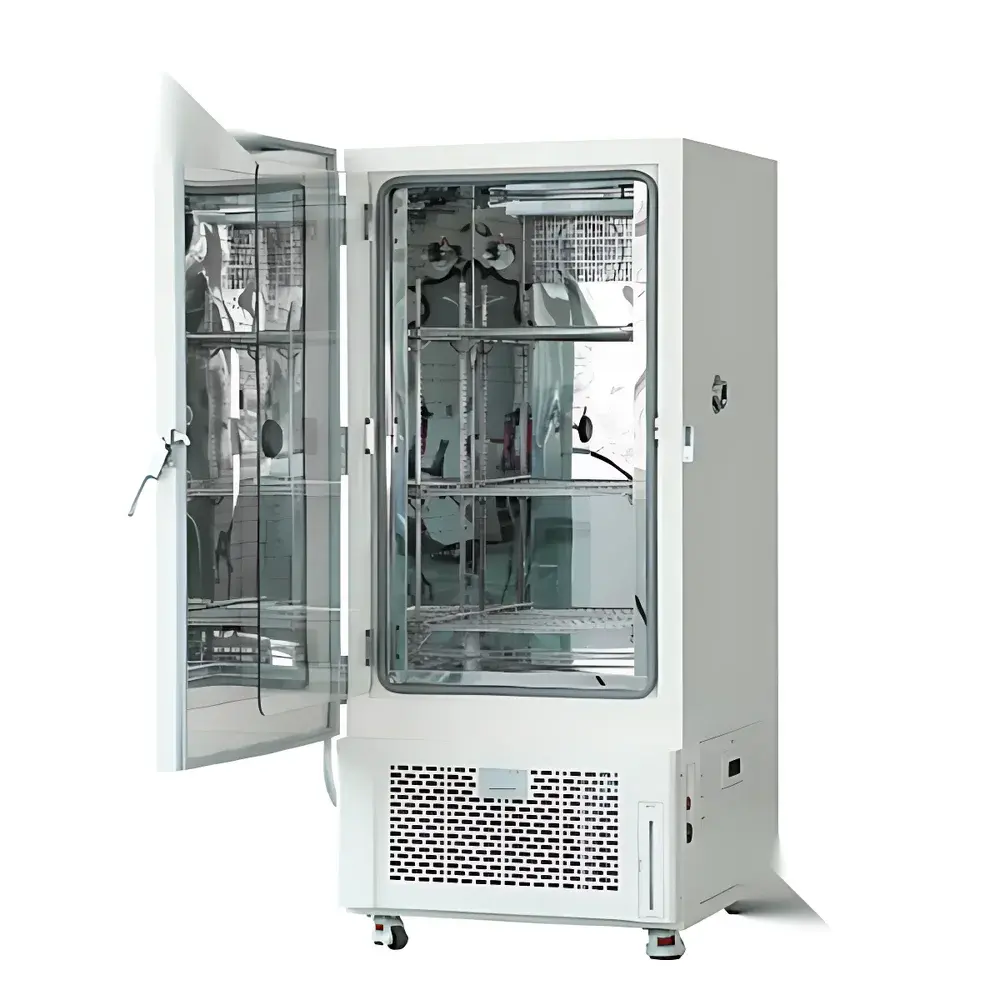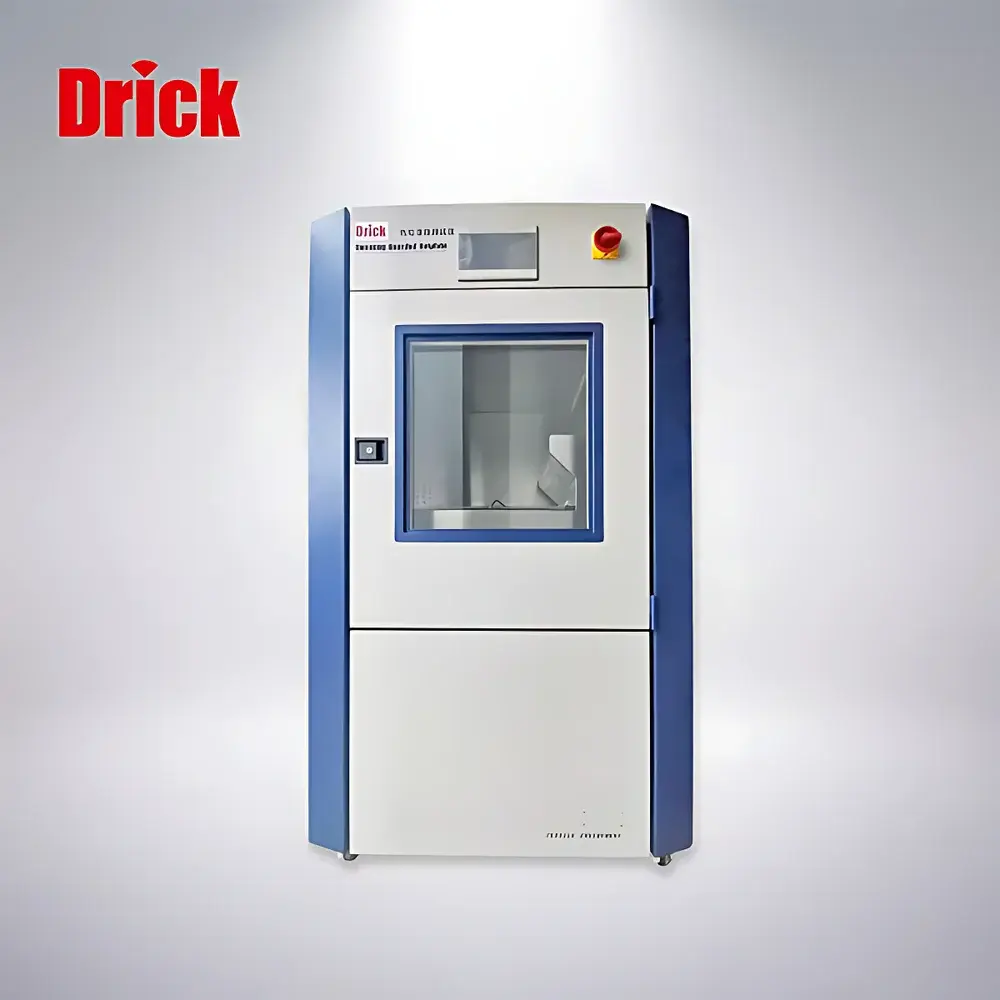
Drick DRK255 Textile Thermal and Moisture Resistance Tester
| Brand | Drick |
|---|---|
| Origin | Shandong, China |
| Manufacturer Type | Manufacturer |
| Country of Origin | China |
| Model | DRK255 |
| Thermal Resistance Range | 0–2000 × 10⁻³ m²·K/W |
| Repeatability Error (Thermal) | < ±2.5% (factory-controlled to ±2.0%) |
| Resolution (Thermal) | 0.1 × 10⁻³ m²·K/W |
| Moisture Resistance Range | 0–700 m²·Pa/W |
| Repeatability Error (Moisture) | < ±2.5% (factory-controlled to ±2.0%) |
| Test Plate Temperature Range | 20–40 °C |
| Air Velocity over Specimen | 1 m/s (adjustable) |
| Platform Vertical Travel (Specimen Thickness) | 0–70 mm |
| Test Duration Setting | 0–9999 s |
| Temperature Control Accuracy | ±0.1 °C |
| Temperature Display Resolution | 0.1 °C |
| Preheating Cycle | 6–99 min |
| Specimen Size | 350 mm × 350 mm |
| Test Plate Size | 200 mm × 200 mm |
| Dimensions (L×W×H) | 1050 mm × 1950 mm × 850 mm |
| Power Supply | AC 220 V ±10%, 3300 W, 50 Hz |
| Environmental Operating Range | 10–30 °C, 30–80% RH |
Overview
The Drick DRK255 Textile Thermal and Moisture Resistance Tester is a fully automated, integrated climate-controlled instrument engineered for the precise determination of thermal resistance (Rct) and evaporative resistance (Ret) of planar textile materials under steady-state conditions. It operates on the principle of guarded hot-plate calorimetry combined with controlled vapor diffusion across a standardized test surface—mimicking human skin thermoregulatory behavior in a defined microclimate. The system maintains strict compliance with ISO 11092:2014, ASTM F1868–22, and GB/T 11048–2008, ensuring traceable, internationally recognized measurement outcomes for thermal insulation and moisture management performance. Unlike modular or semi-automated alternatives, the DRK255 integrates the heated test plate, environmental chamber, airflow control, and real-time data acquisition into a single robust architecture—eliminating inter-unit calibration drift and minimizing operator-induced variability.
Key Features
- Proprietary high-stability heating control system (patented under CN ZL200610154833.9), designed to suppress thermal inertia effects and deliver repeatability better than ±2.0%—surpassing both ISO/ASTM tolerance limits (±7.0%) and typical industry benchmarks (±5.0%)
- Integrated microclimate chamber with synchronized temperature and humidity control at the reference point—ensuring method-compliant boundary conditions per ISO 11092 Annex A
- Physiologically representative sweating surface: uniformly distributed vapor emission across the full 200 mm × 200 mm test plate, eliminating localized pressure gradients inherent in perforated-plate designs
- Real-time dynamic visualization of Rct and Ret evolution throughout preheating, stabilization, and measurement phases—enabling process diagnostics and endpoint validation
- Multi-point independent calibration routine across the full operational range (0–2000 × 10⁻³ m²·K/W and 0–700 m²·Pa/W), compensating for non-linear transducer response and enhancing measurement fidelity
- Motorized vertical positioning system accommodating specimens up to 70 mm thick—supporting layered composites, padded fabrics, and technical laminates without manual reconfiguration
Sample Compatibility & Compliance
The DRK255 accommodates flat, flexible specimens measuring 350 mm × 350 mm—including woven and knitted apparel textiles, industrial geotextiles, medical barrier fabrics, nonwovens, coated membranes, and multilayer insulation assemblies. Its 200 mm × 200 mm active test area ensures full coverage of standard specimen dimensions while maintaining edge-effect mitigation per ISO 11092 Clause 6. All hardware and firmware are validated against the metrological requirements of ISO/IEC 17025:2017 for testing laboratories. The instrument supports GLP-compliant operation through audit-trail-enabled software logging (user actions, calibration events, environmental deviations), and its thermal control subsystem meets the stability criteria specified in ASTM E644 for precision temperature measurement systems.
Software & Data Management
The embedded Windows-based control interface provides intuitive test setup, real-time graphing of Rct/Ret convergence curves, automatic pass/fail evaluation against user-defined thresholds, and export of raw time-series data in CSV and XML formats. Calibration records—including date, technician ID, reference standards used (NIST-traceable PT100 sensors and certified humidity generators), and deviation logs—are digitally signed and stored with tamper-evident timestamps. Optional integration with LIMS platforms is supported via OPC UA and RESTful API endpoints. Data integrity safeguards include 21 CFR Part 11–compliant electronic signatures, role-based access control, and immutable audit trails covering all critical parameters: air velocity setpoint, chamber RH, plate temperature ramp rate, and measurement duration.
Applications
This instrument serves quality assurance laboratories in outdoor apparel, military PPE, automotive interior textiles, healthcare gowns and drapes, and smart fabric R&D. It enables comparative evaluation of phase-change material (PCM)-infused textiles, hydrophilic/hydrophobic finish efficacy, breathability trade-offs in waterproof membranes, and thermal buffering capacity of flame-retardant composites. In regulatory contexts, it supports submissions to EU REACH Annex XVII, FDA 510(k) dossiers for medical textiles, and ISO 15223–1 labeling claims related to “thermal comfort” and “moisture management.” Academic users apply it to validate computational models of coupled heat-mass transfer in fibrous media.
FAQ
What standards does the DRK255 fully comply with?
ISO 11092:2014, ASTM F1868–22, and GB/T 11048–2008—all verified through third-party metrological assessment.
Is external climate control required for stable operation?
No—though optimal performance is achieved in environments maintained at 10–30 °C and 30–80% RH; the integrated microclimate chamber actively regulates internal conditions regardless of ambient fluctuations.
How is repeatability validated during factory calibration?
Using NIST-traceable reference fabrics with certified Rct and Ret values, measured across ≥10 consecutive cycles under identical environmental setpoints; final acceptance requires ≤±2.0% coefficient of variation.
Can the instrument measure materials with irregular thickness or curvature?
It is designed exclusively for planar specimens; non-flat or highly compressible samples require pre-conditioning to ensure uniform contact with the test plate surface.
What maintenance intervals are recommended for long-term accuracy?
Annual verification of temperature/humidity sensors and airflow calibration using ISO 17025-accredited service providers; quarterly cleaning of air filters and condensate traps per the maintenance logbook.