
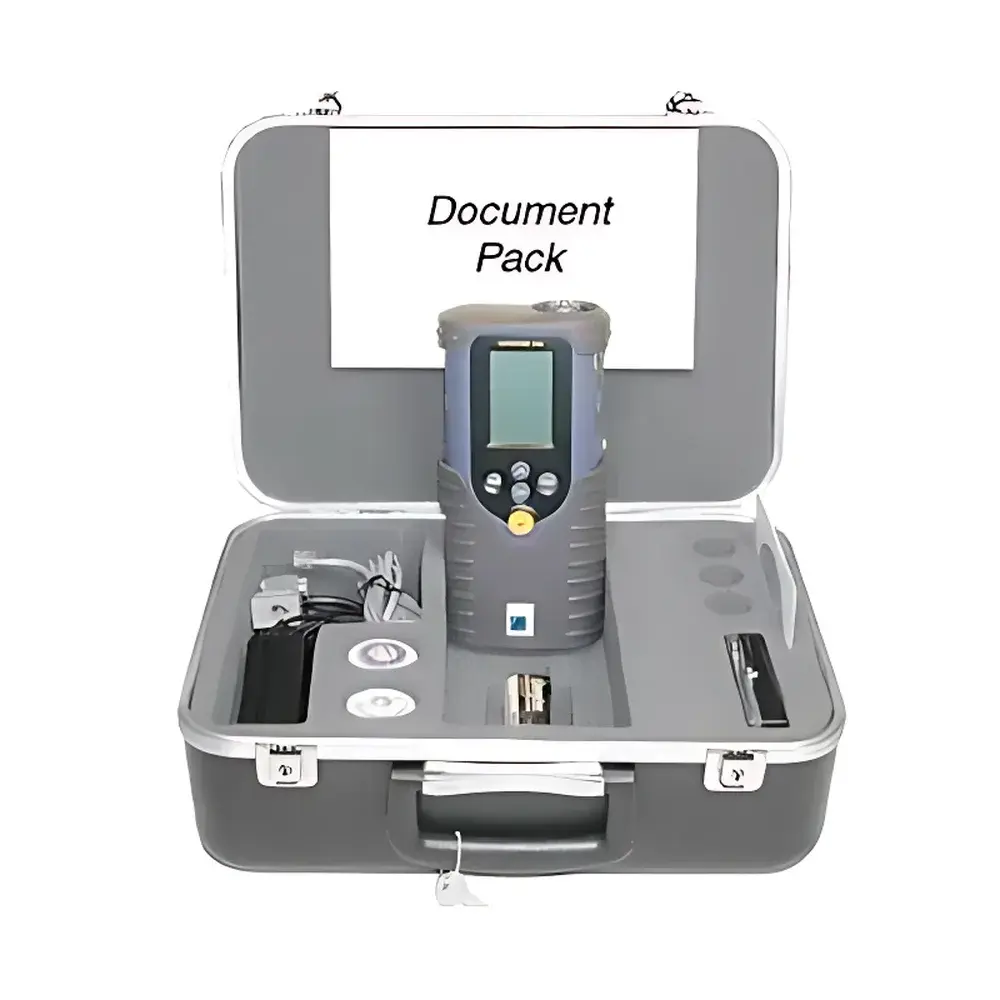
Sensigent Cyranose 320 Electronic Nose
| Brand | USA Sensigent |
|---|---|
| Origin | USA |
| Model | Cyranose 320 |
| Sensor Array | 32-element NoseChip™ nanocomposite sensor array |
| Detection Limit | Low ppm range for volatile organic compounds (VOCs) and vapors |
| Onboard Memory | Supports up to 5 preloaded methods, each with 6 classes and 10 sample acquisitions per class |
| Display | Backlit LCD |
| Dimensions | 10 × 22 × 5 cm |
| Weight | 0.9 kg |
| Operating Temperature | 0–40 °C |
| Storage Temperature | −20–50 °C |
| Relative Humidity | 0–95% RH (non-condensing) |
| Power | Rechargeable NiMH battery or 4× AA batteries |
| Certifications | CE, FCC |
| Warranty | 1 year |
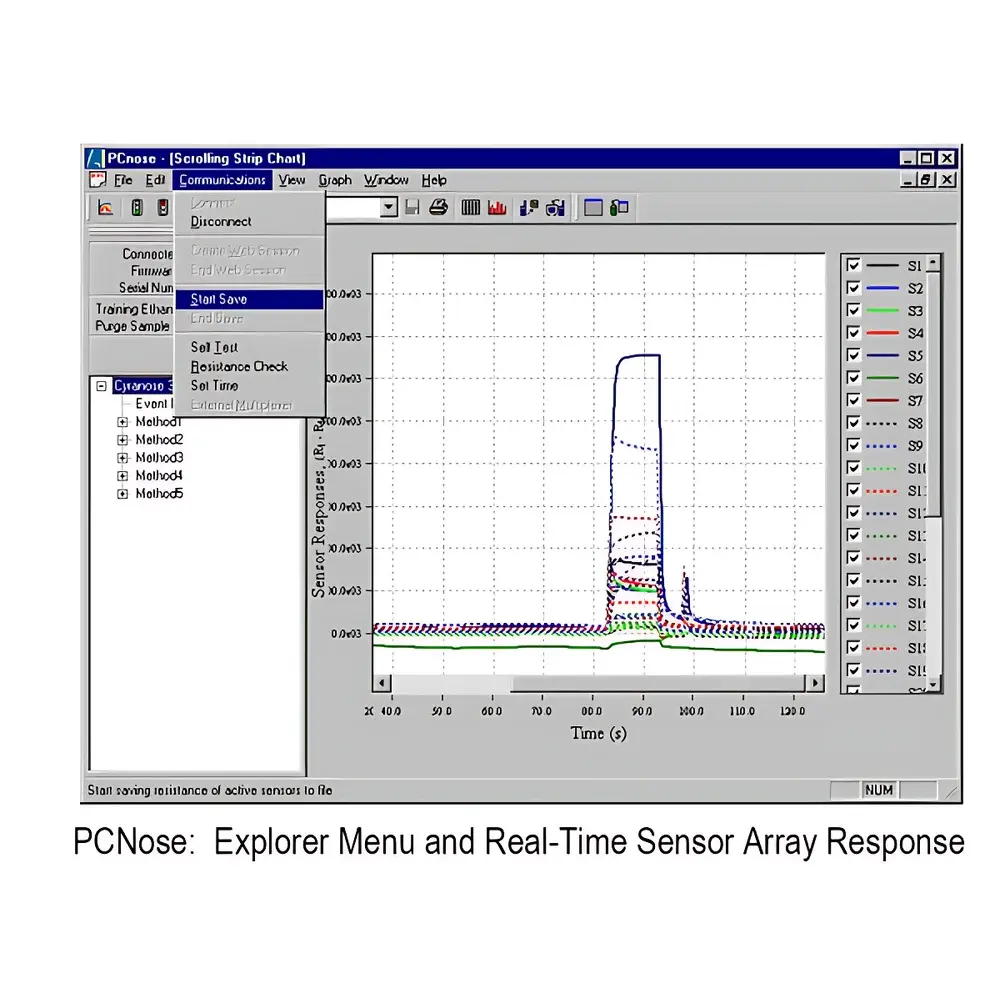
| Software | PCnose™ (2D/3D visualization, SmellPrints™, real-time data streaming, method development, full audit trail), CDAnalysis™ (optional chemometric extension with HCA, SIMCA, SVM, single-class modeling, feature importance indexing) |
Overview
The Sensigent Cyranose 320 Electronic Nose is a field-deployable, portable olfactory sensing platform engineered for rapid, repeatable qualitative and semi-quantitative analysis of volatile organic compound (VOC) profiles in headspace samples. Based on conductive polymer–nanocomposite sensor technology, the system operates via pattern recognition of transient resistance changes across a 32-element NoseChip™ sensor array upon exposure to gaseous analytes. Unlike conventional gas chromatography–mass spectrometry (GC–MS) systems, the Cyranose 320 delivers real-time odor fingerprinting without sample preparation or laboratory infrastructure—making it suitable for inline quality control, R&D screening, and clinical breath research. Its architecture complies with fundamental principles of electronic nose design as defined in ISO 18923:2017 (Sensory analysis — Instrumental odour profiling) and supports traceable method development aligned with GLP and GMP documentation practices.
Key Features
- Proprietary 32-channel NoseChip™ nanocomposite sensor array with tunable selectivity toward aldehydes, ketones, esters, sulfur compounds, and nitrogen-containing volatiles
- Integrated sampling pump with flow-controlled headspace aspiration (5–15 s measurement cycle)
- On-device method storage: up to 5 user-defined analytical protocols, each supporting 6 classification categories and 10 replicates per category
- Intuitive interface with backlit LCD display; results rendered as user-configurable pass/fail flags, formulation IDs (e.g., “Formulation 15”), or 5-point quality scores
- Embedded database logging all measurements, timestamps, operator IDs, and environmental metadata (temperature, humidity, battery level)
- Rechargeable NiMH battery or standard AA configuration enabling >4 hours of continuous field operation
- CE- and FCC-certified for use in regulated industrial and clinical environments
Sample Compatibility & Compliance
The Cyranose 320 accepts direct headspace sampling from liquids, solids, and gases—including breath condensate, food packaging headspace, polymer off-gassing, wastewater vapor, and ambient air. It has been validated in peer-reviewed studies for detection of biomarkers associated with ventilator-associated pneumonia (VAP), chronic obstructive pulmonary disease (COPD), asthma, lung cancer, otitis media, urinary tract infection (UTI), and sinusitis—results published in Nature, European Respiratory Journal, and other high-impact journals. The system supports method validation per ASTM E2750–19 (Standard Guide for Use of Electronic Noses in Sensory Analysis) and enables compliance with FDA 21 CFR Part 11 when paired with PCnose™ software configured for electronic signature and audit trail retention. All sensor modules are replaceable and customizable, including options with chemically modified single-walled carbon nanotubes, metal nanoparticle composites, and tailored conductive polymers for enhanced sensitivity to target VOC classes.
Software & Data Management
PCnose™ software provides comprehensive chemometric analysis including Principal Component Analysis (PCA), K-Nearest Neighbors (KNN), K-Means clustering, Canonical Discriminant Analysis (CDA), and Support Vector Machines (SVM). It generates SmellPrints™—multidimensional odor fingerprints visualized in 2D and 3D scatter plots—and supports continuous data streaming, batch processing, and method export/import. The optional CDAnalysis™ extension adds Hierarchical Cluster Analysis (HCA), Soft Independent Modeling of Class Analogy (SIMCA), single-class modeling, feature importance indexing, and advanced visualization tools for large-scale multi-instrument datasets. All raw sensor response curves, classification outputs, and metadata are stored in a relational database with full export capability (CSV, Excel, XML) and configurable reporting templates compliant with ISO/IEC 17025 documentation requirements.
Applications
- Food & Beverage: Shelf-life monitoring, authenticity verification, spoilage detection, flavor consistency testing
- Pharmaceuticals & Packaging: Leachables/extractables screening, residual solvent analysis, blister pack integrity assessment
- Chemicals & Polymers: Batch-to-batch variation control, catalyst degradation monitoring, VOC emission profiling
- Environmental & Odor Control: Landfill gas characterization, wastewater treatment plant odor source identification, ambient air quality trend analysis
- Clinical Research: Non-invasive breath biomarker discovery, point-of-care respiratory disease triage, longitudinal monitoring of inflammatory status
- Materials Science: Off-gassing evaluation of adhesives, coatings, composites, and recycled plastics
FAQ
What types of samples can be analyzed directly with the Cyranose 320?
Liquid headspace (e.g., urine, serum, broth cultures), solid-phase emissions (e.g., cheese, polymers, paper), and ambient or exhaled breath—no derivatization or pre-concentration required.
Is the Cyranose 320 compliant with regulatory standards for pharmaceutical or clinical use?
Yes—when operated with validated methods and PCnose™ configured for 21 CFR Part 11 compliance (audit trail, electronic signatures, data integrity controls), it meets foundational requirements for GxP-aligned odor profiling applications.
Can sensor arrays be customized for specific analytes?
Yes—Sensigent offers custom NoseChip™ modules with chemically modified SWCNTs, metal oxide nanoparticles, or functionalized conductive polymers optimized for target VOC families (e.g., aldehydes in lipid oxidation, ammonia in renal dysfunction).
How is calibration performed?
Multi-sensor calibration uses certified reference standards or representative training sets; quantitative extension requires correlation with GC–MS or PID reference data using partial least squares (PLS) regression within CDAnalysis™.
Does the system support remote data synchronization or networked deployment?
PCnose™ supports LAN/WiFi-connected instrument fleets; raw data and method files can be centrally managed via secure FTP or cloud-hosted SQL databases with role-based access control.
Related Products





