
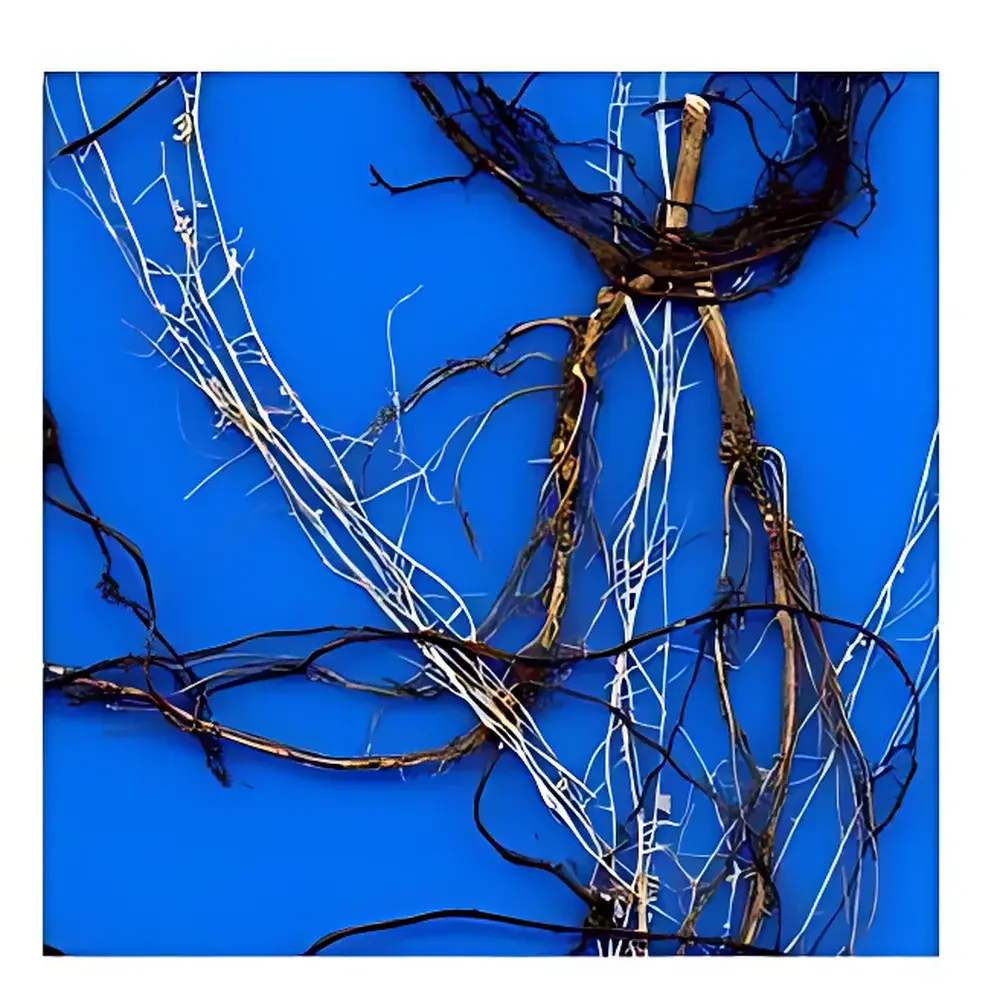
Tlyon-WinRHIZO Plant Root System Analyzer
| Brand | Tlyon |
|---|---|
| Model | Tlyon-WinRHIZO |
| Origin | Sichuan, China |
| Instrument Type | High-Resolution Flatbed Scanner-Based Root Image Analysis System |
| Software Editions | Basic / Standard / Professional |
| Image Input Formats | TIFF, JPEG |
| Calibration | Scanner-specific .cal file + hardware dual-source illumination |
| Minimum PC Requirements | Pentium III, 64 MB RAM, 17" display |
| Compliance | Designed for GLP-aligned root phenotyping workflows |
Overview
The Tlyon-WinRHIZO Plant Root System Analyzer is a dedicated image-based morphometric analysis platform engineered for quantitative characterization of excised plant root systems. It operates on the principle of high-fidelity flatbed scanning combined with calibrated dual-illumination optics to capture shadow-free, high-contrast monochrome or color root images—enabling precise, non-destructive quantification of structural and physiological proxies. Unlike statistical sampling or destructive measurement techniques, the system employs deterministic pixel-based segmentation and skeletonization algorithms to extract morphological parameters directly from digitized root images. This approach ensures reproducibility across laboratories and supports longitudinal studies in plant phenotyping, stress response assessment, nutrient uptake modeling, and breeding program validation—particularly under controlled environment or greenhouse conditions where root architecture serves as a critical functional trait.
Key Features
- Dual-source illumination system: Integrated top and bottom LED light sources with dedicated calibration zones minimize specular reflection, cast shadows, and uneven contrast—critical for accurate segmentation of fine lateral roots and root hairs.
- Optimized root imaging tray: Chemically inert, ultra-transparent acrylic trays (multiple sizes available) provide consistent sample positioning and optical homogeneity during scanning.
- Hardware-software co-calibration: Each unit ships with a scanner-specific
Scanner.calfile; this binary calibration profile corrects for spatial nonlinearity, gamma drift, and sensor noise—ensuring µm-level geometric fidelity in all derived metrics. - Three-tier software architecture: Basic Edition delivers core morphometrics (total length, average diameter, surface area, volume, tip count); Standard Edition adds diameter-class distribution (by user-defined bin width) and cross-sectional area/volume per class; Professional Edition enables color-based viability mapping, topological connectivity analysis (branch order, path length, node degree), and hierarchical root extension profiling.
- Non-statistical, pixel-accurate computation: All measurements derive from binary skeleton reconstruction and boundary tracing—not stochastic sampling—eliminating variance introduced by subsampling or thresholding artifacts.
Sample Compatibility & Compliance
The Tlyon-WinRHIZO accommodates washed root systems from herbaceous and woody species—including Arabidopsis, maize, rice, wheat, soybean, and perennial forage grasses—provided specimens fit within the active scan area (up to 300 × 400 mm). Samples must be fully separated from soil particles and debris prior to placement; hydroponic or gel-grown roots yield optimal contrast. The system complies with standard laboratory documentation practices for morphological phenotyping: raw TIFF/JPEG images, calibration logs, and analysis reports are timestamped and exportable in CSV/Excel format. While not FDA 21 CFR Part 11-certified out-of-the-box, the software architecture supports audit-trail logging when deployed on validated Windows environments meeting GLP/GMP documentation requirements. It aligns with ISO 20200:2017 (Plant phenotyping—Terminology and minimum reporting standards) and ASTM E3158-19 (Standard Guide for Imaging-Based Root Trait Quantification).
Software & Data Management
WinRHIZO software runs natively on Windows OS (XP through 11) and requires USB-connected hardware dongle authentication. Image import supports lossless TIFF (16-bit grayscale or RGB) and compressed JPEG (with quality ≥95%). All analyses generate structured metadata: acquisition date/time, scanner model ID, calibration file version, operator ID (user-defined), and parameter set configuration. Export options include tabular CSV (for integration with R, Python, or JMP), annotated PNG overlays, and batch-processed summary reports. The Professional Edition supports batch mode processing across multi-image datasets and includes scripting hooks via COM interface for automated pipeline integration (e.g., linking to LIMS or breeding database APIs). No cloud storage or remote telemetry is embedded—data sovereignty remains fully under local IT control.
Applications
- Root architectural plasticity under abiotic stress (drought, salinity, heavy metal exposure)
- Genotype-by-environment interaction studies in cereal and legume breeding programs
- Validation of CRISPR-edited root traits (e.g., altered lateral root density, gravitropic response)
- Quantitative comparison of mycorrhizal colonization effects on root branching topology
- Time-series analysis of root system development from seedling to maturity (using sequential harvests)
- Correlation of root morphology with shoot biomass, water-use efficiency, and nitrogen use efficiency indices
FAQ
What root preparation protocols are recommended prior to scanning?
Roots must be thoroughly rinsed free of soil or agar, gently blotted dry, and arranged flat without overlapping on the transparent tray. For fragile species, submersion in water during scanning may reduce curling—but requires post-acquisition background subtraction.
Can WinRHIZO distinguish live vs. dead root segments using color analysis?
Yes—the Professional Edition uses RGB channel decomposition and user-defined hue/saturation/value thresholds to classify segments by chromatic signature, correlating with tetrazolium chloride (TTC) staining outcomes in validation studies.
Is the system compatible with automated phenotyping platforms?
While designed for benchtop use, the scanner’s TWAIN-compliant driver and COM automation interface allow integration into custom conveyor-based or robotic imaging stations with third-party control software.
How is measurement accuracy validated across instruments?
Each unit undergoes factory calibration using NIST-traceable line-pair targets and grayscale step wedges; users are advised to perform quarterly verification using the included calibration slide and reference image set.
Does the software support batch processing of time-series root images?
Yes—Professional Edition includes batch mode with configurable naming rules, parameter templates, and auto-generated progress logs for unattended overnight processing of 100+ samples.




