
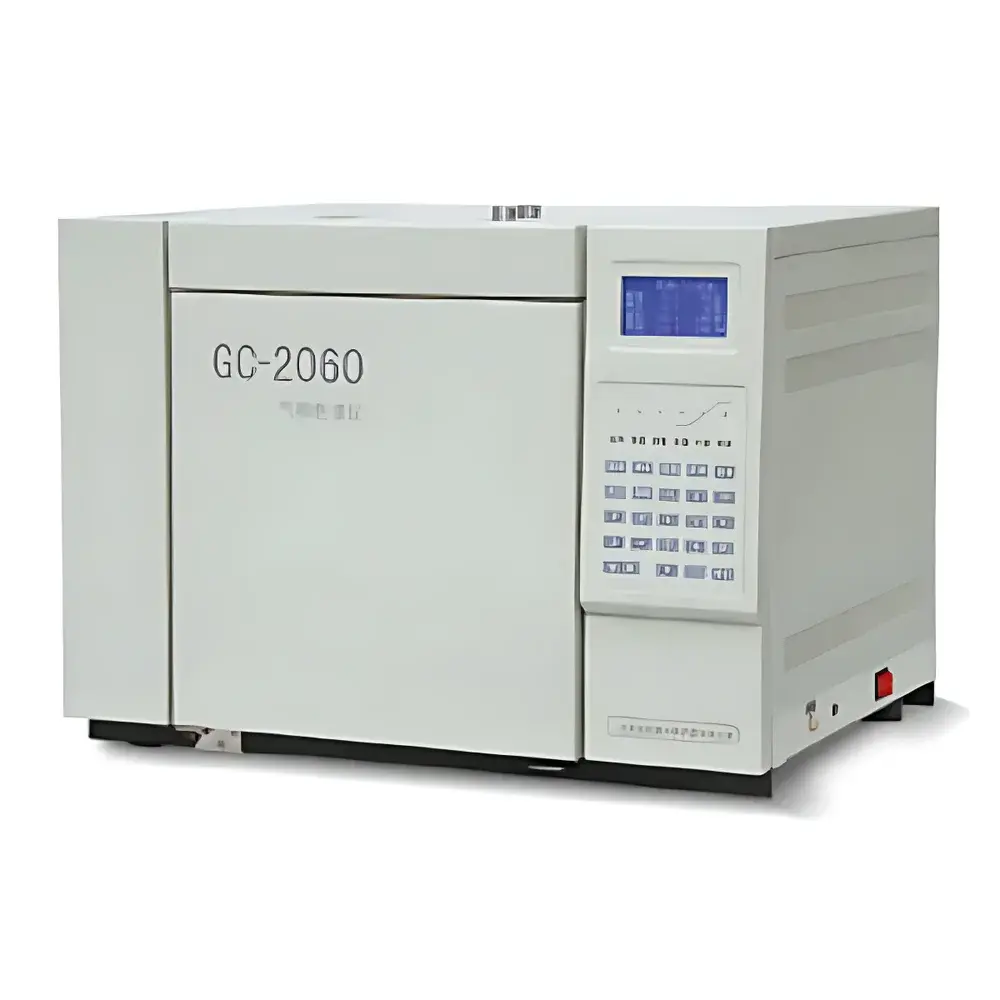
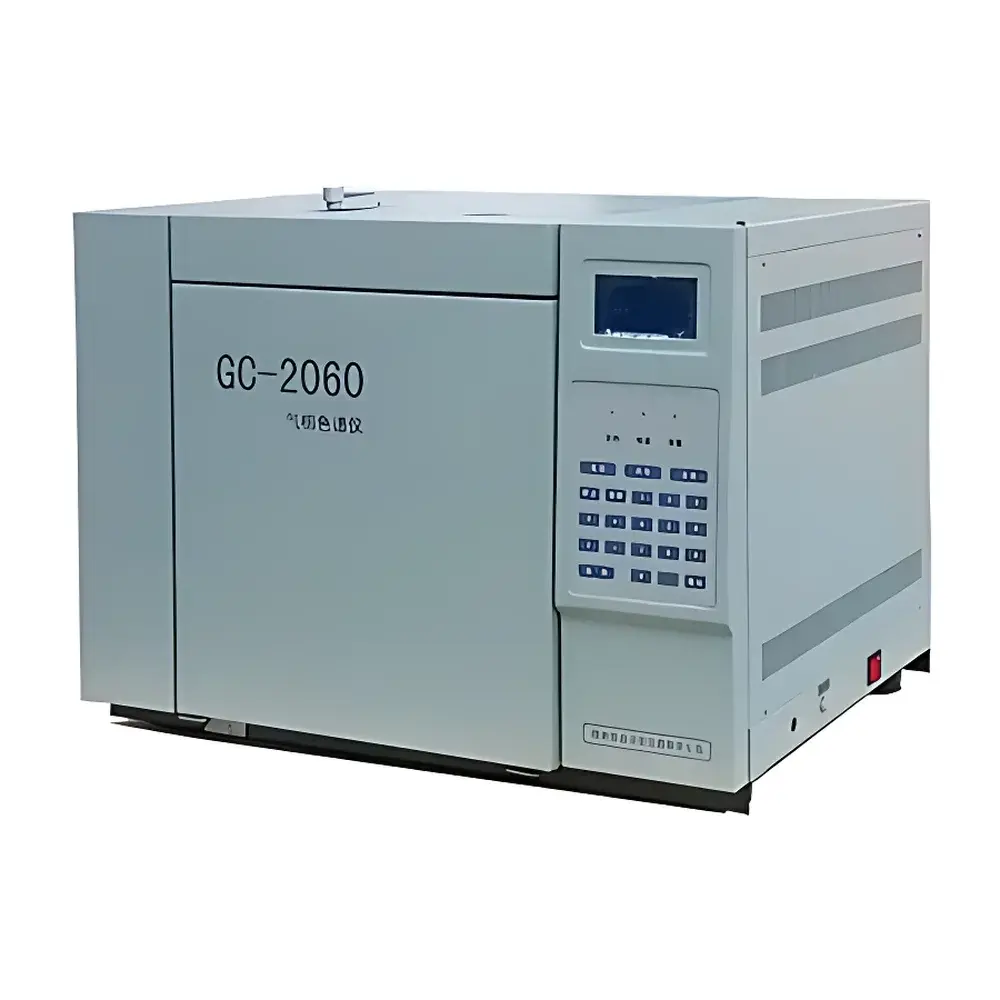
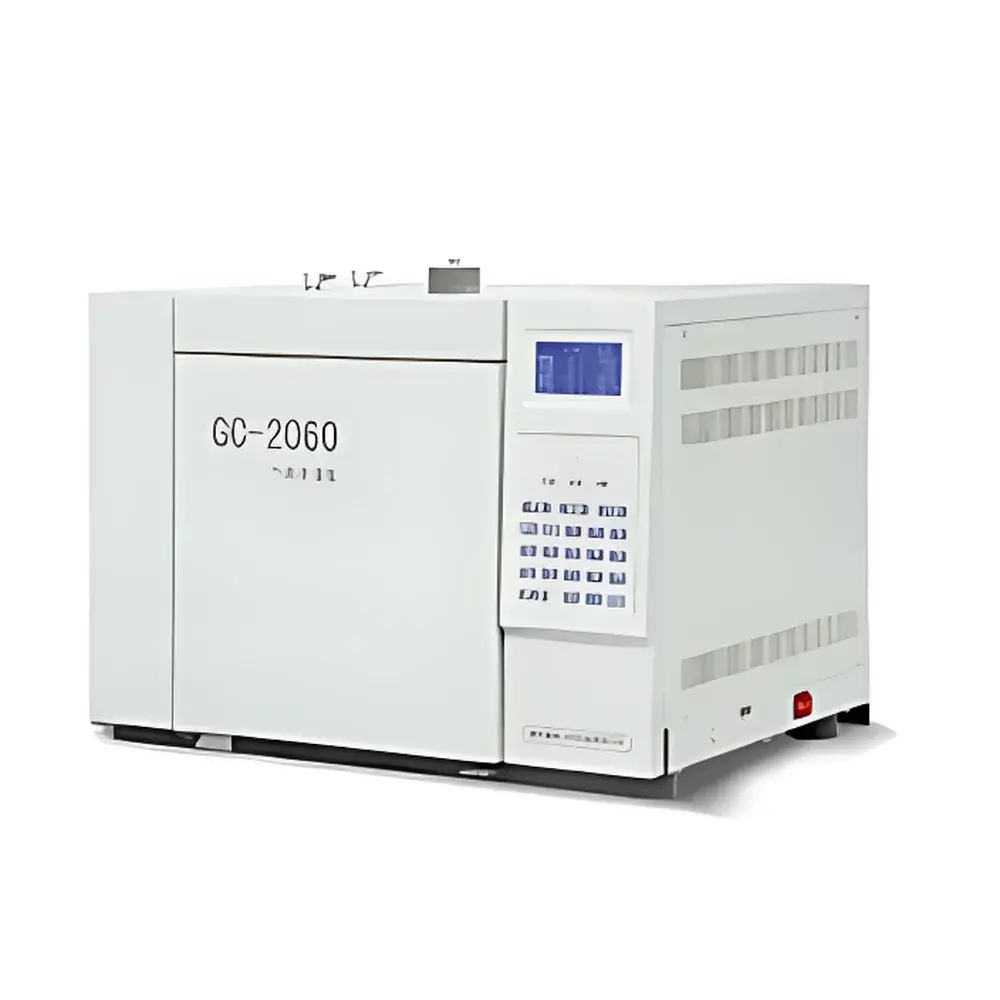
ZHONGKEHUIFEN GC-2060 Gas Chromatograph
| Brand | ZHONGKEHUIFEN |
|---|---|
| Origin | Beijing, China |
| Model | GC-2060 |
| Temperature Control Range | Ambient + 3°C to 450°C |
| Ramp Rate | 0.1–40°C/min |
| Cooling Time | ~8 min (450°C → 50°C) |
| Carrier Gas Flow Range | 0–1200 mL/min |
| Carrier Gas Pressure Range | 0–970 kPa |
| Injector Max Operating Temperature | 450°C |
| Injector Pressure Setting Range | 0–970 kPa |
| Injector Total Flow Setting Range | 0–1200 mL/min |
| Column Oven Capacity | Supports up to three independent injectors and optional six-port valve or methanizer |
| FID Sensitivity | ≤5×10⁻¹¹ g/s (n-hexadecane) |
| TCD Sensitivity | ≥3000 mV·mL/mg (benzene/toluene) |
| FPD (S) | ≤5×10⁻¹¹ g/s (parathion-methyl) |
| FPD (P) | ≤3×10⁻¹¹ g/s (parathion-methyl) |
| Baseline Noise (FID) | ≤2.5×10⁻¹⁴ A |
| Baseline Drift (30 min, FID) | ≤5×10⁻¹⁴ A |
| Linearity (FID) | ≥10⁶ |
Overview
The ZHONGKEHUIFEN GC-2060 Gas Chromatograph is a benchtop analytical instrument engineered for precision separation and quantitative analysis of volatile and semi-volatile organic compounds. Based on the fundamental principle of differential partitioning between a mobile phase (inert carrier gas) and a stationary phase (capillary column coating), the GC-2060 delivers robust performance in routine laboratory environments. Its modular thermal architecture supports simultaneous operation of multiple detectors—including Flame Ionization Detection (FID), Thermal Conductivity Detection (TCD), and Flame Photometric Detection (FPD)—enabling multi-analyte characterization across environmental, petrochemical, pharmaceutical, and food safety applications. Designed with ISO/IEC 17025-aligned operational integrity in mind, the system meets essential requirements for method validation, calibration traceability, and long-term baseline stability under GLP-compliant workflows.
Key Features
- Intuitive large-format LCD interface with native Chinese and English language support—streamlining method setup, real-time status monitoring, and diagnostic feedback without external PC dependency.
- Dual-zone independent temperature control: precisely regulated oven (ambient + 3°C to 450°C) and separately heated injector/detector modules, each with ±0.1°C thermal stability over 30 minutes.
- High-efficiency column oven with extended thermal mass and forced-air convection cooling, achieving 450°C → 50°C cooldown in approximately 8 minutes—reducing cycle time without compromising reproducibility.
- Capillary-optimized split/splitless injector with maximum operating temperature of 450°C, pressure-programmable from 0–970 kPa, and total flow control up to 1200 mL/min—compatible with standard 0.1–0.53 mm ID fused-silica columns.
- Modular detector bay accommodating FID, TCD, and FPD configurations; all detectors feature digitally stabilized baselines, low-noise electronics (<2.5×10⁻¹⁴ A for FID), and wide dynamic linearity ranges (≥10⁶ for FID).
- Programmable five-stage temperature ramping (0.1–40°C/min, 0.1°C increments) and customizable hold times—supporting complex gradient elution protocols required for ASTM D3606, USP , and EPA Method 8260C compliance.
Sample Compatibility & Compliance
The GC-2060 accommodates liquid, gaseous, and headspace-derived samples via manual or autosampler injection. Its flexible inlet design supports direct capillary coupling, on-column injection, and optional six-port valve configurations for automated gas sampling or derivatization workflows (e.g., CO/CO₂ conversion via methanizer). All thermal zones meet IEC 61010-1 safety standards for laboratory equipment. When operated with validated methods and documented calibration records, the system satisfies data integrity expectations under FDA 21 CFR Part 11 (when paired with compliant chromatography data systems), as well as ISO/IEC 17025 clause 7.7 (uncertainty estimation) and GLP Annex III (instrument qualification). Routine performance verification includes retention time repeatability (RSD <0.1%), peak area precision (RSD <1.5%), and detector response linearity assessment per USP .
Software & Data Management
The GC-2060 operates natively via embedded firmware but integrates seamlessly with third-party CDS platforms—including OpenLAB CDS, Chromeleon, and Empower—via standard RS-232 or USB virtual COM port protocols. Raw signal acquisition supports .CSV and .CDF export formats for post-run processing in MATLAB, Python (using PyGC or NIST MS Search), or statistical packages. Audit trail functionality, electronic signatures, and user access levels are enforced at the CDS layer, enabling full traceability for regulatory submissions. Method templates can be exported/imported across instruments, facilitating cross-site harmonization in multi-lab networks.
Applications
- Environmental testing: BTEX, PAHs, chlorinated solvents, and pesticide residues per EPA Methods 8021B, 8270D, and 502.2.
- Petrochemical QA/QC: Hydrocarbon group-type analysis (HTA), gasoline oxygenates (MTBE, ETBE), and sulfur speciation using FPD-P/S channels.
- Pharmaceutical residual solvent quantification per ICH Q3C guidelines, including Class 2 and 3 solvents (e.g., acetone, ethanol, toluene).
- Food flavor and fragrance profiling: Terpenes, aldehydes, esters, and lactones in essential oils and fermented products.
- Forensic toxicology: Volatile substance identification in blood headspace (e.g., ethanol, isopropanol, acetone) using dual-FID/TCD confirmation.
FAQ
What detector configurations are factory-supported on the GC-2060?
The base configuration includes a high-stability FID. Optional factory-installed modules include TCD and dual-channel FPD (phosphorus and sulfur modes), all with pre-aligned optical paths and certified sensitivity specifications.
Is the GC-2060 compatible with legacy capillary columns from Agilent or Thermo Fisher?
Yes—standard 0.1–0.53 mm ID fused-silica columns with universal ferrule interfaces (0.4–0.5 mm ID) are fully supported. Column installation follows IUPAC-recommended procedures for leak-free connections.
Can the instrument be qualified under GMP conditions?
Yes—when deployed with documented IQ/OQ/PQ protocols, calibrated reference standards (NIST-traceable), and a validated CDS, the GC-2060 meets core GMP requirements for analytical instrumentation per EU Annex 15 and FDA Guidance for Industry.
What maintenance intervals are recommended for optimal FID performance?
Weekly inspection of jet cleanliness and collector electrode alignment; quarterly replacement of silica gel traps and annual ceramic igniter verification. Detector tuning logs must be retained for audit readiness.
Does the system support unattended overnight runs?
Yes—the embedded scheduler enables up to 99 sequential injections with auto-shutdown and ambient cooling activation upon completion, minimizing operator dependency during extended batch analyses.
Related Products




