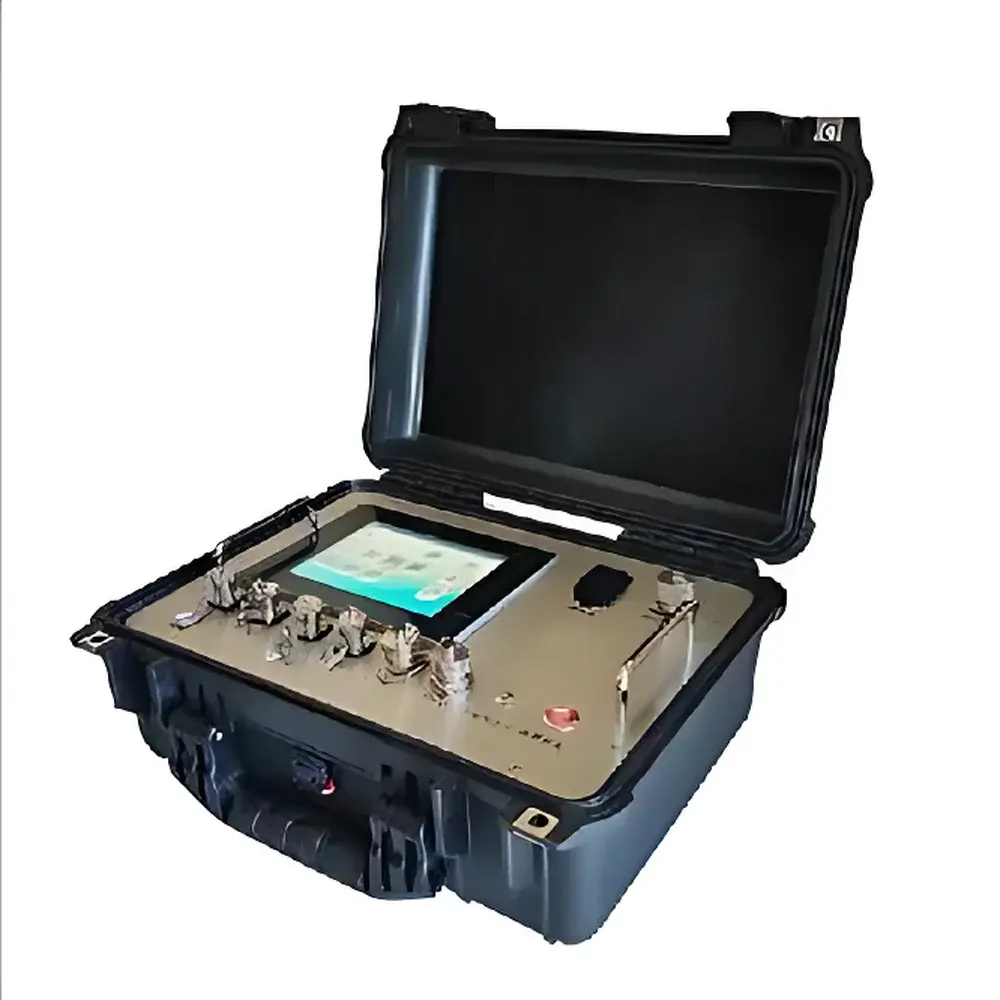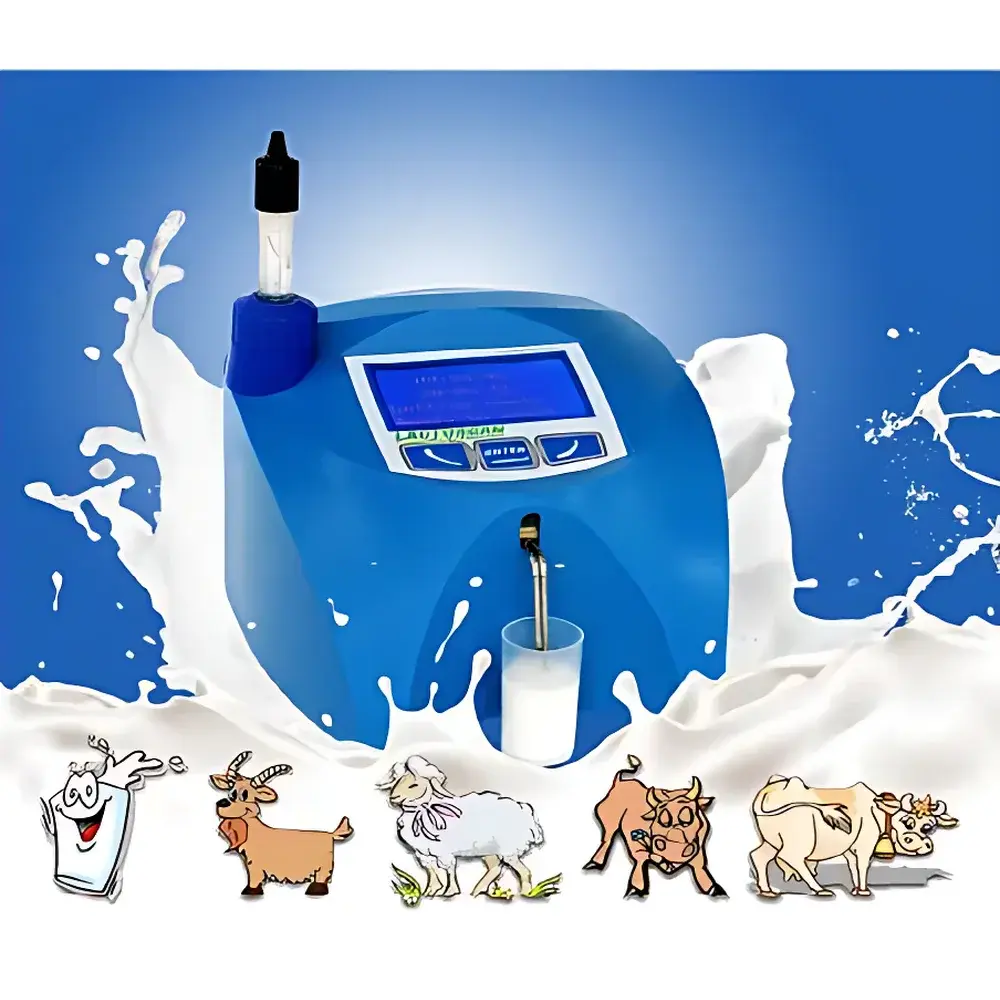
Funke Lactoscan_SP Dairy Analyzer
| Brand | Funke |
|---|---|
| Origin | Bulgaria |
| Manufacturer Type | Authorized Distributor |
| Origin Category | Imported |
| Model | Lactoscan_SP |
| Detection Parameters | Fat, Protein, Lactose, Solid-Not-Fat (SNF), Total Solids, Freezing Point Depression, Density, Conductivity |
| Automation Level | Fully Automatic |
| Analysis Time | ≤ 60 s per sample |
| Measurement Range | 0.01–25 % (for major components) |
| Repeatability | ±0.1 % |
| Accuracy | ±0.15 % |
| Sample Temperature Range | 1–40 °C |
| Ambient Temperature Range | 10–40 °C |
| Relative Humidity | 30–80 % RH |
| Power Supply | AC 110/220 V ±10 %, DC 12–14.2 V |
| Power Consumption | 30 W |
| Dimensions (W×D×H) | 100 × 223 × 216 mm |
| Weight | < 3.5 kg |
| Data Storage Capacity | 500 test records |
| Interface | RS-232 serial port |
| Display Language | English & Chinese |
| Optional Accessories | Thermal printer, vehicle power adapter |
Overview
The Funke Lactoscan_SP Dairy Analyzer is a fully automated, benchtop near-infrared (NIR) and ultrasonic multi-parameter analyzer engineered for rapid, non-destructive compositional analysis of raw and processed dairy liquids. Operating on dual physical principles—ultrasonic time-of-flight measurement for density and acoustic impedance, and broadband NIR spectroscopy (700–1100 nm) for quantification of fat, protein, lactose, and total solids—the instrument delivers laboratory-grade results in under 60 seconds per sample. Designed specifically for dairy quality control laboratories, collection centers, and mobile testing units, the Lactoscan_SP meets the functional requirements of ISO 9622:2013 (Milk — Determination of fat, protein and lactose content — Guideline for instrumental methods) and supports compliance with national milk grading standards including EU Regulation (EC) No 853/2004 and China’s GB 19301-2010 for raw milk.
Key Features
- Fully automatic operation with single-button start; no sample preparation, centrifugation, or reagents required
- Dual-sensor architecture: integrated ultrasonic transducer array and high-stability NIR spectrometer for cross-validated measurements
- Real-time temperature compensation across 1–40 °C sample range ensures metrological consistency regardless of incoming milk temperature
- Onboard data storage for up to 500 test records with timestamp, operator ID, and calibration status metadata
- RS-232 serial interface compliant with ASTM E1382-95 (Standard Practice for Serial Communications Between Analytical Instruments and Computers)
- Optional thermal printer support enables GLP-compliant hardcopy output with full traceability (sample ID, date/time, result, operator, instrument serial number)
- Compact footprint (100 × 223 × 216 mm) and lightweight design (<3.5 kg) facilitate deployment in field vehicles or small QC labs
- Bilingual user interface (English/Chinese) with intuitive icon-driven navigation and context-sensitive help
Sample Compatibility & Compliance
The Lactoscan_SP is validated for direct analysis of bovine, ovine, caprine, buffalo, and camel milk without dilution or homogenization. It also accommodates processed dairy matrices including skim milk, whey, cream (up to 45% fat), UHT milk, reconstituted powder, flavored milk, and fermented products such as plain yogurt (non-gelled). All calibrations are traceable to NIST-certified reference materials and verified against gravimetric and Kjeldahl reference methods per ISO 5725-2:2019 (Accuracy and precision of measurement methods). The system supports audit-ready documentation for GMP and ISO/IEC 17025-accredited laboratories, including full calibration logs, performance verification reports, and electronic signature-capable data export (CSV/Excel).
Software & Data Management
Data acquisition and reporting are managed via embedded firmware with configurable report templates. Raw spectral and acoustic waveforms are retained internally and exportable via RS-232 for advanced multivariate modeling (e.g., PLS regression validation). The instrument complies with FDA 21 CFR Part 11 requirements for electronic records when used with validated third-party LIMS integration—supporting user access controls, audit trails, and electronic signatures. Firmware updates are delivered via USB flash drive and include version-controlled calibration coefficients and regulatory documentation packages. All stored results include instrument serial number, firmware revision, calibration expiration date, and environmental sensor readings (ambient temperature/humidity) at time of analysis.
Applications
- Raw milk acceptance testing at dairy cooperatives and collection hubs
- In-line quality monitoring during pasteurization and standardization processes
- Verification of composition claims on finished dairy products (e.g., high-protein milk, lactose-free variants)
- Freezing point depression measurement for adulteration detection (water addition)
- Contract testing laboratories serving ISO/IEC 17025 accreditation scopes
- Research applications in dairy science, including breed-specific milk profiling and seasonal variation studies
- Mobile veterinary and extension services performing on-farm milk assessment
FAQ
What reference standards are used to validate the Lactoscan_SP calibration?
Certified reference materials from IRMM (Institute for Reference Materials and Measurements) and AOAC International dairy reference sets, verified annually against primary methods per ISO/IEC 17025 Clause 6.5.
Does the instrument require daily recalibration?
No—factory-installed calibration remains stable for ≥30 days under routine use; performance verification using control samples is recommended before each shift.
Can the Lactoscan_SP measure freezing point depression?
Yes, it calculates freezing point depression (°C) directly from conductivity and density measurements, enabling detection of water adulteration per IDF Standard 107:2015.
Is the thermal printer interface compatible with common lab printers?
It supports ESC/POS protocol thermal printers (e.g., Epson TM-T20, Star TSP100); drivers and configuration guides are provided in the technical documentation package.
How is data security maintained during RS-232 transmission?
All serial communication uses hardware handshaking (RTS/CTS) and CRC-16 error checking; no encryption is applied as the interface is intended for local, trusted network segments per IEC 62443-3-3 guidance.