
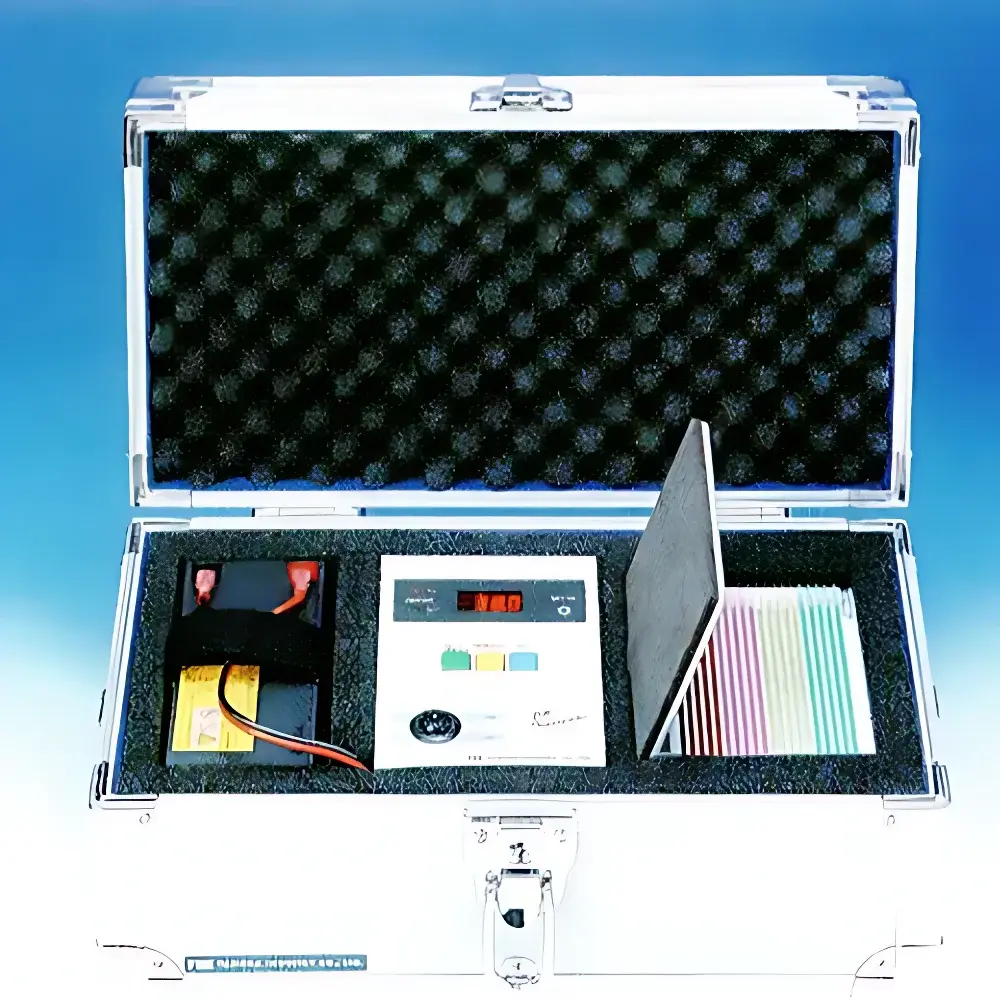
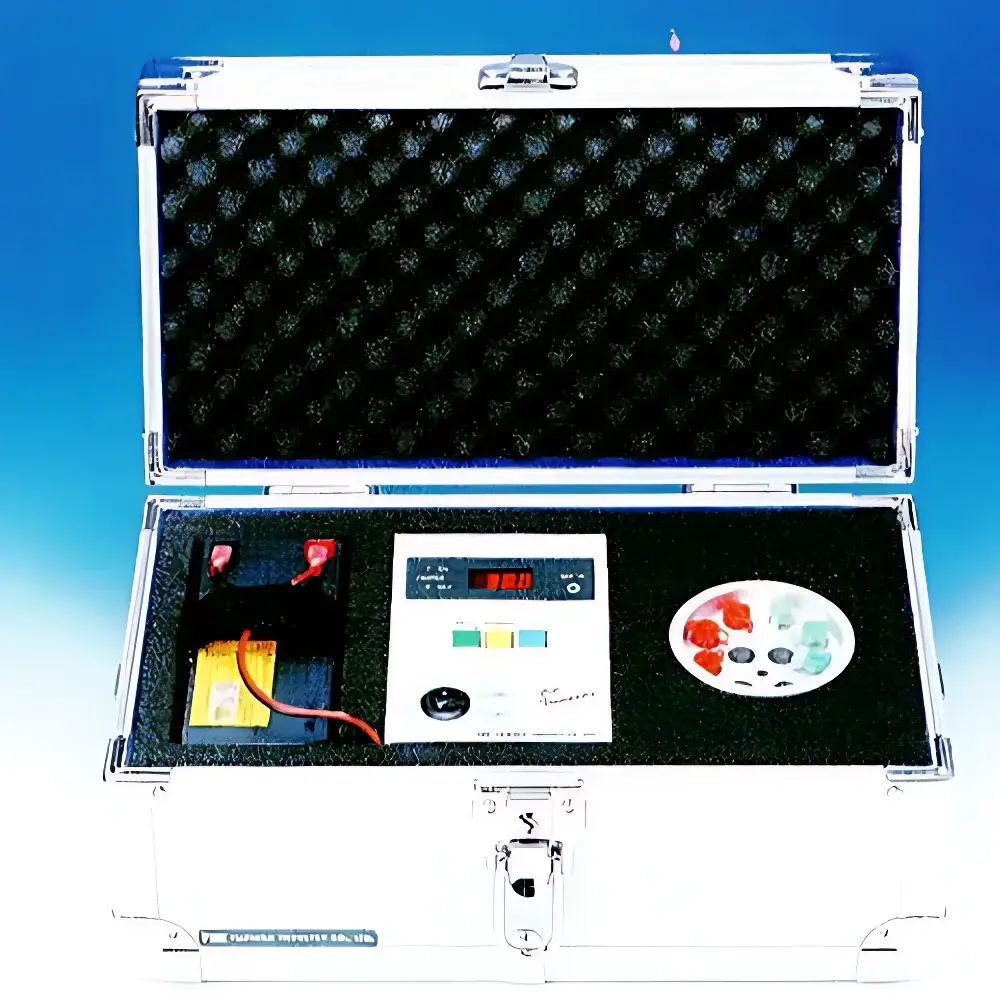
FHK NFA450 Portable Embryo Transport Incubator
| Brand | FHK (Fujihei Kogyo Co., Ltd.) |
|---|---|
| Origin | Japan |
| Manufacturer Type | Authorized Distributor |
| Origin Category | Imported |
| Model | NFA450 |
| Temperature Control Range | 37–38.5 °C |
| Temperature Uniformity | ±1 °C |
| Capacity | 0.25 mL straws × 20 or Eppendorf tubes × 10 |
| Power Supply | Sealed 12 V / 6.5 Ah rechargeable battery |
| Heater | 12 V / 10 W |
| Temperature Setting Accuracy | ±1 °C |
| Temperature Measurement Accuracy | ±1 °C |
| Operating Ambient Temperature | 10–35 °C |
| Operating Ambient Humidity | ≤85% RH |
| Continuous Operation Time | ~24 h (fully charged, setpoint 38 °C) |
| Dimensions (L×W×H) | 370 × 210 × 210 mm |
| Weight | ~6 kg |
Overview
The FHK NFA450 Portable Embryo Transport Incubator is a purpose-engineered thermal management system designed exclusively for the safe, short- to medium-duration transport of viable mammalian embryos—particularly bovine oocytes and blastocysts derived from abattoir-sourced ovaries or ovum pick-up (OPU) procedures. Unlike general-purpose portable incubators, the NFA450 implements a tightly constrained, biologically validated temperature regime (37.0–38.5 °C), reflecting the narrow thermotolerance window required to maintain embryonic metabolic integrity, mitochondrial membrane potential, and cytoskeletal stability during transit. Its operation relies on resistive heating controlled by a closed-loop analog circuit with dual-stage thermal feedback—ensuring minimal thermal drift even under variable ambient loads. Developed in collaboration with the Livestock Biotechnology Research Center (LBRC), an R&D unit under the Japan Livestock Improvement Association, the device meets the functional requirements of commercial embryo transfer (ET) programs operating under ISO 9001-certified logistics protocols and adheres to core principles outlined in IETS (International Embryo Transfer Society) Guidelines for Embryo Handling.
Key Features
- Electromagnetic interference (EMI)-shielded dual-layer aluminum alloy housing, engineered to attenuate external RF emissions from mobile devices and vehicle electronics that may destabilize analog temperature regulation circuits.
- High-resilience polyurethane internal cradle system, providing shock absorption (≥25 g peak deceleration tolerance) while preserving stratification of cryoprotectant solution and air column within 0.25 mL insemination straws—critical for preventing osmotic shock during vibration-induced fluid displacement.
- Compact form factor (370 × 210 × 210 mm) and lightweight construction (~6 kg), enabling single-operator handling and integration into standard veterinary field kits or airline-approved carry-on configurations.
- Dedicated thermal calibration traceability: Each unit undergoes factory verification using NIST-traceable PT100 sensors at three spatial points (top/mid/base) across the full operating range, with documented deviation ≤±0.8 °C (mean ± SD).
- Fail-safe thermal architecture: Independent overtemperature cutoff (40.0 °C hard limit) and low-voltage disconnect (<10.5 V) prevent battery thermal runaway and heater burnout.
Sample Compatibility & Compliance
The NFA450 accommodates two standardized specimen formats: twenty 0.25 mL plastic embryo straws (ISO 11553-compliant dimensions) or ten 1.5 mL Eppendorf-style microtubes. All internal contact surfaces are autoclavable (121 °C, 15 min) and chemically resistant to ethanol, glycerol, and ethylene glycol-based cryoprotectants. The device complies with IEC 61000-4-3 (radiated RF immunity) and IEC 61000-4-6 (conducted RF immunity) standards. While not classified as a medical device under FDA 21 CFR Part 820, its operational parameters align with Good Manufacturing Practice (GMP)-adjacent quality control benchmarks used by accredited embryo production laboratories (e.g., those certified under JACVET or IETS Laboratory Accreditation Programs).
Software & Data Management
The NFA450 operates without embedded firmware or digital user interfaces; temperature control is fully analog, eliminating software-related validation burdens and cybersecurity vulnerabilities. A front-panel LED display provides real-time setpoint and measured temperature (resolution: 0.1 °C), with manual knob-based adjustment. For auditability, users are advised to log ambient conditions, charge state, and thermal readings manually—or integrate with external data loggers (e.g., HOBO UX100 series) via optional 4–20 mA analog output (add-on module). This design supports compliance with GLP Annex 11 and FDA 21 CFR Part 11 when paired with validated electronic lab notebook (ELN) systems.
Applications
- Transport of fresh (non-frozen) bovine embryos between OPU collection sites and recipient farm clinics.
- Field-side stabilization of in vitro matured (IVM) oocytes prior to intracytoplasmic sperm injection (ICSI).
- Inter-laboratory transfer of pre-implantation embryos for genetic testing or collaborative research.
- Emergency backup incubation during power outages in fixed-location embryo processing labs.
- Training modules for veterinary students in embryo handling best practices under simulated logistical constraints.
FAQ
What is the recommended maximum transport duration for optimal embryo viability?
Under continuous operation at 38.0 °C and ambient temperatures ≤30 °C, viability retention exceeds 92% for bovine blastocysts over 24 hours—validated per IETS Standard Protocol 4.2.
Can the NFA450 be used for human ART specimens?
No. It is specifically calibrated and validated for ruminant embryology workflows and does not meet ISO 13485 requirements for human-assisted reproductive technology devices.
Is external power input supported during operation?
Yes—DC 12 V input (via automotive cigarette socket or bench supply) enables indefinite runtime while preserving battery charge; the unit automatically prioritizes external power when detected.
How often must the internal thermal calibration be verified?
Annual verification is recommended using a calibrated reference thermometer (e.g., Fluke 1523 with dry-block calibrator); certificates of verification are accepted for ISO/IEC 17025-accredited facility audits.
Does the device include documentation for regulatory submission?
Yes—each unit ships with a Factory Calibration Report, EMC Test Summary (per IEC 61000-4 series), and Material Declaration (RoHS/REACH compliant).




