
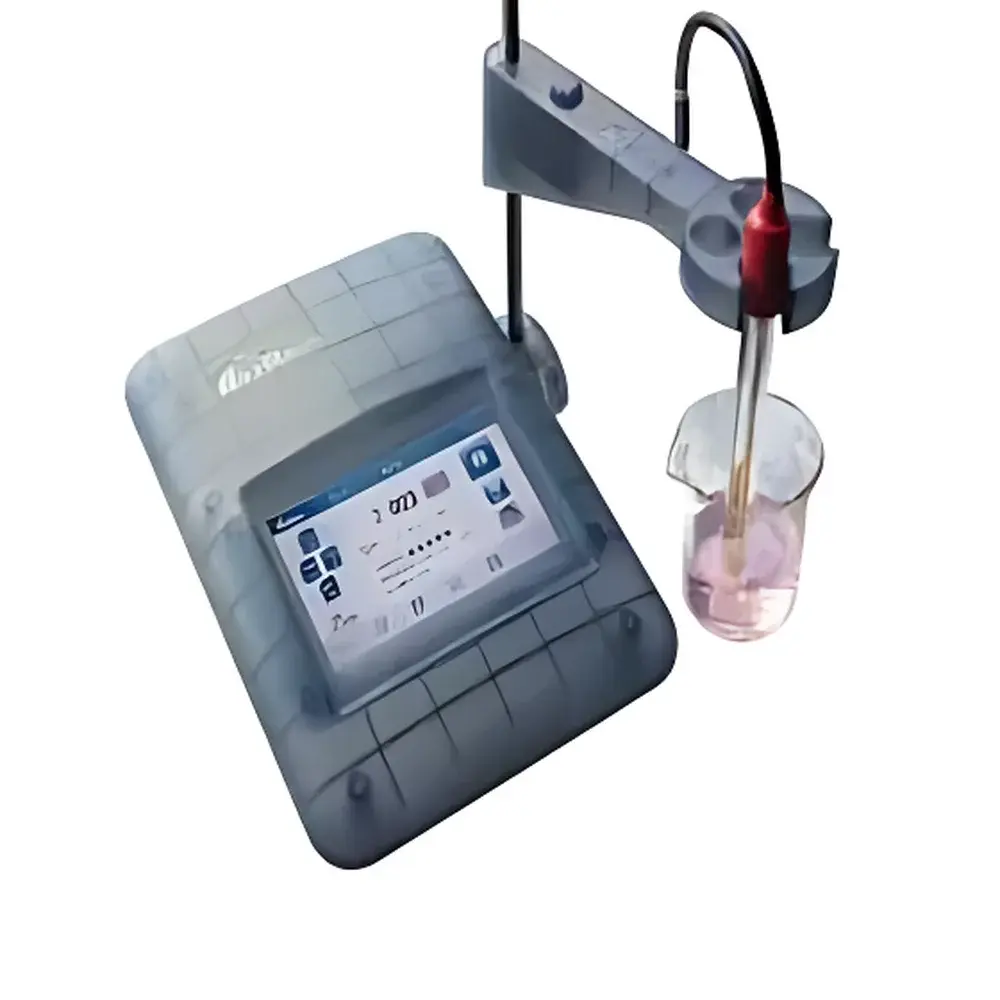
JIHEPU IS126 Benchtop pH Meter
| Brand | JIHEPU |
|---|---|
| Origin | Shandong, China |
| Model | IS126 |
| Instrument Type | Benchtop |
| Parameter Type | Single-Parameter (pH/mV) |
| pH Range | −2.00 to 18.00 |
| pH Resolution | 0.01 / 0.1 (selectable) |
| pH Accuracy | ±0.01 |
| mV Range | −2000 to +2000 mV |
| mV Resolution | 1 mV |
| mV Accuracy | ±1 mV |
| Temperature Range (MTC/ATC) | −5.0 to 105.0 °C |
| Temperature Accuracy | ±0.2 °C |
| Calibration Points | 1–5 point, auto-buffer recognition |
| Built-in Buffer Sets | 3 standard groups (NIST, DIN, USA) |
| Data Storage | 1000 measurements with timestamp |
| Display | 5.0-inch color TFT touchscreen (800 × 480) |
| Interface | RS232 serial port |
| Software Compatibility | IS-LINK PC software for real-time data streaming and GLP-compliant reporting |
| Power Supply | External 9 V DC / 1 A adapter |
Overview
The JIHEPU IS126 is a high-precision benchtop pH meter engineered for routine and quality-critical electrochemical measurements in academic laboratories, pharmaceutical QC labs, environmental monitoring stations, and industrial process control environments. It operates on the fundamental principle of potentiometric measurement: detecting the potential difference between a pH-sensitive glass electrode and a stable reference electrode immersed in an aqueous sample, then converting that voltage into a pH value via the Nernst equation (−59.16 mV/pH unit at 25 °C). The instrument supports both pH and direct millivolt (mV) modes, enabling not only acidity/alkalinity assessment but also redox potential (Eh) evaluation and ion-selective electrode (ISE) compatibility with appropriate probes. Its wide measurement range (−2.00 to 18.00 pH) accommodates highly acidic or alkaline samples—such as concentrated caustic solutions, battery electrolytes, or fermentation broths—where conventional meters may saturate or drift.
Key Features
- 5.0-inch full-color TFT touchscreen (800 × 480 resolution) with intuitive, icon-driven navigation—no physical buttons required.
- Three calibration buffer group presets (NIST, DIN, and USA standards), with automatic buffer recognition during calibration to minimize user error and ensure traceability.
- Flexible endpoint detection: auto-read (stable-signal hold), manual read (user-triggered), and time-based read (programmable interval)—optimized for kinetic studies or viscous samples.
- Real-time electrode health diagnostics: graphical electrode response curve, slope calculation (%), and asymmetry potential display—supporting proactive maintenance and validation per ISO 17025 requirements.
- Dual temperature compensation: manual (MTC) and automatic (ATC) modes using integrated or external Pt1000 sensors; temperature accuracy ±0.2 °C across −5.0 to 105.0 °C.
- GLP-compliant operation mode: timestamps all calibrations and measurements, logs operator ID (via optional user login), and enforces audit-ready data integrity.
- Dynamic real-time plotting: simultaneous pH vs. time and mV vs. time curves displayed during continuous monitoring—valuable for titration endpoint verification or stability testing.
Sample Compatibility & Compliance
The IS126 is validated for use with aqueous and low-ionic-strength non-aqueous samples (e.g., ethanol–water mixtures up to 30% v/v) when paired with appropriate electrodes such as the included YE203 tri-combination pH electrode. It complies with core electrochemical metrology principles defined in ASTM E70, ISO 3696 (Grade 3 water), and USP . While not certified for hazardous area use (e.g., ATEX or IECEx), its robust enclosure meets IP20 rating for general laboratory environments. All calibration and measurement records adhere to ALCOA+ data integrity principles—attributable, legible, contemporaneous, original, accurate, complete, consistent, enduring, and available—as required under FDA 21 CFR Part 11 for electronic records in regulated industries.
Software & Data Management
The IS126 interfaces via RS232 serial communication with the proprietary IS-LINK Windows application, enabling real-time data streaming, remote instrument control, and automated report generation. Stored datasets (up to 1000 entries) include pH/mV values, temperature, date/time stamps, calibration history, and electrode diagnostics. Export formats include CSV and PDF—both structured for LIMS integration and regulatory submission. The software supports configurable data fields, digital signature capture for analyst verification, and export-log encryption—facilitating compliance with GLP and GMP documentation workflows.
Applications
- Pharmaceutical: Dissolution testing, buffer preparation verification, and cleaning validation (pH-based residue detection).
- Food & Beverage: Fermentation pH profiling (e.g., yogurt, beer, wine), shelf-life stability studies, and HACCP critical control point monitoring.
- Environmental: Wastewater effluent compliance testing (EPA Method 150.1), soil extract analysis, and acid rain monitoring.
- Academic Research: Electrode characterization, kinetics of hydrolysis reactions, and teaching potentiometry fundamentals in analytical chemistry labs.
- Chemical Manufacturing: Catalyst slurry pH control, neutralization endpoint detection, and corrosion inhibitor formulation QA.
FAQ
Does the IS126 support calibration with non-standard or custom buffer solutions?
Yes—users can define up to three custom buffer sets with user-specified nominal pH values and temperatures, stored alongside factory presets.
Is the YE203 electrode compatible with high-salt or protein-rich samples?
The YE203 features a double-junction reference system and ceramic junction, offering improved resistance to clogging and junction potential drift in complex matrices—but for heavy fouling applications, a sleeve-type or open-junction electrode is recommended.
Can measurement data be exported directly to Excel without IS-LINK software?
No—the RS232 interface requires terminal emulation or IS-LINK for structured data parsing; raw ASCII output is unsupported.
What is the warranty coverage and service support structure?
JIHEPU provides a 12-month limited warranty covering parts and labor; extended service plans and certified calibration certificates are available upon request.
Does the instrument meet electromagnetic compatibility (EMC) standards for laboratory use?
It conforms to IEC 61326-1:2013 for EMC in laboratory environments (Group 1, Class A emissions; basic immunity).




