
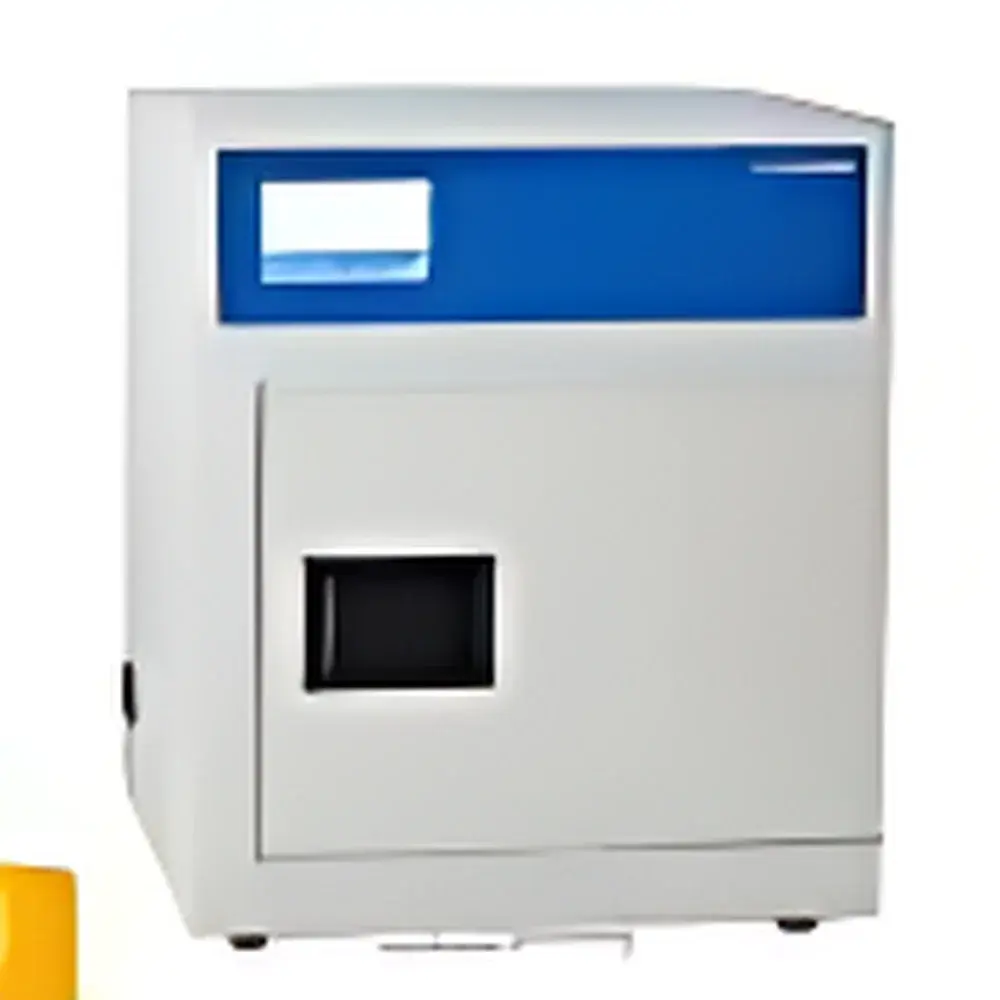
Xiatech TC3300 Cryogenic Thermal Conductivity Analyzer (–150 °C)
| Brand | Xiatech |
|---|---|
| Model | TC3300 |
| Measurement Principle | Transient Hot Wire Method |
| Temperature Range | –150 °C to Ambient |
| Thermal Conductivity Accuracy | ±5% |
| Repeatability | ±3% |
| Sample Forms | Solid, Paste, Powder, Liquid |
| Sample Dimensions | ≥25 mm (solid edge length) |
| Test Atmosphere | Air |
| Compliance | ASTM C1113, ASTM D5930, GB/T 10297, GB/T 11205 |
| Maximum Operating Pressure | High-Pressure Compatible |
| Sample Throughput | Single-sample per cycle |
Overview
The Xiatech TC3300 Cryogenic Thermal Conductivity Analyzer is an engineered solution for precise thermal conductivity characterization of heterogeneous materials under deep-cryogenic conditions down to –150 °C. Based on the transient hot wire (THW) method—recognized internationally for its high accuracy in isotropic and homogeneous media—the instrument delivers rapid, non-destructive measurements without requiring sample machining or contact pressure calibration. Its cryogenic chamber integrates a closed-cycle refrigeration system with real-time PID-controlled temperature stabilization, enabling stable thermal equilibrium across the full operating range. Unlike guarded-hot-plate or laser-flash instruments, the TC3300 avoids assumptions about sample homogeneity or interfacial resistance, making it particularly suitable for quality control labs and R&D facilities where speed, minimal sample preparation, and broad material compatibility are critical.
Key Features
- Cryogenic capability: Stable operation from –150 °C to ambient temperature with ±0.1 °C temperature control stability over 30-minute dwell periods.
- Transient hot wire methodology: Compliant with ASTM C1113 (standard test method for thermal conductivity of refractory materials) and ASTM D5930 (standard test method for thermal conductivity of plastics), ensuring traceable, standards-aligned results.
- Minimal sample requirements: Accepts irregularly shaped solids, pastes, powders, gels, and liquids without probe replacement or fixture reconfiguration.
- High-speed acquisition: Completes full thermal decay curve capture within 1–20 seconds per measurement, with automated multi-cycle averaging to suppress noise and improve statistical confidence.
- Low-power heating protocol: Uses sub-milliwatt step-heating pulses to minimize thermal perturbation—critical for thermally unstable compounds, phase-change materials, and biological specimens.
- Robust mechanical architecture: Stainless-steel vacuum-jacketed chamber with integrated pressure-rated viewport and gas purge port for inert-atmosphere or high-pressure testing (up to 10 MPa, depending on configuration).
Sample Compatibility & Compliance
The TC3300 supports diverse physical states without modification: rigid solids (e.g., polymer composites, metal alloys, ceramics), compliant materials (thermal interface pastes, silicone gels), granular media (ceramic powders, mineral soils), and low-viscosity liquids (cryogenic coolants, organic solvents). Minimum solid dimensions are defined by lateral heat diffusion constraints—not geometric symmetry—requiring only that the shortest sample dimension exceeds 25 mm to ensure one-dimensional radial conduction during the transient pulse. All measurement protocols adhere to ISO/IEC 17025-relevant validation practices, including documented uncertainty budgets, reference material verification (e.g., NIST SRM 1470a), and routine drift monitoring. The system meets regulatory expectations for GLP-compliant thermal property documentation and supports audit-ready reporting per FDA 21 CFR Part 11 when paired with optional electronic signature modules.
Software & Data Management
Xiatech’s proprietary TCSoft v4.2 provides intuitive instrument control, real-time thermal decay visualization, and automated parameter extraction using inverse modeling algorithms based on the Carslaw–Jaeger analytical solution. Raw voltage-time datasets are stored in HDF5 format with embedded metadata (temperature setpoint, ambient pressure, probe calibration ID, operator ID, timestamp). Export options include CSV, Excel, and PDF reports conforming to ASTM E29–23 rounding rules. Software features include batch processing for multi-sample sequences, customizable pass/fail thresholds, and trend analysis across time-series datasets. Audit trail logging records all parameter changes, measurement starts/stops, and user logins—fully compliant with GxP data integrity principles.
Applications
- Insulation development: Quantifying k-values of aerogels, vacuum-insulated panels (VIPs), and cryogenic foams at operational temperatures.
- Thermal interface materials (TIMs): Benchmarking paste-to-substrate thermal resistance in semiconductor packaging and battery module thermal management.
- Geoscience research: Measuring thermal diffusivity of frozen soils, permafrost analogs, and icy regolith simulants.
- Pharmaceutical formulation: Assessing thermal transport in lyophilized cakes, lipid nanoparticles, and cryoprotectant solutions.
- Metallurgy & additive manufacturing: Characterizing anisotropic conductivity in as-built metal AM parts before and after HIP treatment.
- Energy storage: Evaluating solid-state electrolyte performance in Li-metal batteries below –40 °C.
FAQ
What calibration standards are supported for traceability?
NIST-traceable reference materials including SRM 1470a (fused quartz), SRM 1469 (alumina), and certified glycerol/water mixtures are preloaded in TCSoft’s calibration library.
Can the TC3300 operate under inert or reducing atmospheres?
Yes—the chamber includes a dual-port gas purge system compatible with Ar, N₂, H₂, or forming gas; optional pressure-rated seals enable up to 10 MPa operation.
Is probe recalibration required between sample types?
No—the THW probe is factory-calibrated and remains valid across all sample states; only temperature-dependent resistivity correction is applied in software.
How is thermal contact resistance mitigated for low-conductivity solids?
The THW method inherently minimizes interfacial resistance effects by embedding the wire directly into the sample matrix—eliminating the need for thermal grease or clamping force optimization.
Does the system support automated temperature ramping for thermal conductivity vs. temperature profiles?
Yes—programmable temperature ramps (0.1–5 °C/min) with dwell-and-measure cycles enable full k(T) mapping across the –150 °C to 30 °C range.



