
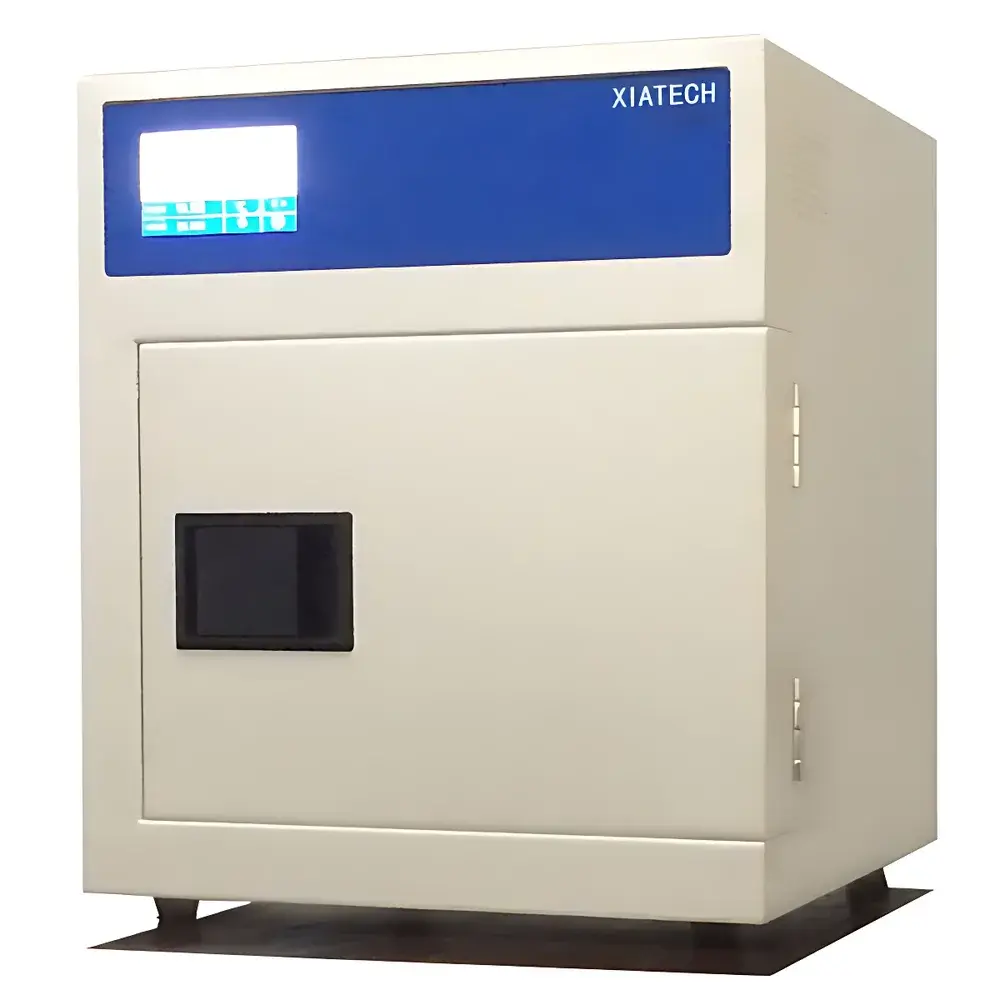
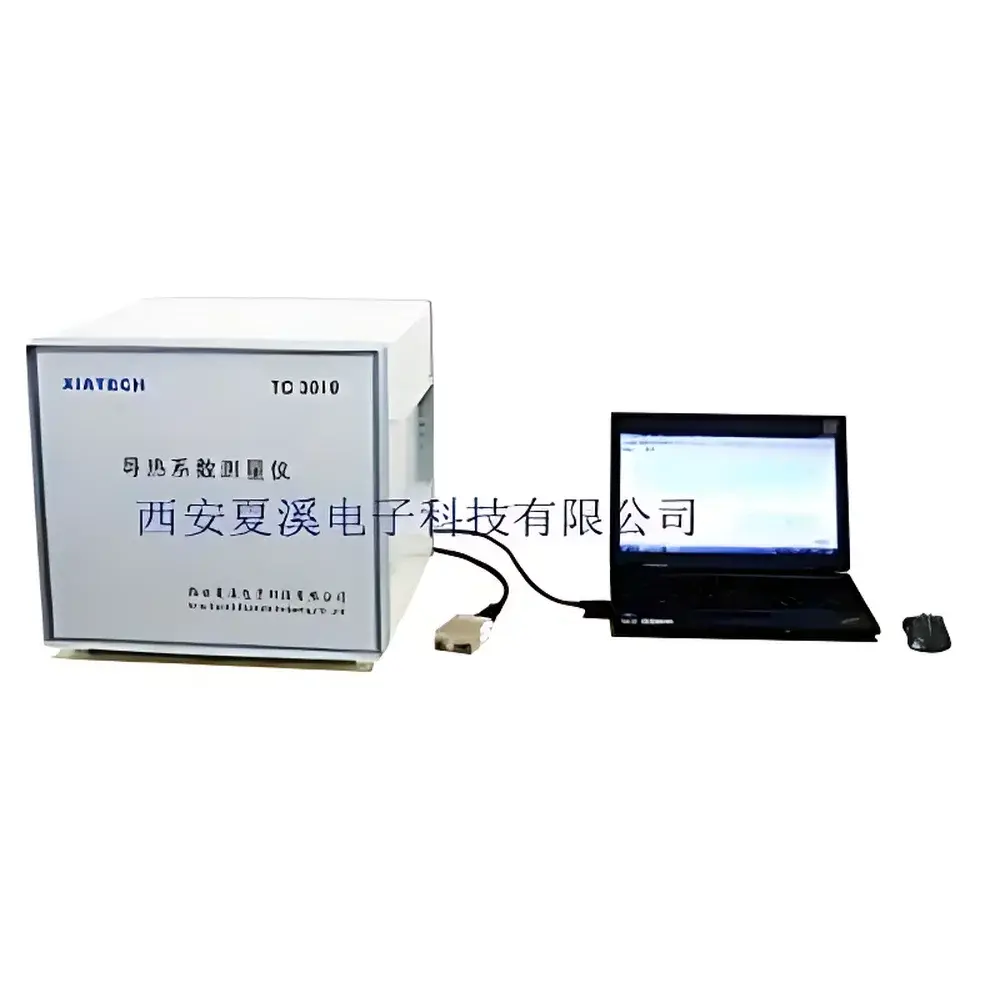
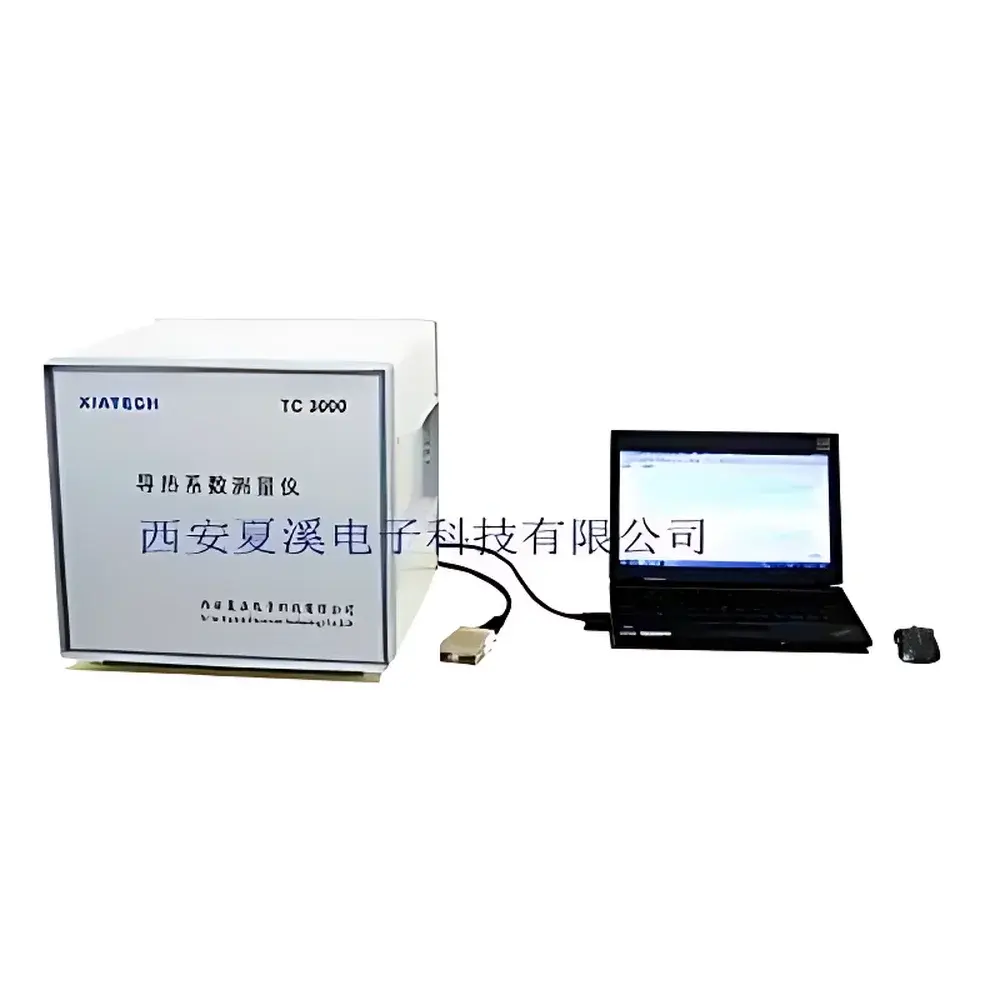
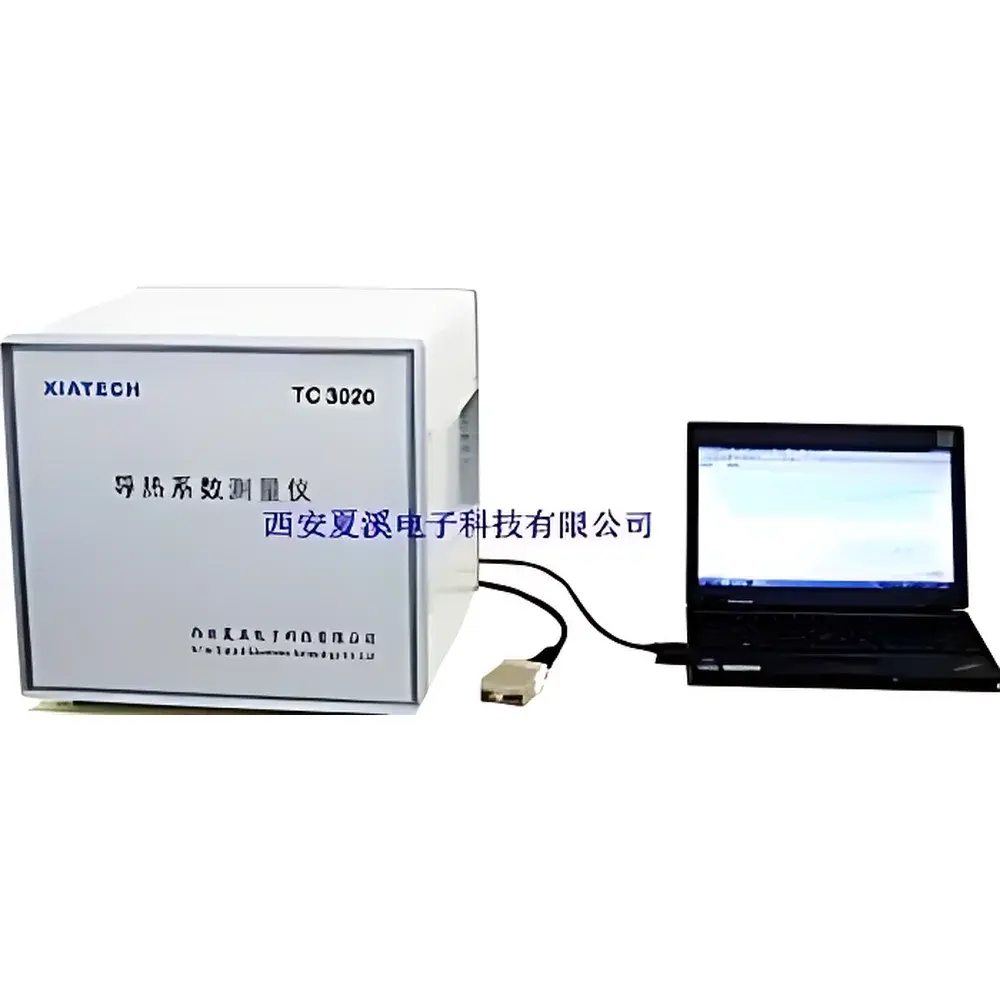
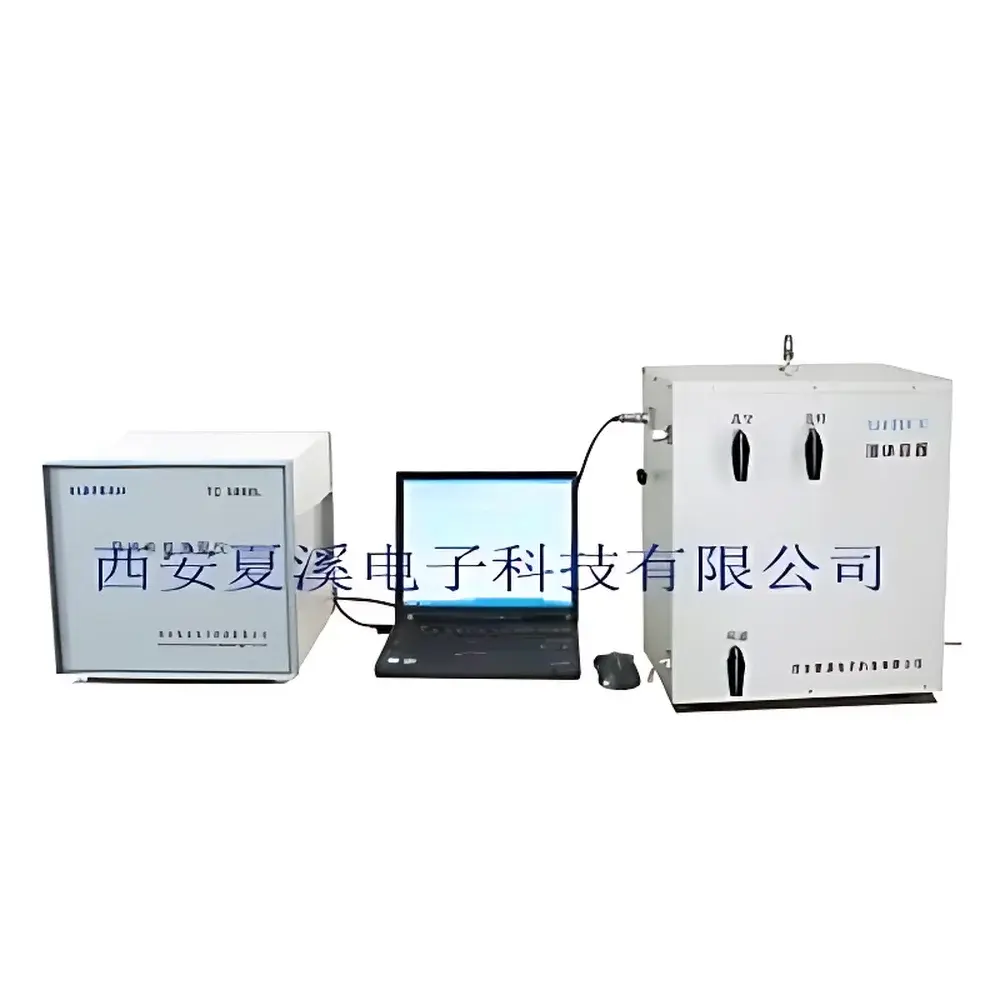
Xiatech TC3100 Series Transient Hot Wire Thermal Conductivity Analyzer
| Brand | Xiatech |
|---|---|
| Origin | Shaanxi, China |
| Model | TC3100 Series |
| Measurement Principle | Transient Hot Wire Method |
| Thermal Conductivity Range | 0.001–50 W/(m·K) (extendable to 100 W/(m·K)) |
| Accuracy | ±3% |
| Repeatability | ±3% |
| Resolution | 0.0005 W/(m·K) |
| Measurement Time | 1–20 s per test |
| Sample Forms | Solid, powder, granular, liquid, paste, gel, colloidal |
| Sample Dimensions (Solid) | Min. thickness 0.1 mm, min. lateral dimension ≥25 mm |
| Sample Volume (Liquid/Paste/Gel) | ≥50 mL |
| Operating Temperature Range | –30 °C to 100 °C |
| Test Atmosphere | Ambient air |
| Enclosure Dimensions (L×W×H) | 550 × 500 × 650 mm |
| Compliance | ASTM C1113, ASTM D5930, GB/T 10297, GB/T 11205 |
| Data Interface | USB |
| OS Compatibility | Windows |
Overview
The Xiatech TC3100 Series Transient Hot Wire Thermal Conductivity Analyzer is a precision-engineered instrument designed for rapid, non-destructive determination of thermal conductivity in heterogeneous and thermally sensitive materials. Based on the transient hot wire (THW) method—a standardized absolute technique defined in ASTM C1113 and ASTM D5930—the system measures thermal conductivity by monitoring the temperature rise of a thin, electrically heated wire embedded in or inserted into the sample. The underlying principle relies on solving the one-dimensional heat conduction equation for an infinite line source in an infinite medium, enabling direct calculation of thermal conductivity from the slope of the ln(t)-T curve during the transient phase. This method eliminates the need for calibration standards and provides high reproducibility across diverse material classes without requiring contact pressure optimization or interfacial resistance correction—critical advantages over guarded-hot-plate or laser-flash techniques when evaluating soft, porous, or low-conductivity media.
Key Features
- High-accuracy measurement with ±3% uncertainty across the full range (0.001–50 W/(m·K)), validated against NIST-traceable reference materials;
- Single-test duration of 1–20 seconds, supporting automated sequential analysis of multiple samples without manual intervention;
- Minimal sample preparation: accepts irregularly shaped solids, powders, granules, liquids, pastes, gels, and colloids—no probe exchange required;
- Low-power heating (<50 mW) ensures negligible thermal perturbation, preserving structural integrity of thermally labile or phase-change materials;
- Robust mechanical architecture with vibration-damped base and thermally stabilized electronics for stable operation under ambient laboratory conditions;
- Compliance with international thermal transport standards including ASTM C1113 (for solids), ASTM D5930 (for liquids), GB/T 10297 (Chinese national standard for steady-state and transient methods), and GB/T 11205 (for rubber and plastics);
- Integrated temperature control module enables measurements from –30 °C to +100 °C, supporting cryogenic and elevated-temperature characterization workflows.
Sample Compatibility & Compliance
The TC3100 accommodates a broad spectrum of physical states and microstructures without modification to hardware configuration. Solid specimens—including metals, alloys (e.g., stainless steel, lead, sodium-potassium eutectics), ceramics, polymers, composites, rocks, soils, biological tissues, and wood—require only minimal dimensional constraints (≥25 mm lateral dimension, ≥0.1 mm thickness). Liquids, nanofluids, refrigerants, lubricants, pharmaceutical emulsions, and biofluids are tested using standardized cylindrical containers with volume ≥50 mL. Powders, granular media, and aerogels are measured in consolidated or loosely packed configurations. Pastes, greases, thermal interface materials (TIMs), hydrogels, cosmetics, and food-grade colloids are evaluated in situ with no drying, pressing, or pelletization. All measurements are conducted under ambient atmospheric conditions, eliminating the need for vacuum or inert gas purging—reducing operational complexity while maintaining metrological rigor per ISO/IEC 17025-aligned testing practices.
Software & Data Management
The TC3100 operates via Xiatech’s proprietary Windows-based ThermalLab™ software, which supports real-time data acquisition, automatic curve fitting, outlier rejection, and statistical reporting. Each measurement session generates timestamped records containing raw voltage-time traces, fitted thermal conductivity values, confidence intervals, and environmental metadata (ambient temperature, humidity, operator ID). Audit trails comply with GLP and GMP documentation requirements, including electronic signatures, version-controlled firmware logs, and immutable data export in CSV, PDF, and XML formats. Software architecture adheres to FDA 21 CFR Part 11 principles for electronic records and signatures, with role-based access control, password-protected configuration changes, and encrypted local storage. Exported datasets integrate seamlessly with LIMS platforms and third-party analytics tools such as MATLAB, Python (SciPy), and JMP for advanced regression modeling and multivariate correlation studies.
Applications
This analyzer serves critical roles across R&D, quality assurance, and process engineering domains. In materials science laboratories, it supports development of next-generation thermal interface materials, phase-change composites, insulating aerogels, and thermoelectric ceramics. In polymer manufacturing, it validates batch-to-batch consistency of conductive fillers in silicone greases and epoxy encapsulants. Geotechnical engineers apply it to characterize thermal diffusivity of soil strata for geothermal energy modeling. Battery researchers use it to quantify thermal transport in electrode slurries and solid-state electrolytes under simulated operating temperatures. Pharmaceutical labs employ it for stability assessment of temperature-sensitive suspensions and ointments. Additionally, the TC3100 meets ASTM D5930 requirements for routine thermal screening of industrial fluids—from hydraulic oils and transformer coolants to cryogenic propellants—ensuring compliance with OEM thermal management specifications.
FAQ
What is the fundamental measurement principle employed by the TC3100?
The TC3100 implements the transient hot wire (THW) method, where a fine platinum wire acts both as heater and thermometer; thermal conductivity is derived from the linear relationship between wire temperature and natural logarithm of time during the early-stage transient heat conduction phase.
Can the TC3100 measure anisotropic materials?
No—the THW method assumes isotropic thermal properties; directional dependence requires complementary techniques such as laser flash analysis or guarded hot plate with directional sensor arrays.
Is calibration required before each measurement?
No—THW is an absolute method; however, periodic verification using certified reference materials (e.g., distilled water at 25 °C, κ = 0.606 W/(m·K)) is recommended per ISO/IEC 17025 quality assurance protocols.
Does the system support automated temperature ramping?
Yes—the integrated Peltier-based thermal chamber enables programmable isothermal holds and stepwise temperature sweeps between –30 °C and 100 °C with ±0.1 °C stability.
How is data integrity ensured during long-term deployment?
All measurements include cryptographic hashing of raw data streams, write-once archival logging, and dual-storage redundancy (local SSD + optional network-attached backup), satisfying ALCOA+ (Attributable, Legible, Contemporaneous, Original, Accurate, Complete, Consistent, Enduring, Available) data governance criteria.



