
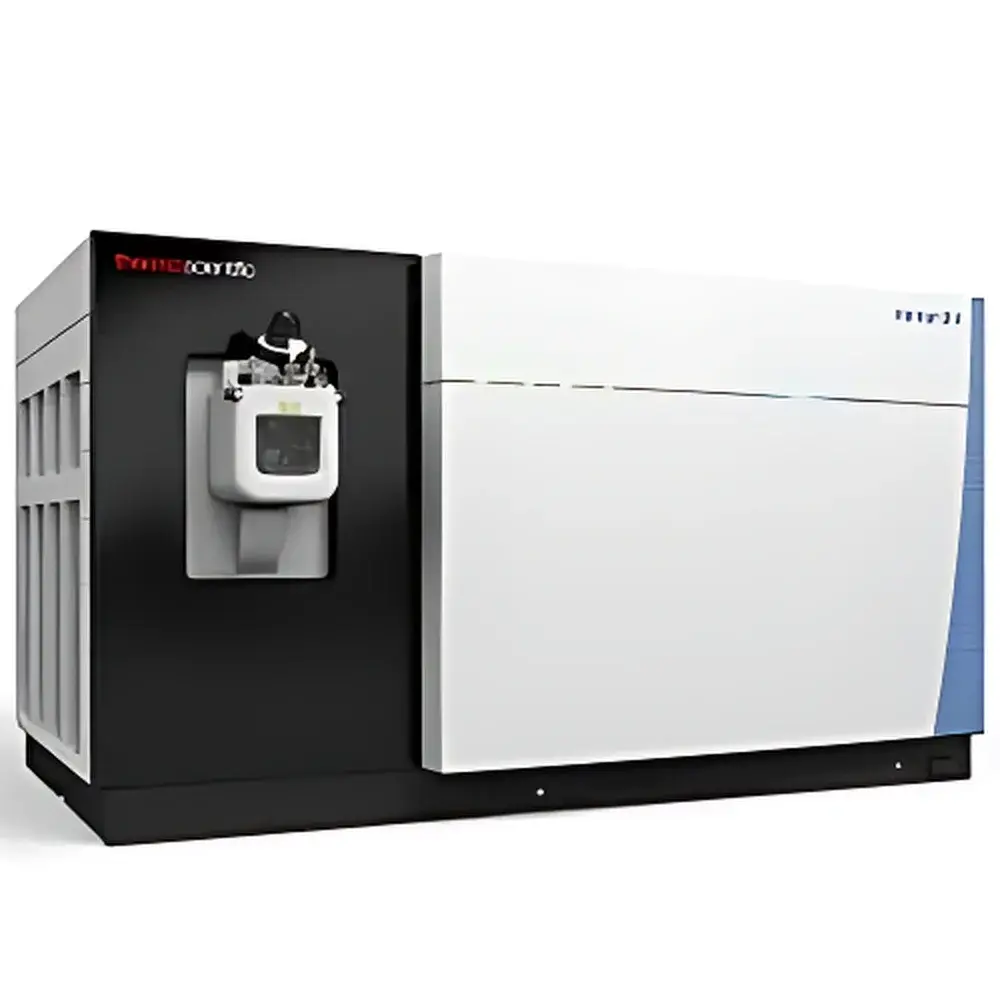
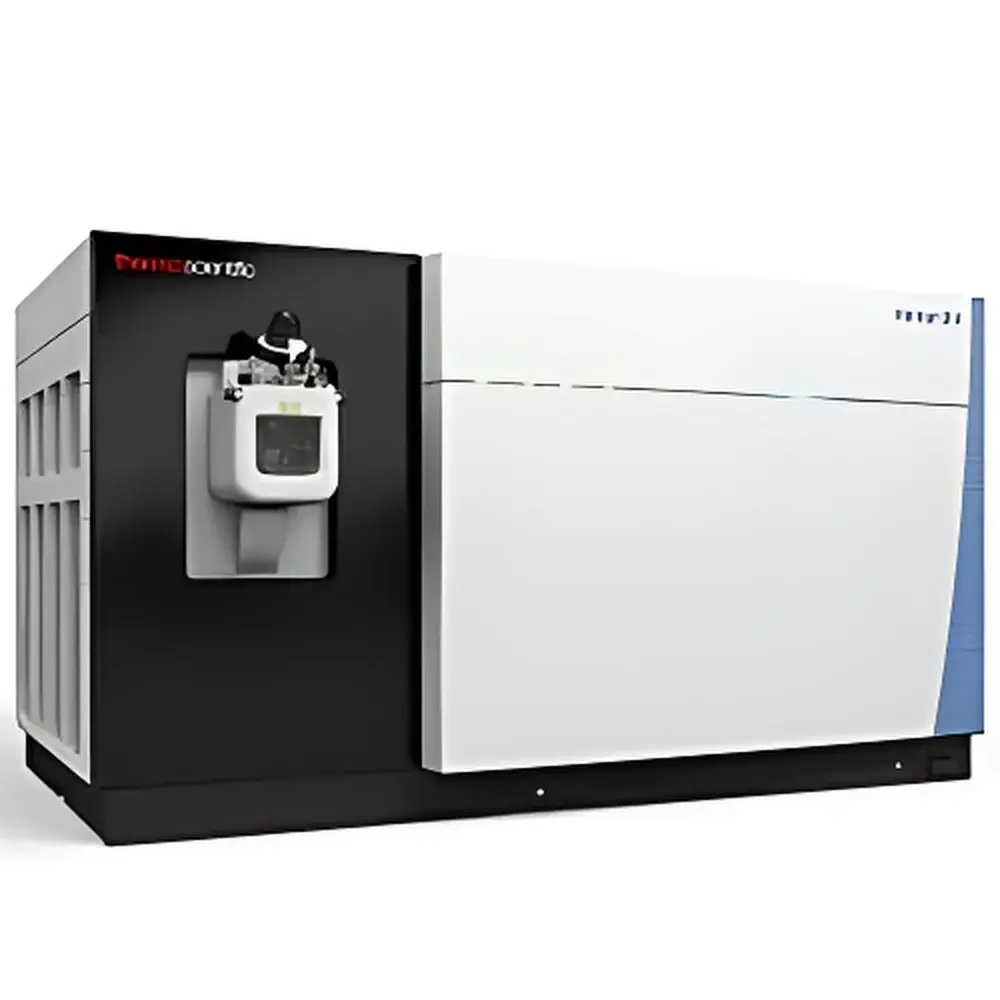
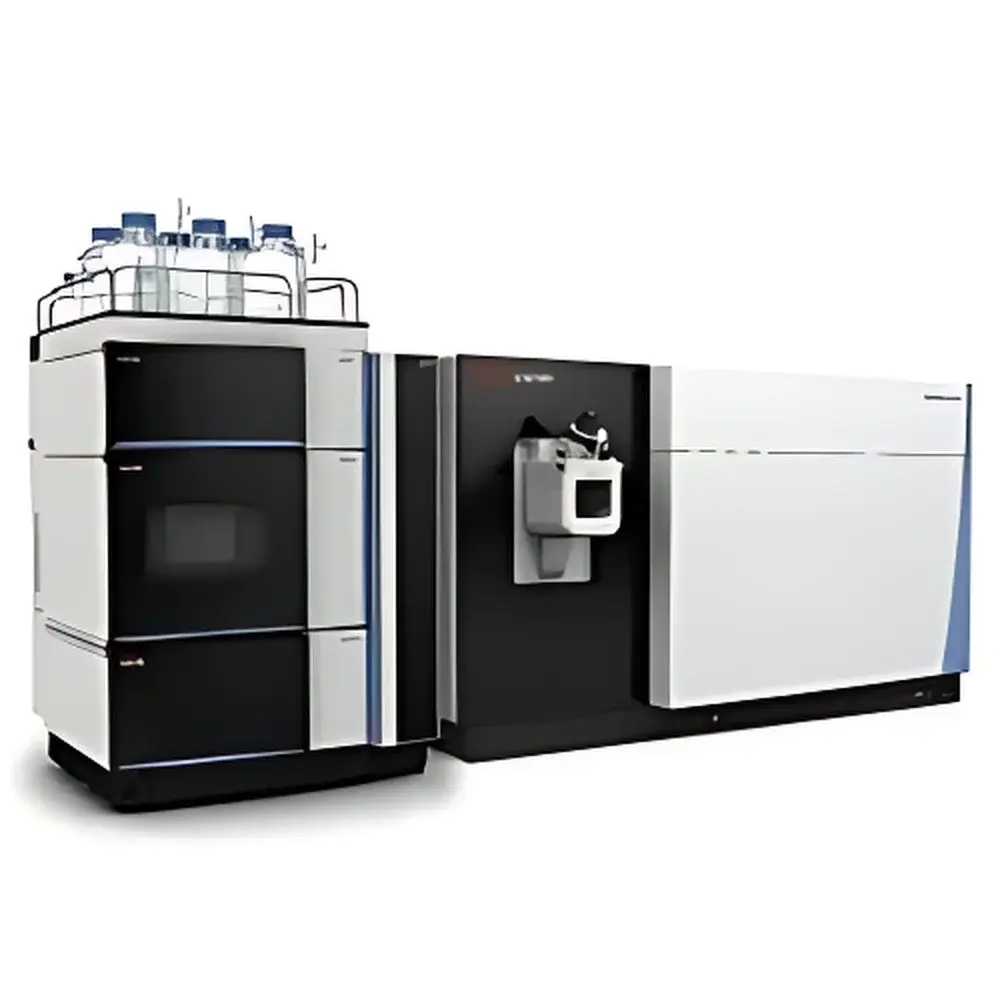
Thermo Fisher Orbitrap ID-X™ Tribrid™ Mass Spectrometer
| Brand | Thermo Fisher |
|---|---|
| Origin | USA |
| Manufacturer Type | Original Equipment Manufacturer (OEM) |
| Origin Category | Imported Instrument |
| Model | Orbitrap ID-X™ |
| Instrument Type | Orbitrap-based Tribrid™ Mass Spectrometer |
| Configuration | Integrated with Quadrupole, Linear Ion Trap, and Orbitrap™ Analyzers |
Overview
The Thermo Fisher Orbitrap ID-X™ Tribrid™ Mass Spectrometer represents a purpose-built platform for high-confidence small-molecule characterization in complex matrices. Engineered around a tribrid architecture—comprising a front-end quadrupole mass filter, a high-speed linear ion trap (LIT), and a high-resolution, high-mass-accuracy Orbitrap™ mass analyzer—the system enables sequential, intelligent MSn experiments within a single acquisition cycle. Its core measurement principle relies on electrostatic trapping of ions in the Orbitrap cell, where image current detection yields Fourier-transform-derived mass spectra with sub-ppm mass accuracy and resolving power up to 500,000 (FWHM at m/z 200). Coupled with real-time, data-dependent acquisition guided by AcquireX™ intelligent sampling logic, the platform prioritizes low-abundance precursors across retention time windows—maximizing structural coverage without manual method tuning. Designed for laboratories performing untargeted screening, metabolite identification, impurity profiling, and natural product characterization, the ID-X™ delivers reproducible, audit-ready data under regulated environments.
Key Features
- Tribrid™ architecture integrating quadrupole precursor selection, LIT rapid isolation/fragmentation, and Orbitrap high-resolution detection—enabling MS2–MS4 in one run.
- AcquireX™ intelligent data acquisition: dynamically adjusts isolation windows and collision energies based on real-time spectral quality and chromatographic peak shape—optimized for trace-level small-molecule detection.
- Preconfigured method editor templates—including DDA, DIA, and targeted workflows—with editable parameters for polarity switching, dynamic exclusion, and retention time alignment.
- Real-time spectral deconvolution and charge state determination during acquisition—reducing post-run processing latency.
- Robust RF-only ion optics and dual-pressure HCD cell design—ensuring consistent transmission efficiency across wide m/z ranges (50–6,000).
- Integrated lock mass correction using internal or external calibrants—maintaining long-term mass stability (<±0.2 ppm over 48 h).
Sample Compatibility & Compliance
The Orbitrap ID-X™ is fully compatible with standard LC interfaces—including electrospray ionization (ESI), atmospheric pressure chemical ionization (APCI), and heated electrospray (H-ESI)—and supports direct infusion, nano-LC, and UHPLC coupling. It accommodates typical small-molecule sample types: biological fluids (plasma, urine, CSF), tissue extracts, reaction mixtures, pharmaceutical formulations, and environmental extracts. From a regulatory standpoint, the system complies with 21 CFR Part 11 requirements when deployed with Xcalibur™ software configured for electronic signatures, audit trails, and user-access controls. Instrument qualification documentation aligns with ASTM E2629, ISO/IEC 17025, and ICH M10 guidelines for bioanalytical method validation. Full GLP/GMP traceability is supported via instrument log export, raw data immutability, and metadata-rich .raw file structure.
Software & Data Management
Data acquisition is managed through Thermo Scientific™ Xcalibur™ 4.5+ software, offering intuitive sequence setup, real-time QC monitoring, and integrated calibration management. Structural elucidation leverages Compound Discoverer™ 3.4+, which provides automated peak detection, alignment, formula prediction (with isotopic pattern scoring), and fragmentation tree generation. Integration with Mass Frontier™ enables rule-based in silico fragmentation and spectral library matching against NIST, mzCloud™, and commercial vendor libraries. The mzLogic™ algorithm uniquely combines spectral similarity scores with chemical database constraints (e.g., PubChem, ChemSpider) to rank candidate structures—reducing false positives in unknown identification. All raw data are stored in vendor-neutral .raw format; processed results export to .csv, .mgf, and .mzML for third-party tools including OpenMS and Skyline.
Applications
- Untargeted metabolomics and lipidomics—resolving isobaric species (e.g., phospholipid isomers) via retention time–m/z–fragmentation correlation.
- Drug metabolism and pharmacokinetics (DMPK): identification of phase I/II metabolites in preclinical and clinical studies.
- Impurity and degradation product characterization per ICH Q3B(R2) and Q5C guidelines.
- Natural product dereplication and scaffold annotation in phytochemical discovery.
- Environmental contaminant screening (e.g., PFAS, pesticides, microplastic additives) with retrospective data mining capability.
- Forensic toxicology workflows requiring confirmatory identification per SWGTOX standards.
FAQ
What distinguishes the ID-X™ from earlier Orbitrap Tribrid systems (e.g., Fusion Lumos)?
The ID-X™ introduces AcquireX™-driven adaptive acquisition, enhanced low-abundance sensitivity via improved ion optics, and tighter integration between Compound Discoverer™ and mzCloud™—specifically optimized for small-molecule structural confidence rather than proteomics throughput.
Is the system compliant with FDA 21 CFR Part 11 for regulated submissions?
Yes—when deployed with validated Xcalibur™ configurations, including role-based access control, electronic signatures, and immutable audit trails for all acquisition and processing events.
Can the ID-X™ perform both quantitative and qualitative analysis in the same run?
Yes—via hybrid DDA-DIA methods or scheduled parallel reaction monitoring (PRM), enabling simultaneous identification and relative quantification without compromising resolution or duty cycle.
What level of technical support and application expertise is available globally?
Thermo Fisher provides regional application scientists certified in small-molecule MS, on-site installation qualification (IQ/OQ), and annual performance verification (PV) services aligned with ISO/IEC 17025 laboratory accreditation requirements.




