
SEBA Flash-Com / Log-Com Water Level and Water Quality Monitoring System
| Origin | Germany |
|---|---|
| Manufacturer Type | Authorized Distributor |
| Origin Category | Imported |
| Model | SEBA Flash-Com |
| Pricing | Upon Request |
Overview
The SEBA Flash-Com / Log-Com Water Level and Water Quality Monitoring System is a field-deployable, low-power environmental telemetry platform engineered for long-term, unattended operation in groundwater observation wells, surface water bodies, and distributed hydrological networks. At its core, the system implements a modular architecture centered on a ruggedized data logger—either the battery-powered Log-Com or the solar-recharged Flash-Com—which serves as the central acquisition, processing, and wireless transmission unit. It operates on the principle of digital sensor interfacing via RS-485 or analog inputs (0–5 V / 4–20 mA), enabling synchronized time-series measurement of hydrostatic pressure (converted to water level), temperature, electrical conductivity, pH, redox potential (ORP), dissolved oxygen (DO), and turbidity. Designed for compliance with international groundwater monitoring standards—including ISO 5667-11 (water sampling) and ASTM D4044 (in-situ water quality measurements)—the system supports continuous, high-integrity data capture under harsh outdoor conditions across temperature ranges from –20 °C to +60 °C.
Key Features
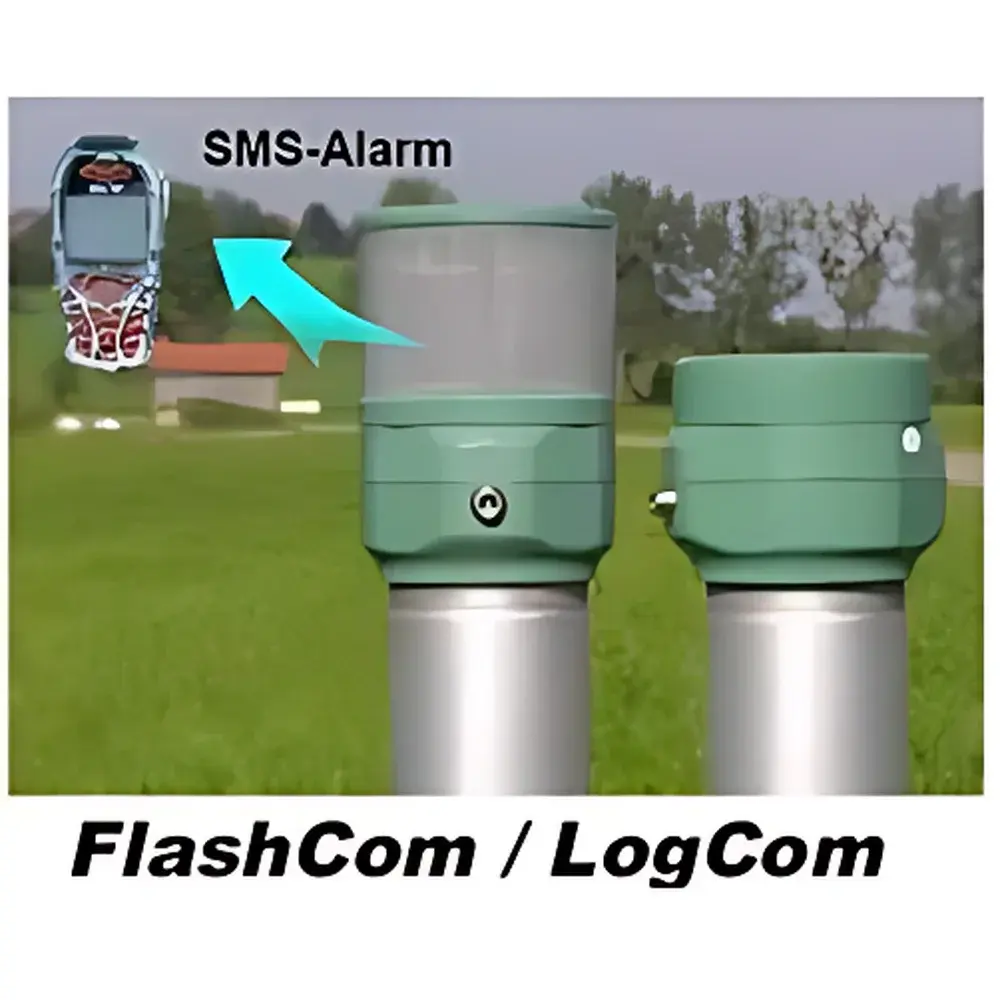
- Two logger variants optimized for deployment duration and energy constraints: Log-Com (6 × 1.5 V alkaline batteries, >2 years operational life) and Flash-Com (integrated solar charging capability)
- GSM/GPRS modem (900/1800 MHz) with embedded antenna and dual SIM support for redundant network connectivity
- Configurable SMS alerting: up to four recipient mobile numbers and one fax number for critical threshold breaches (e.g., flood-level exceedance, DO depletion)
- Internal memory capacity of 512 KB—sufficient for over 130,000 timestamped records with configurable sampling intervals (1 min to 24 h)
- Compact cylindrical form factor: Log-Com (Ø168 mm × 133 mm); Flash-Com (Ø168 mm × 220 mm)—designed for direct installation into standard 4″–8″ diameter monitoring wells
- IP67-rated housing ensuring dust-tightness and resistance to temporary immersion (up to 1 m for 30 min)
- Support for multiple sensor configurations: DS22 (submersible pressure transducer), DST22 (pressure + temperature), or MPS-D (multi-parameter probe measuring up to eight parameters simultaneously)
Sample Compatibility & Compliance
The system accommodates a range of calibrated, field-serviceable sensors compliant with EN 14152 (water quality sensors) and IEC 60529 (enclosure protection). The DS22 and DST22 pressure sensors deliver ±0.1% full-scale accuracy (<1 cm equivalent water column) across 0–10 m ranges (custom ranges available). The MPS-D probe integrates platinum RTD temperature sensing (±0.1°C), glass-electrode pH measurement (0–14 pH), galvanic DO cells (0–40 mg/L), and optical turbidity detection (0–1000 NTU), all traceable to NIST-certified reference standards. Data integrity is maintained through automatic sensor diagnostics, linearization algorithms, and temperature compensation routines embedded in firmware. The platform meets requirements for GLP-compliant environmental monitoring programs and supports audit-ready data export formats compatible with regulatory submissions to agencies such as the U.S. EPA, EU WFD reporting frameworks, and national hydrological services.
Software & Data Management
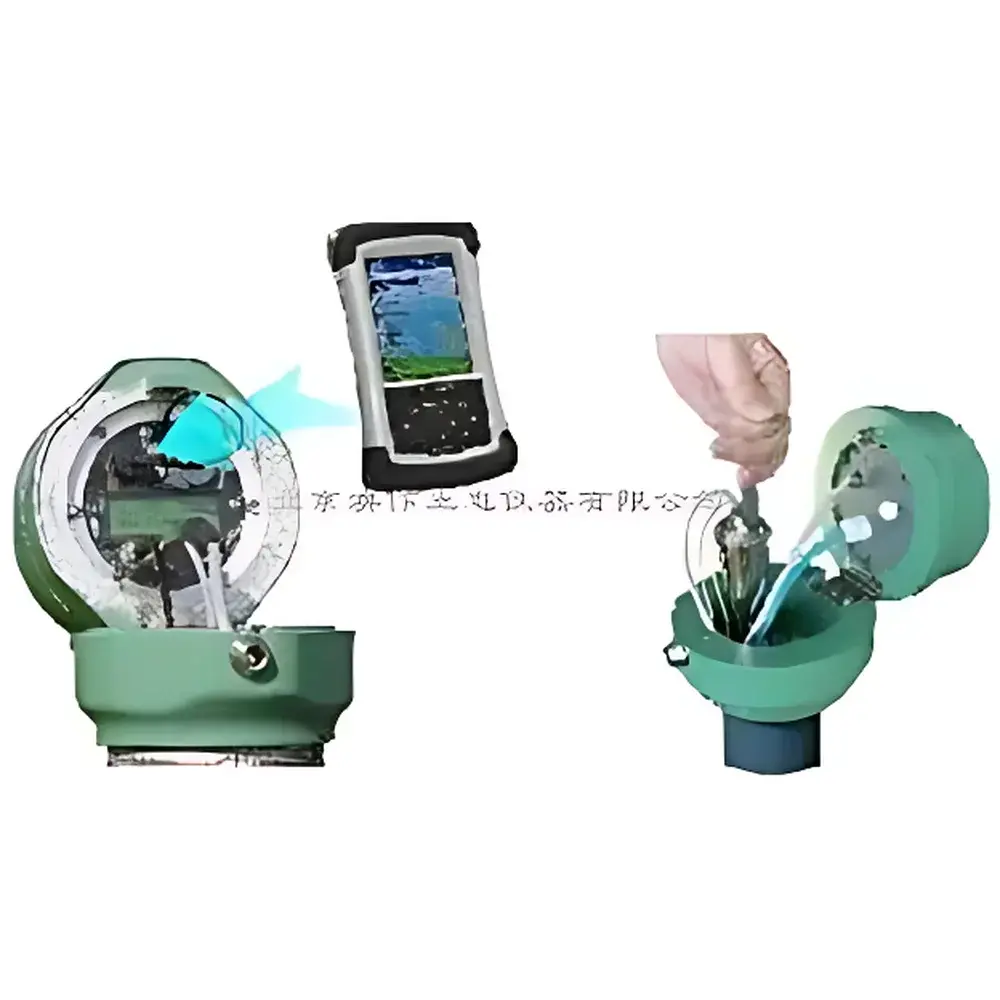
Data acquisition and configuration are managed via the HDA handheld reader—a Windows Mobile 2003–based device featuring a 240 × 320 TFT touchscreen, RS232/USB interface, and 64 MB RAM. Field operators use the DEMASdb software suite to visualize real-time and historical trends, perform calibration verification, generate annotated reports, and export datasets in CSV, XML, or SQL-compatible schemas. All logged entries include UTC timestamps, sensor metadata, and status flags (e.g., “low battery”, “sensor fault”). Remote access is enabled via secure GPRS tunneling to centralized SCADA or cloud-based platforms (e.g., MQTT or RESTful APIs), supporting integration with GIS layers and automated modeling workflows (e.g., MODFLOW input generation). Audit trails, user-access logs, and electronic signatures align with FDA 21 CFR Part 11 principles where required.
Applications
- Groundwater level trend analysis and aquifer response modeling in hydrogeological studies
- Flood early-warning systems in alpine catchments and urban drainage networks
- Long-term water quality surveillance at drinking water abstraction points and wastewater discharge zones
- Ecological monitoring of nutrient dynamics (e.g., phosphate-driven algal bloom correlation) in protected karst and spring-fed ecosystems
- Regulatory compliance reporting for EU Water Framework Directive (WFD) Article 8 monitoring obligations
- Performance evaluation of retention ponds and constructed wetlands in stormwater management infrastructure
FAQ
What power options are available for extended field deployment?
The Log-Com logger operates on six 1.5 V alkaline cells with an expected service life exceeding two years at typical 15-minute sampling intervals. The Flash-Com variant integrates a photovoltaic panel and rechargeable battery system for indefinite operation in sun-exposed locations.
Can the system be integrated into existing SCADA or cloud-based environmental dashboards?
Yes—GPRS data packets can be routed via TCP/IP to third-party servers using configurable APN settings, supporting protocols including Modbus TCP, HTTP POST, and MQTT. Pre-built connectors are available for platforms such as ThingSpeak, Azure IoT Hub, and custom PostgreSQL deployments.
Is sensor calibration traceable to international standards?
All SEBA-certified sensors undergo factory calibration against NIST-traceable references. Calibration certificates—including uncertainty budgets and drift specifications—are supplied with each unit and can be re-validated in situ using certified buffer solutions and standard gases.
How does the system handle communication failures or signal loss?
Local storage ensures zero data loss during outages; once connectivity resumes, buffered records are transmitted in chronological order with sequence validation. Configurable retry logic and fallback SMS alerts provide redundancy for mission-critical thresholds.
What is the maximum recommended cable length between logger and MPS-D sensor?
For optimal signal integrity and noise immunity, SEBA specifies a maximum submersible cable length of 300 m between the logger and MPS-D probe when using shielded twisted-pair cabling rated for underwater deployment.
Related Products







