ACM-200+ Anthocyanin Content Meter
| Origin | USA |
|---|---|
| Manufacturer Type | Authorized Distributor |
| Origin Category | Imported |
| Model | ACM-200+ |
| Pricing | Available Upon Request |
Overview
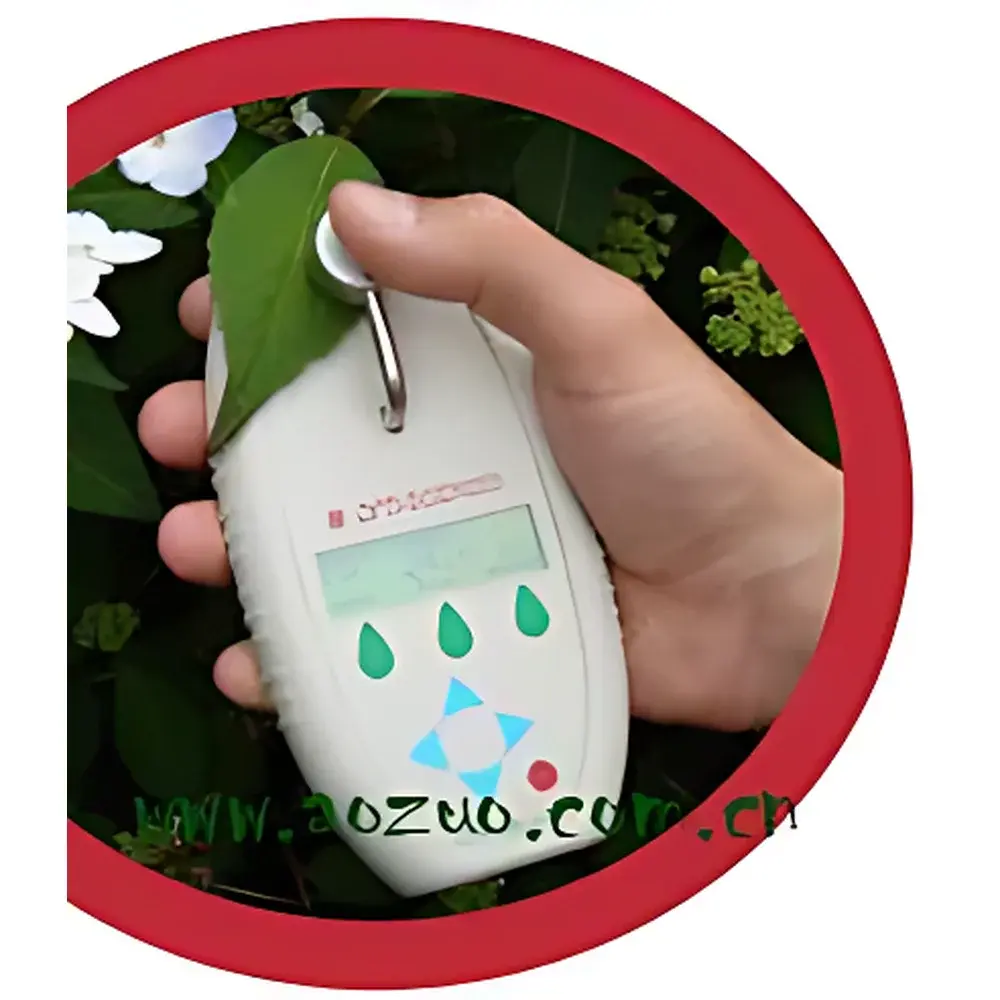
The ACM-200+ Anthocyanin Content Meter is a field-deployable, contact-based optical instrument engineered for rapid, non-destructive quantification of anthocyanin concentration in intact plant tissues—including leaves, petals, and fruit skins. Unlike destructive extraction-based assays (e.g., HPLC or spectrophotometric analysis of acidified methanol extracts), the ACM-200+ eliminates sample homogenization, solvent use, and tissue disruption—preserving specimen integrity while enabling high-throughput phenotyping. Its measurement principle is based on dual-wavelength transmittance spectroscopy: simultaneous detection of light attenuation at 530 nm (anthocyanin absorption peak in acidic vacuolar conditions) and 931 nm (a near-infrared reference wavelength minimally affected by anthocyanin but sensitive to structural interference such as leaf thickness and mesophyll scattering). The instrument computes the Anthocyanin Content Index (ACI) as the ratio of transmittance at 931 nm to that at 530 nm—a dimensionless, normalized index empirically validated across diverse angiosperm species. This approach provides robust compensation for anatomical variability, delivering reproducible ACI values highly correlated (r > 0.92, p < 0.001) with laboratory-derived anthocyanin concentrations (µg/cm² or mg/g FW), as confirmed in peer-reviewed studies on Hydrangea macrophylla, sugar maple (Acer saccharum), and hibiscus (Hibiscus sabdariffa).
Key Features
- Non-invasive, contact-mode measurement: No tissue damage, no reagents, no calibration curves required per species
- Large-area sampling head (3/8″ diameter, 0.71 mm² aperture): Averages signal across heterogeneous tissue microstructures, improving measurement repeatability versus point-source probes
- Integrated temperature-compensated optical circuitry: Minimizes drift across 0–50 °C operating range; dual LED sources (530 nm green, 931 nm NIR) with matched thermal stability
- On-device data acquisition and storage: Up to 160,000 ACI measurements (or 94,000 with embedded GPS coordinates) retained in non-volatile flash memory
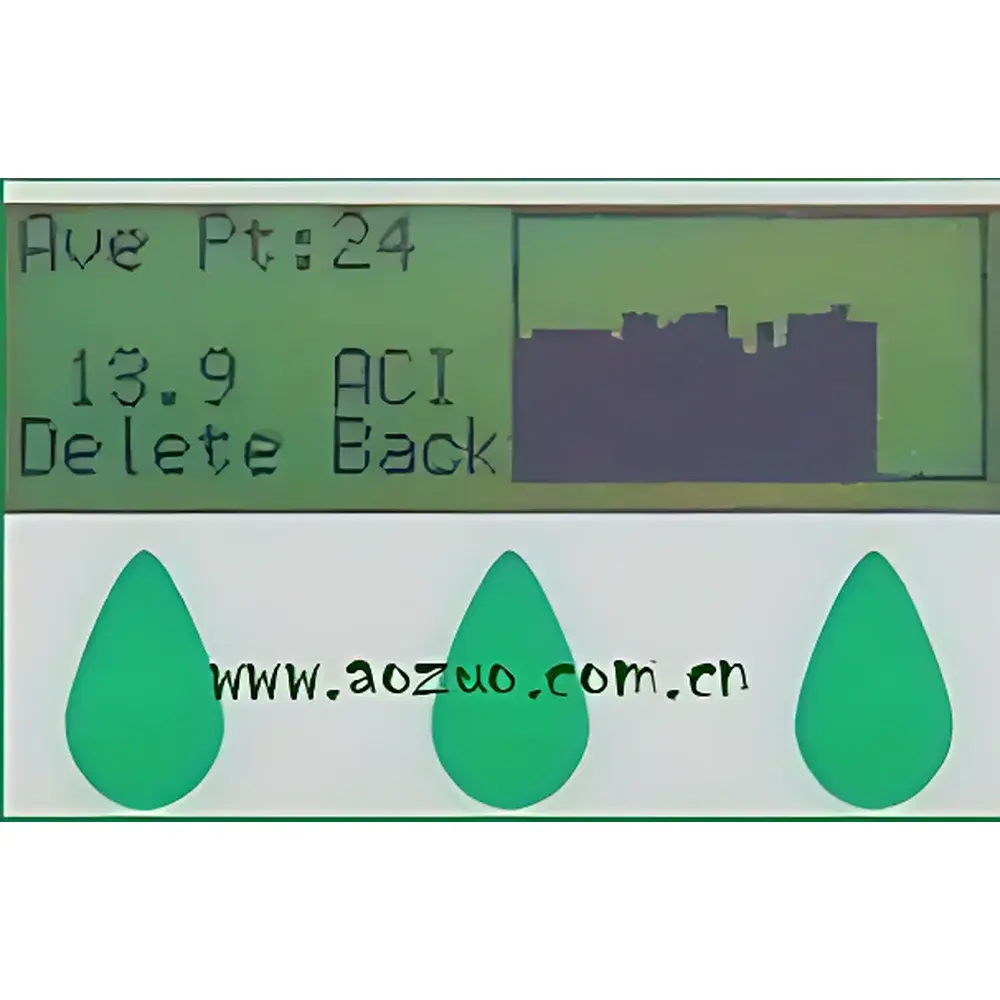
- Intuitive user interface: 128 × 32 pixel monochrome LCD, six tactile control buttons, audible status alerts, and real-time statistical display (mean, SD, n)
- Flexible averaging modes: Single-point, 2–30-point mean, and auto-outlier rejection (2σ filtering over 10–30 points)
- USB 1.1 and RS-232 interfaces: Enables direct data export to PC or synchronization with external GPS modules compliant with NMEA 0183 protocol
Sample Compatibility & Compliance
The ACM-200+ is validated for use with intact, non-waxy, non-hairy dicot and monocot tissues exhibiting anthocyanin accumulation in epidermal or mesophyll layers. It performs reliably on leaves of Arabidopsis thaliana, Brassica oleracea, Vitis vinifera, and ornamental species including Clitoria ternatea and Catharanthus roseus. While not intended for quantitative regulatory compliance (e.g., ISO 17025-accredited testing), its methodology aligns with principles outlined in ASTM E275–22 (Standard Practice for Describing and Measuring Performance of Spectrophotometers) and supports GLP-compliant field data collection when paired with audit-trail-enabled software. All firmware and hardware design adhere to FCC Part 15 Class B and CE electromagnetic compatibility directives.
Software & Data Management
The included Windows-compatible desktop application enables full data import via USB, visualization of ACI time-series or spatial maps (when GPS-tagged), batch statistical analysis (ANOVA, correlation with environmental metadata), and export to CSV, Excel, or MATLAB-compatible formats. Raw transmittance values (T530, T931) are accessible for advanced modeling. Software enforces traceability through timestamped measurement logs, operator ID fields, and optional digital signature authentication—supporting documentation requirements under FDA 21 CFR Part 11 for research-grade data integrity.
Applications
- High-throughput screening of anthocyanin-rich crop germplasm (e.g., purple tomatoes, red lettuce, black rice)
- Phenotypic monitoring of stress-induced anthocyanin accumulation (UV-B exposure, nutrient deficiency, drought, cold acclimation)
- Postharvest quality assessment of fruits and vegetables during storage and ripening
- Ecophysiological field studies linking canopy-level ACI variation to microclimate parameters (PAR, VPD, soil moisture)
- Supporting nutraceutical and functional food R&D by correlating in vivo ACI with ex vivo antioxidant capacity (FRAP, DPPH)
- Educational use in plant physiology and biochemistry laboratories for teaching non-destructive optical sensing principles
FAQ
Does the ACM-200+ require species-specific calibration?
No. The ACI is a relative index designed for comparative, within-study assessments—not absolute quantification. Cross-species correlations are supported by published literature, but users should establish empirical ACI–concentration relationships for novel taxa using representative subsamples.
Can it measure anthocyanins in waxy or hairy leaves?
Performance may be reduced due to surface reflectance artifacts. Light sanding or gentle wiping with ethanol-dampened lens tissue is recommended prior to measurement on such surfaces.
Is GPS integration mandatory for georeferenced data?
No. GPS tagging is optional and requires an external NMEA-compliant receiver connected via RS-232. Latitude/longitude can also be manually entered per measurement session.
How is battery life managed in extended field deployments?
A single 9 V alkaline battery powers ≥5,000 measurements. Auto-power-down after 5 minutes of inactivity extends operational longevity; low-battery warning appears on screen with audible alert.
What maintenance is required for long-term accuracy?
Annual verification using certified neutral-density filters (OD 1.0 and 2.0 at 530 nm and 931 nm) is recommended. Optical path cleaning with compressed air and lint-free wipes maintains signal fidelity.
Related Products