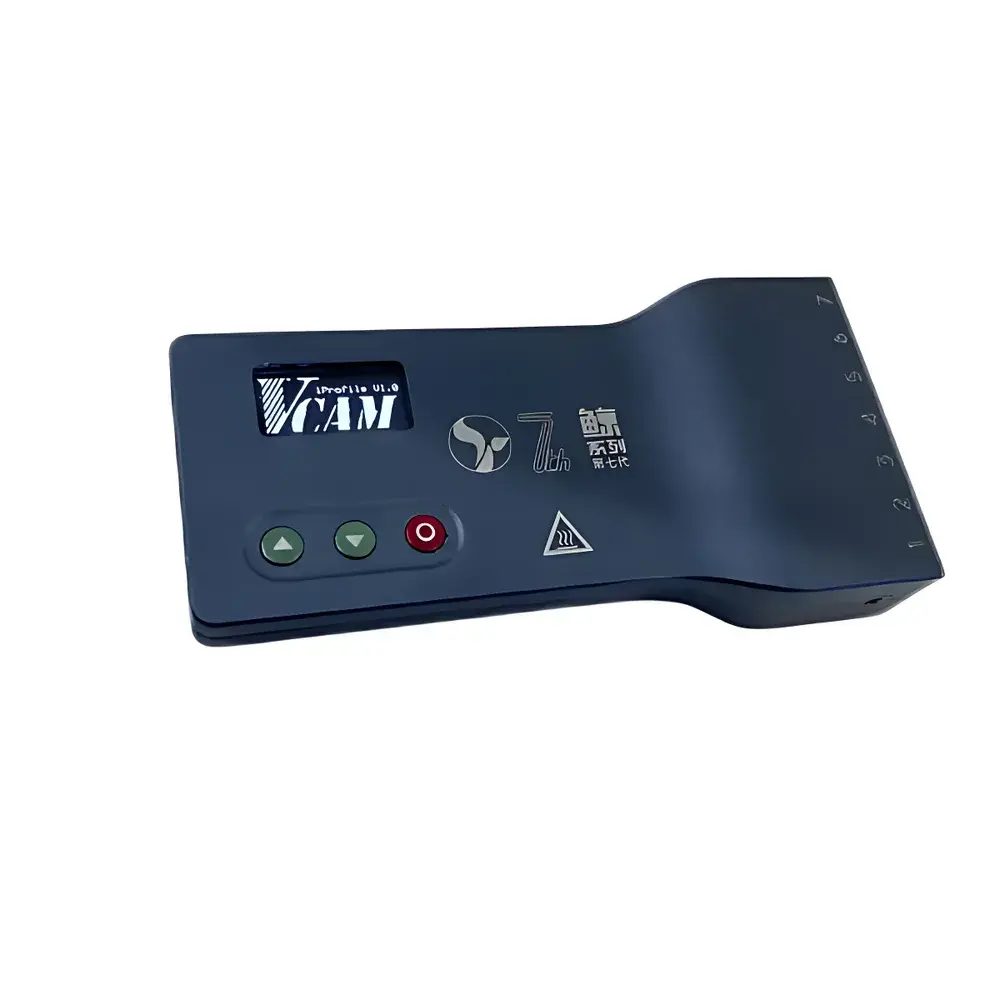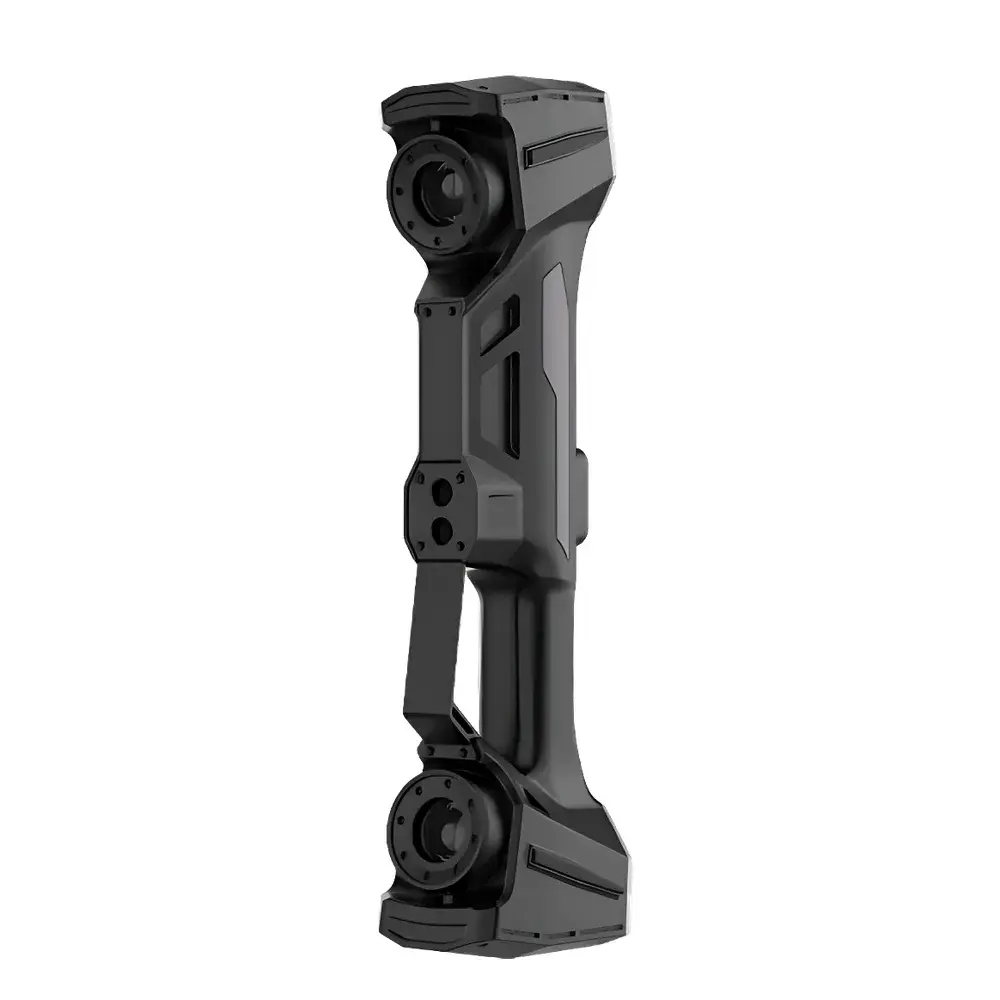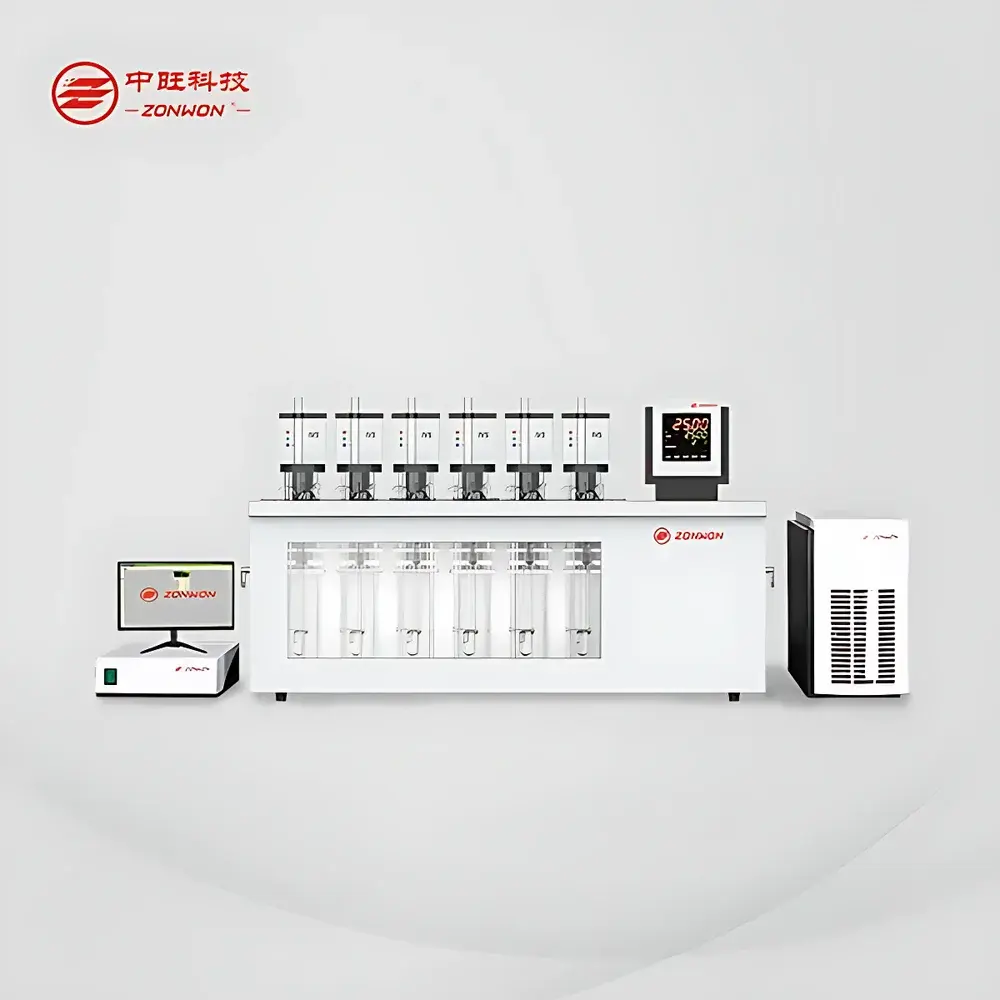
ZONWON IVS400 Automated Intrinsic Viscosity & Molecular Weight Analyzer
| Brand | ZONWON |
|---|---|
| Origin | Zhejiang, China |
| Manufacturer Type | Direct Manufacturer |
| Origin Category | Domestic (China) |
| Model | IVS400 |
| Viscosity Range | 0.3–100,000 mm²/s |
| Temperature Range | 15–90 °C |
| Temperature Uniformity | ≤ ±0.01 °C |
| Timing Resolution | 0.001 s |
| Measurement Duration Range | 0–9999.999 s |
| Solvent Consumption per Rinse | 10–12 mL |
| Rinse Volume for Measurement | ~13 mL |
| Bath Capacities | 25 L / 33 L / 41 L |
| Power Supply | 220 V / 50 Hz, 1200 W |
| Main Controller Dimensions | 200 × 190 × 60 mm |
| Chiller Dimensions | 200 × 360 × 380 mm |
| Bath Configurations | 2-position (610 × 270 × 500 mm), 4-position (810 × 270 × 500 mm), 6-position (990 × 270 × 500 mm) |
| Wireless Communication Range | 50 m |
Overview
The ZONWON IVS400 Automated Intrinsic Viscosity & Molecular Weight Analyzer is a precision-engineered system designed for the quantitative determination of polymer molecular weight parameters via capillary viscometry in dilute solution. It operates on the fundamental principle of measuring flow time through a calibrated Ubbelohde or suspended-level capillary viscometer under gravity-driven laminar flow conditions, enabling calculation of intrinsic viscosity [η]—a key hydrodynamic parameter directly correlated to molar mass via the Mark–Houwink–Sakurada equation. The IVS400 integrates temperature-controlled solvent delivery, high-resolution timing, and automated fluid handling to support standardized methods including ISO 1628-1 (polymers in solution), ASTM D2857 (dilute solution viscosity), and USP (intrinsic viscosity of pharmaceutical polymers). Its architecture eliminates manual intervention during rinse, fill, measurement, waste evacuation, and drying cycles—ensuring repeatability, operator safety, and compliance with GLP/GMP laboratory workflows.
Key Features
- Dual-mode automated cleaning: Supports both dynamic pulse-rinsing (high-frequency aspiration/pressure cycling) and static soak-rinsing—enabling effective removal of high-molecular-weight polymer residues without disassembly of capillaries.
- Multi-solvent programmable rinse module: Configurable for up to three distinct cleaning solvents; automatically dispenses, circulates, drains, and dries post-measurement per user-defined protocol.
- Unified waste management: Single integrated waste collection system accommodates all configurations (2-, 4-, or 6-capillary setups); supports segregated waste streams for solvent recovery and regulatory traceability.
- Compact benchtop design: Entire unit fits within standard fume hoods (≤610 mm depth), minimizing operator exposure to volatile organic solvents such as phenol, chloroform, or concentrated sulfuric acid.
- Embedded control software: Fully integrated GUI manages viscosity acquisition, data reduction, molecular weight derivation, calibration validation, and audit-trail logging—no external switching between modules required.
- High-stability thermal environment: Dual-zone Peltier-regulated bath with ≤±0.01 °C spatial uniformity across all capillary positions ensures metrological integrity per ISO/IEC 17025 requirements.
Sample Compatibility & Compliance
The IVS400 is validated for use with synthetic and natural polymers—including polyethylene terephthalate (PET), polyacrylonitrile (PAN), cellulose derivatives, polylactic acid (PLA), and polyvinyl chloride (PVC)—in common solvents such as sulfuric acid (96%), o-chlorophenol, trifluoroacetic acid, and N,N-dimethylformamide. All measurement routines adhere to internationally recognized standards: ISO 1628 series (Parts 1–5), ASTM D1243, ASTM D4603, and GB/T 12005 (Chinese national standard for polyacrylamide). System-level compliance includes traceable temperature calibration (NIST-traceable RTD sensors), timing accuracy certified to ±0.001 s, and full audit trail generation aligned with FDA 21 CFR Part 11 requirements for electronic records and signatures.
Software & Data Management
The proprietary IVS Control Suite provides real-time monitoring of flow times, temperature stability, solvent level status, and rinse cycle progression. It computes derived parameters—including relative viscosity (ηr), specific viscosity (ηsp), reduced viscosity (ηsp/c), inherent viscosity ([η]inh), intrinsic viscosity ([η]), Fickentscher’s K-value, viscosity-average molecular weight (Mv), and degree of polymerization (DP)—using user-selectable regression models (Huggins, Kraemer, Schulz–Blaschke). Raw data files are saved in .csv and .xlsx formats with embedded metadata (operator ID, timestamp, method version, instrument serial number). Optional PDF report generation includes calibration certificates, QC check logs, and deviation flags per ISO/IEC 17025 clause 7.7.
Applications
The IVS400 serves quality control laboratories in polymer manufacturing, academic polymer physics research, pharmaceutical excipient characterization, and regulatory submission support (e.g., ICH Q5C for biopolymer consistency). Typical use cases include batch release testing of PET resin for bottle-grade applications, degradation monitoring of biodegradable PLA during accelerated aging, intrinsic viscosity verification of sodium hyaluronate for injectables, and routine calibration of reference materials against NIST SRM 2890. Its automation reduces inter-operator variability and enables unattended overnight operation—critical for high-throughput QC environments requiring ≥20 samples/day.
FAQ
Does the IVS400 support ASTM D4603-compliant polyethylene terephthalate (PET) analysis?
Yes—the system implements the specified sulfuric acid dissolution protocol, controlled temperature ramping, and dual-point concentration extrapolation required by ASTM D4603.
Can users define custom Mark–Houwink constants for non-standard polymers?
Yes—users may input polymer-specific K and α values in the software to compute Mv from measured [η].
Is the system compatible with LIMS integration?
Yes—via optional OPC UA or RESTful API interface for bidirectional data exchange with laboratory information management systems.
What maintenance intervals are recommended for the fluidic system?
ZONWON recommends quarterly inspection of syringe pumps, capillary alignment verification, and annual recalibration of temperature and timing subsystems per ISO/IEC 17025 guidelines.
Does the IVS400 meet electromagnetic compatibility (EMC) requirements for EU laboratories?
Yes—the unit complies with EN 61326-1:2013 for laboratory equipment and carries CE marking under the EMC Directive 2014/30/EU.