
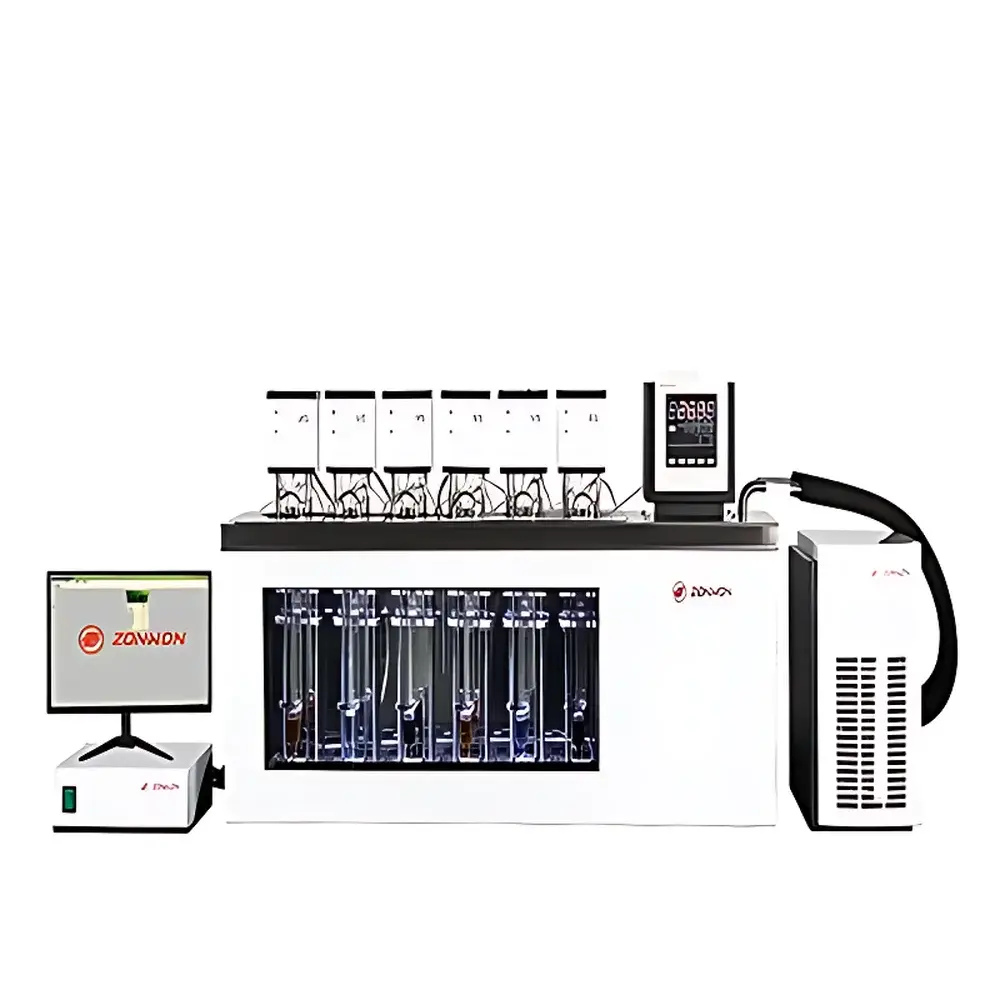
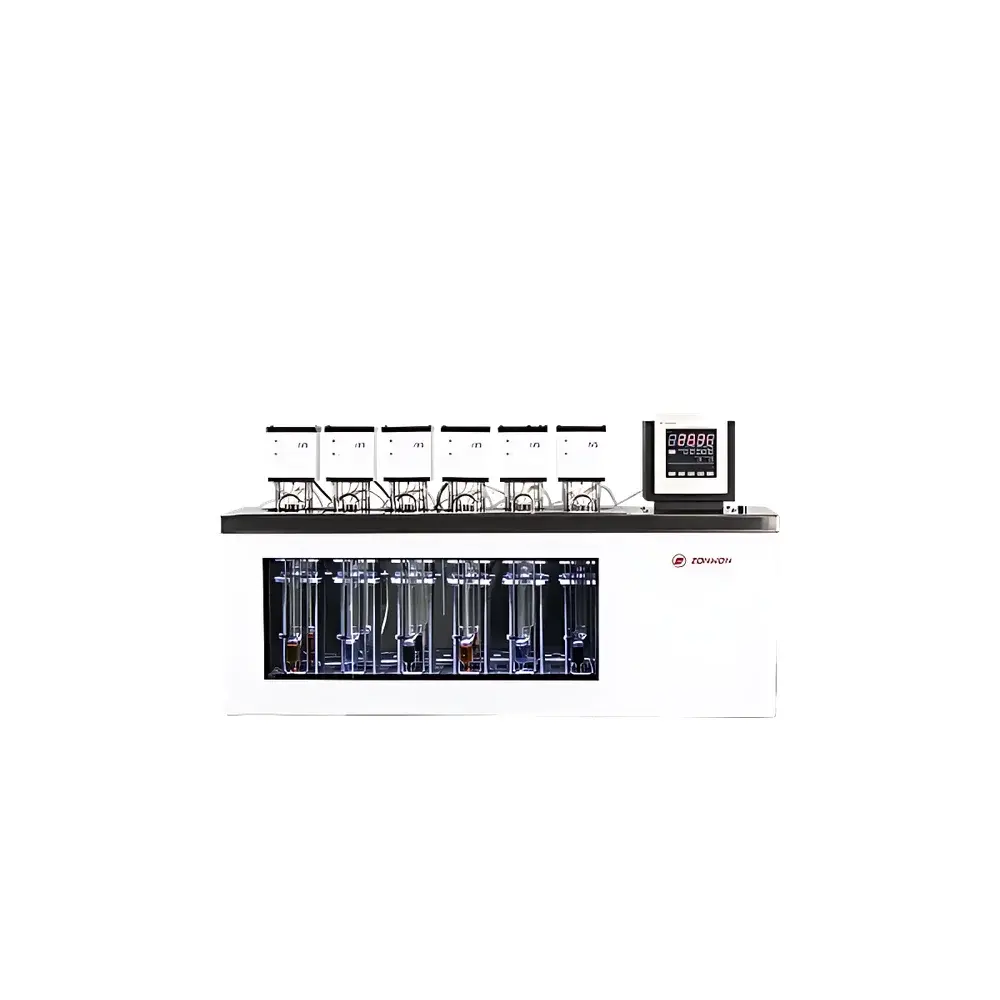
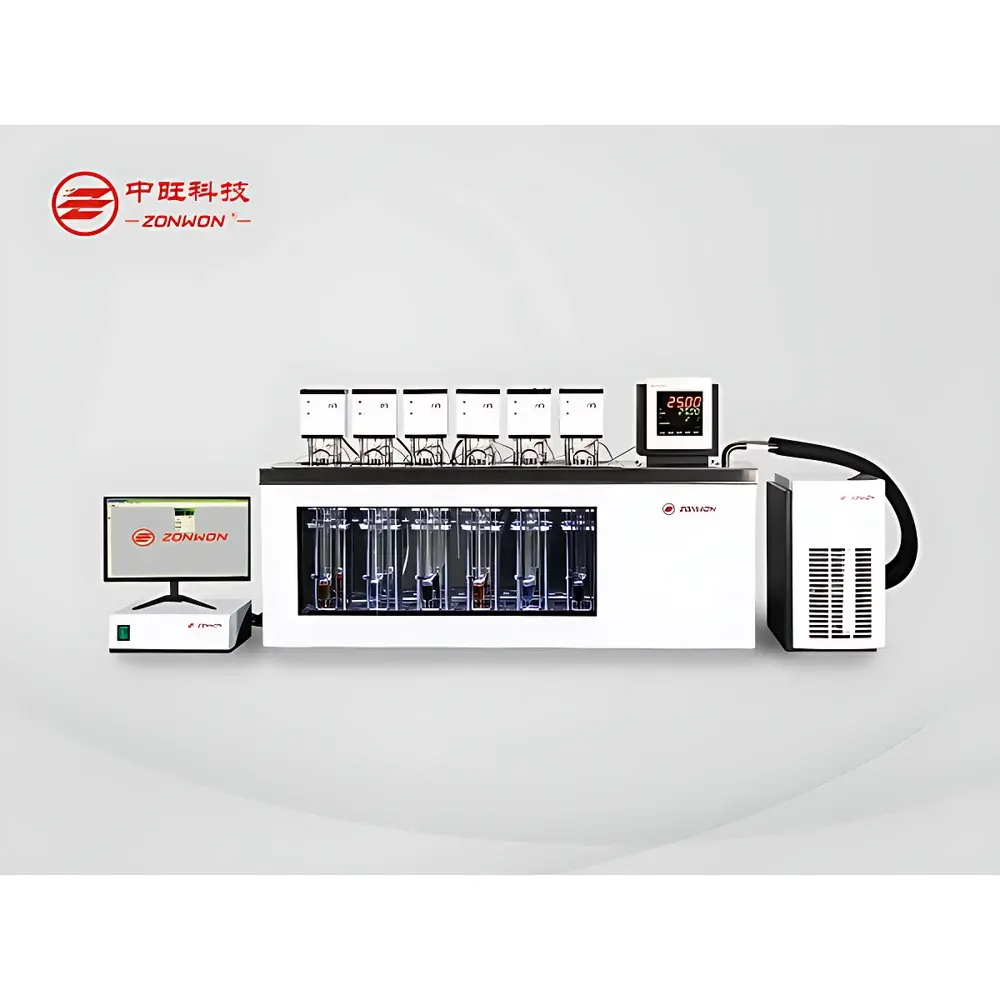
ZONWON IVS300-6 Automated Ubbelohde Viscometer
| Brand | ZONWON |
|---|---|
| Origin | Zhejiang, China |
| Manufacturer Type | Manufacturer |
| Instrument Category | Domestic |
| Model | IVS300-6 |
| Instrument Type | Fixed Benchtop Viscometer |
| Instrument Class | Capillary Viscometer (Ubbelohde-type) |
| Operating Environment | Ambient Temperature |
| Viscosity Range | 0.3–50,000 mPa·s |
| Temperature Range | 15–65 °C |
| Temperature Resolution | 0.01 °C |
| Temperature Accuracy | ±0.01 °C |
Overview
The ZONWON IVS300-6 Automated Ubbelohde Viscometer is a precision benchtop instrument engineered for high-reproducibility intrinsic viscosity and relative viscosity measurements of polymer solutions using the capillary flow principle. Based on the fundamental Hagen–Poiseuille law, it measures the efflux time of a fixed volume of solution through a standardized Ubbelohde capillary under gravity-driven laminar flow—ensuring compliance with ISO 307, ASTM D4603, ASTM D1243, DIN 53728, and GB/T 1632.2. The system integrates a six-position automated measurement station, a high-stability VT-series thermostatic bath with active refrigeration, pressure-driven sample aspiration (replacing vacuum-based methods), and Viscobee control software—all designed to eliminate operator-dependent variability while maintaining full traceability and audit readiness.
Key Features
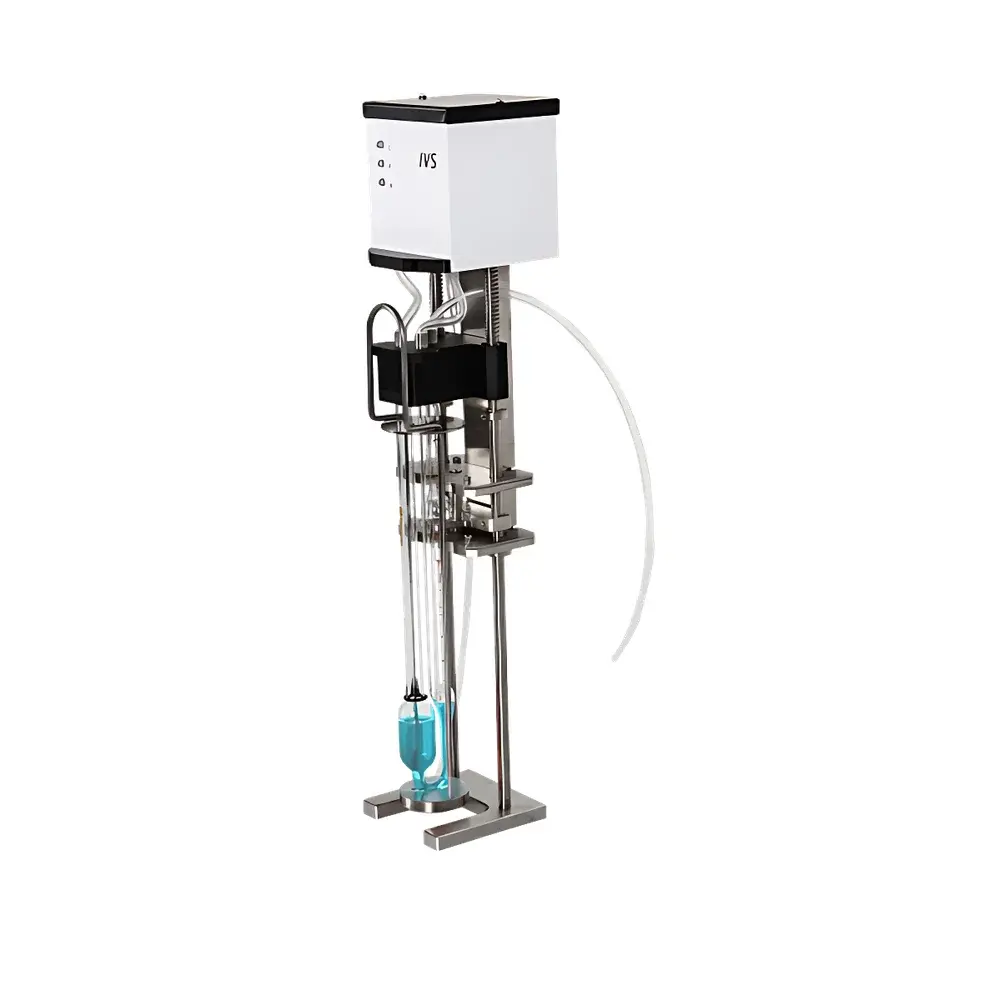
- Pressure-driven sample lifting mechanism: Eliminates vacuum-induced bubble formation, solvent evaporation, and capillary clogging—significantly improving measurement robustness and long-term reliability.
- ±0.01 °C temperature uniformity and stability across the entire bath volume: Achieved via dual-zone PID-controlled heating, integrated refrigeration, and optimized fluid circulation—critical for meeting ISO 307 repeatability requirements (≤0.2% RSD for duplicate runs).
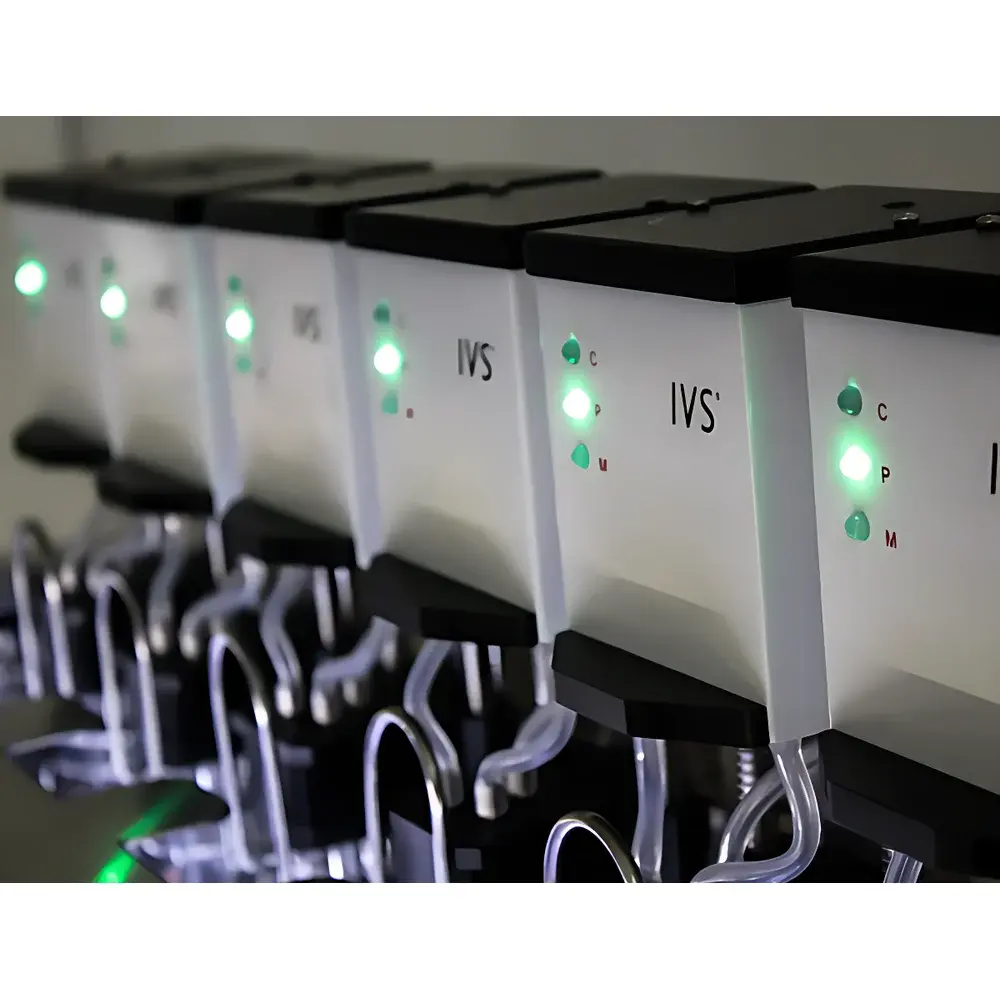
- Independent six-channel architecture: Each viscometer channel operates autonomously—enabling concurrent multi-sample analysis without cross-contamination or timing interference.
- Adaptive infrared detection system with imported stainless-steel fiber optics: Provides non-contact, wear-free meniscus detection with sub-millisecond response time and immunity to solvent fogging or residue buildup.
- Patented pressure-block coupling design: Replaces fragile rubber caps with a rigid, self-aligning mechanical interface—preventing capillary fracture during installation and ensuring consistent immersion depth.
- Hermetically sealed fluid path architecture: Isolates all electronics from solvent exposure—extending service life and reducing maintenance frequency in aggressive organic media (e.g., phenol/o-chlorophenol, HFIP, TFA).
Sample Compatibility & Compliance
The IVS300-6 supports routine viscosity characterization of synthetic and biodegradable polymers—including PET, PBT, PA6/66, PAM, PC, PVC, PLA, PEN, PCT, PAN, PMMA, PSU, TPU, CA, chitin, and polyacrylonitrile derivatives—in solvents such as sulfuric acid (96%), formic acid, o-chlorophenol, hexafluoroisopropanol (HFIP), and trifluoroacetic acid (TFA). All hardware and firmware conform to IEC 61000-6-3 (EMC) and IEC 61010-1 (safety). Software operation complies with FDA 21 CFR Part 11 requirements for electronic records and signatures—including role-based access control, encrypted raw data storage, immutable audit trails, and electronic signature capture. Full GLP/GMP documentation packages—including IQ/OQ/PQ protocols and calibration certificates—are available upon request.
Software & Data Management
Viscobee software provides a validated, bilingual (English/Chinese) interface with six configurable measurement stations visible in real time. It supports both single-concentration (one-point) and multi-concentration linear extrapolation modes—including Mark–Houwink–Sakurada, Huggins, Kraemer, Schulz–Blaschke, Solomon–Ciuta, and Huggins–Martin methods. The software performs automatic efflux time validation using dynamic outlier rejection algorithms, calculates intrinsic viscosity [η], reduced viscosity (ηsp/c), inherent viscosity (ln(ηr)/c), limiting viscosity number (LVN), and converts results to viscosity-average molecular weight (Mv) using preloaded polymer-specific Mark–Houwink parameters. All raw timestamps, sensor readings, and user actions are logged in AES-256-encrypted SQLite databases with SHA-256 hash integrity verification.
Applications
This instrument is routinely deployed in QC laboratories for batch release testing of fiber-grade PET chips, recycled polyester flakes, and engineering thermoplastics; in R&D settings for structure–property correlation studies of branched polyolefins and functionalized polyacrylates; and in academic polymer physics labs for investigating solvent–polymer interaction parameters (χ) and coil expansion behavior in theta solvents. Its precision and automation make it suitable for ISO/IEC 17025-accredited testing facilities performing contract analysis for textile, packaging, biomedical, and automotive polymer suppliers.
FAQ
What capillary types are supported?
Standard Ubbelohde capillaries (e.g., Cannon-Fenske Routine, Schott Ubbelohde) with nominal diameters from 0.2 mm to 1.2 mm—calibration constants entered manually or imported from certified certificates.
Is external calibration required?
Yes—capillary calibration must be performed using certified reference standards (e.g., NIST-traceable water/glycerol mixtures) prior to first use and at defined intervals per internal SOP or ISO/IEC 17025 requirements.
Can the system operate unattended overnight?
Yes—software supports scheduled start times, automatic power-down after completion, and email/SNMP alerts upon error or completion.
Does it support USP or Ph. Eur. 2.2.37?
While not pre-validated for pharmacopeial monographs, the hardware and software architecture fully satisfies the instrumental and data integrity criteria specified in USP (Viscosity) and Ph. Eur. 2.2.37 (Capillary Viscometry), provided site-specific validation is completed.
What maintenance is required?
Quarterly verification of bath temperature uniformity, annual optical path cleaning, and biannual pressure system leak testing—documented in the included Preventive Maintenance Logbook.



