OL Optronic Laboratories OL Series Luminous Flux and Radiant Flux Standard Lamps
| Brand | Optronic Laboratories |
|---|---|
| Origin | USA |
| Manufacturer Type | Authorized Distributor |
| Origin Category | Imported |
| Model | OL Series |
| Calibration Traceability | NIST-traceable via OL 750D Double Monochromator |
| Pricing | Available Upon Request |
Overview
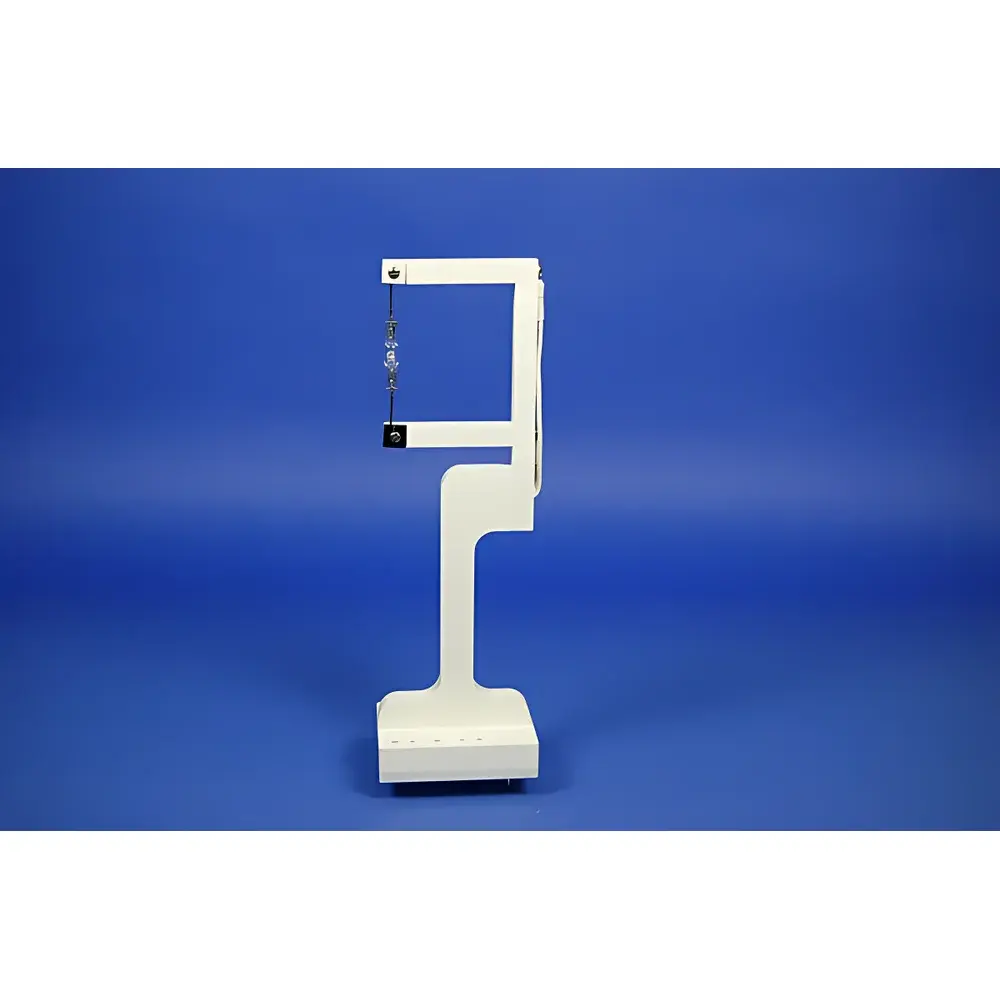
The OL Series Luminous Flux and Radiant Flux Standard Lamps from Optronic Laboratories are primary reference sources engineered for photometric and radiometric calibration laboratories, national metrology institutes (NMIs), and accredited testing facilities. These standard lamps operate on the principle of thermal radiation from stabilized tungsten-halogen filaments under precisely controlled electrical conditions. Each lamp is individually characterized and calibrated against NIST-traceable standards using the OL 750D double monochromator system—a high-resolution, low-stray-light instrument capable of spectral irradiance measurements from 200 nm to 2500 nm with sub-nanometer bandwidth resolution. The calibration process includes full spectral power distribution (SPD) measurement, enabling accurate derivation of luminous flux (Φv, in lumens), radiant flux (Φe, in watts), and associated photometric quantities such as luminous intensity and illuminance under defined CIE standard observer conditions.
Key Features
- Primary-level calibration traceable to NIST through the OL 750D double monochromator system, compliant with ISO/IEC 17025 requirements for reference standard certification.
- Stabilized tungsten-halogen filament architecture with active temperature control and low-noise DC current supply, ensuring long-term photometric stability (< ±0.15% over 100 hours at constant operating point).
- Individually characterized spectral power distribution (SPD) data provided in ASCII and XML formats, including uncertainty budgets per CIE TN 003:2015 and GUM-compliant reporting.
- Robust mechanical design with integrated thermal shielding and quartz envelope optimized for UV-VIS-NIR transmission (250–2500 nm), minimizing spectral drift due to envelope aging or oxidation.
- Compliant with IEC 60068-2 environmental test profiles for shock, vibration, and thermal cycling—validated for laboratory deployment in GLP and ISO 17025-accredited environments.
Sample Compatibility & Compliance
The OL Series lamps are designed for use as transfer standards in photometric and radiometric intercomparisons, supporting calibration of integrating spheres, goniophotometers, spectroradiometers, and imaging colorimeters. They are compatible with all major sphere coatings (e.g., Spectralon®, BaSO4, PTFE) and meet the geometric and angular uniformity requirements specified in CIE Publication 84-1989 and IES LM-79-19 Annex B. All units ship with a full calibration certificate conforming to ISO/IEC 17025:2017 Clause 7.7, including statement of metrological traceability, measurement uncertainty (k = 2), and validity period (typically 12 months under recommended storage and usage conditions). The lamps satisfy regulatory expectations for audit readiness under FDA 21 CFR Part 11 (when used within validated software-controlled calibration workflows) and support GLP/GMP documentation requirements for lighting product certification (e.g., ENERGY STAR®, DLC, CE marking).
Software & Data Management
Optronic Laboratories provides the OL CALSuite™ software package (v3.2+) for post-calibration data analysis, uncertainty propagation, and report generation. The suite imports raw SPD datasets from the OL 750D system and computes derived photometric quantities using CIE 1931 2° and CIE 1964 10° color matching functions, with optional weighting for CIE S 026:2018 (photobiological safety) and CIE S 023/E:2013 (LED measurement). All calibration records include digital signatures, time-stamped audit logs, and export options compliant with ISO 19011 audit trail requirements. Raw spectral data files adhere to the IEC 61290-1-3 format for interoperability with third-party platforms including LightTools®, ASAP®, and MATLAB-based optical modeling environments.
Applications
- Primary calibration of luminous flux measurement systems (e.g., integrating spheres with photodiode or CCD-based detectors).
- Validation and verification of spectroradiometric measurement chains in LED, OLED, and laser diode characterization labs.
- Reference source for interlaboratory comparisons organized by NMIs (e.g., BIPM CCPR key comparisons) and industry consortia (e.g., LED Measurement Standards Working Group).
- Uncertainty budget development for ISO/IEC 17025 accreditation in photometry and radiometry testing scopes.
- Traceability anchoring for in-house reference standards maintained under ISO 10012:2003 and ANSI/NCSL Z540-1-1994.
FAQ
What is the recommended recalibration interval for OL Series standard lamps?
The standard recalibration interval is 12 months from date of issue, assuming operation within manufacturer-specified electrical and thermal limits and storage in inert atmosphere when not in use.
Can OL Series lamps be used for absolute spectral irradiance calibration?
Yes—each lamp’s full SPD is measured and certified; users may compute absolute spectral irradiance at a defined distance using inverse-square law and solid angle correction, provided beam geometry is well-characterized.
Is NIST traceability documented per lamp or per batch?
Each individual lamp receives a unique calibration certificate with lamp-specific SPD data, uncertainty components, and direct traceability path to NIST SRM 2021a or equivalent primary standards.
Do OL Series lamps require warm-up stabilization before use?
Yes—minimum 30-minute warm-up at rated voltage is required to achieve thermal equilibrium; stabilization time is verified during calibration and reported in the certificate.
Are custom spectral calibrations available beyond the standard 350–1050 nm range?
Extended-range calibrations (200–2500 nm) are available upon request, subject to additional characterization using the OL 750D with UV-enhanced optics and InGaAs/NIR detector modules.