
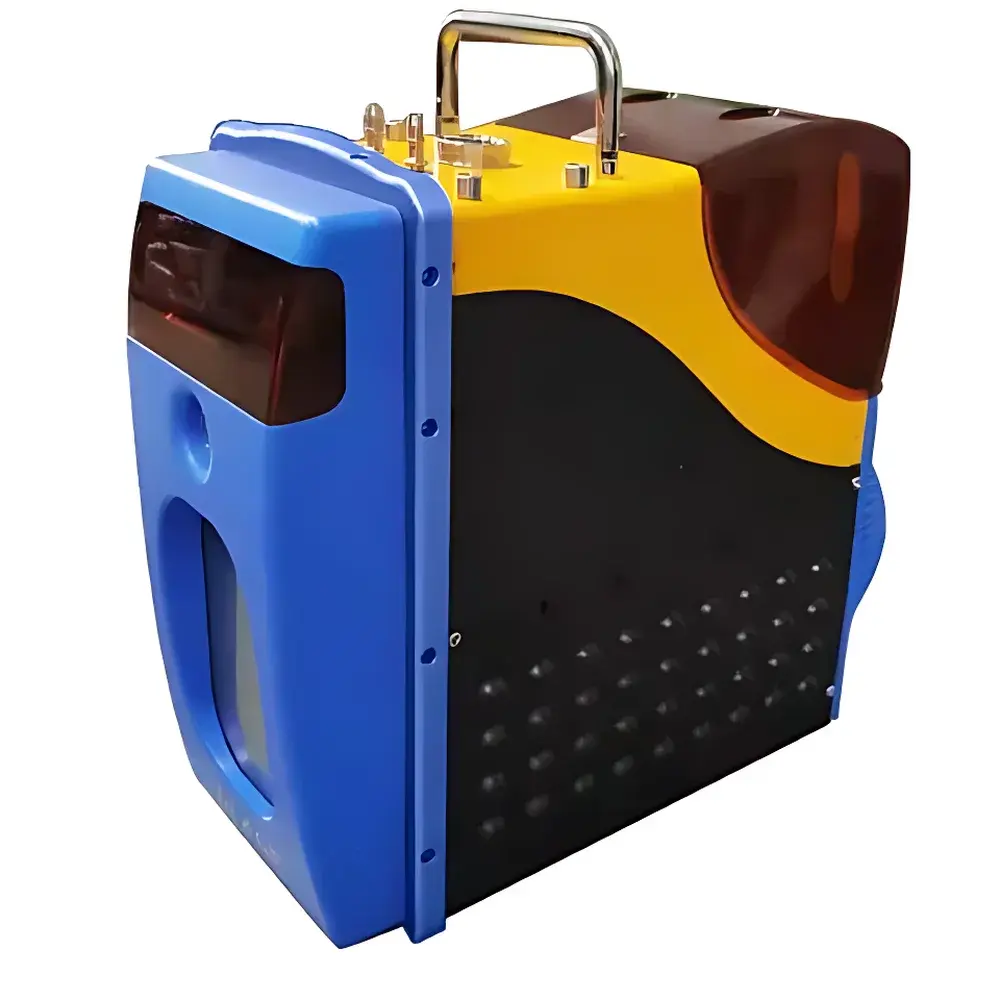
English Product Name
| Brand | AMAE |
|---|---|
| Origin | Guangdong, China |
| Model | EM-2068E |
| Sampling Methods | Filter Gravimetry (TSP/PM₁₀/PM₂.₅), Absorption Solution Collection, Sorbent Tube Enrichment |
| Measured Parameters | TSP, PM₁₀, PM₂.₅, SO₂, NOₓ, VOCs, Halogenated Hydrocarbons, Aldehydes/Ketones |
| Particulate Flow Range | 10–120 L/min |
| Dual High-Flow Gas Channels | 100–1500 mL/min |
| Dual Low-Flow Gas Channels | 10–200 mL/min |
| Flow Stability | ±5% |
| Flow Resolution | 0.1 L/min (particulate), 1 mL/min (gas) |
| Power Supply | Internal Rechargeable DC Battery (6–8 h at nominal flow) |
| Weight | 4.5 kg (including thermoelectric temperature control module) |
Overview
The AMAE EM-2068E Quad-Gas + Particulate Integrated Ambient Air Sampler is an engineered field-deployable instrument designed for simultaneous, independent sampling of airborne particulate matter and gaseous pollutants in ambient and indoor environments. It implements gravimetric determination of total suspended particulates (TSP), inhalable particulate matter (PM₁₀), and fine particulate matter (PM₂.₅) using standardized filter-based collection, while concurrently supporting absorption-based (e.g., impinger solutions for SO₂ and NOₓ), sorbent tube enrichment (e.g., Tenax or activated carbon for VOCs and halogenated hydrocarbons), and derivatization-compatible methods (e.g., DNPH cartridges for aldehydes/ketones). The system’s five-channel architecture—comprising one high-flow particulate channel and four independently programmable gas channels—enables synchronized, multi-analyte sampling per EPA Compendium Method TO-17, ISO 12103-1, and Chinese national standards including HJ 93-2013 and HJ 618-2011. Its thermoelectric temperature stabilization, integrated barometric and thermal sensors, and real-time standard-condition volume correction align with GLP-compliant field monitoring workflows.
Key Features
- Five independent sampling channels: one high-flow particulate path (10–120 L/min) and four configurable gas paths—offering two operational configurations: (A) two medium-flow (100–1500 mL/min) + two low-flow (10–200 mL/min) channels, or (B) four medium-flow channels.
- High-load-capacity brushless DC motor delivering >9 kPa backpressure resistance at 100 L/min—ensuring stable operation under high-resistance filter media (e.g., quartz fiber or PTFE membranes).
- Active moisture management: integrated condensate separation module eliminates reliance on external drying bottles or desiccants; supports automatic drainage during extended unattended operation.
- Real-time environmental compensation: built-in high-accuracy temperature and pressure sensors compute and log standard-cubic-meter (STP: 273.15 K, 101.325 kPa) volumetric flow continuously, traceable to NIST-traceable references.
- Thermoelectric temperature control: semiconductor-based cooling/heating maintains filter or adsorbent cartridge temperature within ±1.5 °C of user-setpoint (range: 0–30 °C), critical for volatile compound stability and humidity-sensitive analyses.
- Full-field calibration access: open firmware interface allows end-user verification and adjustment of flow transducers using primary-standard rotameters or bubble meters—supporting ISO/IEC 17025-mandated metrological traceability.
- Embedded 5-inch capacitive touchscreen with intuitive icon-driven UI; supports multilingual menu navigation (English, Spanish, French), timestamped method logging, and audit-ready session export.
Sample Compatibility & Compliance
The EM-2068E is validated for use with 47 mm and 90 mm diameter filters (quartz, glass fiber, PTFE, nylon), stainless steel or glass impingers (for SO₂, NH₃, H₂S), silica gel or coconut-shell charcoal sorbent tubes (per HJ 644-2013 and HJ 645-2013), and DNPH-coated cartridges (per HJ 683-2014). It meets mechanical and performance requirements specified in GB/T 39193-2020, HJ 93-2013, HJ 374-2007, and HJ 375-2007. All firmware and data handling routines support ALCOA+ principles: attributable, legible, contemporaneous, original, accurate, complete, consistent, enduring, and available—facilitating compliance with FDA 21 CFR Part 11 for regulated environmental laboratories conducting GLP/GMP-aligned studies.
Software & Data Management
Data acquisition and configuration are managed via the embedded ARM Cortex-A7 processor running a real-time Linux kernel. Each sampling session generates a cryptographically signed CSV file containing time-stamped flow values, temperature/pressure readings, battery voltage, pump duty cycle, and user-defined metadata (site ID, operator code, filter ID). Exported datasets include STP-corrected volume, ambient and standard condition flow rates, and thermoelectric module status. Optional GPS module (U-Blox NEO-M8N) embeds WGS84 coordinates and UTC timestamps into raw logs—verifiable via SHA-256 hash for chain-of-custody documentation. PC-side software (Windows/macOS/Linux) enables batch calibration coefficient upload, spectral QA/QC flagging, and automated report generation compliant with CNAS-CL01:2018 reporting templates.
Applications
The EM-2068E serves routine and emergency air quality monitoring across regulatory, industrial hygiene, and academic domains. Typical applications include: ambient PM₂.₅ source apportionment studies requiring co-located gaseous precursor measurement; indoor air quality assessments per GB/T 18883-2022 and ISO 16000 series; occupational exposure monitoring for VOCs and acid gases in manufacturing facilities; mobile monitoring campaigns leveraging its 4.5 kg weight and internal battery; and validation of fixed-site air monitoring networks where portable reference-grade sampling is required. Its dual-range gas channels accommodate both high-concentration stack effluent screening and ultra-low-level background VOC characterization.
FAQ
Does the EM-2068E support remote firmware updates?
Yes—via USB-C or optional Wi-Fi module (IEEE 802.11n), with digital signature verification to ensure integrity.
Can the particulate and gas channels operate simultaneously at full rated flow?
Yes—thermal management and power distribution architecture guarantee concurrent operation without cross-channel interference or flow deviation exceeding ±5%.
Is the internal battery replaceable by the user?
Yes—the LiFePO₄ pack is field-swappable using standard Torx tools; spare modules are certified to UN38.3 transport regulations.
How is flow calibration traceability documented?
Each unit ships with a factory calibration certificate referencing NIST-traceable primary standards; user-performed calibrations generate timestamped, digitally signed audit logs stored in non-volatile memory.
What data export formats are supported?
CSV (UTF-8 encoded, RFC 4180 compliant), with optional XML schema for integration into LIMS platforms adhering to ASTM E1467-07 and ISO/IEC 17025 Annex A.2 requirements.
Related Products







