
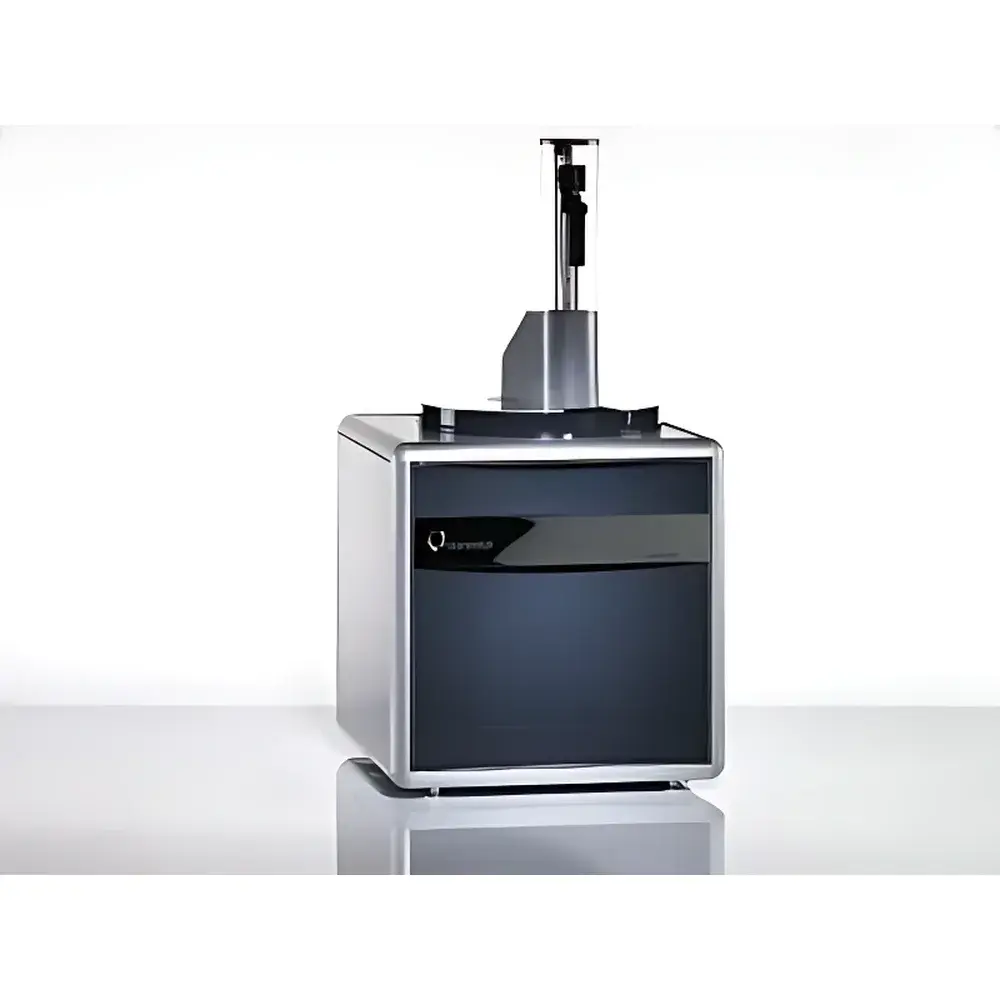
Elementar vario MAX cube Organic Elemental Analyzer
| Brand | Elementar |
|---|---|
| Origin | Germany |
| Model | vario MAX cube |
| Measured Elements | C, N, S |
| Sample Capacity | up to 5 g (solid) or 5 mL (liquid) |
| Carrier Gas Options | He or Ar (switchable without hardware modification) |
| Warranty | 10 years on combustion furnace and TCD detector |
| Compliance | ASTM D5373, ISO 16968, EN 15148, USP <28>, GLP/GMP-ready |
Overview
The Elementar vario MAX cube is a high-throughput, fully automated organic elemental analyzer engineered for precise, reliable quantification of carbon (C), nitrogen (N), and sulfur (S) in solid and liquid samples. Based on high-temperature combustion (up to 1,200 °C) followed by gas chromatographic separation and thermal conductivity detection (TCD), the instrument employs patented dual-stage combustion technology to ensure complete oxidation of refractory and heterogeneous matrices—including soils, plant tissues, fertilizers, polymers, and industrial chemicals. Its robust architecture supports unattended overnight operation, enabled by an integrated automatic ash removal system that continuously evacuates residual inorganic oxides from the combustion zone—eliminating manual cleaning cycles and preserving long-term baseline stability.
Key Features
- Automatic Ash Removal System: A mechanically actuated ceramic trap captures and ejects ash residues during analysis, enabling continuous multi-hour sequences without operator intervention—even with high-ash samples like soils or biomass.
- Flexible Sample Handling: Accommodates sample masses up to 5 g (solids) or volumes up to 5 mL (liquids) in reusable quartz or ceramic crucibles, reducing preparation time and improving representativeness for heterogeneous materials.
- Carrier Gas Agnosticism: Switches seamlessly between helium and argon carrier gases via software configuration—no hardware modifications required. This ensures operational continuity amid global helium supply constraints and reduces per-sample consumable cost by >60% when using argon.
- Extended Component Reliability: Combustion furnace and TCD detector are backed by a 10-year warranty, reflecting design emphasis on thermal stability, corrosion resistance, and long-term signal reproducibility.
- Modular Combustion Architecture: Dual-zone combustion (primary at 1,200 °C + secondary at 850 °C) guarantees quantitative conversion of recalcitrant compounds (e.g., sulfates, nitrates, lignin-rich organics) into detectable CO₂, N₂, and SO₂.
Sample Compatibility & Compliance
The vario MAX cube routinely analyzes environmental, agricultural, and industrial samples including soil extracts, compost, leaf tissue, synthetic fertilizers, petrochemical feedstocks, pharmaceutical intermediates, and polymer additives. It complies with internationally recognized standard methods—including ASTM D5373 (coal and coke), ISO 16968 (soil organic carbon), EN 15148 (waste characterization), and USP (elemental impurities in drug substances). Its audit-trail-enabled software meets GLP and GMP requirements under FDA 21 CFR Part 11 when deployed with appropriate user access controls and electronic signature protocols.
Software & Data Management
Controlled via the intuitive vario software suite, the instrument supports method-driven workflows, customizable calibration curves (single-point or multi-point), and real-time chromatogram visualization. All analytical parameters—including injection timing, gas flow rates, oven temperatures, and integration windows—are stored with full metadata (user ID, timestamp, instrument ID). Raw data and processed results export to CSV, XML, or LIMS-compatible formats. Audit trails record every parameter change, result modification, and user login event—ensuring traceability for regulatory submissions and internal quality reviews.
Applications
- Environmental Science: Quantifying total organic carbon (TOC) and total nitrogen (TN) in soils, sediments, and wastewater sludge per ISO 10694 and EPA Method 9060A.
- Agricultural Research: Determining protein content (via N × 6.25) and sulfur nutrition status in crop tissues and fertilizers.
- Materials Characterization: Verifying elemental composition of catalysts, carbon blacks, and flame-retardant polymers where heterogeneity demands large sample loads.
- Pharmaceutical QA/QC: Screening for residual catalyst metals (via S/N ratios) and confirming batch-to-batch consistency of active pharmaceutical ingredients (APIs).
- Academic & Method Development Labs: Supporting validation studies for novel sample introduction techniques (e.g., direct liquid injection) and matrix-matched calibration strategies.
FAQ
Can the vario MAX cube analyze hydrogen (H) or oxygen (O)?
No—this model is configured exclusively for C, N, and S determination. Hydrogen and oxygen require dedicated modules (e.g., vario EL cube or macro CNS variants) with modified reduction furnaces and IR detection.
Is helium mandatory for optimal performance?
No. Argon delivers equivalent precision and accuracy for C, N, and S across all certified methods; retention times and peak shapes are automatically compensated via software-based retention time locking.
What maintenance is required beyond ash removal?
Routine tasks include quarterly replacement of the CO₂ absorbent (Ascarite II) and water trap (Magnesium perchlorate), annual inspection of quartz combustion tubes, and biannual verification of TCD zero drift using certified reference materials.
How does the instrument handle high-salt or halogen-rich samples?
A dedicated halogen trap (optional) intercepts Cl/Br/F before the TCD; salt-laden samples should be diluted or pre-washed to avoid ceramic crucible degradation and combustion tube corrosion.
Is remote monitoring supported?
Yes—via Ethernet-connected PC with VNC or TeamViewer integration; real-time status dashboards and alarm notifications (email/SMS) are configurable through third-party SCADA interfaces.




