
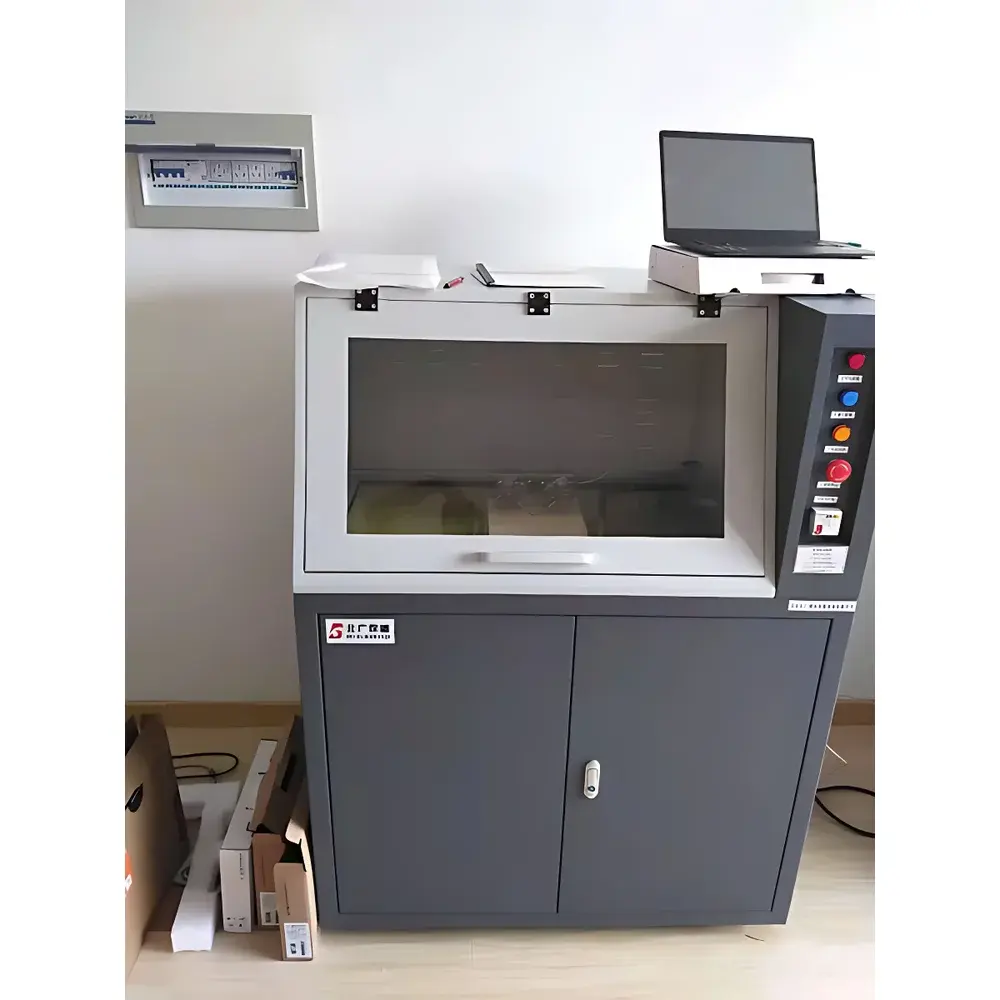
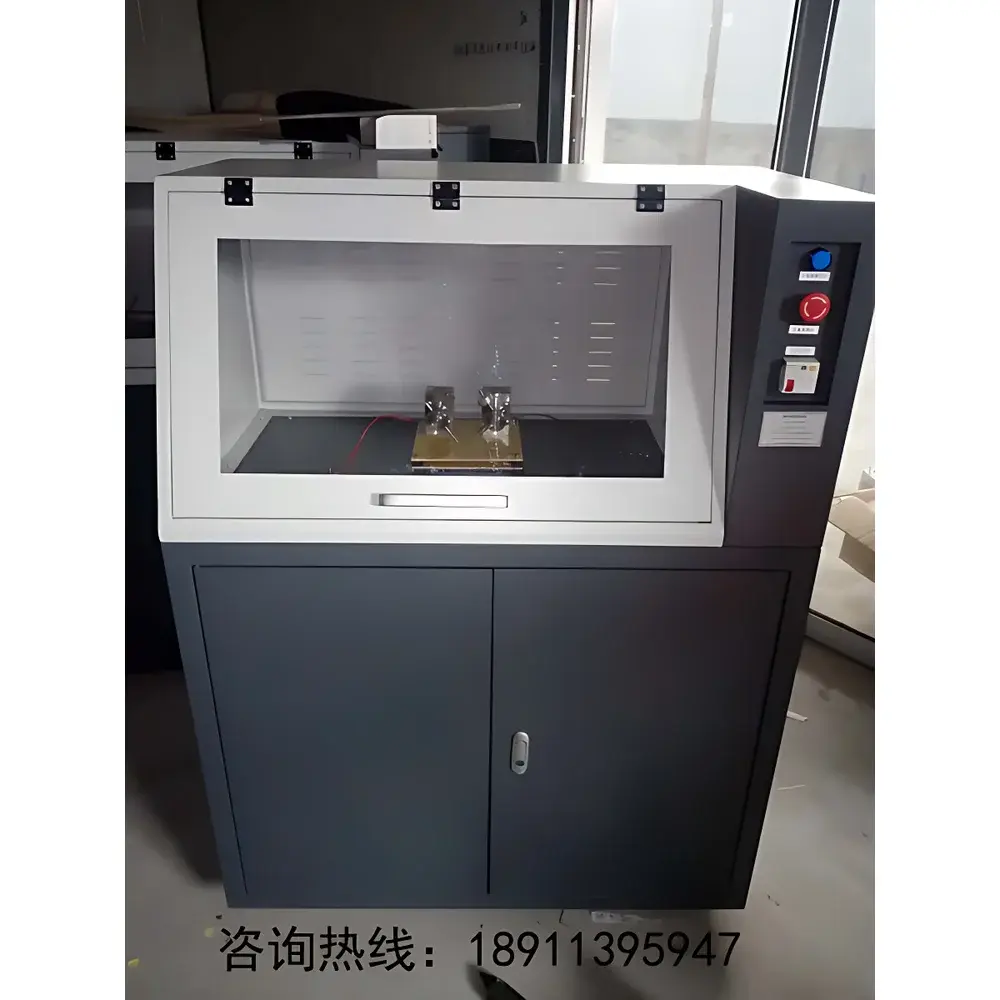
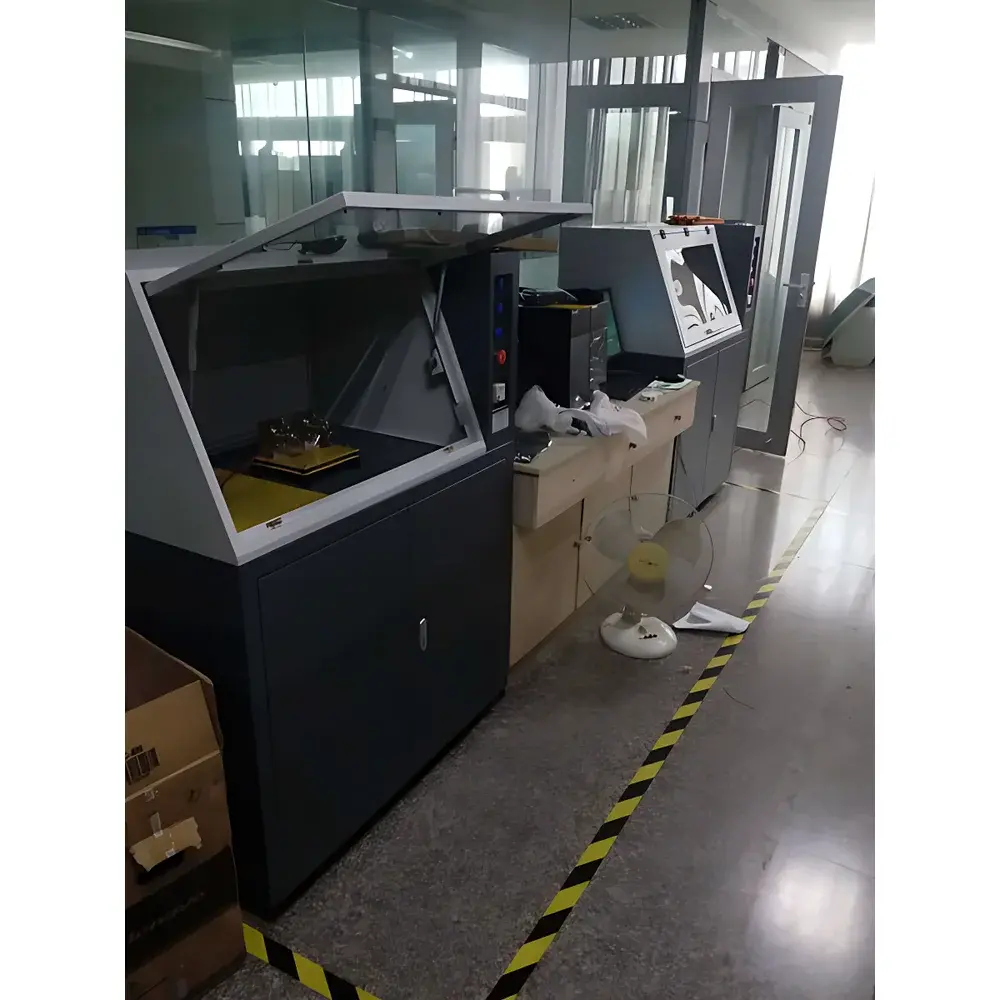
North Guang Precision Instrument BDH-20KV Microprocessor-Controlled Arc Resistance Tester
| Brand | North Guang Precision Instrument |
|---|---|
| Origin | Beijing, China |
| Manufacturer Type | Direct Manufacturer |
| Country of Origin | China |
| Model | BDH-20KV (Microprocessor-Controlled) |
| Output Voltage | 0–12.5 kV AC |
| Electrical Capacity | 3 kVA |
| Test Modes | Intermittent & Continuous Arc |
| Test Currents | 10 / 20 / 30 / 40 mA selectable |
| Voltage Regulation Accuracy | ≤1% |
| Arc On/Off Timing Error | <5 ms |
| Electrode Configuration | Tungsten rods, Ø2.5 mm × 70 mm, 110° included angle, electrode force 0.5 ± 0.05 N |
| Electrode Dimensions | Stainless steel plate electrodes 25.4 mm × 12.7 mm × 0.15 mm |
| Safety Protections | Overvoltage, overcurrent, short-circuit, interlocked safety door, software operation lockout |
| Compliance Standards | GB 1411–1978, IEC 61621:1997, ASTM D495, UL 746A, JEC 149 |
Overview
The North Guang Precision Instrument BDH-20KV Microprocessor-Controlled Arc Resistance Tester is a dedicated high-voltage apparatus engineered to quantify the arc resistance of solid insulating materials under standardized electrical stress conditions. Based on the principle of controlled surface arcing—where high-frequency, low-current arcs are repeatedly or continuously applied across two precisely positioned tungsten electrodes—the instrument measures the time elapsed from arc initiation until the formation of a conductive carbonized path that causes dielectric failure. This time-to-failure metric serves as the primary performance indicator for comparative evaluation of material resilience against progressive thermal degradation, oxidative decomposition, and carbon tracking. The system operates at adjustable AC voltages up to 12.5 kV with current settings spanning 10–40 mA, enabling rigorous differentiation between materials with marginal or superior arc resistance characteristics. Its design adheres strictly to the physical test mechanics defined in IEC 61621:1997 and ASTM D495, where arc duration, electrode geometry, contact force, and timing resolution are rigorously controlled to ensure inter-laboratory reproducibility.
Key Features
- Precision microprocessor-based control architecture with real-time arc cycle monitoring and automatic sequence execution for 10, 20, 30, and 40 mA continuous or intermittent arc protocols.
- High-stability 3 kVA high-voltage generator with ≤1% output voltage regulation accuracy and <5 ms arc switching timing tolerance—critical for compliance with IEC 61621:1997 clause 6.2.3.
- Electrode assembly featuring tungsten rods (Ø2.5 mm × 70 mm) mounted at a fixed 110° included angle, calibrated to apply 0.5 ± 0.05 N normal force onto specimens—ensuring repeatable surface contact pressure per ASTM D495 Section 7.3.
- Dual-electrode configuration support: interchangeable stainless-steel plate electrodes (25.4 mm × 12.7 mm × 0.15 mm) for specialized comparative testing per legacy GB 1411–1978 requirements.
- Integrated hardware safety subsystem including overvoltage cutoff, overcurrent limiting, short-circuit detection, interlocked safety door actuation, and software-level operational validation to prevent erroneous test initiation.
- Full digital data acquisition: isolated voltage and current transducers synchronized with millisecond-resolution timestamps, enabling waveform capture and post-test analysis of arc stability and breakdown dynamics.
Sample Compatibility & Compliance
The BDH-20KV accommodates rigid and semi-rigid sheet, film, and molded specimens up to 15 mm thick, including thermoplastics (e.g., PBT, PC, PA66), thermosets (epoxy, phenolic, silicone resins), laminates (GPO-3, FR-4), ceramics, glass, mica, paperboard, and insulating varnishes. Specimen mounting fixtures conform to IEC 61621 Figure 1 and ASTM D495 Figure 2 dimensional tolerances. All mechanical and electrical parameters—including electrode spacing (6.35 mm ± 0.1 mm), alignment repeatability (<0.05 mm lateral deviation), and thermal mass consistency—are validated against ISO/IEC 17025 calibration traceability protocols. The instrument satisfies functional verification requirements for GLP-compliant laboratories and supports audit-ready documentation per FDA 21 CFR Part 11 when paired with validated software configurations.
Software & Data Management
The bundled Windows-based arc resistance measurement software provides full test orchestration, real-time graphical display of voltage/current waveforms, and automated pass/fail classification based on user-defined time thresholds. Each test session logs timestamped metadata—including operator ID, environmental temperature/humidity (via optional external sensor input), specimen ID, electrode set serial number, and firmware revision—into an encrypted SQLite database. Export options include CSV for statistical process control (SPC) integration and PDF reports compliant with ISO 17025 Clause 7.8.2. Software updates—including revised test sequences aligned with future editions of IEC 61621 or national adoptions such as GB/T 1411—can be deployed via authenticated firmware update packages without hardware modification.
Applications
This tester is routinely deployed in R&D laboratories and QC departments within electric motor manufacturers, transformer producers, PCB laminate suppliers, and appliance OEMs to validate material suitability for high-voltage insulation systems. Typical use cases include qualification of encapsulation resins for EV power modules, screening of flame-retardant additives in polyamide housings, comparative assessment of ceramic substrates for power semiconductor packaging, and verification of coating integrity on magnet wire enamel. In academic research, it supports fundamental studies on carbonization kinetics, plasma-surface interaction mechanisms, and synergistic effects of humidity and surface contamination on tracking resistance.
FAQ
What standards does the BDH-20KV fully support?
It complies with GB 1411–1978, IEC 61621:1997, ASTM D495–2020, UL 746A, and JEC 149, with hardware and software pre-configured for all specified electrode geometries, timing cycles, and voltage ramp profiles.
Is calibration traceability available?
Yes—factory calibration certificates are provided with NIST-traceable references for voltage (±0.5% full scale), current (±0.8% full scale), and timing (±1 ms), valid for 12 months under standard operating conditions.
Can the system operate without a connected PC?
No—the microprocessor controller requires the host computer for test initiation, parameter configuration, real-time monitoring, and data export; standalone operation is not supported.
What maintenance intervals are recommended?
Electrode tip polishing every 50 test cycles, high-voltage cable insulation inspection quarterly, and annual full-system verification including isolation resistance testing (>100 MΩ at 1 kV DC) and protective earth continuity check.
Does the software support multi-user role-based access control?
Yes—administrator, technician, and reviewer roles can be assigned with differential permissions for method editing, test execution, and report approval, satisfying 21 CFR Part 11 electronic signature requirements when configured with time-stamped audit trails.



