
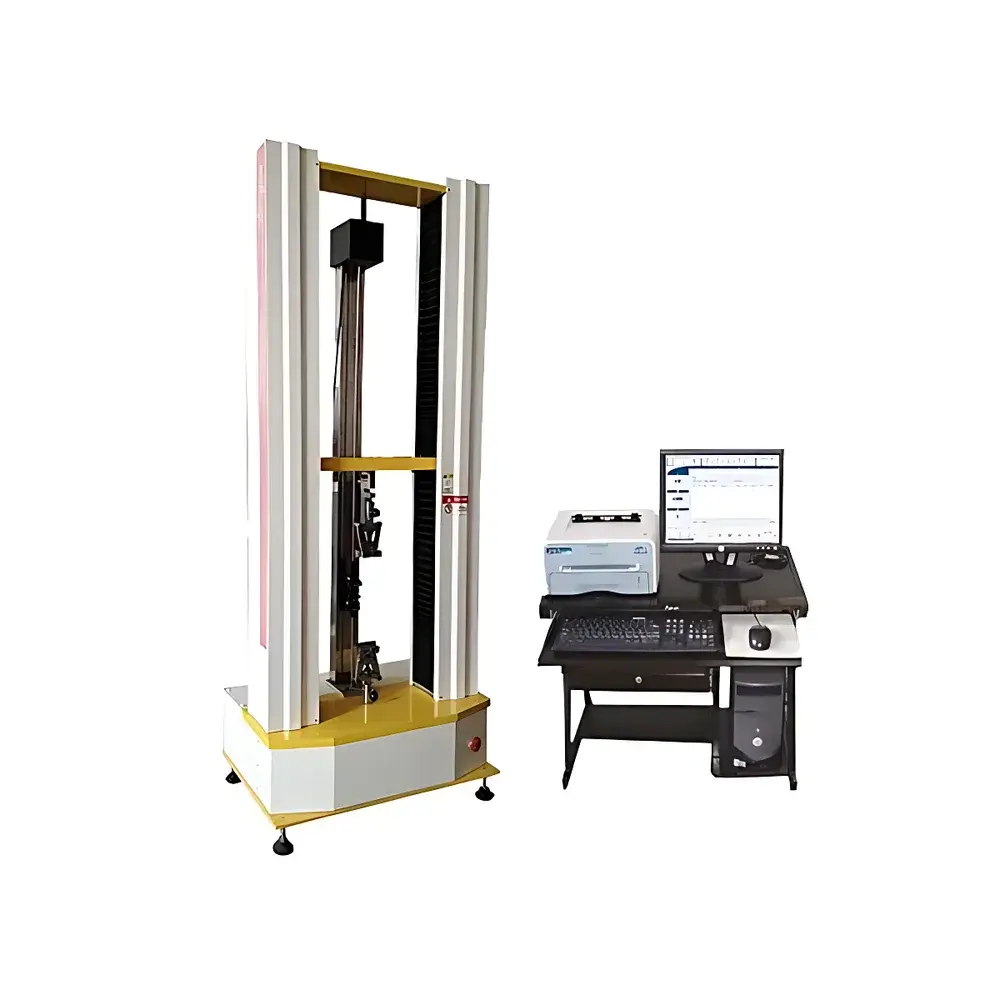
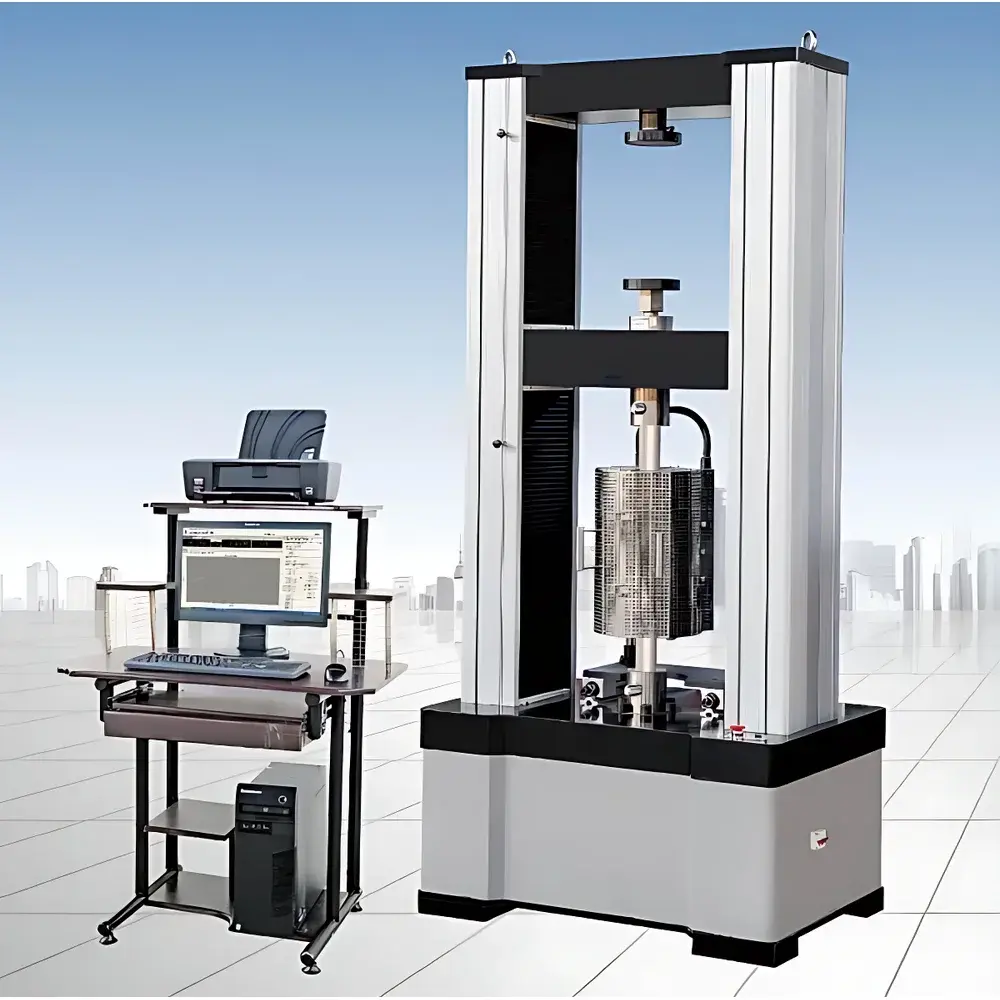
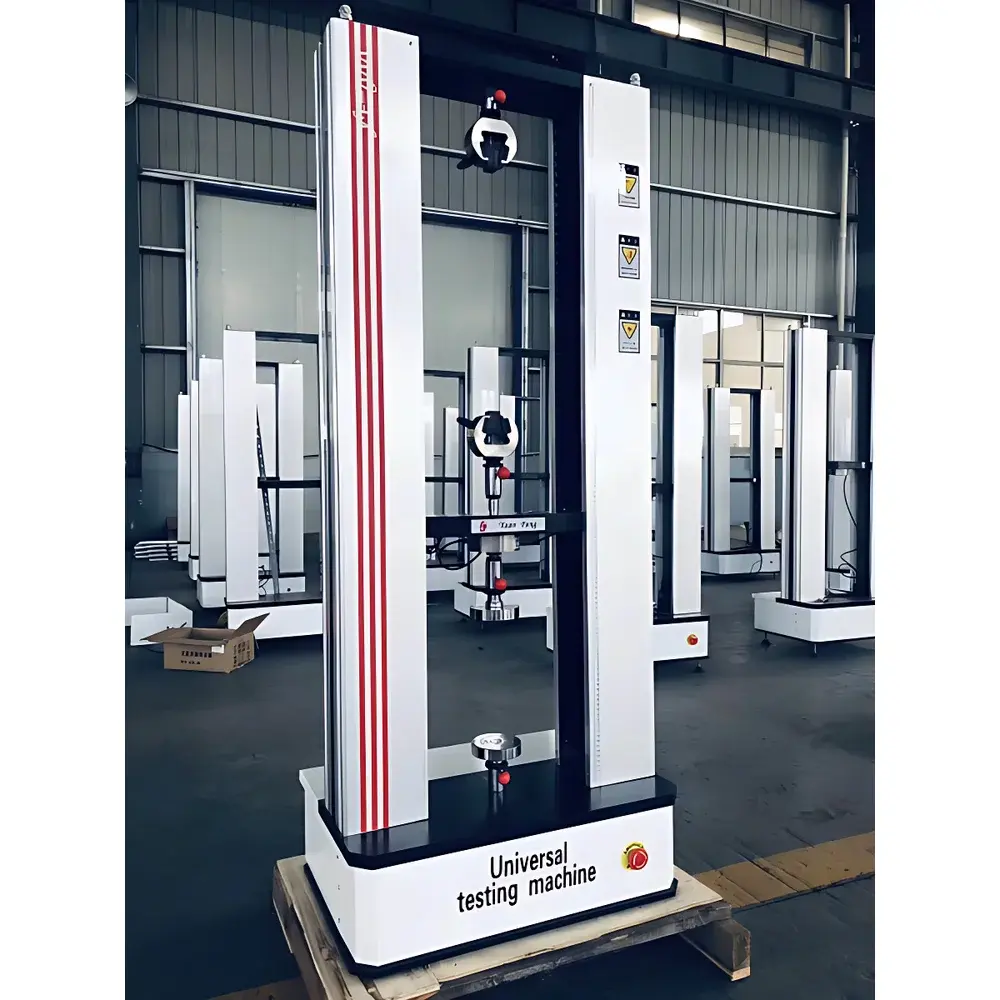
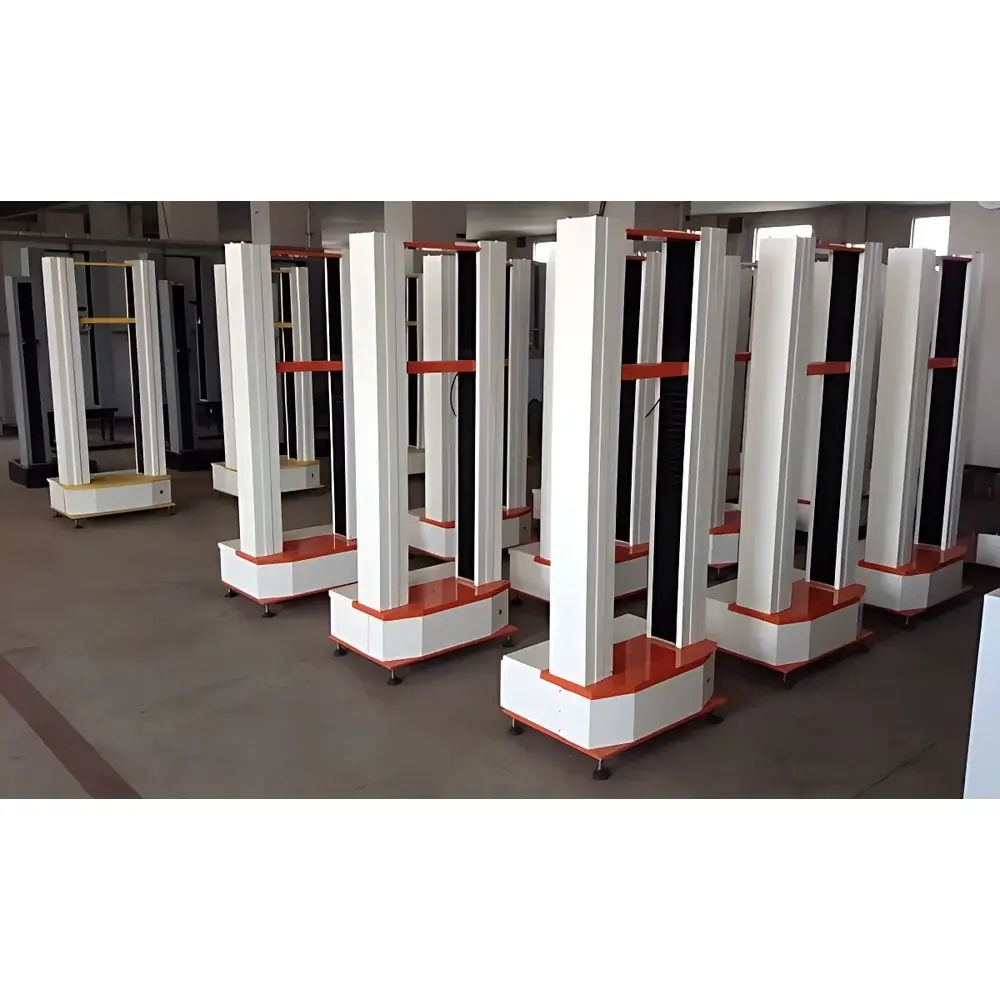
Beiguang Jingyi BWN Series Portal-Style Digital Tensile Testing Machine
| Brand | Beiguang Jingyi / All Precision Instrument |
|---|---|
| Origin | Beijing, China |
| Manufacturer Type | Direct Manufacturer |
| Product Category | Domestic |
| Model | BWN Series |
| Max Test Force | 5 kN |
| Force Measurement Range | 2–10% FS |
| Force Accuracy | ±1% of reading |
| Displacement Resolution | 0.001 mm |
| Force Resolution | 1/300,000 full scale |
| Crosshead Speed Range | 0.05–500 mm/min (infinitely variable) |
| Power Supply | 220 V ±10%, 50 Hz, 0.5 kW |
| Weight | 120 kg |
Overview
The Beiguang Jingyi BWN Series Portal-Style Digital Tensile Testing Machine is a microprocessor-controlled electromechanical universal testing system engineered for high-reproducibility mechanical property evaluation of metallic, polymeric, composite, and elastomeric materials. Based on the principle of controlled uniaxial force application via precision ball-screw actuation and high-fidelity load cell transduction, the system complies with fundamental mechanics-of-materials test methodologies defined in ISO 6892-1, ASTM E4, ASTM E8/E8M, and GB/T 228.1–2021. Its rigid portal frame architecture ensures minimal deflection under load, while the integrated optical encoder and digital servo control enable precise displacement tracking and closed-loop force regulation—critical for accurate determination of tensile strength, yield point, elongation at break, modulus of elasticity, and strain-hardening behavior across standardized specimen geometries.
Key Features
- Rigid two-column portal frame design with reinforced base and crosshead, optimized for axial alignment and lateral stability during high-force testing up to 5 kN
- High-precision load cell calibrated to Class 1 accuracy per ISO 7500-1, delivering force resolution of 1 part in 300,000 full scale
- Digital servo motor coupled with arc-synchronous reduction gearbox and preloaded precision ball screw, enabling smooth, backlash-free crosshead motion across 0.05–500 mm/min
- Displacement measurement via high-resolution optical encoder (0.001 mm resolution), traceable to national metrological standards
- Full-digital control system with real-time data acquisition at ≥1 kHz sampling rate, supporting both open-loop speed control and closed-loop force/strain rate control modes
- Modular fixture interface compatible with standard wedge-action, pneumatic, peel, shear, bending, compression, and burst test fixtures per ISO 20795-1, ASTM D882, ASTM D1876, and GB/T 1040 series
Sample Compatibility & Compliance
The BWN Series accommodates specimens ranging from thin films (≥0.05 mm thick) to solid metal rods (≤20 mm diameter), including plastics, rubber, textiles, adhesives, packaging laminates, biomedical sutures, and wire ropes. It supports standardized test configurations per ISO, ASTM, and GB/T frameworks—including tensile, compression, flexural, peel (90° and 180°), tear (trouser, tongue, dart), puncture, and shear protocols. The system meets mechanical verification requirements outlined in ISO 7500-1 (static calibration), ISO 5893 (dynamic performance), and JJG 475–2008 (Chinese national verification regulation for universal testing machines). All hardware and firmware are designed to support GLP-compliant operation, with optional audit trail logging and electronic signature functionality available upon request for regulated environments.
Software & Data Management
The embedded control software provides intuitive test setup, real-time curve visualization (force vs. displacement, stress vs. strain), and automated calculation of key mechanical parameters—including tensile strength, yield strength (0.2% offset), Young’s modulus, elongation at break, tearing energy, and peel adhesion values. Raw data export is supported in CSV and XML formats for post-processing in third-party statistical or finite-element analysis tools. For enterprise integration, the system offers optional Ethernet-based communication (TCP/IP) and supports SCADA-level data streaming. Software validation documentation—including IQ/OQ protocols and traceability matrices—is available to assist users in fulfilling FDA 21 CFR Part 11 and ISO/IEC 17025 compliance requirements.
Applications
This testing machine serves quality control laboratories, R&D centers, and contract testing facilities engaged in material qualification, process validation, and failure analysis. Typical use cases include: mechanical characterization of thermoplastic injection-molded parts per ISO 527; evaluation of medical device polymer films under USP ; validation of adhesive bond strength in automotive trim assemblies per SAE J2243; tensile verification of aerospace-grade aluminum alloys per AMS 2355; and routine QC of packaging seal integrity per ASTM F88 and ISO 11607-2. Its versatility extends to academic research in polymer physics, biomechanics, and nanocomposite development where repeatable, traceable mechanical response data is essential.
FAQ
What international standards does this machine comply with for tensile testing?
It conforms to ISO 6892-1 (metallic materials), ASTM E8/E8M (tension testing of metallic materials), ASTM D638 (plastics), and GB/T 228.1–2021 (Chinese national standard for metallic tensile testing), among others.
Can the system perform closed-loop strain-rate-controlled tests?
Yes—the digital controller supports strain-rate control mode using real-time feedback from extensometers (optional accessories) or encoder-derived displacement signals.
Is calibration certification included with shipment?
Each unit ships with a factory calibration report traceable to CNAS-accredited reference standards; optional third-party ISO/IEC 17025 calibration certificates are available upon request.
What is the warranty coverage and service support model?
Standard warranty is 24 months parts-and-labor; technical support is provided remotely, and return-to-factory repair is recommended for complex diagnostics to ensure full system recalibration and preventive maintenance.
Are custom fixtures or software extensions available?
Yes—Beiguang Jingyi offers OEM fixture design services and API-based software integration kits for LIMS and MES platforms.
Related Products



