
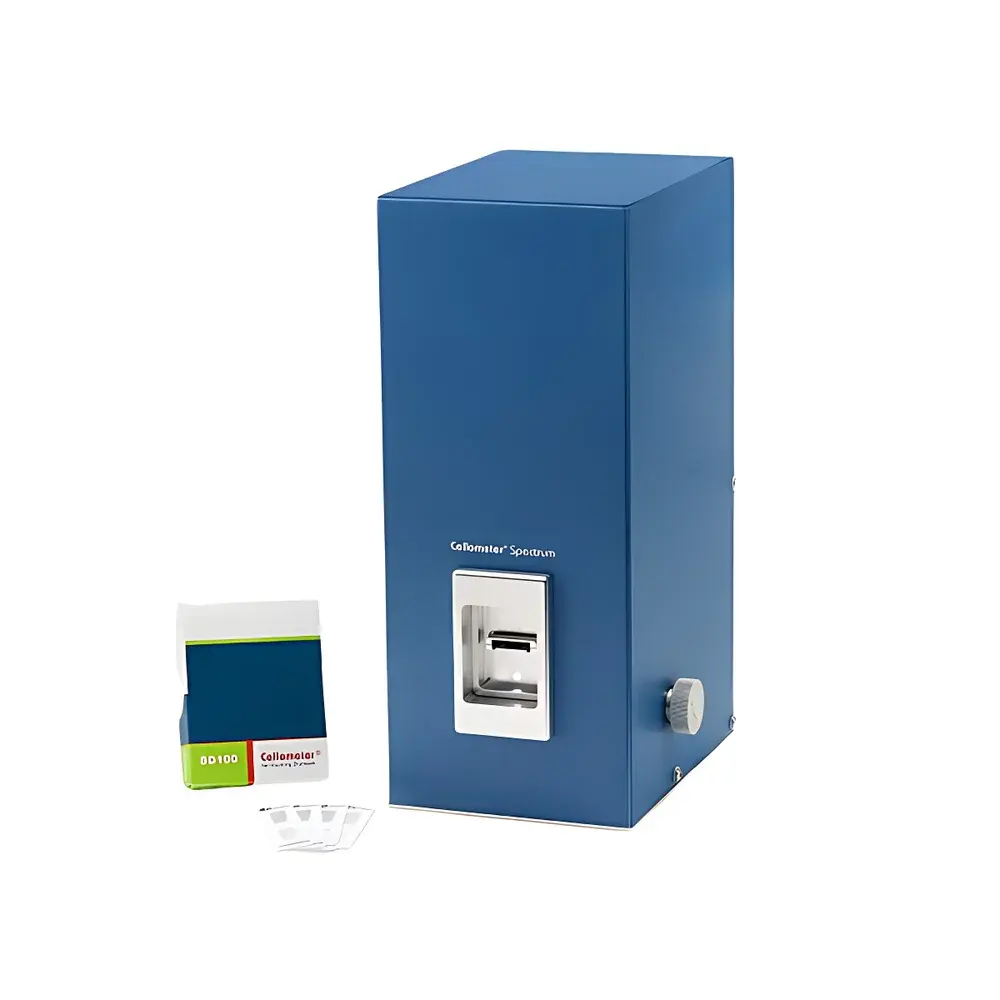
Revvity Cellometer Family Imaging-Based Cell Counters and Cell Analysis Systems
| Brand | Revvity |
|---|---|
| Origin | USA |
| Manufacturer Type | Authorized Distributor |
| Product Category | Imported Instrument |
| Model | Cellometer Family |
| Pricing | Available Upon Request |
Overview
The Revvity Cellometer Family is a suite of high-precision, imaging-based cell counters and cell analysis systems engineered for quantitative, morphology-aware assessment of mammalian, microbial, and primary cells. Unlike flow cytometry or impedance-based counters, the Cellometer platform employs digital brightfield and fluorescence microscopy coupled with proprietary image segmentation algorithms to deliver accurate, reproducible cell counts, viability assessments (e.g., trypan blue exclusion), and population-level morphometric data—including cell size distribution, circularity, clump detection, and confluence metrics. Each instrument in the family is built around a standardized 20 µL sample volume requirement and utilizes fixed-focus optics with automated exposure and contrast optimization to minimize user variability. Designed for integration into regulated laboratory environments, the system architecture supports audit-ready workflows aligned with GLP, GMP, and FDA 21 CFR Part 11 requirements—particularly critical for cell therapy process development, bioprocess monitoring, and preclinical toxicology studies.
Key Features
- Imaging-based quantification: Eliminates reliance on hydrodynamic focusing or electrical resistance; enables direct visualization and validation of counting events.
- Multi-modal detection: Brightfield (trypan blue), dual-channel fluorescence (acridine orange/propidium iodide), and optional UV-enhanced imaging for autofluorescent or GFP-expressing cells.
- Automated clump recognition and split correction: Algorithmically resolves aggregated cells (e.g., hepatocytes, tumor spheroids, PBMCs) without manual gating or dilution bias.
- Embedded IQ/OQ protocols: Pre-validated installation and operational qualification packages available for Auto T4, Auto 1000, Auto 2000, and K2 models—facilitating rapid deployment in regulated labs.
- Touchscreen interface with onboard data storage: All models feature integrated Android-based operating systems, local database logging, and encrypted export (CSV, PDF, PNG) compliant with ALCOA+ data integrity principles.
- NIST-traceable calibration framework: Developed in collaboration with the National Institute of Standards and Technology to support metrological traceability for cell counting standards used in cell therapy product release testing.
Sample Compatibility & Compliance
The Cellometer Family accommodates a broad spectrum of suspension and semi-adherent samples without enzymatic dissociation or centrifugation artifacts. Validated applications include yeast (Saccharomyces cerevisiae, Brettanomyces), E. coli, algae (Chlorella, Scenedesmus), primary human hepatocytes, adipocytes, tumor-derived ascites suspensions, PBMCs, CD34+ stem cells, and splenocytes. All instruments comply with IEC 61010-1 for laboratory equipment safety and meet electromagnetic compatibility (EMC) requirements per EN 61326-1. The Auto 2000, X1/X2, and K2 models are configured with 21 CFR Part 11–enabled software modules—including electronic signatures, audit trails, and role-based access control—supporting compliance in pharmaceutical QC, clinical trial labs, and ATMP manufacturing facilities subject to EMA Annex 1 or USP .
Software & Data Management
Cellometer instruments run on Revvity’s proprietary Cellometer Software Suite v5.x, which provides real-time image acquisition, batch processing, and comparative analytics across instruments and timepoints. Data files include raw TIFF images, metadata logs (exposure time, gain, threshold settings), and structured result tables with statistical summaries (mean diameter, CV%, viability %, total count/mL). Export formats adhere to FAIR principles: CSV for LIMS integration, PDF reports with embedded digital signatures, and PNG overlays for publication-grade figures. The software supports multi-user environments with configurable permissions and automatic backup to network drives or cloud storage (AWS S3, Azure Blob) via secure TLS 1.2 endpoints. All audit trails record operator ID, timestamp, parameter changes, and result modifications—fully retrievable for regulatory inspections.
Applications
- Bioprocess monitoring: Real-time viability tracking during CHO or HEK293 fed-batch cultures; fermentation control in brewing and bioethanol production.
- Toxicology screening: Dose-response assessment of compound-induced cytotoxicity in primary hepatocytes using AO/PI dual staining.
- Cell therapy manufacturing: Release testing of CAR-T products per ISCT guidelines—quantifying viable CD45+ cells, detecting residual RBCs or debris, and verifying morphology consistency.
- Microbial quality control: Enumeration of spoilage organisms (e.g., Lactobacillus, Pediococcus) in beverage matrices without culture bias.
- Academic research: High-content phenotyping of CRISPR-edited cell lines, including size heterogeneity and nuclear/cytoplasmic ratio analysis.
FAQ
What regulatory standards does the Cellometer Family support?
The Auto 2000, K2, and Auto 1000 models include validated 21 CFR Part 11 modules. IQ/OQ documentation is provided for all major platforms, and the system design conforms to ISO 13485:2016 and EU MDR Annex II requirements for in vitro diagnostic instrumentation.
Can the Cellometer analyze adherent cells without trypsinization?
No—adherent cells must be detached into single-cell suspensions prior to loading. However, gentle enzymatic or EDTA-based dissociation protocols preserve membrane integrity better than mechanical scraping, minimizing false-positive trypan blue uptake.
Is NIST traceability available for routine calibration verification?
Yes. Revvity supplies NIST-traceable reference microbeads (10 µm and 25 µm polystyrene) and certified cell standards (lyophilized Jurkat and HEK293) for daily performance verification and inter-instrument harmonization.
How does the Cellometer handle highly autofluorescent samples like algae or stem cells?
The Spectrum and K2 models offer adjustable excitation/emission filters and background subtraction algorithms optimized for high-background fluorescence. Users may define custom ROI masks to exclude chlorophyll or lipofuscin signal from viability calculations.
Does the software support integration with LIMS or ELN systems?
Yes—via RESTful API and HL7-compliant middleware. Sample IDs, test parameters, and results can be synchronized bidirectionally with LabVantage, Thermo Fisher SampleManager, and Benchling ELN platforms.




