
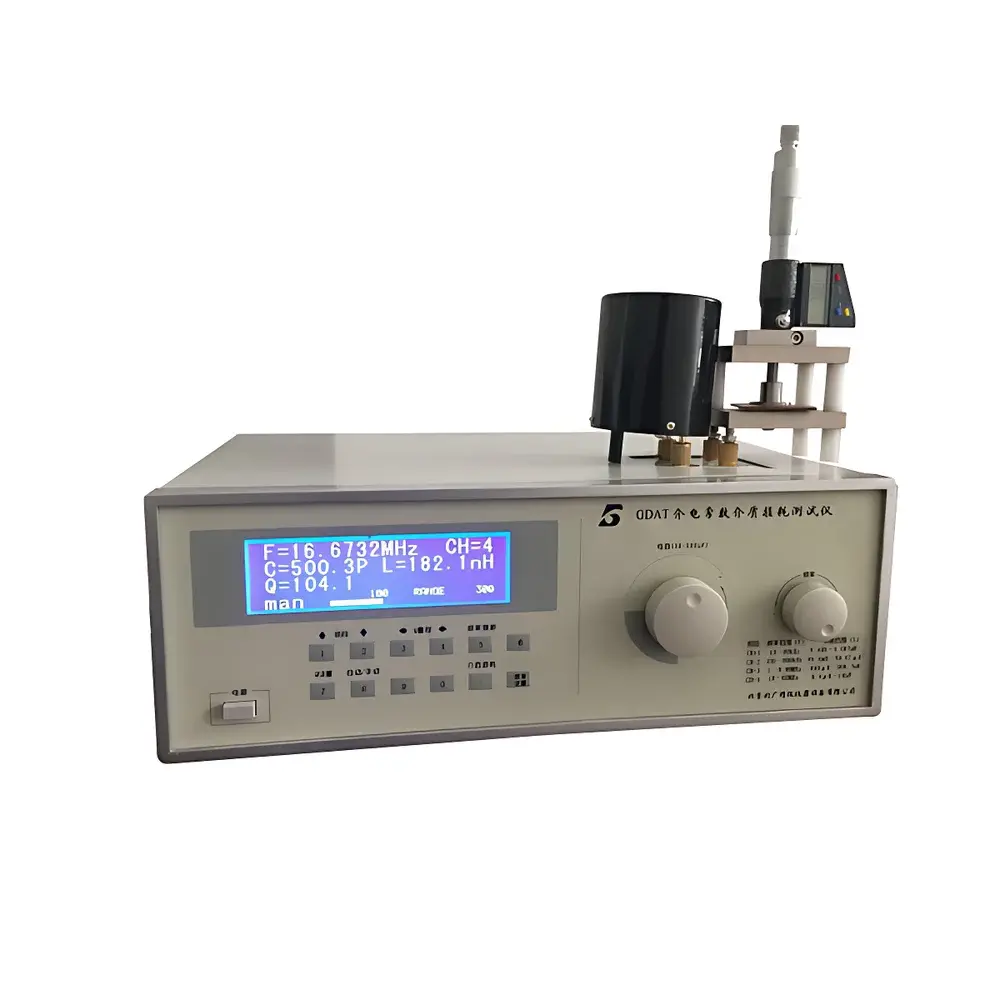
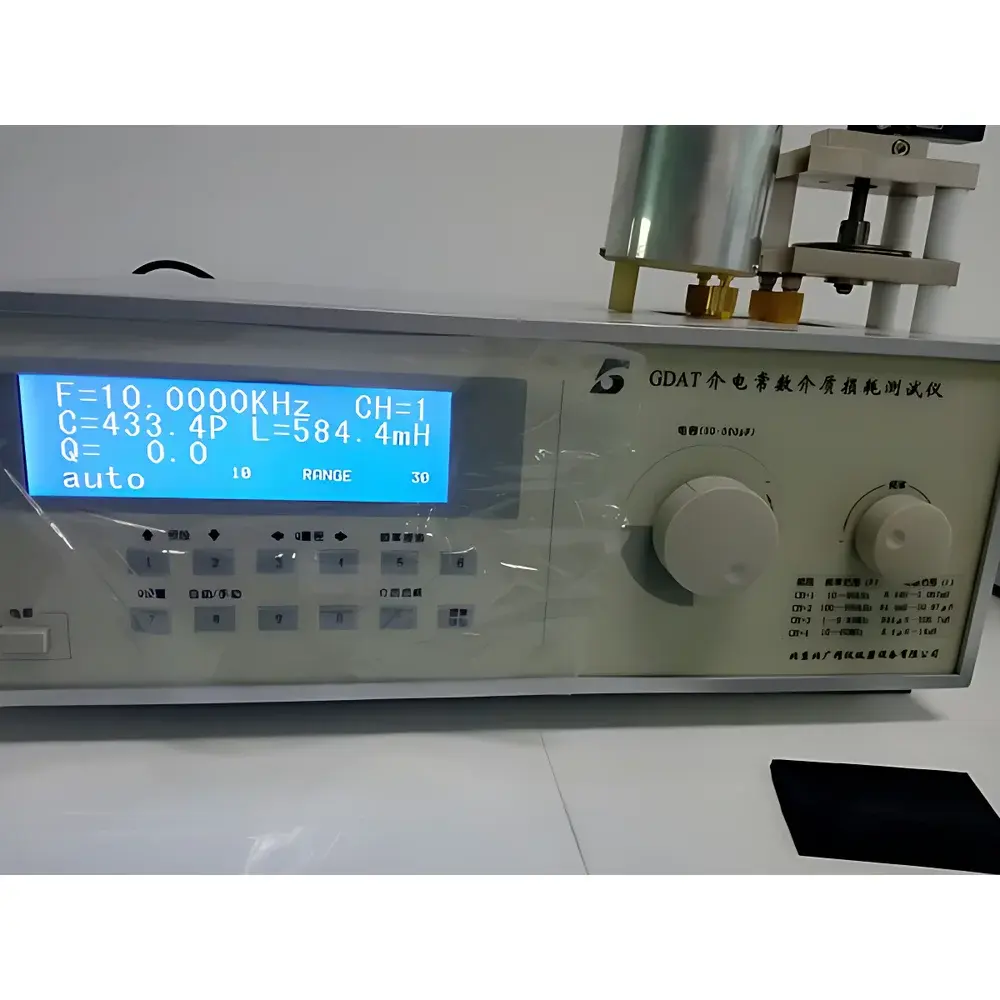
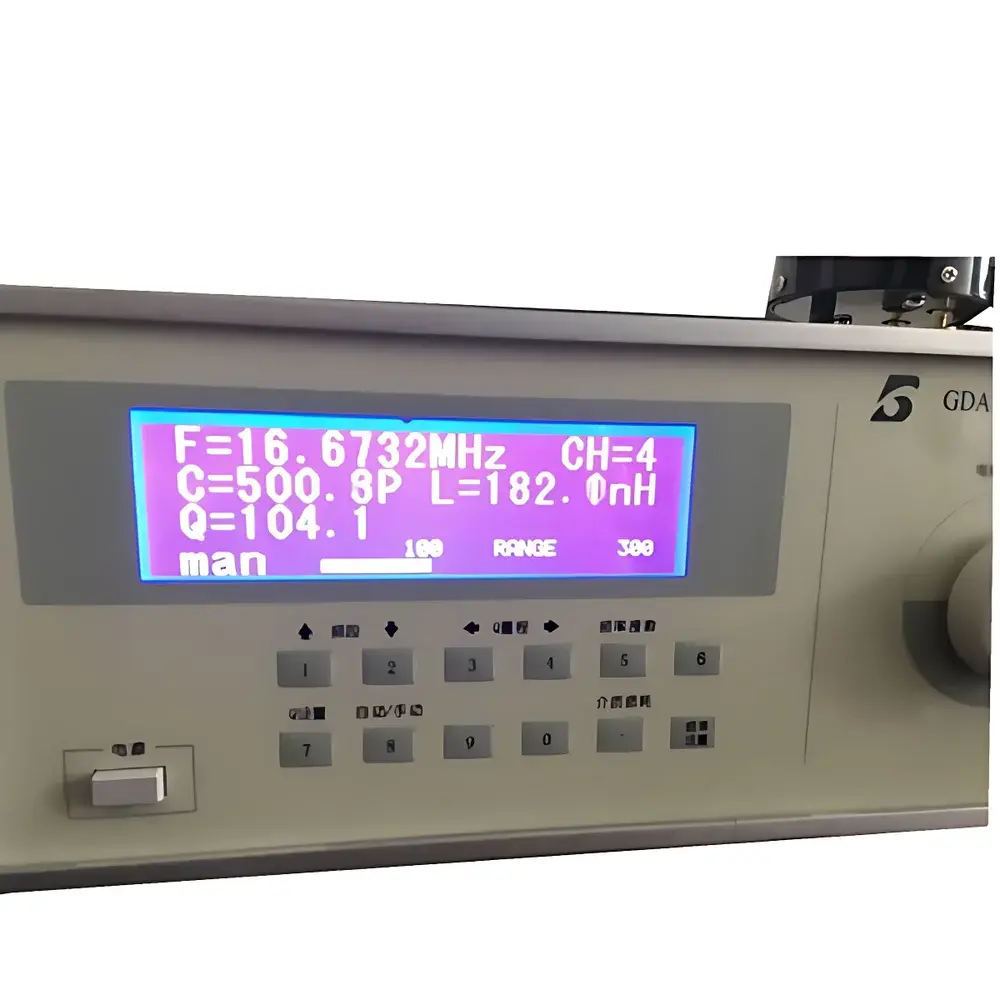
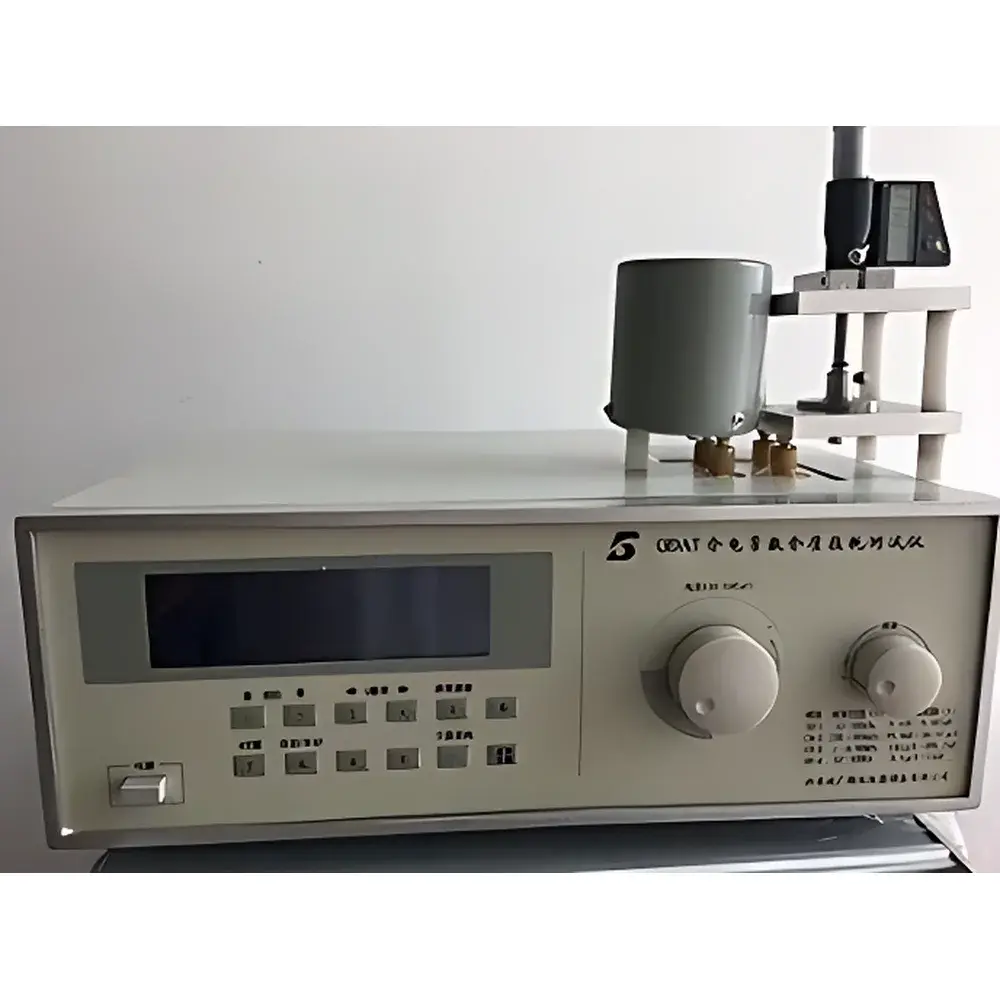
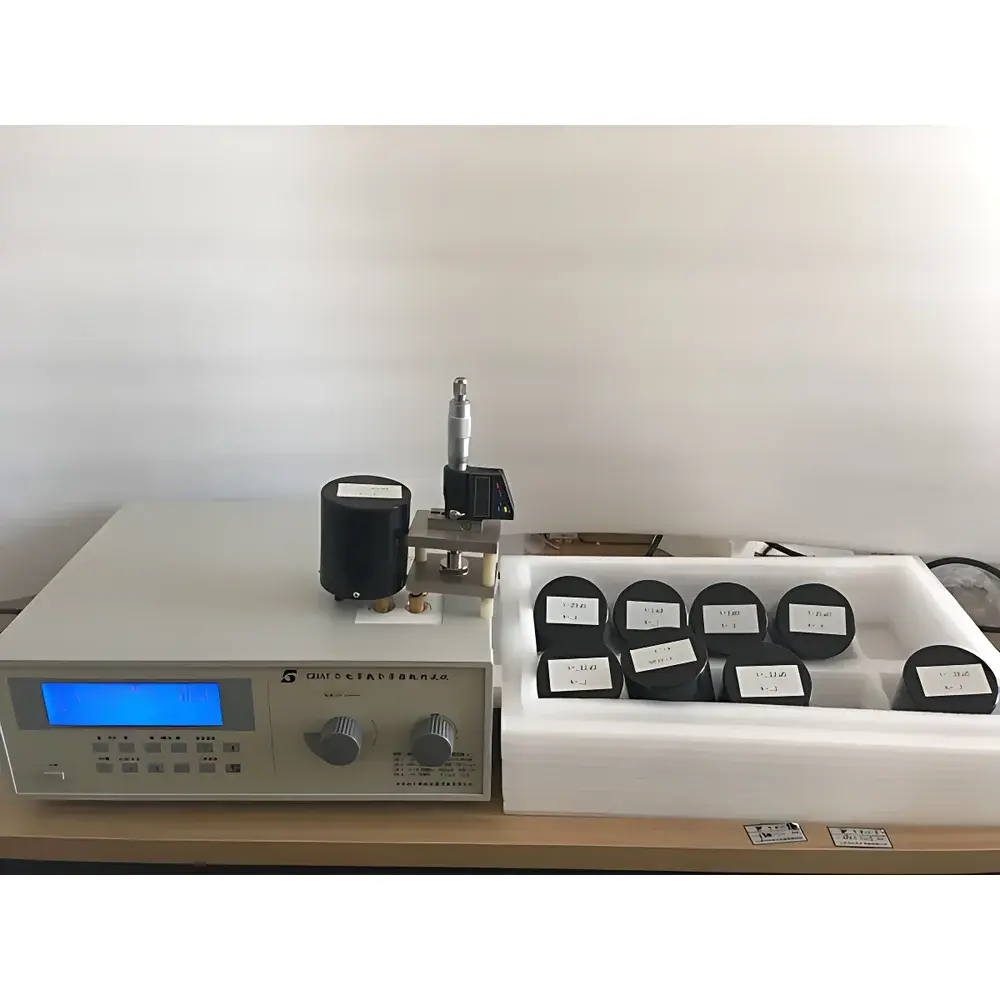
Beiguang Jingyi GDAT-A High-Frequency/Audio Dielectric Constant and Loss Tangent Analyzer
| Brand | Beiguang Jingyi (All Precision Instrument) |
|---|---|
| Origin | Beijing, China |
| Manufacturer Type | Direct Manufacturer |
| Product Origin | Domestic (China) |
| Model | GDAT-A |
| Price | USD 2,250 (approx.) |
Overview
The Beiguang Jingyi GDAT-A High-Frequency/Audio Dielectric Constant and Loss Tangent Analyzer is a precision impedance measurement instrument engineered for accurate characterization of dielectric properties across a broad frequency spectrum—from audio frequencies up to 160 MHz. It operates on the principle of high-frequency resonance, utilizing a calibrated LC resonant circuit to determine complex permittivity (ε* = ε′ − jε″) and dissipation factor (tan δ = ε″/ε′) of solid and thin-film dielectric materials. The instrument implements a variable-reactance substitution method in accordance with IEC 60250, ASTM D150, and GB/T 1409–2006 standards. Its core architecture features ultra-low residual inductance (<8 nH) in the tuning circuit, enabling high-fidelity measurements at frequencies up to 100 MHz with minimized systematic phase error. Designed for R&D laboratories, quality control departments, and materials science facilities, the GDAT-A delivers traceable, repeatable data essential for evaluating insulating ceramics, polymer composites, capacitor dielectrics, and high-frequency substrate materials.
Key Features
- Frequency coverage spanning four discrete bands: CH1 (0.1–0.999999 MHz), CH2 (1–9.99999 MHz), CH3 (10–99.9999 MHz), and CH4 (100–160 MHz)
- Q-factor measurement range: 2–1023, with automatic or manual range selection across five fixed scales (30, 100, 300, 1000)
- Capacitance measurement range: 1–205 pF; main capacitance tuning: 18–220 pF; accuracy: ±1.5 pF (≤150 pF), ±1% (>150 pF)
- Inductance measurement range: 4.5 nH–7.9 mH
- Digital Phase-Locked Loop (DPLL) signal synthesis supporting dual output modes: internal test signal and independent auxiliary RF source (1 kHz–160 MHz)
- High-resolution LCD interface displaying real-time Q, tan δ, ε′, frequency, tuning status, and pass/fail indicators
- Auto-tuning algorithm with resonance point search and amplitude stabilization to ensure consistent excitation conditions
- Q-value retention technology achieving resolution of 0.1 Q and tan δ resolution down to 5×10⁻⁵
Sample Compatibility & Compliance
The GDAT-A supports standardized electrode configurations per ASTM D150 Annex A1 (parallel-plate), including guarded and unguarded setups. It accommodates flat, rigid specimens with thicknesses between 0.1 mm and 10 mm—typical for ceramic discs, polymer sheets, and laminated composites. For non-planar or low-dielectric-loss samples, optional fixture kits (e.g., coaxial air-line adapters or split-cylinder holders) may be employed under validated protocols. All measurements comply with ISO/IEC 17025-relevant uncertainty evaluation practices. The system meets electromagnetic compatibility (EMC) requirements per GB/T 18268.1–2010 (equivalent to IEC 61326-1) and safety standards per GB 4793.1–2007 (IEC 61010-1). Calibration traceability is maintained through annual verification using NIST-traceable LCR standards and certified reference materials (e.g., fused quartz, polyethylene).
Software & Data Management
While the GDAT-A operates as a standalone benchtop instrument with embedded firmware, it includes RS-232 and USB-B interfaces for external data logging and remote control via SCPI-compatible commands. Users may integrate measurement sequences into automated test scripts (Python, LabVIEW) for batch processing of multi-frequency sweeps. Exported datasets include timestamped records of ε′, tan δ, Q, C, L, and test conditions (temperature, humidity, electrode configuration). All stored results support CSV and ASCII formats compatible with statistical analysis tools (e.g., JMP, MATLAB). Audit trail functionality adheres to GLP/GMP principles: operator ID, calibration date, instrument ID, and environmental metadata are appended to each export file. Firmware updates are delivered via signed binary packages to ensure integrity and version control.
Applications
- Characterization of high-frequency substrate materials (e.g., PTFE-based laminates, LTCC, alumina) for RF/microwave PCB design
- Quality assurance of capacitor dielectrics (Class I/X7R/Y5V ceramics, polymer films) across production lots
- Research into temperature- and frequency-dependent polarization mechanisms in ferroelectric and relaxor materials
- Evaluation of moisture absorption effects on epoxy molding compounds and encapsulants used in semiconductor packaging
- Validation of space-charge-limited conduction models in insulating polymers under AC stress
- Correlation studies between dielectric dispersion and mechanical relaxation behavior in viscoelastic thermoplastics
FAQ
What is the recommended warm-up time before performing precision measurements?
A minimum 30-minute thermal stabilization period is required after power-on to achieve thermal equilibrium in the oscillator and detector circuits, ensuring measurement repeatability within ±0.5% of full scale.
Can the GDAT-A measure samples with surface electrodes applied?
Yes—provided the electrode geometry conforms to ASTM D150 Section 7.2 (e.g., evaporated gold or sputtered silver layers with defined diameter and edge guard), and contact resistance remains below 1 Ω. Surface roughness must be <0.5 µm Ra to minimize interfacial capacitance variation.
How does residual inductance affect high-frequency tan δ accuracy?
Residual inductance >10 nH introduces phase shift errors that distort the imaginary component of admittance. The GDAT-A’s optimized tuning circuit maintains residual inductance ≤8 nH, limiting tan δ uncertainty to ≤±0.0001 at 100 MHz for ε′ < 100.
Is the instrument suitable for compliance testing under FDA 21 CFR Part 11?
While the base unit lacks built-in electronic signature or audit-log encryption, its data export architecture supports integration with validated LIMS platforms compliant with 21 CFR Part 11 when deployed in regulated pharmaceutical or medical device manufacturing environments.
What environmental conditions are mandatory for valid test reporting per GB/T 1409–2006?
Ambient temperature must be controlled within 23±2°C, relative humidity at 50±5% RH, and atmospheric pressure recorded. Specimens shall undergo preconditioning for ≥24 h under these conditions prior to measurement.



