
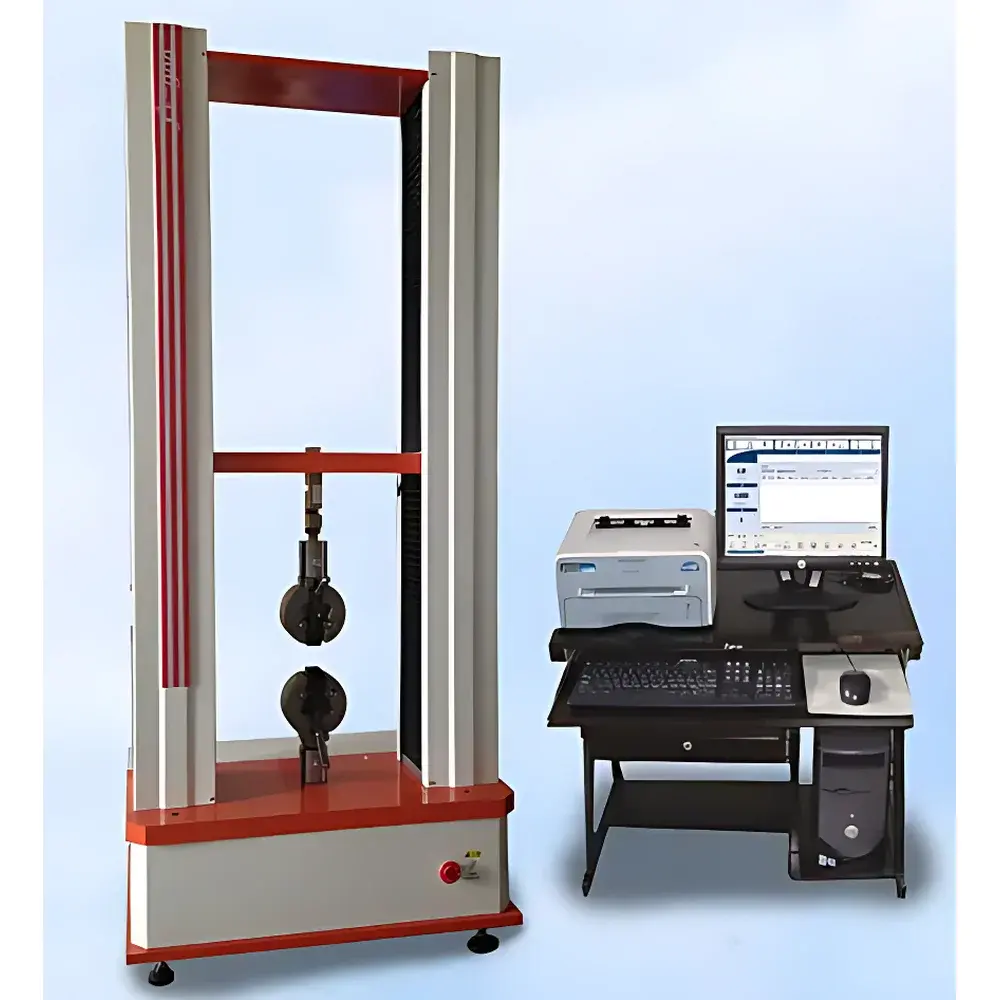
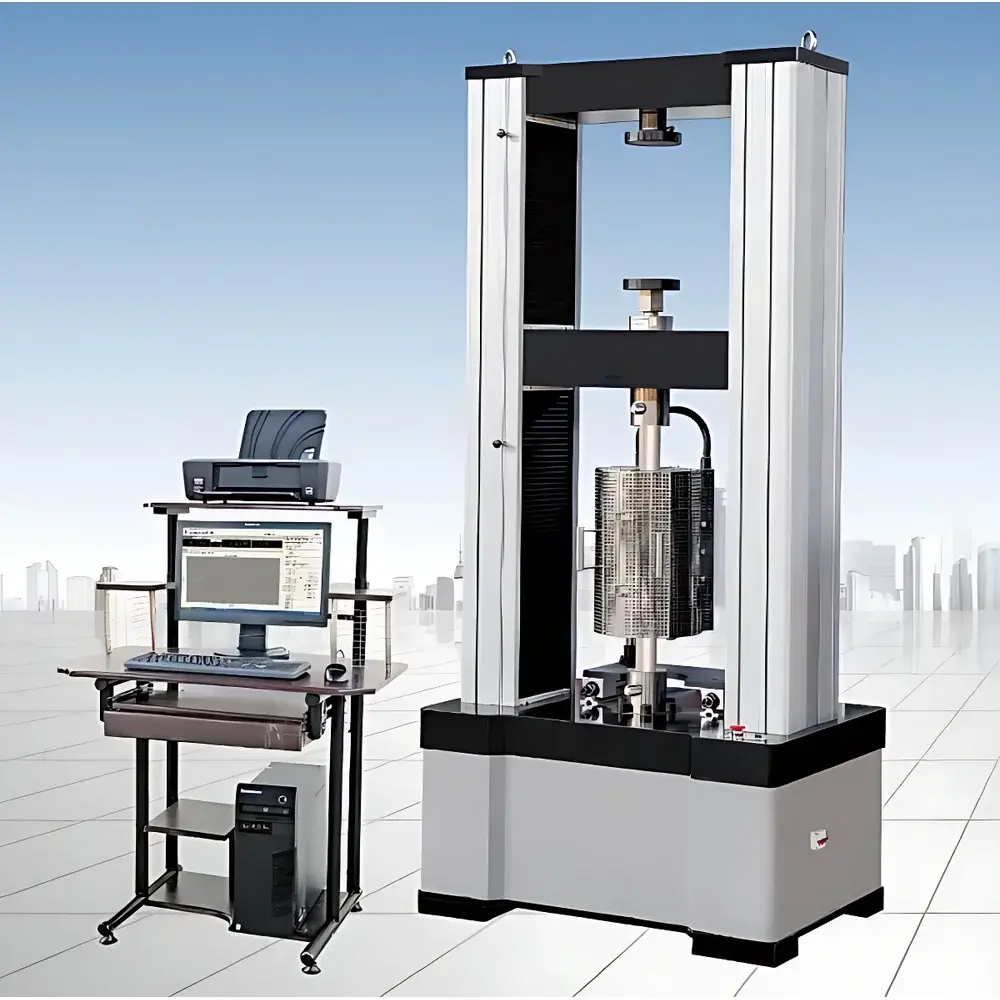
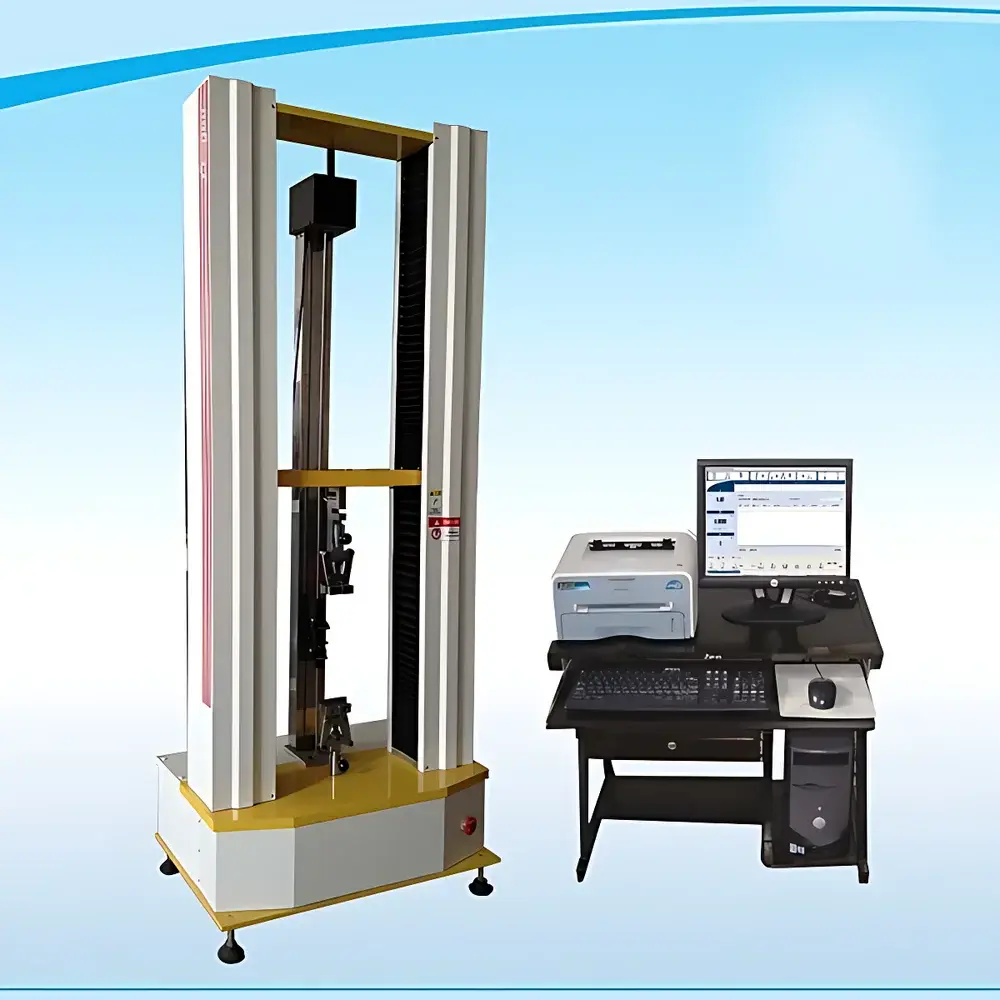
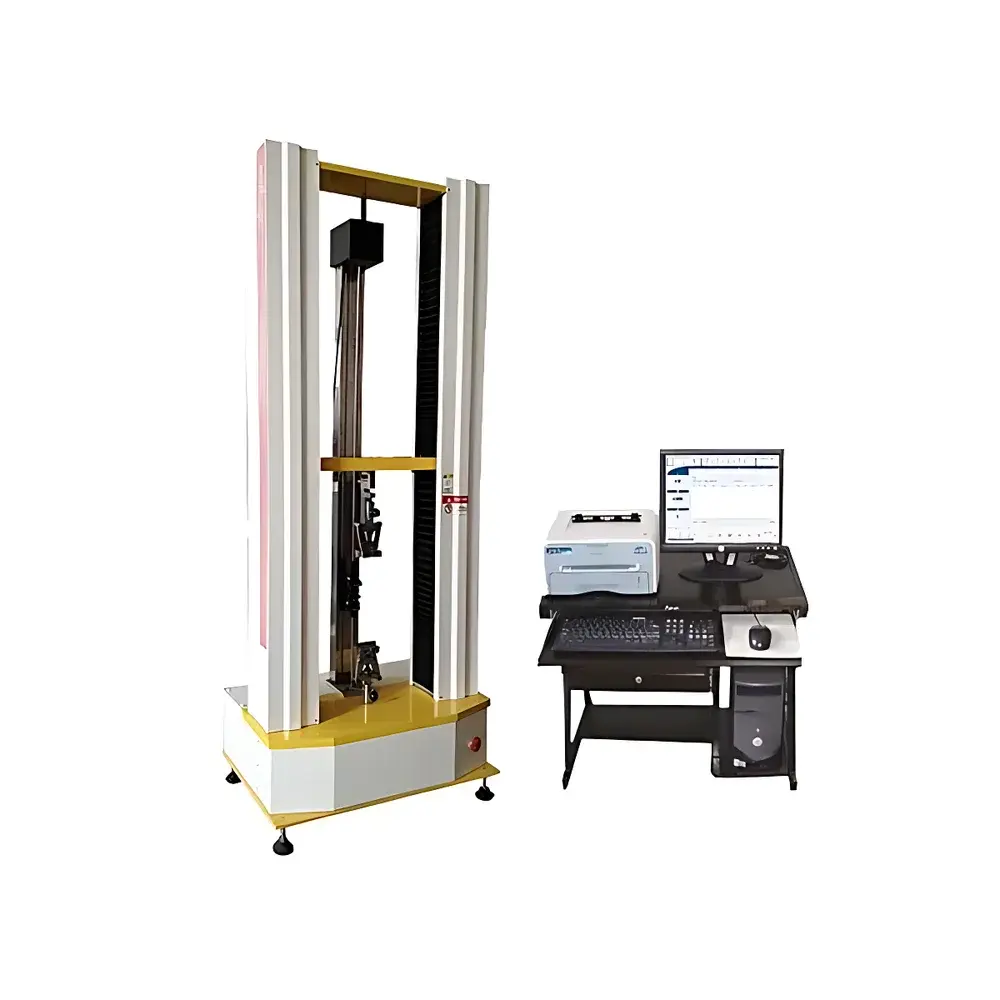
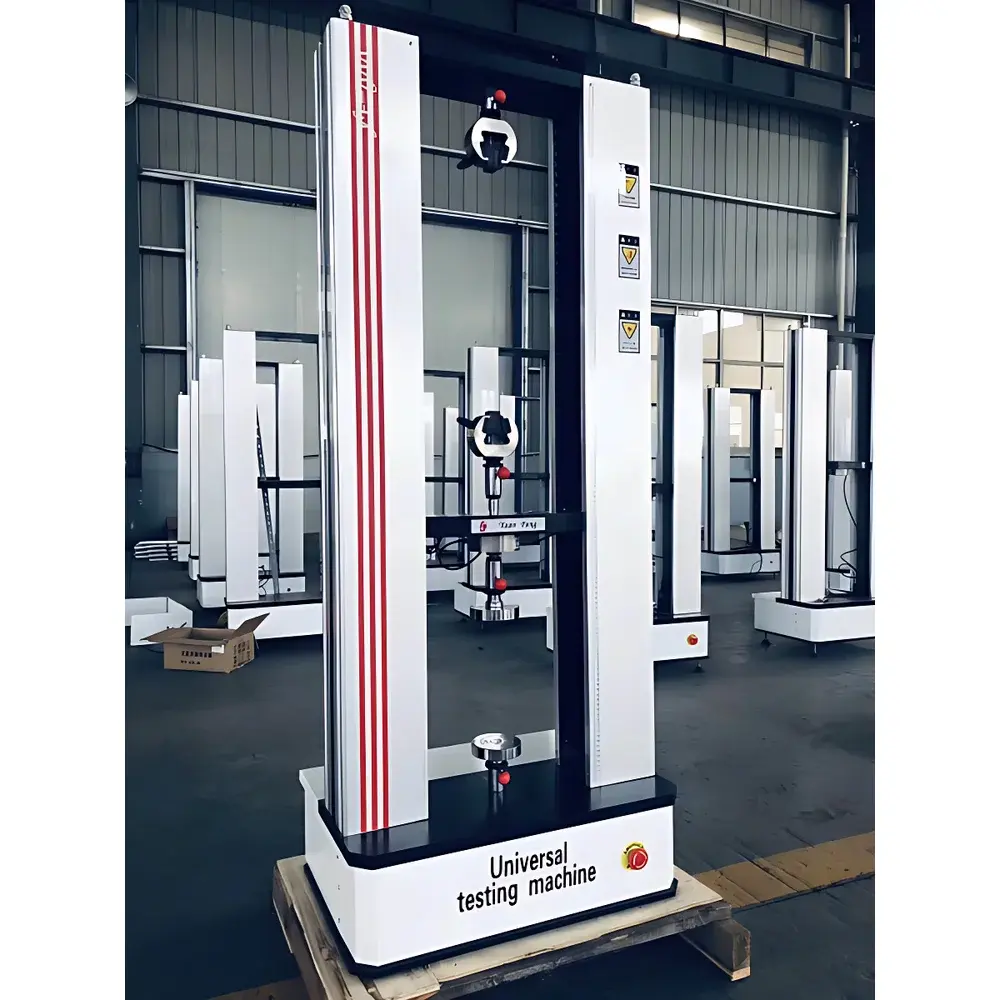
Beiguang Jingyi BWN* Series Universal Testing Machine for Adhesive Material Tensile Testing
| Brand | Beiguang Jingyi / All Precision Instrument |
|---|---|
| Origin | Beijing, China |
| Manufacturer Type | OEM Manufacturer |
| Instrument Type | Electromechanical Universal Testing Machine |
| Model | BWN* |
| Load Cell Capacity | 0–1 ton (10 kN) |
| Force Accuracy | ±0.5% FS |
| Force Resolution | 1/100,000 full scale |
| Speed Range | 0.01–500 mm/min |
| Crosshead Travel | 950 mm (standard) |
| Test Width | 350 mm (standard) |
| Displacement Resolution | 0.001 mm |
| Displacement Accuracy | ≤0.5% |
| Compliance | GB/T 16491, ASTM D412, ISO 37, ISO 1798, DIN 53504, EN 12803, JIS K6251 |
Overview
The Beiguang Jingyi BWN* Series Universal Testing Machine is an electromechanical static testing system engineered for high-reproducibility mechanical property characterization of adhesive materials and a broad spectrum of metallic and non-metallic specimens. Based on the fundamental principles of uniaxial tensile-compressive mechanics—governed by Hooke’s law, stress-strain continuum theory, and standardized force-displacement transduction—the instrument delivers traceable, repeatable measurements across tension, compression, bending, peel (90° and 180°), shear, tear, puncture, and adhesion strength protocols. Its modular architecture integrates a precision load cell, high-resolution encoder-based displacement sensing, and closed-loop pulse-command servo control to ensure compliance with international test method requirements under controlled environmental conditions (20–35 °C, 20–80% RH, vibration-free installation). Designed for laboratory- and QC-grade applications, it serves as a primary platform for evaluating interfacial bond integrity, cohesive strength, elongation at break, modulus of elasticity, yield behavior, and energy absorption in laminates, tapes, medical adhesives, packaging composites, and structural bonding systems.
Key Features
- High-accuracy load measurement via USA-made transducer (0–1 ton range), calibrated to ±0.5% full-scale accuracy with 24-bit A/D conversion and auto-ranging across seven sensitivity segments (×1 to ×100)
- Ultra-fine displacement resolution of 0.001 mm enabled by 2500 P/R LINE DRIVE encoder with enhanced electromagnetic interference immunity
- Wide-speed electromechanical actuation (0.01–500 mm/min) with dual-mode crosshead adjustment: rapid coarse positioning and fine micrometer-level alignment
- Robust mechanical frame with reinforced base mounting (leveling tolerance ≤0.2/1000), overload protection, upper/lower travel limit switches, and automatic emergency shutdown
- Modular gripping interface supporting standard tensile jaws, peel fixtures, compression platens, bend supports, and custom-designed clamps for irregular or soft specimens (e.g., hydrogels, foams, thin films)
Sample Compatibility & Compliance
The BWN* accommodates diverse specimen geometries—including films, tapes, laminates, elastomeric sheets, fiber-reinforced composites, biomedical polymers, metal foils, and coated substrates—within a 350 mm test width and 950 mm vertical travel envelope. It meets essential regulatory and quality assurance frameworks: ISO/IEC 17025 preconditions for calibration traceability; GLP-compliant data audit trails when configured with timestamped metadata logging; and alignment with FDA 21 CFR Part 11 requirements through secure user authentication, electronic signature support, and immutable result archiving. Standardized test execution adheres to over 400 active methods, including GB/T 2792 (peel adhesion), GB/T 2791 (adhesive strength), ASTM D3330 (pressure-sensitive tape peel), ISO 8510-2 (flexible laminate adhesion), and EN 14410 (structural bonding performance).
Software & Data Management
The UTM107+WIN-XP software suite provides full test lifecycle management—from method configuration to final report generation. Core capabilities include: multi-standard test template library (ASTM, ISO, DIN, JIS, BS, GB); dynamic unit switching (force: N/kN/kgf/lbf; displacement: mm/cm/inch); real-time Auto Scale graphical rendering of stress–strain, load–displacement, load–time, and strain–time curves; customizable Excel-integrated reporting with formula editor for derived parameter computation; automated calculation of tensile strength, yield point (upper/lower), Young’s modulus, elongation at break, peel force max/mean/min, tear resistance (trouser, Elmendorf), and energy metrics (net, return, total). All raw and processed data are stored in structured binary format with optional backup to network drives or external media. Software supports bilingual UI (English/Chinese) and operates on Windows XP–Vista platforms with minimum hardware specs: Intel Pentium 4 3.0 GHz CPU, 512 MB RAM, 100 GB HDD, 1024×768 16-bit color display.
Applications
This system is routinely deployed in R&D laboratories, contract testing facilities, and manufacturing QA departments for validation of adhesive performance in critical applications: medical device assembly (e.g., skin-contact patches, wound dressings, catheter bonding); automotive interior trim lamination; aerospace composite layup integrity; flexible electronics encapsulation; food and pharmaceutical packaging seal strength; and construction-grade bonding of insulation panels or acoustic membranes. It further supports material qualification per ISO 10365 (adhesive classification), ASTM D1002 (lap-shear joints), and ISO 4587 (rigid substrate bonding), enabling correlation between mechanical response and formulation variables such as crosslink density, filler loading, or surface pretreatment efficacy.
FAQ
What standards does the BWN* machine natively support?
It includes built-in templates for GB/T 16491, ASTM D412, ISO 37, ISO 1798, DIN 53504, EN 12803, and JIS K6251, with expandable library functionality for user-defined methods.
Can the system perform peel tests at both 90° and 180° angles?
Yes—dedicated peel fixtures with angular alignment guides and low-friction rollers ensure consistent peel geometry per ASTM D903 and ISO 8510-1 specifications.
Is data export compatible with LIMS integration?
Raw ASCII and Excel-formatted outputs support direct ingestion into Laboratory Information Management Systems; CSV export enables third-party statistical analysis workflows.
Does the machine meet requirements for ISO/IEC 17025 accredited testing?
When operated with documented calibration certificates, validated software version, and procedural SOPs, it fulfills technical requirements for scope accreditation—subject to on-site assessment by the accrediting body.
What safety certifications apply to the electrical subsystem?
Compliance with IEC 61000-6-2 (immunity) and IEC 61000-6-4 (emissions), CE-marked power supply module, and internal ground-fault circuit interruption (GFCI) protection are implemented per design.



