
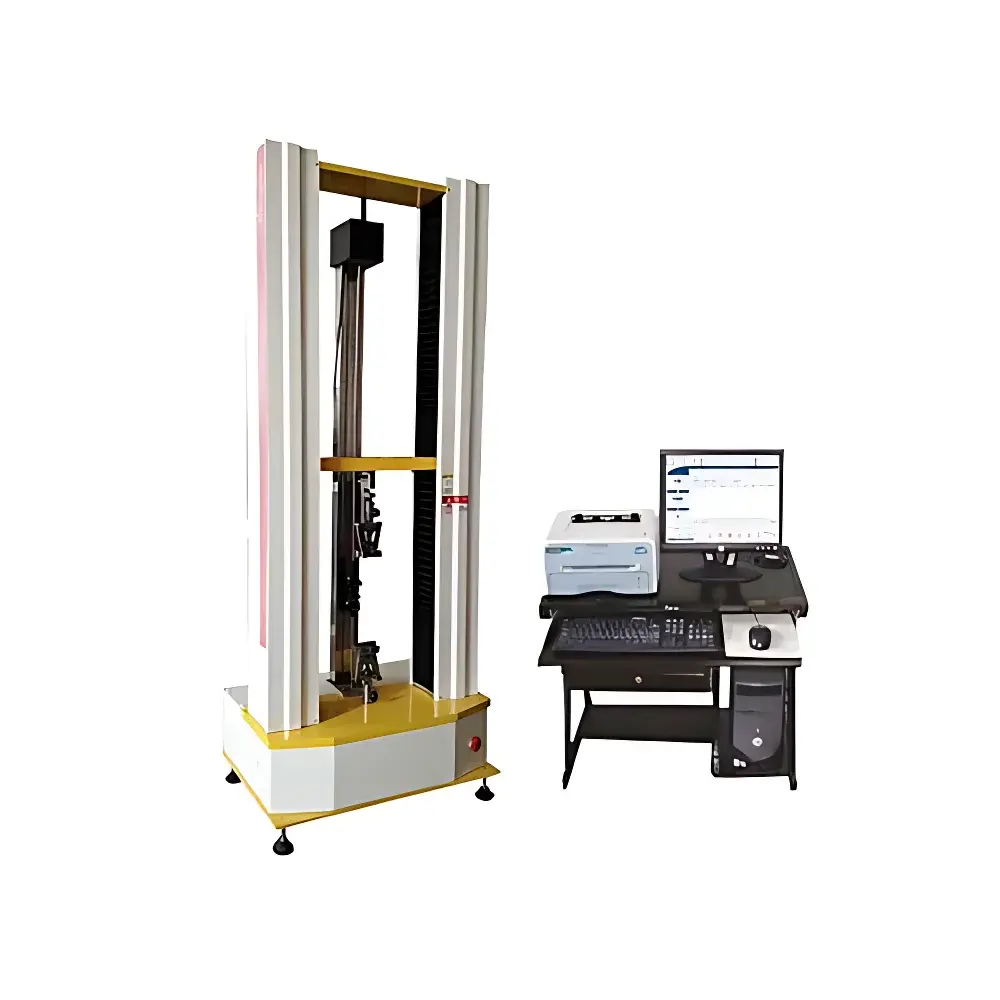
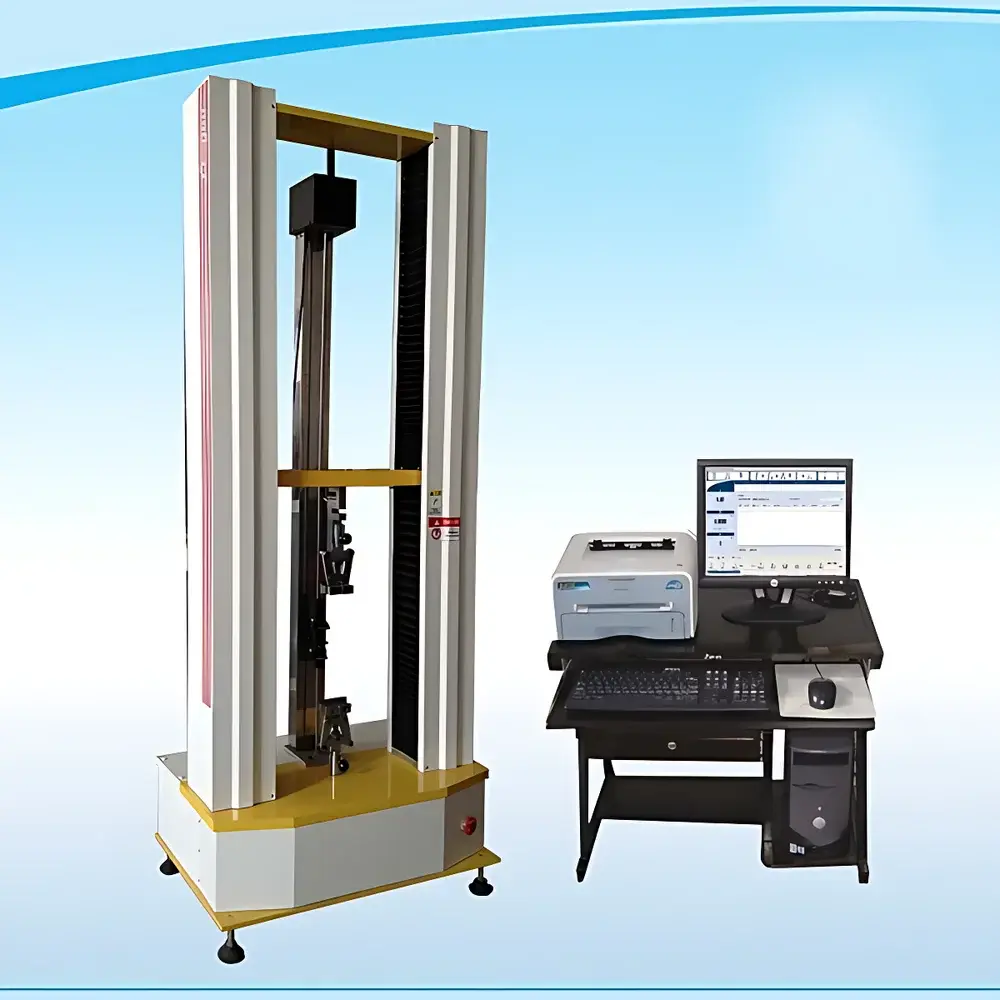
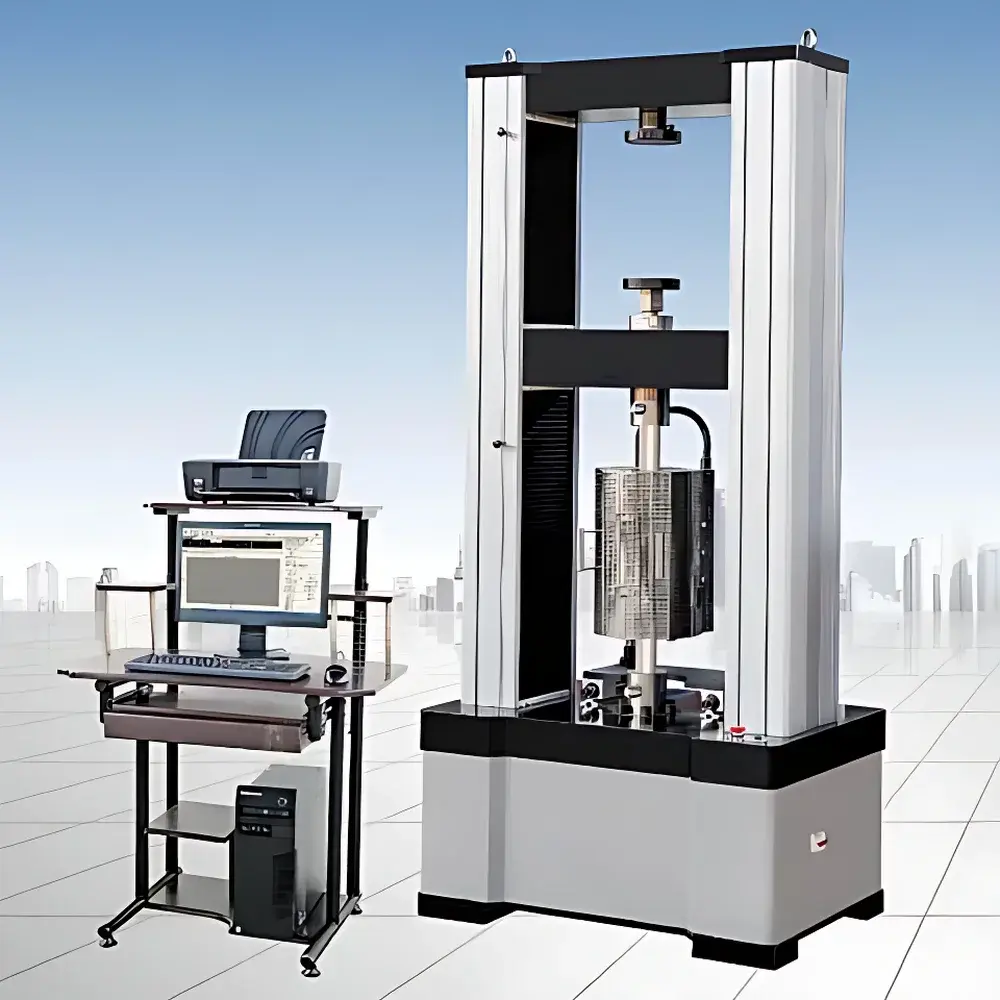
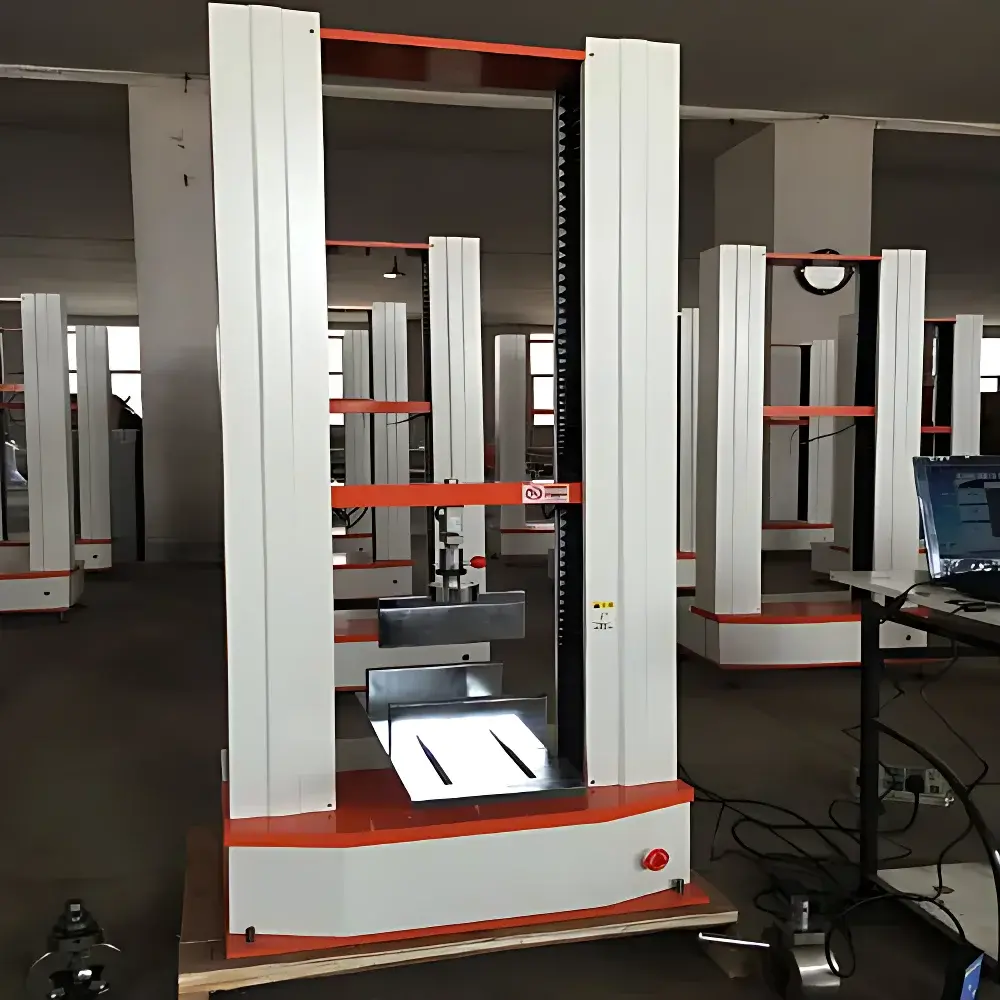
Beiguang Jingyi BWN-200N Microcomputer-Controlled Electronic Tensile Testing Machine
| Brand | Beiguang Jingyi / All Precision Instrument |
|---|---|
| Origin | Beijing, China |
| Manufacturer Type | Direct Manufacturer |
| Model | BWN-200N |
| Maximum Test Force | 200 N |
| Force Accuracy | ±1% of reading |
| Force Resolution | 1/300,000 FS |
| Test Speed Range | 0.05–500 mm/min (infinitely variable) |
| Speed Accuracy | ±1% of set value |
| Displacement Measurement Range | 0–999 mm |
| Displacement Resolution | 0.001 mm |
| Displacement Accuracy | ±1% of reading |
| Effective Test Width | 400 mm |
| Effective Tensile/Compression Stroke | 700 mm (customizable) |
| Operating Environment | 10–35 °C, 20–80% RH |
Overview
The Beiguang Jingyi BWN-200N Microcomputer-Controlled Electronic Tensile Testing Machine is a precision-engineered universal testing system designed for static mechanical property evaluation of metallic and non-metallic materials under uniaxial loading conditions. Based on the fundamental principle of load-cell transduction and high-resolution displacement measurement via precision ball-screw actuation, the instrument delivers repeatable force–displacement data compliant with international standard test methodologies. Its architecture integrates a full-digital servo control system, high-stiffness dual-column frame, and real-time closed-loop feedback to ensure stable load application across wide speed ranges—from quasi-static creep assessments at 0.05 mm/min to dynamic tensile rupture analysis at 500 mm/min. The machine conforms to ISO 7500-1 (Class 1 accuracy), ASTM E4, and GB/T 16491, making it suitable for R&D laboratories, QC departments, and third-party certification facilities requiring traceable, auditable mechanical test data.
Key Features
- Full-digital AC servo motor drive with arc-synchronous reduction gearbox and preloaded precision ball screw for low-noise, high-repeatability crosshead motion.
- Modular load cell options (0–1 kN range standard; extended ranges available), calibrated to ≤±1% indication error per ISO 376 requirements.
- Real-time dual-closed-loop control: force-controlled and displacement-controlled modes support ISO 6892-1 Annex A and ASTM D638 Annex A protocols.
- Adjustable test width (standard 400 mm) and vertical stroke (700 mm standard, up to 950 mm optional) accommodate diverse specimen geometries including films, fibers, composites, and molded parts.
- Integrated overload protection circuitry—electronic current/voltage limiting, mechanical limit switches, and software-defined safety thresholds prevent hardware damage during unexpected failure events.
- Ergonomic quick-clamp system with optional universal joint cross-pin alignment ensures axial load alignment and minimizes bending moments during tensile tests on irregular or flexible specimens.
Sample Compatibility & Compliance
The BWN-200N supports standardized mechanical testing of polymers (e.g., PE, PP, PET films per ASTM D882), elastomers (ASTM D412), composites (ISO 527-2), packaging materials (GB/T 8808 peel strength), textiles (ISO 13934-1), adhesives (ASTM D1002 lap shear), and thin metallic foils (ISO 6892-1). It meets essential regulatory and quality framework requirements: GLP-compliant audit trails (via timestamped data logging), FDA 21 CFR Part 11-ready software configuration (user authentication, electronic signatures, immutable archives), and ISO/IEC 17025 traceability pathways through factory calibration certificates (NIST-traceable load cells and displacement encoders). All test reports include metadata such as operator ID, environmental conditions, calibration status, and raw curve export—enabling direct integration into LIMS or QMS platforms.
Software & Data Management
The embedded Windows-based control software provides modular, standards-driven test execution. Users select from over 120 preconfigured test methods—including GB/T 1040 (plastics), ASTM D3574 (foam compression), ISO 37 (vulcanized rubber), and JIS K6251 (tensile properties)—with editable parameters for strain rate, preload, break detection logic, and hold durations. Real-time plotting includes stress–strain, load–displacement, load–time, and multi-curve overlay modes with Auto-Scale optimization. Data output supports CSV, Excel (.xlsx), and Word (.docx) formats; all curves retain native resolution for post-processing in MATLAB or Origin. Advanced analytics compute Young’s modulus (secant/tangent), yield strength (0.2% offset), tensile strength, elongation at break, tear energy (net/return/total), peel adhesion (90°/180°), and cyclic hysteresis loss—all compliant with ISO 11357-3 and ASTM D790 calculation algorithms. Historical test archives are encrypted and stored with SHA-256 hash verification for integrity assurance.
Applications
This system is routinely deployed in polymer formulation labs to quantify modulus shifts following plasticizer addition; in medical device manufacturing for validating suture tensile strength per ISO 10993-12; in packaging R&D for optimizing seal integrity of laminated pouches (ASTM F88); and in academic materials science for characterizing nanocomposite reinforcement efficiency. Its versatility extends to wire-and-cable testing (IEC 60811-501), leather tensile performance (ISO 2418), geotextile grab strength (ASTM D4632), and fiber denier validation (ASTM D2256). The open API interface allows custom scripting for automated batch testing sequences—critical for accelerated aging studies where hundreds of specimens require identical protocol execution across temperature/humidity chambers.
FAQ
What standards does the BWN-200N natively support?
The software includes built-in templates for GB/T, ASTM, ISO, DIN, JIS, BS, and CNS standards. Users may also import custom test definitions via XML schema.
Is the system compliant with FDA 21 CFR Part 11 for regulated environments?
Yes—when configured with role-based user accounts, electronic signatures, and audit-log archiving, it satisfies Part 11 requirements for electronic records and signatures.
Can I integrate this tester with our existing LIMS or MES platform?
Absolutely—the system exports structured data via TCP/IP socket or OPC UA, enabling bidirectional communication with LabVantage, Thermo Fisher SampleManager, or Siemens Opcenter.
What is the typical recalibration interval for the load cell and encoder?
Per ISO 9001 and internal QA policy, annual recalibration is recommended; however, daily verification using certified reference weights and displacement gauges is advised before critical test runs.
Does the machine support high-temperature or environmental chamber coupling?
Yes—optional thermal chamber adapters (−70 °C to +300 °C) with feedthrough interfaces maintain full sensor functionality and real-time data streaming during in-situ testing.



