
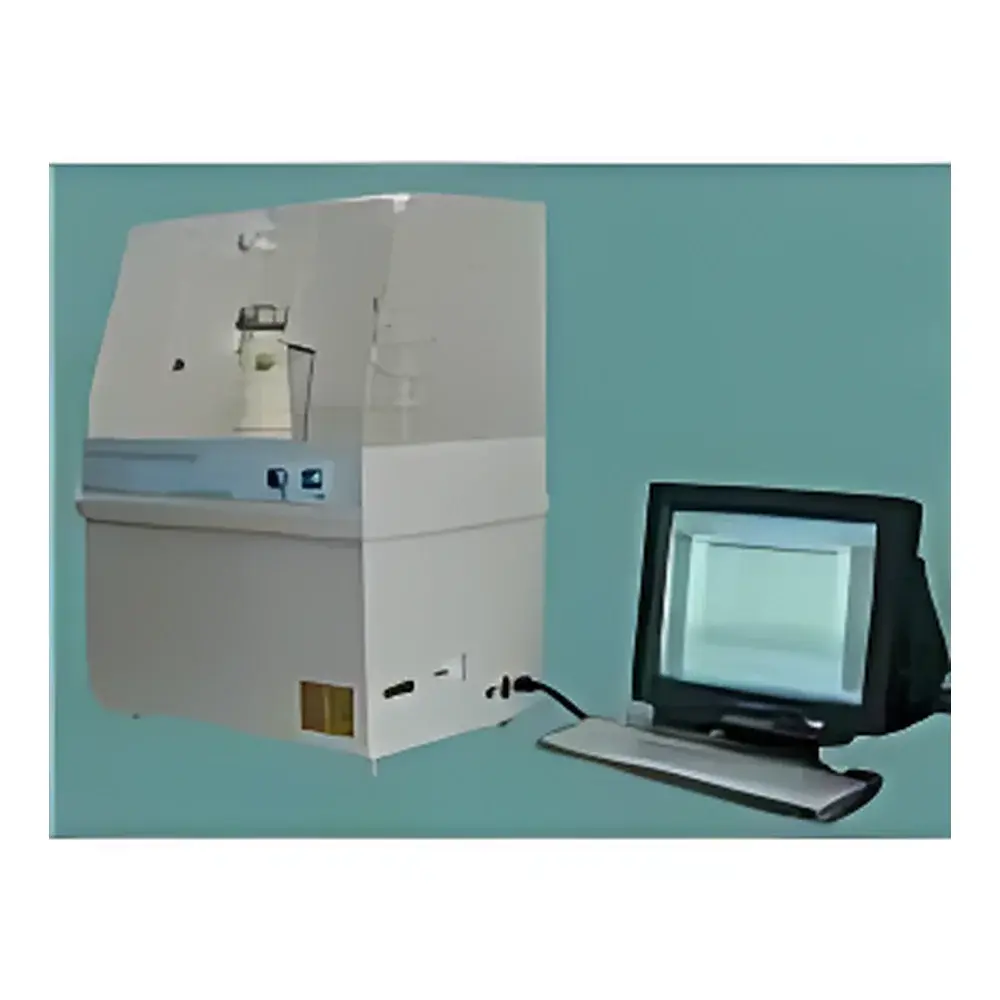
North Guangjingyi BDJv-50KV Dielectric Strength & Voltage Breakdown Tester
| Brand | North Guangjingyi / All Precision Instrument |
|---|---|
| Origin | Beijing, China |
| Manufacturer Type | OEM Manufacturer |
| Model | BDJv-50KV |
| Test Voltage Range | AC/DC 0–50 kV (continuously adjustable) |
| Transformer Capacity | 10 kVA |
| Voltage Ramp Rates | 50–2000 V/s (10 discrete steps) |
| Voltage Measurement Accuracy | ≤ ±2% |
| Leakage Current Threshold | 1–20 mA |
| Test Modes | AC (50 Hz sinusoidal), DC |
| Compliance Standards | GB 1408.1/1408.2, IEC 60243-1/-2, GB/T 1695-2005, ASTM D149, GB/T 3333, GB 12656 |
| Electrode Set | Two 25 mm diameter × 25 mm height |
| Dimensions (L×W×H) | 1400 × 1040 × 1500 mm |
| Weight | 200 kg |
Overview
The North Guangjingyi BDJv-50KV Dielectric Strength & Voltage Breakdown Tester is an engineered system for determining the electrical breakdown resistance and dielectric strength of solid insulating materials under controlled AC or DC voltage stress. Based on the principle of controlled voltage ramping—either continuous or stepwise—the instrument applies precisely regulated high-voltage stress across standardized electrode configurations until electrical failure (i.e., dielectric breakdown) occurs. The resulting breakdown voltage (kV) is recorded, and when normalized to specimen thickness, yields dielectric strength in kV/mm—a critical parameter for material qualification in power electronics, cable insulation, aerospace composites, and high-voltage component manufacturing. Designed for compliance with international test methodologies, the BDJv-50KV operates within the full 0–50 kV range for both AC (50 Hz sinusoidal, 48–62 Hz tolerance) and DC excitation, supporting standardized evaluation protocols required by quality assurance labs, R&D centers, and third-party certification bodies.
Key Features
- High-fidelity voltage generation: Dual-mode 10 kVA high-voltage transformer delivering stable AC (50 Hz) and DC outputs up to 50 kV, with real-time regulation via stepper-motor-driven autotransformer.
- Precision ramp control: Ten programmable voltage ramp rates (50–2000 V/s), enabling strict adherence to ASTM D149, IEC 60243-1, and GB 1408.1 test sequences—critical for reproducible breakdown detection.
- Integrated safety architecture: Interlocked test chamber with automatic high-voltage cutoff upon door opening; minimum clearance distances (≥250 mm for 50 kV systems) between HV electrodes and enclosure walls per IEC 61000-4-5 guidelines.
- Comprehensive protection suite: Overcurrent, undervoltage, leakage current (1–20 mA threshold), short-circuit, and DC residual charge detection with audible/visual discharge alarm.
- Onboard discharge system: Integrated electrostatic discharge unit—eliminates reliance on external discharge rods and enforces mandatory post-DC-test discharge before chamber access.
- Digital measurement backbone: High-impedance analog signal conditioning circuitry coupled with industrial-grade data acquisition modules ensures ≤±2% voltage measurement accuracy per IEC 61000-4-30 Class A requirements.
Sample Compatibility & Compliance
The BDJv-50KV accommodates a broad spectrum of solid dielectrics—including thermoplastics, elastomers (e.g., vulcanized rubber per GB/T 1695), ceramics, glass, mica, silicone gels, epoxy resins, and insulating varnishes—tested either in ambient air or immersion oil (provided with optional oil tank). Standard electrode configurations conform to GB 1408.1–2006: two cylindrical electrodes (Ø25 mm × 25 mm) for thin films and sheet materials, and one larger electrode (Ø75 mm × 25 mm) for bulk specimens requiring uniform field distribution. All operational parameters and reporting outputs are traceable to national metrological standards, supported by included calibration certificate and factory verification documentation. The system meets structural and procedural requirements for GLP-compliant laboratories and supports audit-ready records aligned with ISO/IEC 17025 clause 7.8.2.
Software & Data Management
The BDJv-50KV includes dedicated Windows-based test software with role-based user authentication, configurable test templates (AC fast-ramp, AC step-ramp, DC hold-to-break), and automated pass/fail logic per user-defined voltage thresholds and dwell times. All voltage, current, time, and event logs (e.g., breakdown timestamp, ramp interruption, safety interlock activation) are stored in encrypted binary format with SHA-256 hash integrity validation. Export options include CSV, PDF test reports with embedded digital signatures, and XML files compatible with LIMS integration. Audit trail functionality complies with FDA 21 CFR Part 11 requirements—including electronic signature capture, operator action logging, and immutable record retention—ensuring full traceability for regulatory submissions and internal QA reviews.
Applications
This tester serves core functions across multiple technical domains: qualification of polymer insulation for automotive EV battery packs; screening of encapsulation materials for high-power semiconductor modules; validation of ceramic substrates used in RF/microwave packaging; comparative analysis of nanocomposite dielectrics for pulsed-power applications; and routine QC testing of transformer board, motor winding tapes, and printed circuit board laminates. Its dual AC/DC capability enables correlation studies between frequency-dependent breakdown behavior and space-charge accumulation effects—particularly relevant for DC grid components and aerospace wiring harnesses operating under variable thermal and humidity conditions.
FAQ
What standards does the BDJv-50KV support for dielectric strength testing?
It fully implements GB 1408.1/1408.2, IEC 60243-1/-2, ASTM D149, GB/T 1695-2005, GB/T 3333, and GB 12656—with preloaded test templates and report formats matching each standard’s procedural requirements.
Is the system suitable for testing liquid dielectrics?
While optimized for solids, the inclusion of a sealed oil tank permits immersion testing of liquids (e.g., transformer oils) using ASTM D877 or D1816 protocols—electrode geometry and gap spacing must be adjusted per standard specifications.
How is measurement traceability ensured?
Each unit ships with a NIST-traceable calibration certificate issued by a CNAS-accredited laboratory; voltage transducers are calibrated annually per ISO/IEC 17025, and software timestamps are synchronized to UTC via NTP.
Can test sequences be customized beyond standard ramp profiles?
Yes—advanced scripting mode allows users to define multi-stage voltage programs (e.g., hold at 30 kV for 60 s, then ramp to 50 kV at 100 V/s), with conditional branching based on real-time leakage current thresholds.
What maintenance is required for long-term accuracy?
Annual verification of HV transformer turns ratio, insulation resistance (>100 GΩ at 5 kV DC), and electrode surface finish (Ra ≤ 0.8 µm) is recommended; all consumables—including silicone oil and electrode polishing kits—are available as OEM spare parts.



