
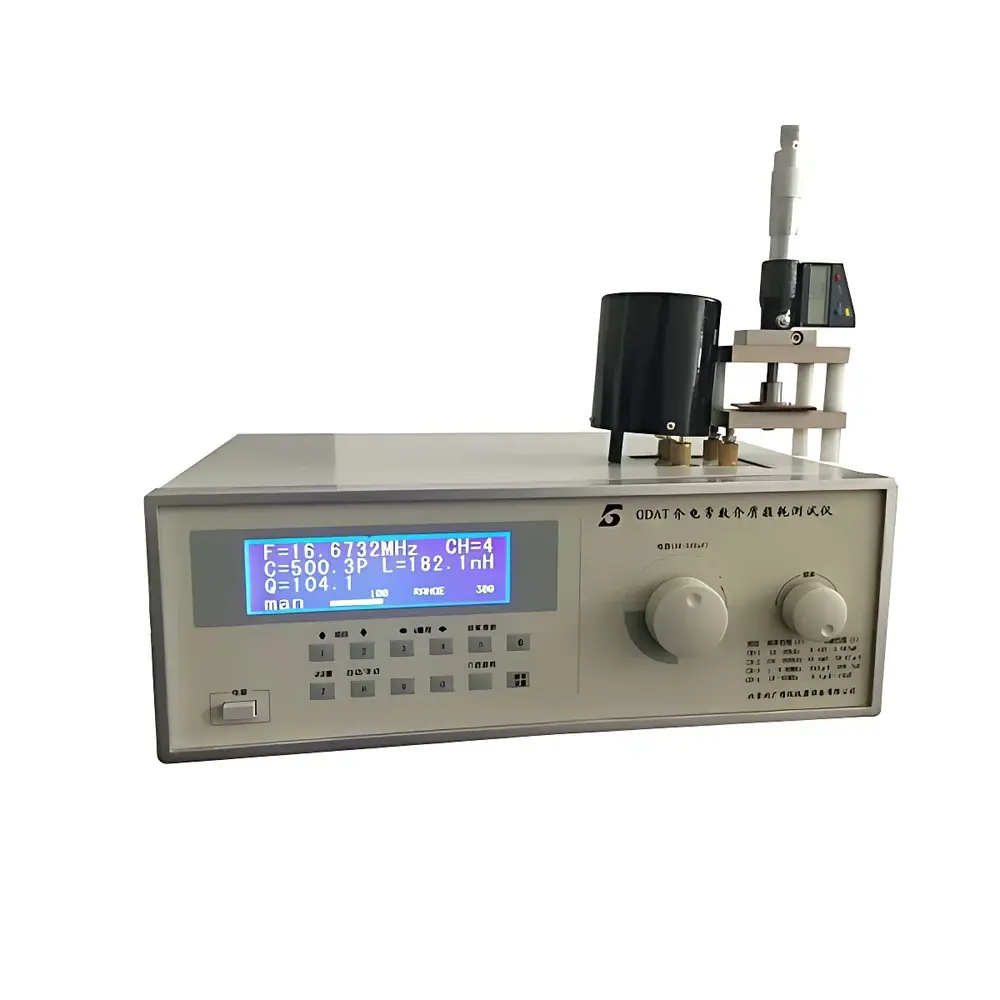
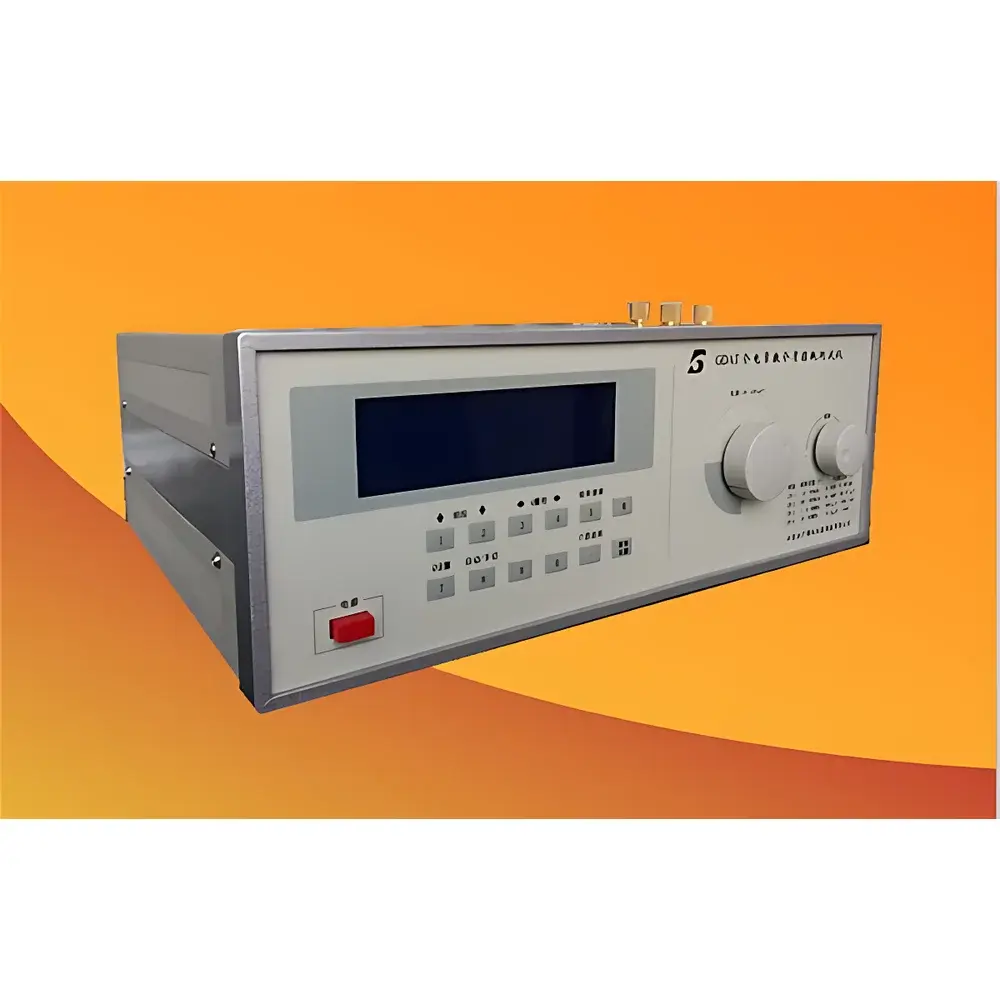
Beijing North Guang Precision Instruments GDAT1 Dielectric Loss Tangent Analyzer for Coating Films
| Brand | Beijing North Guang Precision Instruments |
|---|---|
| Origin | Beijing, China |
| Manufacturer Type | OEM Manufacturer |
| Country of Origin | China |
| Model | GDAT1 |
| Price | USD 2,250 (approx.) |
Overview
The Beijing North Guang Precision Instruments GDAT1 Dielectric Loss Tangent Analyzer for Coating Films is a precision LCR-based impedance measurement system engineered for quantitative evaluation of dielectric properties in thin insulating films—particularly organic coatings applied on metallic or conductive substrates. Operating on the principle of high-frequency resonance and Q-factor analysis, the instrument determines the dielectric loss tangent (tan δ) and relative permittivity (εr) by measuring the phase relationship between voltage and current across a sample under controlled AC excitation. It employs a calibrated series/parallel resonant circuit architecture with variable-frequency signal generation (100 kHz to 50 MHz), enabling characterization of both bulk dielectric behavior and interfacial polarization effects at film-substrate boundaries. Designed for laboratory-based quality control and R&D environments, the GDAT1 supports standardized testing protocols aligned with ASTM D150, IEC 60250, and ISO 257-3 for solid insulating materials. Its measurement capability extends beyond tan δ to include inductance (14.5 nH–8.14 H), capacitance, distributed capacitance of inductive components, and characteristic impedance of transmission lines—making it functionally equivalent to a broadband RF Q-meter with integrated dielectric analysis functionality.
Key Features
- Seven-step manual inductance range selection (0.1 μH–1 H) with automatic range optimization for improved signal-to-noise ratio
- Continuous frequency sweep from 100 kHz to 50 MHz with digital frequency synthesis and ±0.01% stability
- High-resolution Q-factor measurement (Q ≥ 230 at 25 MHz) with real-time correction for residual circuit parameters
- Integrated high-voltage protection circuitry: automatic shutdown upon short-circuit, dielectric breakdown, or overcurrent events
- Ground continuity monitoring: prevents high-voltage operation unless verified earth connection is detected
- Capacitive voltage rise (“capacitive boost”) compensation algorithm maintains constant test voltage amplitude during large-capacitance measurements
- Anti-miswiring detection logic identifies common connection errors (e.g., open guard, reversed shield polarity) and triggers audible/visual alerts
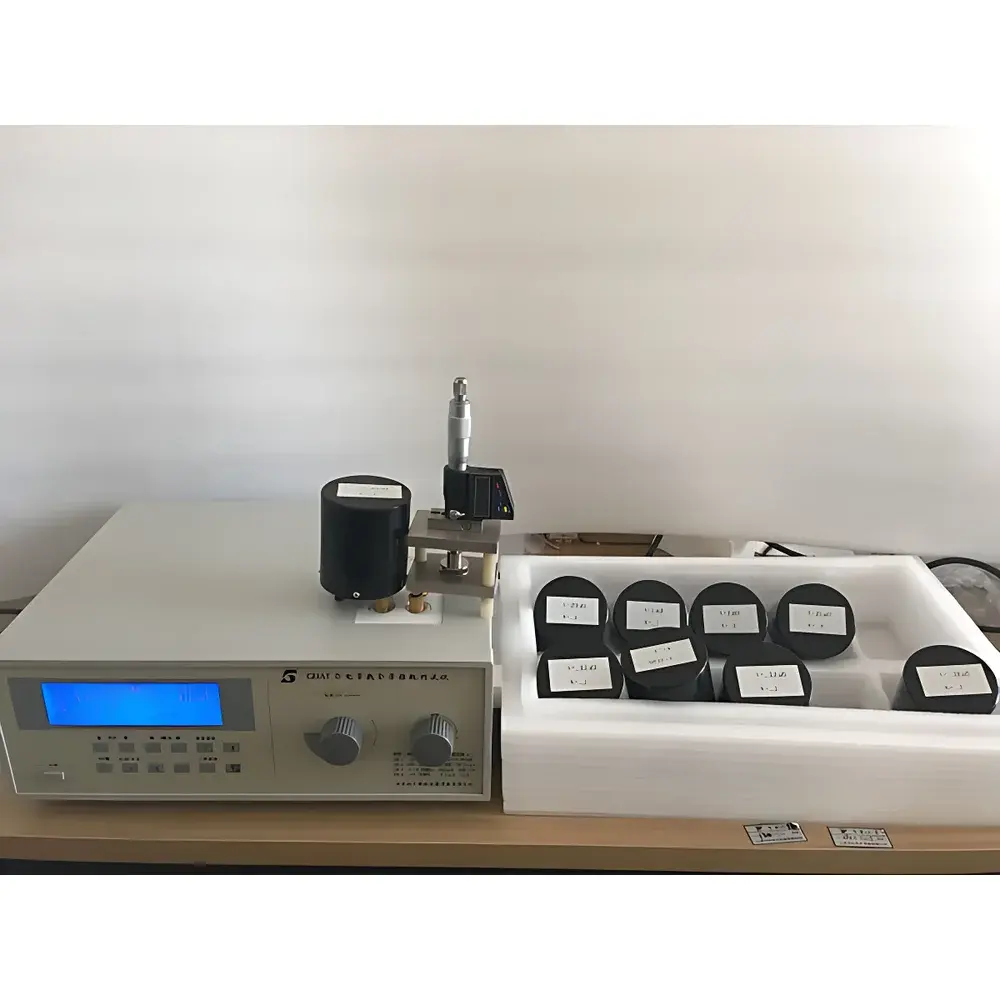
- Low-loss sample fixture set included (9 calibrated inductors + dedicated coating film夹具) with polyethylene and polystyrene insulating spacers
Sample Compatibility & Compliance
The GDAT1 is optimized for non-destructive dielectric assessment of cured paint films, enamel coatings, polymer laminates, and thin-film dielectrics (thickness range: 10 μm–500 μm) on conductive substrates. Sample mounting follows ASTM D257 guidelines for surface resistivity and dielectric constant testing. The instrument complies with electromagnetic compatibility requirements per EN 61326-1:2013 (industrial environment), safety standards per IEC 61010-1:2010 (measurement category CAT II, pollution degree 2), and electrical insulation testing requirements outlined in IEC 60664-1. All firmware and calibration routines adhere to GLP documentation principles, supporting audit-ready traceability for regulated laboratories. While not FDA 21 CFR Part 11–certified out-of-the-box, the system architecture permits integration with validated LIMS environments through RS-232 and USB virtual COM port interfaces.
Software & Data Management
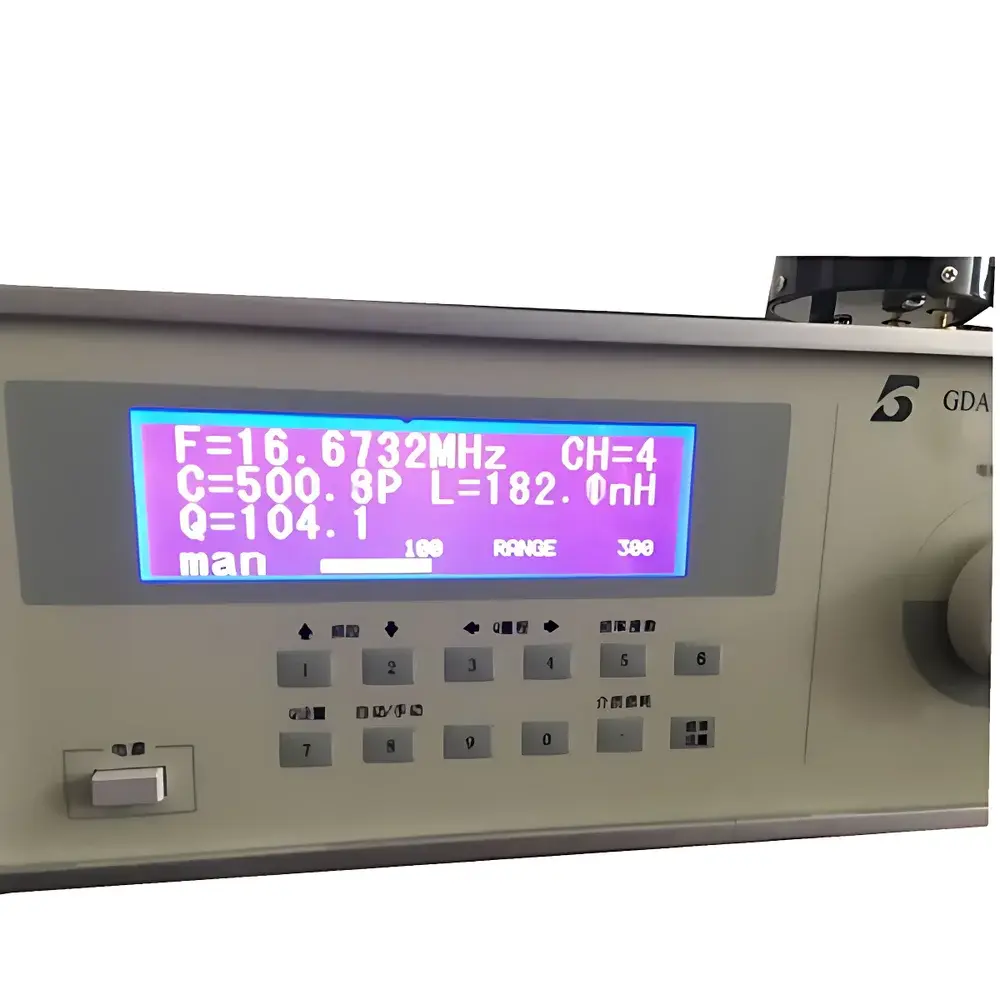
The GDAT1 operates without proprietary software dependency—measurements are displayed directly on its front-panel LCD with numeric readouts for Q, L, C, tan δ, and εr. Raw data export is supported via ASCII-formatted serial output (baud rate configurable up to 115,200), enabling seamless import into MATLAB, Python (PySerial), LabVIEW, or Excel for post-processing. Calibration coefficients are stored in non-volatile memory with write-protection; factory calibration certificates (traceable to NIM, China) are provided with each unit. Firmware updates are delivered free-of-charge for the lifetime of the instrument and installed via UART bootloader mode—no external programmer required. All internal diagnostics—including oscillator drift monitoring, reference capacitor aging compensation, and thermal drift correction—are executed automatically during warm-up (30-minute stabilization period recommended per IEC 60068-2-1).
Applications
- Quality assurance of automotive OEM coatings for humidity resistance and long-term dielectric stability
- Development of corrosion-inhibiting primer layers using epoxy, polyurethane, or acrylic resin systems
- Characterization of anti-static coatings for electronics manufacturing enclosures
- Research on water uptake kinetics in hydrophilic polymer films via time-resolved tan δ monitoring
- Validation of curing degree in thermoset coatings through correlation of εr and tan δ with DSC/TGA data
- Screening of nanocomposite coatings containing SiO₂, Al₂O₃, or BN fillers for high-frequency insulation performance
- Failure analysis of delaminated or blistered coating systems via localized Q-factor mapping (with optional probe fixture)
FAQ
What is the minimum recommended warm-up time before performing calibrated measurements?
A minimum 30-minute warm-up period is required to stabilize internal oscillator temperature and reference component values, as specified in IEC 60068-2-1 Clause 5.2.
Can the GDAT1 measure coated samples on non-conductive substrates such as glass or ceramic?
Yes—using the optional parallel-plate electrode configuration (not included standard); however, substrate permittivity must be accounted for in post-processing using the two-layer dielectric model.
Is the instrument compatible with automated test sequences or SCADA integration?
Yes—the RS-232 interface supports full remote command control (SCPI-like syntax), including trigger synchronization, parameter sweeping, and batch data logging.
How is residual inductance/capacitance of test leads compensated?
Zeroing is performed using open-circuit and short-circuit calibration routines prior to measurement; residual reactance values are subtracted mathematically in real time.
Does the GDAT1 support compliance with ISO/IEC 17025 accredited testing?
When operated within its specified environmental conditions (23 ± 2°C, RH < 65%), with documented calibration history and uncertainty budgeting, the GDAT1 meets technical requirements for ISO/IEC 17025 Clause 6.4.1 (equipment suitability).



