
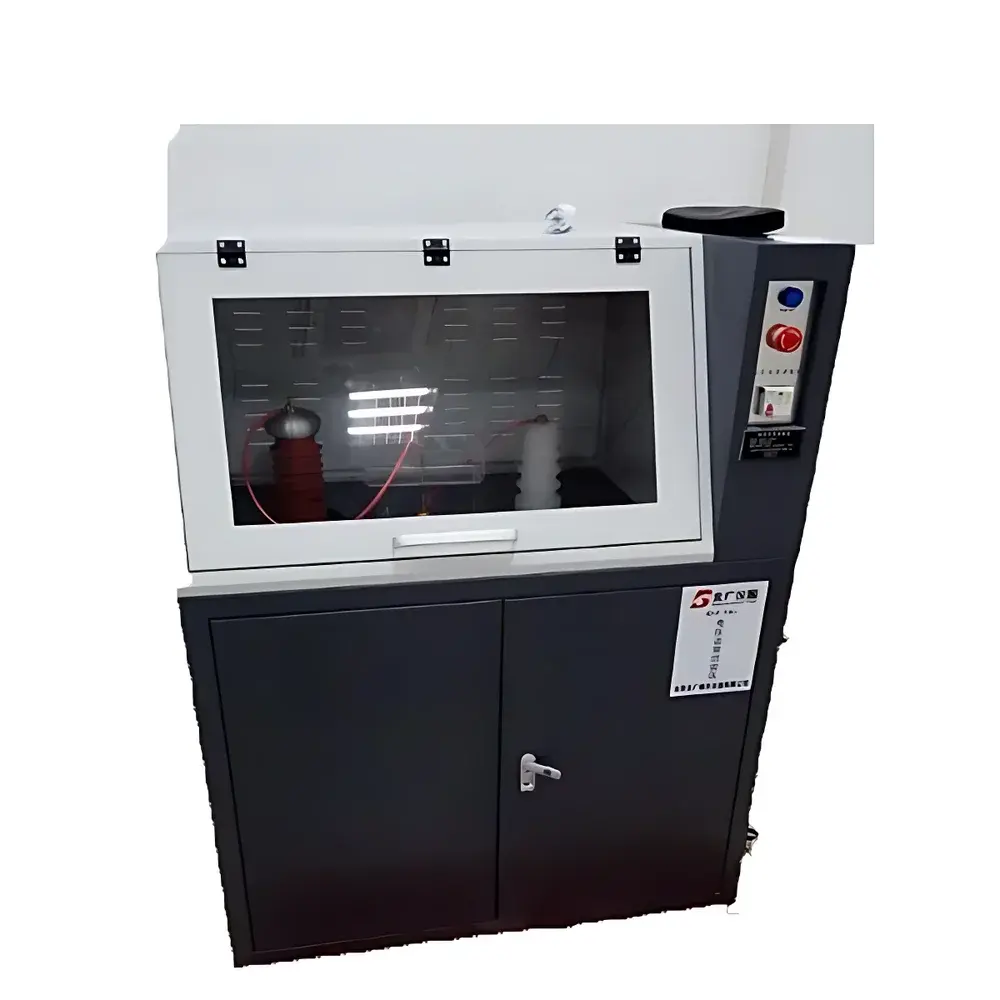
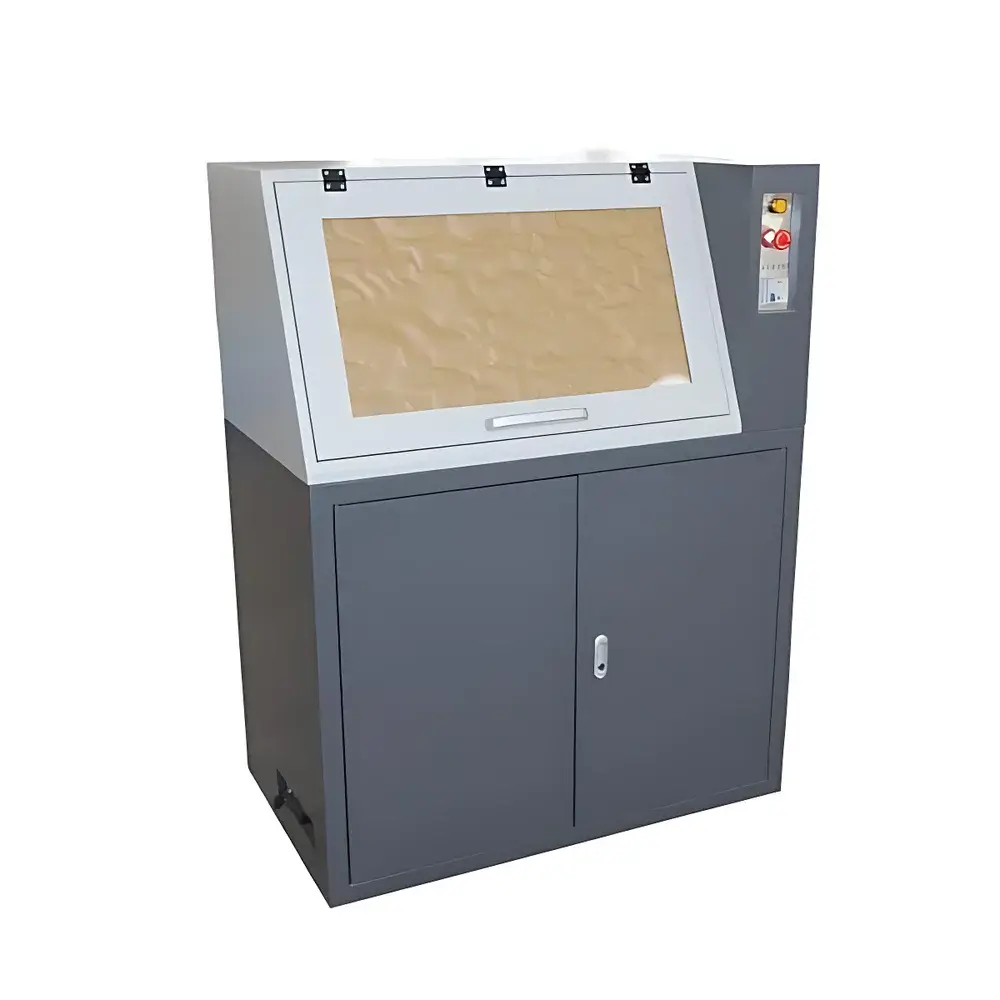
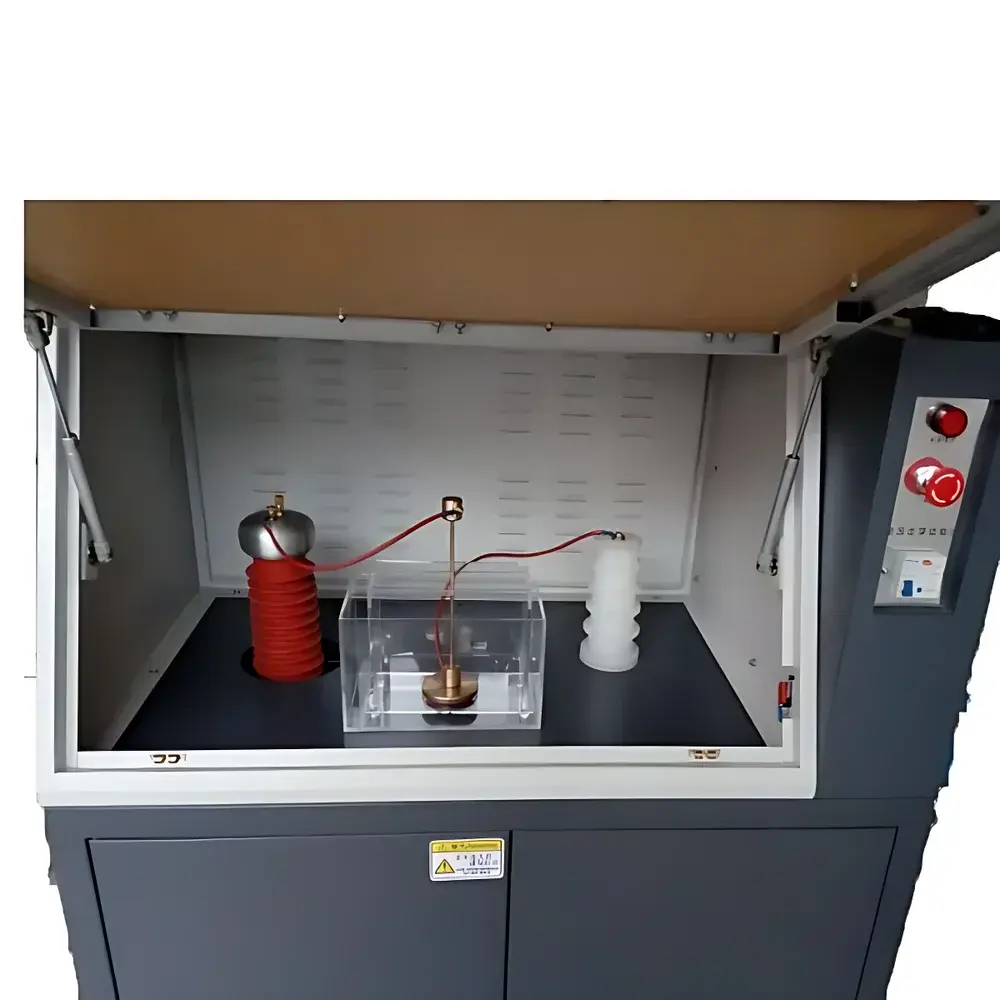
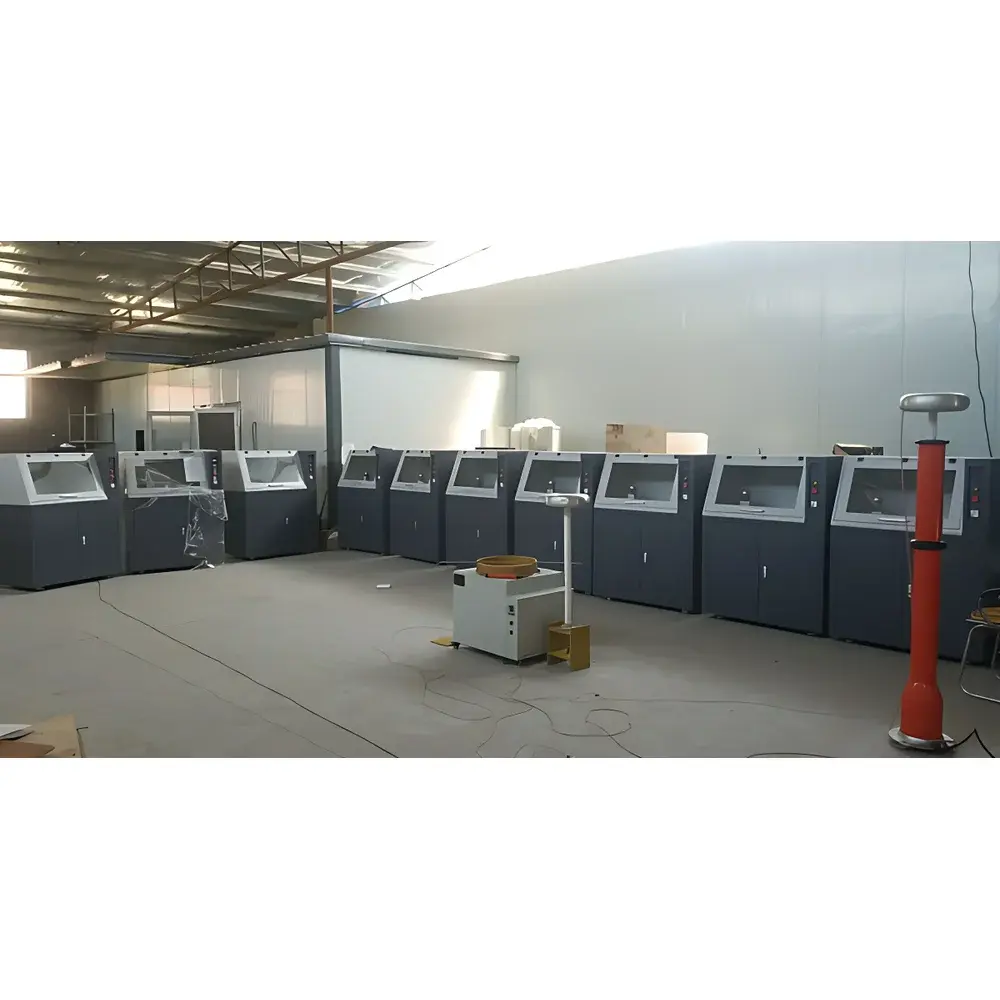
North Guangjingyi BDJCC Voltage Breakdown Tester
| Brand | North Guangjingyi / All Precision Instrument |
|---|---|
| Origin | Beijing, China |
| Manufacturer Type | Manufacturer |
| Product Category | Domestic |
| Model | BDJCC |
| Breakdown Voltage Range | 0–50 kV (AC/DC) |
| Input Voltage | AC 220 V ±10%, 50 Hz ±1% |
| Output Power | 2 kVA (standard configuration) |
| Measurement Accuracy | ≤ ±2% |
| Ramp Rate | 1–5 kV/s (software-controlled, adjustable in 0.1 kV/s increments) |
| Hold Time | 0–6 hours |
| Leakage Current Threshold | 1–30 mA (user-definable) |
| Electrode Set | Two φ25 mm × 25 mm disc electrodes + one φ75 mm × 25 mm disc electrode (per GB/T 1408.1–2006) |
| Operating Environment | 15–30 °C, RH ≤85% non-condensing |
| Dimensions (L×W×H) | 800 × 800 × 1450 mm |
| Weight | 100 kg |
| Grounding Requirement | Dedicated earth rod ≥1.5 m depth, resistance ≤4 Ω |
| Compliance | GB/T 1408.1–2006, IEC 60243-1, ASTM D149, ASTM D877 |
Overview
The North Guangjingyi BDJCC Voltage Breakdown Tester is an engineered solution for determining the dielectric strength of insulating liquids—including transformer oil, capacitor oil, cable oil, and other hydrocarbon-based dielectrics—according to standardized ramped-voltage protocols. It operates on the principle of controlled voltage escalation under defined environmental and geometric conditions, enabling precise measurement of the voltage at which electrical breakdown occurs across a defined gap between two standardized electrodes immersed in the test medium. The system integrates a high-stability AC/DC high-voltage generation module (0–50 kV), microprocessor-driven step-motor-controlled voltage ramping, real-time leakage current monitoring, and a fully traceable software platform compliant with GLP data integrity requirements. Designed for routine quality control laboratories, power equipment maintenance centers, and third-party certification labs, the BDJCC delivers repeatable, auditable results aligned with international electrotechnical standards.
Key Features
- High-voltage output capability: 0–50 kV AC/DC, with dual-range configurations (0–20 kV standard; extended 0–50 kV option available)
- Precision ramp-rate control: Adjustable voltage rise rate from 1.0 to 5.0 kV/s in 0.1 kV/s increments, ensuring full compliance with ASTM D149 Method A and GB/T 1408.1–2006 Clause 6.2
- Integrated safety architecture: Automatic circuit interruption within ≤100 ms upon detection of breakdown current exceeding user-defined threshold (1–30 mA), coupled with redundant mechanical and electronic interlocks
- Dual-mode operation: Independent AC and DC high-voltage paths with galvanic isolation, eliminating cross-mode interference during polarity-sensitive testing
- Modular electrode system: Supplied with three standardized stainless-steel electrodes per GB/T 1408.1–2006: two φ25 mm × 25 mm discs and one φ75 mm × 25 mm disc—calibrated, documented, and certified for traceability
- Robust thermal management: Forced-air cooling with temperature-monitored transformer windings and over-temperature shutdown (≥85 °C)
- Comprehensive grounding interface: Dedicated low-impedance earth terminal (≤4 Ω verified), compatible with national grounding codes (GB 50169)
Sample Compatibility & Compliance
The BDJCC is validated for use with Class I insulating oils meeting IEC 60296 specifications and is routinely deployed in accordance with GB/T 507 (Chinese standard for insulating oil dielectric strength testing), ASTM D877 (for low-precision screening), and ASTM D149 (for research-grade dielectric strength evaluation). Its electrode geometry and gap settings adhere strictly to the 2.5 mm spacing requirement specified in GB/T 1408.1–2006 for liquid dielectrics. The instrument supports both sealed-cell and open-cup test configurations, accommodating samples ranging from 300 mL to 1 L volume. Environmental operation is certified for ambient temperatures of 15–30 °C and relative humidity up to 85% non-condensing—conditions typical of ISO/IEC 17025-accredited calibration laboratories. All firmware and software modules are designed to support audit-ready documentation, including full electronic signatures, change logs, and 21 CFR Part 11–compatible user access controls.
Software & Data Management
The BDJCC is operated via proprietary Windows-based software v4.2.1, featuring a deterministic real-time acquisition engine synchronized to hardware triggers at 10 kHz sampling resolution. The software provides full GLP-compliant data governance: automatic timestamping, operator ID binding, parameter lockout after test initiation, and immutable storage of raw voltage/current waveforms alongside metadata (ambient T/RH, electrode ID, sample batch number). Users may perform post-test analysis including dynamic curve zoom, multi-trace overlay (up to 12 simultaneous tests), region-specific derivative calculation, and statistical summary (mean, SD, CV%) across test series. Export formats include CSV, Excel (.xlsx), and Word-compatible RTF reports with customizable templates—fully editable without compromising original audit trail integrity. Role-based access control allows administrators to assign permissions for method editing, report generation, or system calibration—ensuring separation of duties in regulated environments.
Applications
- Quality assurance of new insulating oils prior to transformer filling (per IEEE C57.106)
- Condition monitoring of in-service transformer oil in substation maintenance programs
- Verification of filtration and dehydration efficiency during oil reclamation processes
- Research into additive performance (e.g., oxidation inhibitors, pour-point depressants) under accelerated aging protocols
- Third-party certification testing for oil suppliers seeking ISO 9001 or IECQ qualification
- Educational laboratory instruction on dielectric failure mechanisms and Paschen’s law validation
FAQ
What standards does the BDJCC comply with?
The system meets GB/T 1408.1–2006, GB/T 507, ASTM D149, ASTM D877, and IEC 60243-1 for dielectric strength testing of insulating liquids.
Is the software 21 CFR Part 11 compliant?
Yes—the software implements electronic signatures, audit trails, role-based permissions, and immutable record storage as required for FDA-regulated environments.
Can the BDJCC test solid insulating materials?
No—this model is specifically configured for liquid dielectrics. Solid-sample testing requires alternative electrode fixtures and voltage conditioning not supported by the standard BDJCC configuration.
What maintenance is required for long-term accuracy?
Annual verification of high-voltage divider calibration and electrode surface roughness (Ra ≤0.8 µm) is recommended; no routine internal recalibration is needed between certifications.
Does the system support remote diagnostics or network integration?
Yes—Ethernet-enabled communication allows secure remote monitoring, firmware updates, and integration with LIMS via TCP/IP-based API (documentation provided upon request).



