
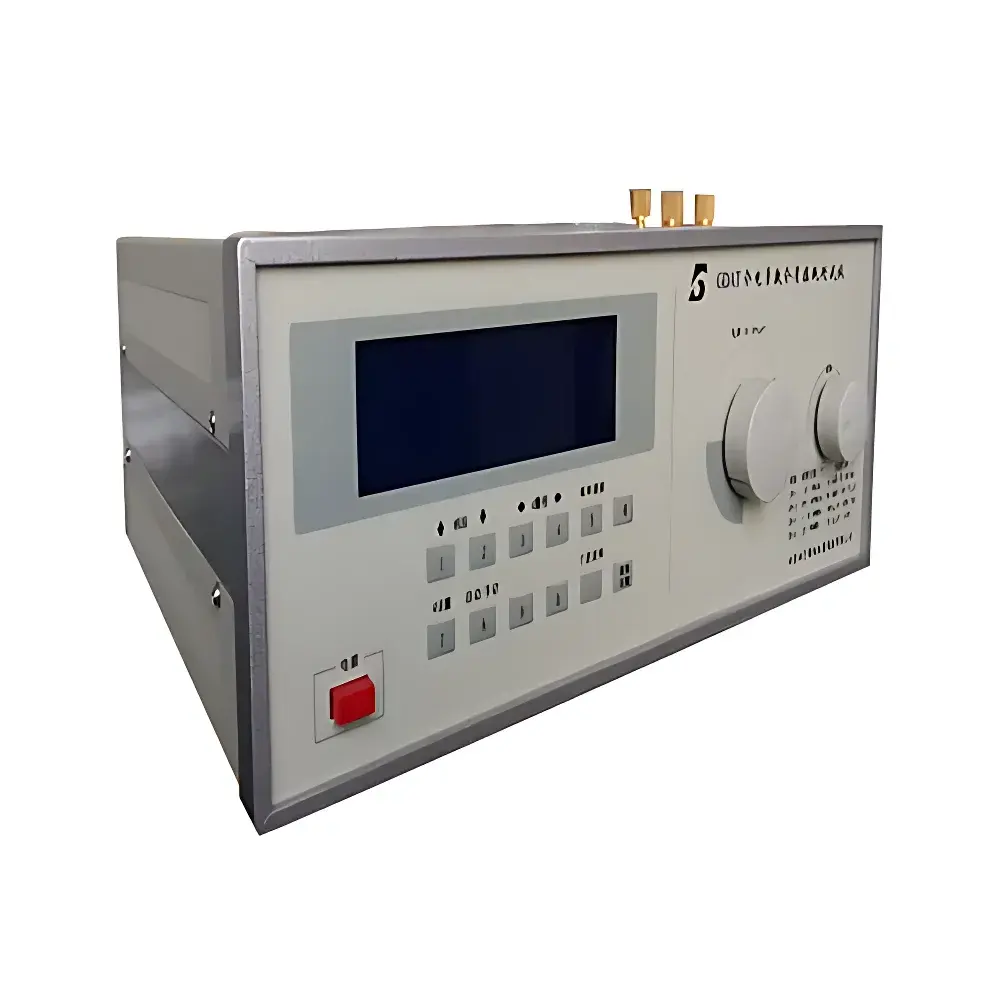
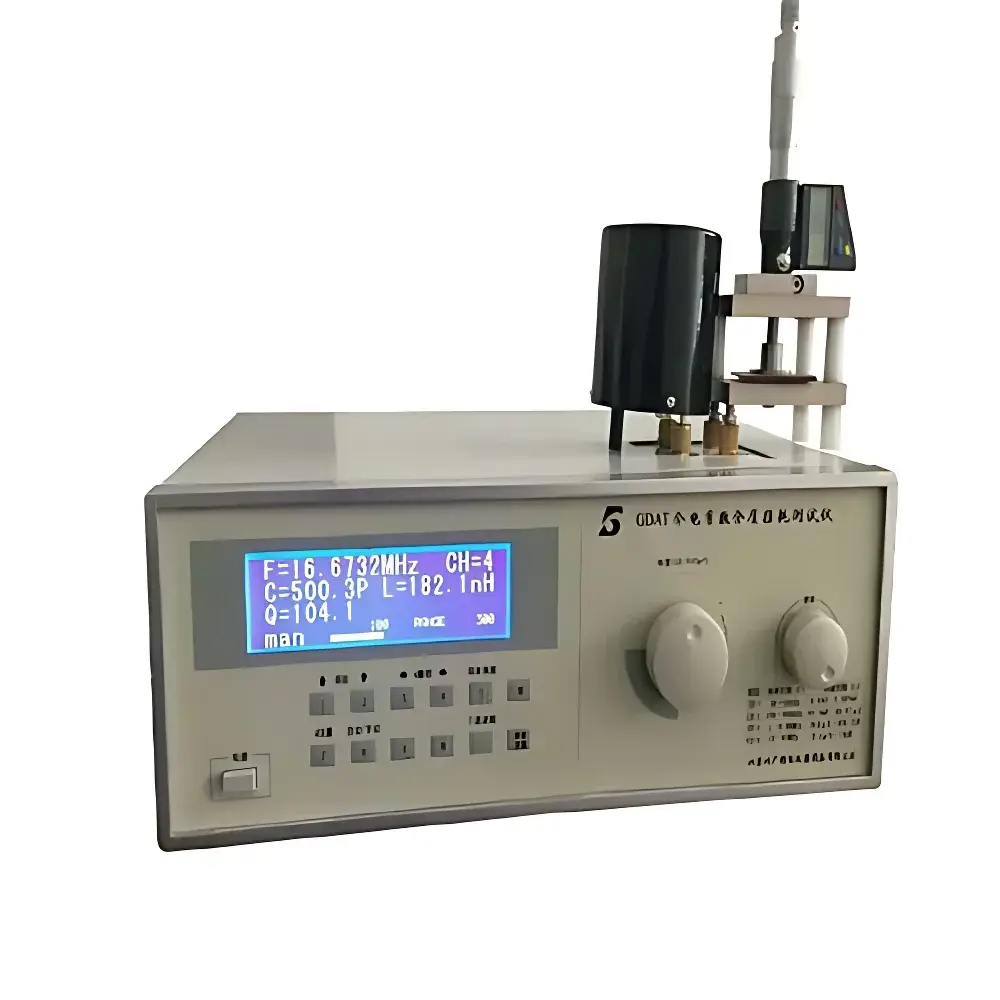
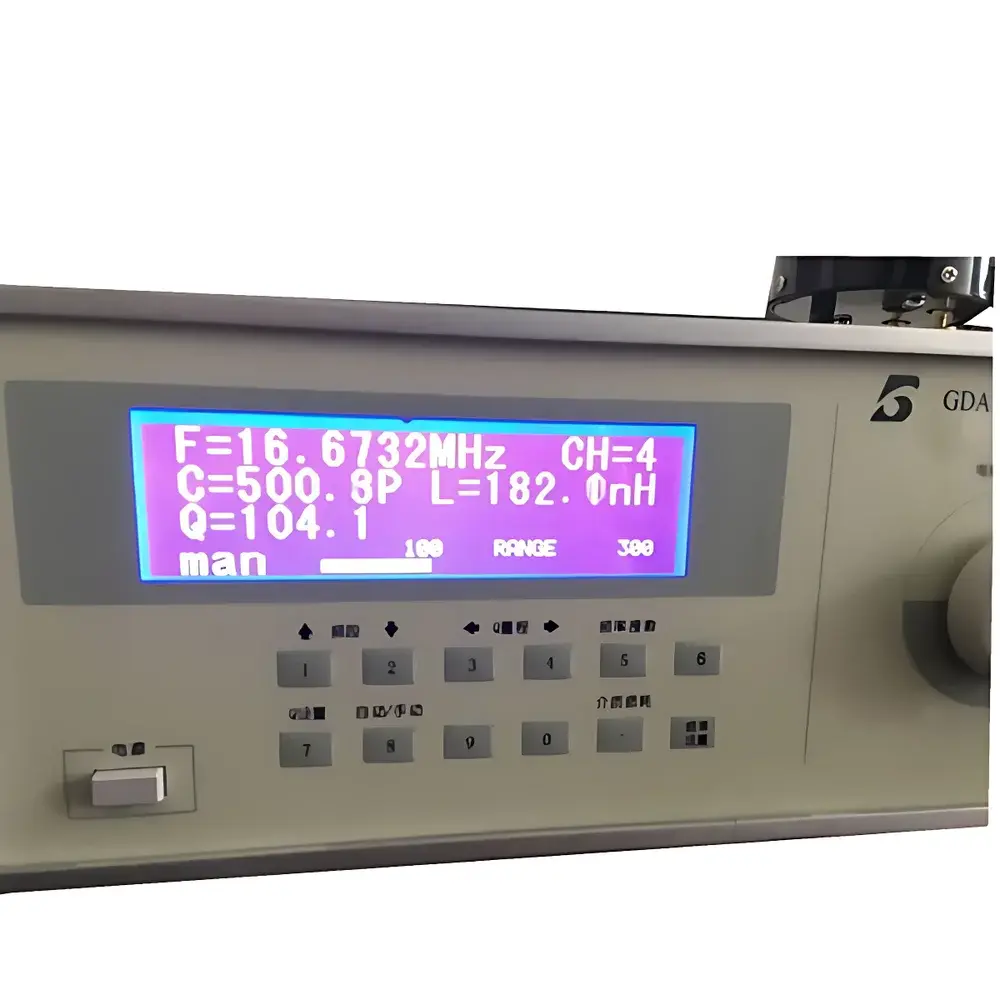
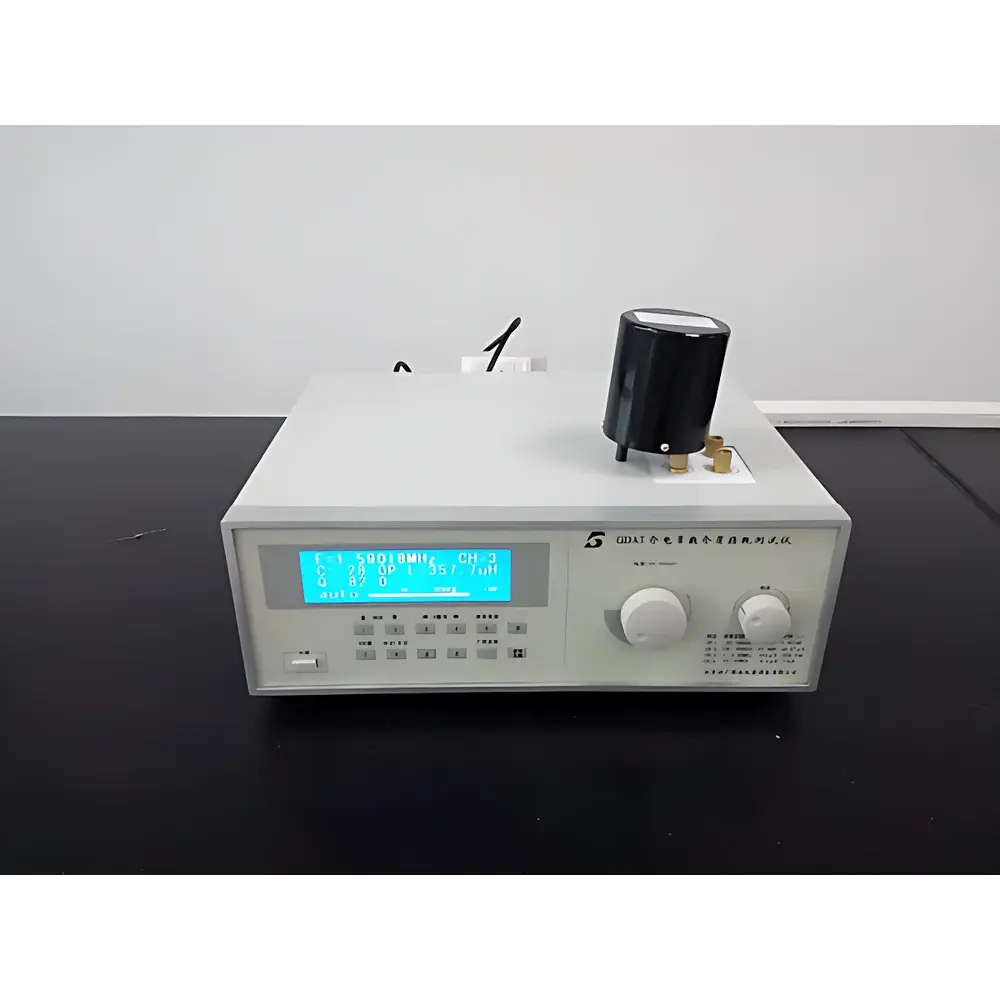
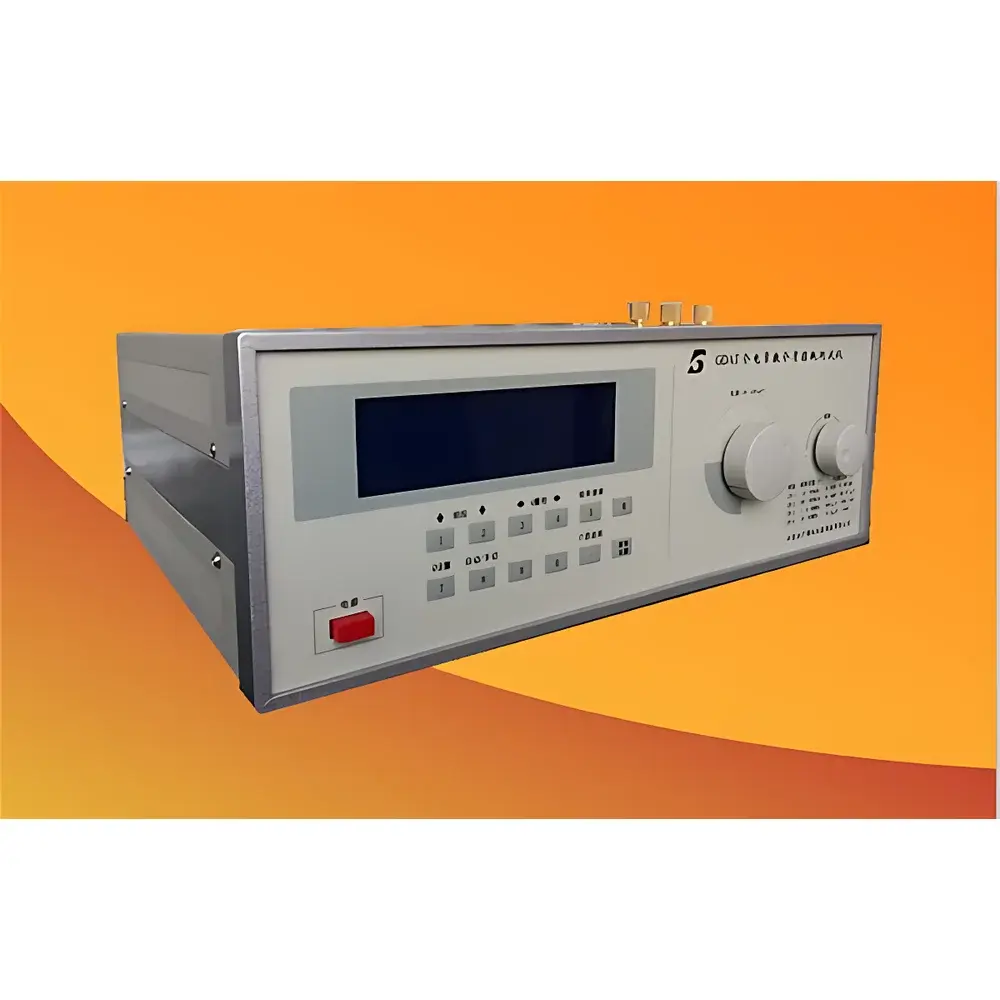
Beijing North Guang Precision Instruments GDAT-A70MHz High-Frequency Dielectric Constant and Loss Tangent Analyzer
| Brand | Beijing North Guang Precision Instruments |
|---|---|
| Origin | Beijing, China |
| Manufacturer Type | Direct Manufacturer |
| Product Origin | Domestic (China) |
| Model | GDAT-A70MHz |
| Price | USD 1,850 (approx.) |
Overview
The Beijing North Guang Precision Instruments GDAT-A70MHz is a high-frequency dielectric property analyzer engineered for precise measurement of relative permittivity (dielectric constant, εr) and loss tangent (tan δ) of solid insulating materials—particularly thermoplastics, thermosets, polymer composites, and ceramic-filled polymers. It operates on the principle of high-frequency resonant cavity perturbation combined with Q-factor-based impedance analysis in the 20 kHz to 70 MHz frequency range. Unlike broadband dielectric spectrometers relying on vector network analysis, this instrument employs a calibrated high-Q parallel-resonant LC circuit, where sample-induced shifts in resonance frequency and bandwidth yield εr and tan δ via established cavity perturbation theory (IEEE Std 1676-2019). Its design prioritizes metrological traceability, low residual reactance (< 0.02 pF equivalent stray capacitance), and stable amplitude regulation—enabling repeatable measurements compliant with ASTM D150, IEC 60250, and ISO 257-3 for electrical insulating materials. The system integrates digital frequency locking, auto-resonance search, and programmable Q-range switching (2–1023), minimizing operator dependency while maintaining sub-7% working error across its full operational bandwidth.
Key Features
- Frequency coverage: 20 kHz – 70 MHz, with 12 preset test points including 100 kHz, 400 kHz, 1 MHz, 2 MHz, 4.5 MHz, 12 MHz, 25 MHz, and 50 MHz—aligned with industrial QC checkpoints for polymer characterization.
- Q-factor measurement range: 2–1023, with five manual/auto-switching ranges (30, 100, 300, 1000) and ≤7% working error at frequencies up to 10 MHz; ≤8% above 10 MHz (per IEC 60250 Annex B calibration protocol).
- Dual-parameter output: Simultaneous calculation of εr and tan δ from resonance shift (Δf) and bandwidth (Δf½), with built-in correction algorithms for fringing field effects and electrode edge capacitance.
- Integrated safety architecture: HV overcurrent cutoff (<10 µs response), CVT current-limit protection, real-time ground continuity verification, anti-miswiring detection, and automatic voltage compensation for capacitive voltage rise ("capacitive lift") during high-C sample testing.
- Low-stray test fixture: Shielded coaxial sample holder with adjustable electrode spacing (1–10 mm), polyethylene-insulated support stand, and low-loss RF-grade connectors to minimize parasitic inductance (< 20 nH) and distributed capacitance.
Sample Compatibility & Compliance
The GDAT-A70MHz accommodates rigid and semi-rigid plastic specimens in disk, slab, or ring form (diameter: 25–50 mm; thickness: 0.5–5 mm), provided surface flatness meets ISO 293 requirements (≤0.02 mm deviation). It supports ASTM D257-compliant guard-ring electrode configurations for volume resistivity cross-validation. All measurements adhere to GLP documentation standards, with audit-trail-capable data logging (time-stamped, user-ID tagged) compatible with FDA 21 CFR Part 11–compliant LIMS integration. Calibration traceability follows CNAS-accredited reference standards (e.g., NIST SRM 1827 polycarbonate, εr = 2.92 ± 0.02 at 1 MHz). Compliance includes: ASTM D150-21 (dielectric constant and dissipation factor of solid electrical insulating materials), IEC 60250:2022 (measurement methods for permittivity and dielectric dissipation factor), and GB/T 1409-2006 (Chinese national standard equivalent).
Software & Data Management
The instrument embeds a dedicated ARM Cortex-M7 controller running real-time firmware with USB 2.0 host interface for PC connectivity. Included Windows-compatible software (v3.2+) provides: automated multi-frequency sweep sequences, εr/tan δ temperature-correction tables (based on ASTM D150 Annex A), comparative batch reporting with statistical process control (SPC) charts (X̄-R, Cpk), and export to CSV, XML, or PDF formats. Raw Q, f0, and Δf½ values are stored with metadata (operator ID, ambient T/RH, calibration date), satisfying ISO/IEC 17025 clause 7.7 record retention requirements. No cloud dependency—data remains fully on-premise unless explicitly exported.
Applications
- QC screening of injection-molded ABS, PC, PBT, and PEI components for batch-to-batch εr consistency (±0.03 tolerance at 1 MHz).
- Development of high-frequency PCB substrates (e.g., PTFE-glass laminates), quantifying moisture-induced tan δ drift under 85°C/85% RH preconditioning per IPC-TM-650 2.6.3.
- Evaluation of nanofiller dispersion homogeneity in conductive polymer composites via frequency-dependent εr dispersion analysis (Maxwell-Wagner-Sillars interfacial polarization modeling).
- Validation of plasma-treated polymer surfaces for improved adhesion, correlating tan δ reduction at 10 MHz with increased surface energy (Dyne test correlation R² > 0.92).
- Accelerated aging studies tracking εr hysteresis in automotive under-hood plastics exposed to thermal cycling (−40°C to +125°C, 1000 cycles).
FAQ
What sample preparation is required for compliant measurements?
Specimens must be conditioned at 23°C ± 2°C and 50% ± 5% RH for ≥48 h per ASTM D618, machined to parallel faces (flatness ≤0.02 mm), and cleaned with isopropanol to remove mold release agents.
Does the instrument support temperature-controlled measurements?
No integrated oven or cryostat; however, it is compatible with external environmental chambers (e.g., ESPEC SU-241) via analog trigger I/O and external temperature input channel (0–10 V, ±0.1°C resolution).
How is residual parameter correction applied?
The firmware applies pre-characterized stray capacitance (Cs = 0.82 pF) and inductance (Ls = 18.3 nH) offsets using the “open-short-load” three-point calibration routine defined in IEC 60250 Section 8.2.
Can it measure liquids or powders?
Not recommended—designed exclusively for solid dielectrics with defined geometry. Liquid measurements require specialized coaxial probe systems (e.g., Keysight N1501A) operating above 100 MHz.
Is firmware upgrade supported remotely?
Firmware updates are delivered via signed .bin files through USB; no remote access or internet connectivity is implemented—ensuring air-gapped security for regulated labs.



