
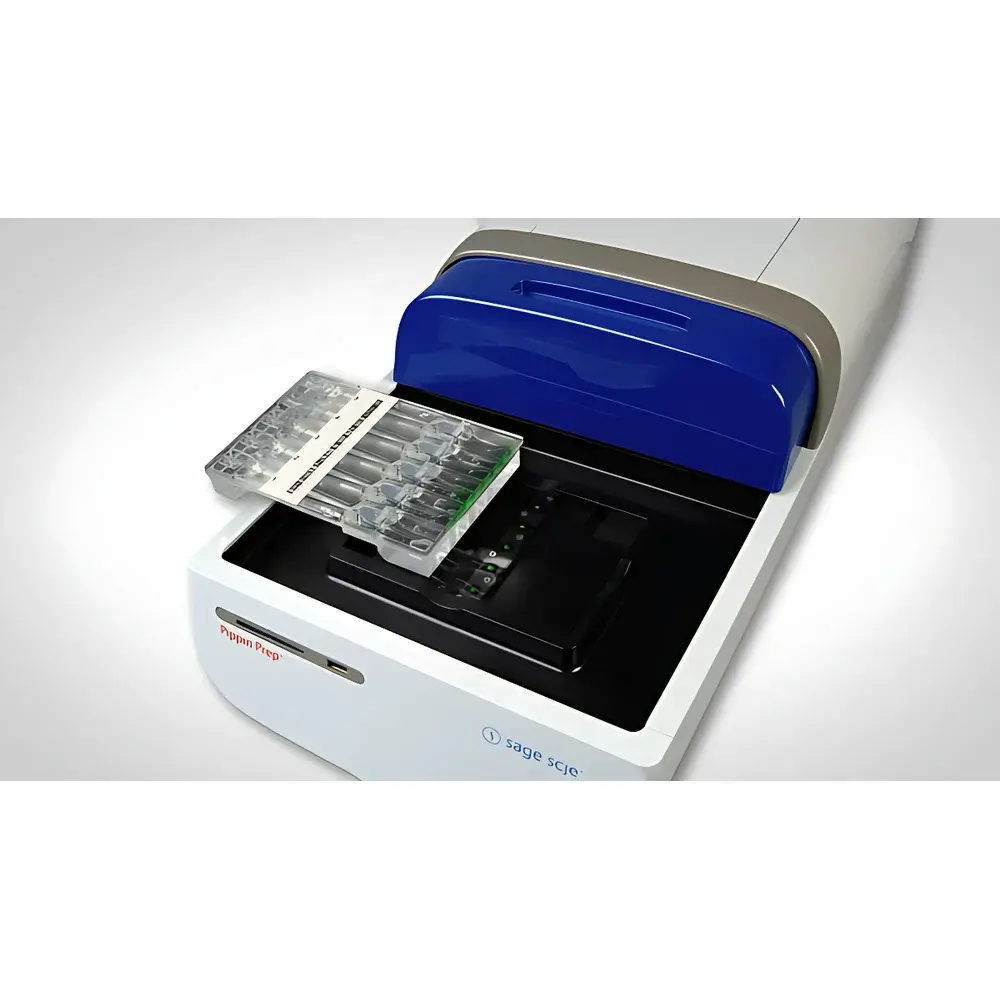
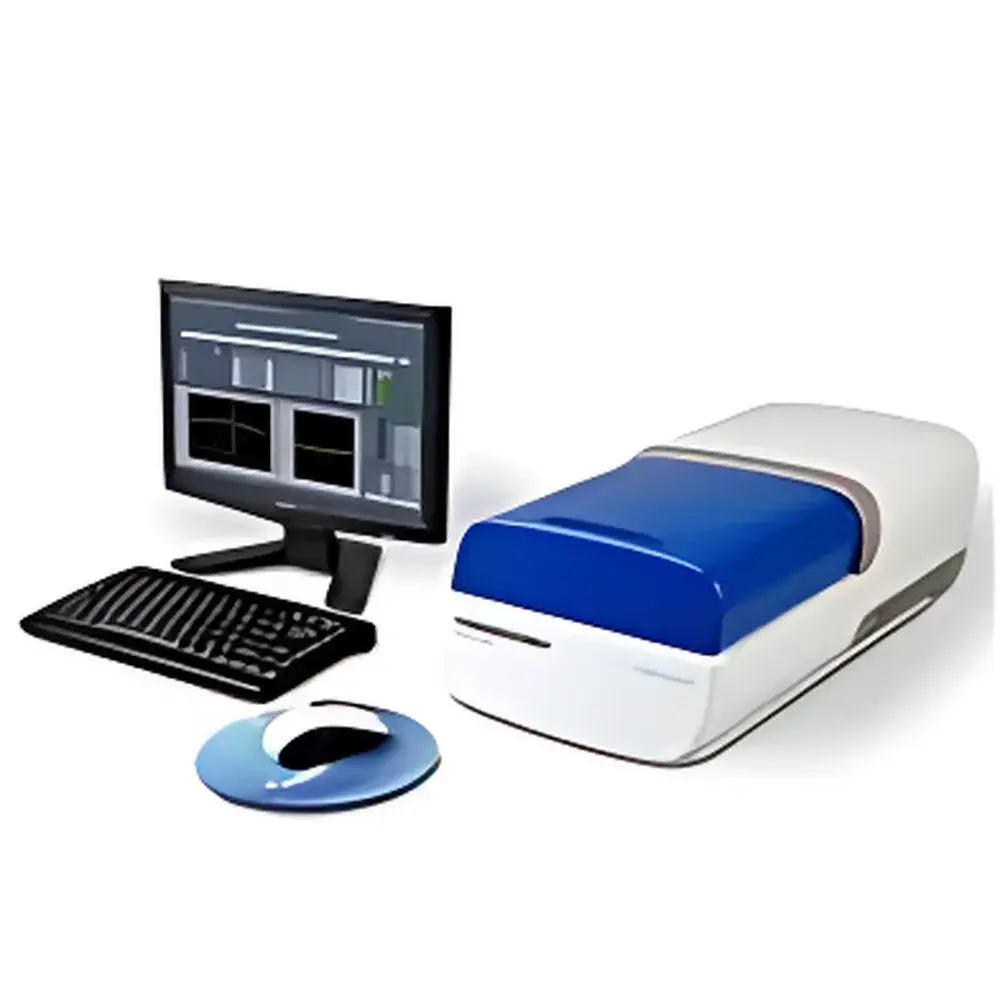
Sage Science Pippin Prep Automated Electrophoresis and Nucleic Acid Fragment Recovery System
| Brand | Sage Science |
|---|---|
| Origin | USA |
| Manufacturer Type | Authorized Distributor |
| Product Origin | Imported |
| Model | Pippin Prep |
| Instrument Type | Magnetic Bead-Based Purification |
| Automation Level | Dedicated Fully Automated |
| Sample Capacity per Run | 5 |
| Sample Volume Range | 5 µL |
| Fragment Recovery Range | 50 bp – 8 kbp |
| Recovery Efficiency | 50–80% |
| Detection Method | Real-Time Fluorescent DNA Detection (Non-UV) |
| Cartridge Format | Disposable 5-Lane Pre-Cast Gel Cassette |
Overview
The Sage Science Pippin Prep Automated Electrophoresis and Nucleic Acid Fragment Recovery System is an integrated, benchtop platform engineered for high-precision size selection and recovery of DNA fragments via real-time fluorescent electrophoretic monitoring. Unlike conventional UV-based gel excision or column-based size selection methods, the Pippin Prep employs a proprietary microfluidic cartridge containing pre-cast polyacrylamide gels in five parallel lanes—each with integrated separation and elution channels. During electrophoresis, a built-in fluorescence detection module continuously monitors DNA migration in real time using SYBR-compatible dyes, eliminating UV exposure and enabling quantitative, kinetic assessment of fragment mobility. By dynamically comparing sample band progression against a co-electrophoresed DNA ladder in a reference lane, the system autonomously triggers electrode polarity reversal at the precise moment target fragments enter the elution channel—thereby isolating nucleic acids within user-defined size windows (50 bp to 8 kbp) with sub-base-pair resolution in migration time. This closed-cartridge, electrokinetic elution architecture ensures reproducible recovery without manual intervention, minimizing operator variability and cross-contamination risk.
Key Features
- Dedicated fully automated workflow—from electrophoretic separation to size-selected elution—in a single, unattended run
- Disposable 5-lane pre-cast gel cassettes with integrated separation and elution channels, eliminating gel pouring, staining, and UV visualization
- Real-time fluorescent DNA detection using non-UV excitation (470 nm LED) and emission collection (520 nm filter), compatible with standard intercalating dyes (e.g., SYBR Gold, EvaGreen)
- Dynamic electrode switching control enables precise temporal gating of elution events, ensuring strict adherence to user-specified size ranges
- No post-run purification steps required—eluted fragments are directly compatible with downstream enzymatic reactions including library preparation, cloning, and Sanger sequencing
- Software-controlled method storage and recall support standardized SOP execution across multiple users and instruments
Sample Compatibility & Compliance
The Pippin Prep accommodates input samples ranging from 5 µL volumes of fragmented genomic DNA, PCR amplicons, sheared chromatin immunoprecipitation (ChIP) products, or adapter-ligated NGS libraries. It supports double-stranded DNA fragments across a broad molecular weight spectrum (50 bp to 8 kbp), including challenging populations such as AT-rich sequences and GC-rich regions that often exhibit anomalous migration in agarose systems. The system complies with laboratory quality frameworks requiring traceability and audit readiness: instrument logs record timestamped run parameters, detection thresholds, elution timing, and cartridge lot numbers. While not FDA 21 CFR Part 11–validated out-of-the-box, its software architecture supports integration into GLP/GMP environments through configurable user access controls, electronic signature protocols, and exportable CSV/Excel reports compliant with ISO/IEC 17025 documentation requirements.
Software & Data Management
The Pippin Prep is operated via Sage Science’s proprietary Pippin Pulse software (Windows-based), which provides intuitive graphical method design—including multi-range size selection, ladder calibration, and elution window definition. All runs generate encrypted binary data files (.ppd) containing raw fluorescence traces, voltage profiles, and elution event timestamps. Export options include annotated PDF run reports, tabular fragment distribution summaries, and comma-separated value (CSV) files suitable for LIMS ingestion. Software updates are delivered via secure HTTPS portal with version-controlled release notes and validation documentation available upon request. No cloud connectivity or remote telemetry is enabled by default; local network deployment ensures full data sovereignty.
Applications
- Next-generation sequencing library size selection—particularly for Illumina, PacBio, and Oxford Nanopore workflows requiring tight insert size distributions
- Preparation of subcloning-ready fragments with minimized adapter dimer carryover and LMW contaminant removal
- Recovery of large DNA fragments (>3 kbp) for BAC/PAC library construction or long-read sequencing applications
- Isolation of closely spaced size populations (e.g., ±50 bp differences) from complex mixtures such as restriction digests or CRISPR editing outcomes
- Processing of low-input, high-value samples—including FFPE-derived DNA, single-cell WGA products, and ancient DNA extracts—where yield preservation is critical
- Quality control of enzymatic fragmentation efficiency prior to adapter ligation or end-repair steps
FAQ
What types of DNA fragments can the Pippin Prep recover?
The system recovers double-stranded DNA fragments ranging from 50 base pairs to 8 kilobase pairs, including blunt-ended, A-tailed, and adapter-ligated molecules.
Does the Pippin Prep require UV light or ethidium bromide?
No. It uses non-UV fluorescent detection with safe, low-energy blue LED excitation and does not require hazardous intercalating dyes.
How many samples can be processed simultaneously?
Each run accommodates up to five independent samples using the 5-lane disposable cassette format.
Is the recovered DNA compatible with downstream enzymatic reactions?
Yes. Eluates contain no residual acrylamide, polymer, or buffer components known to inhibit ligases, polymerases, or kinases.
Can the Pippin Prep be used for RNA size selection?
No. The system is optimized exclusively for double-stranded DNA; RNA requires denaturing conditions incompatible with the cartridge design.
What maintenance is required?
Routine cleaning involves wiping the electrode contacts and optical window with ethanol; no consumables beyond cartridges are needed.
Related Products



