
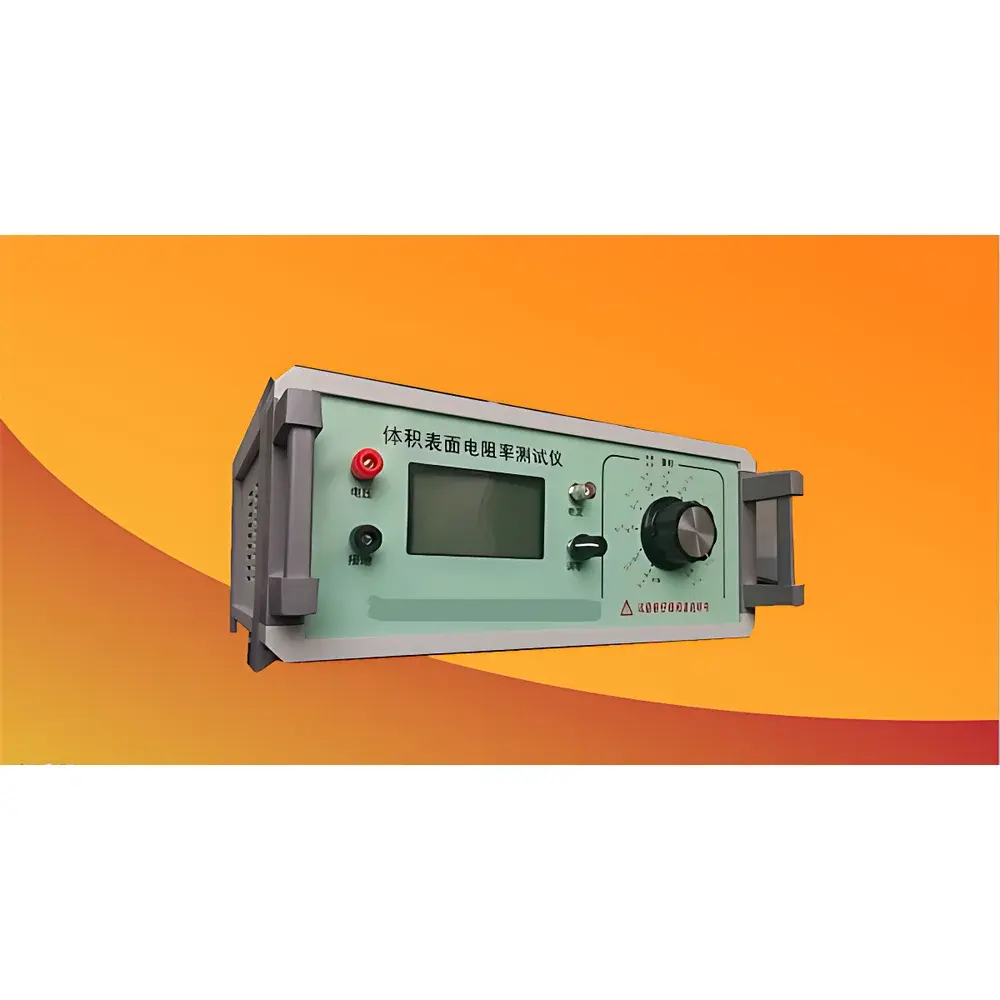
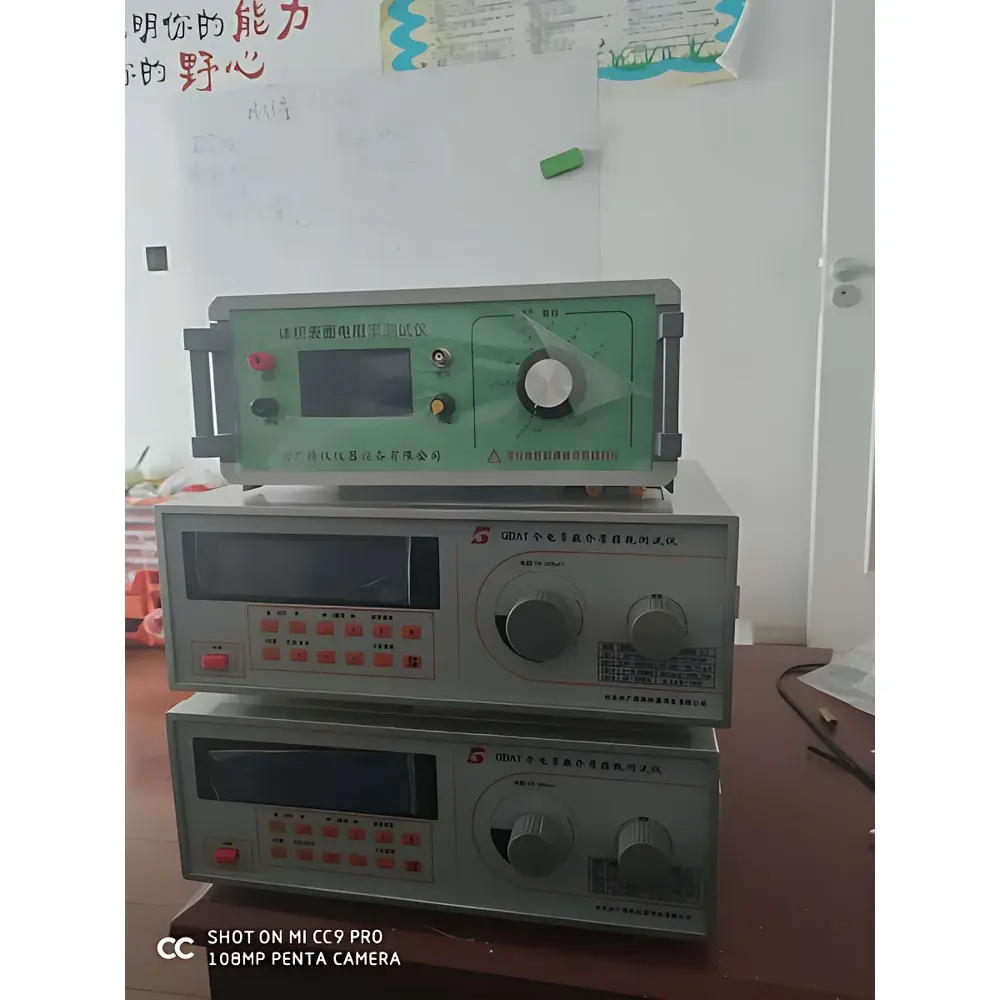
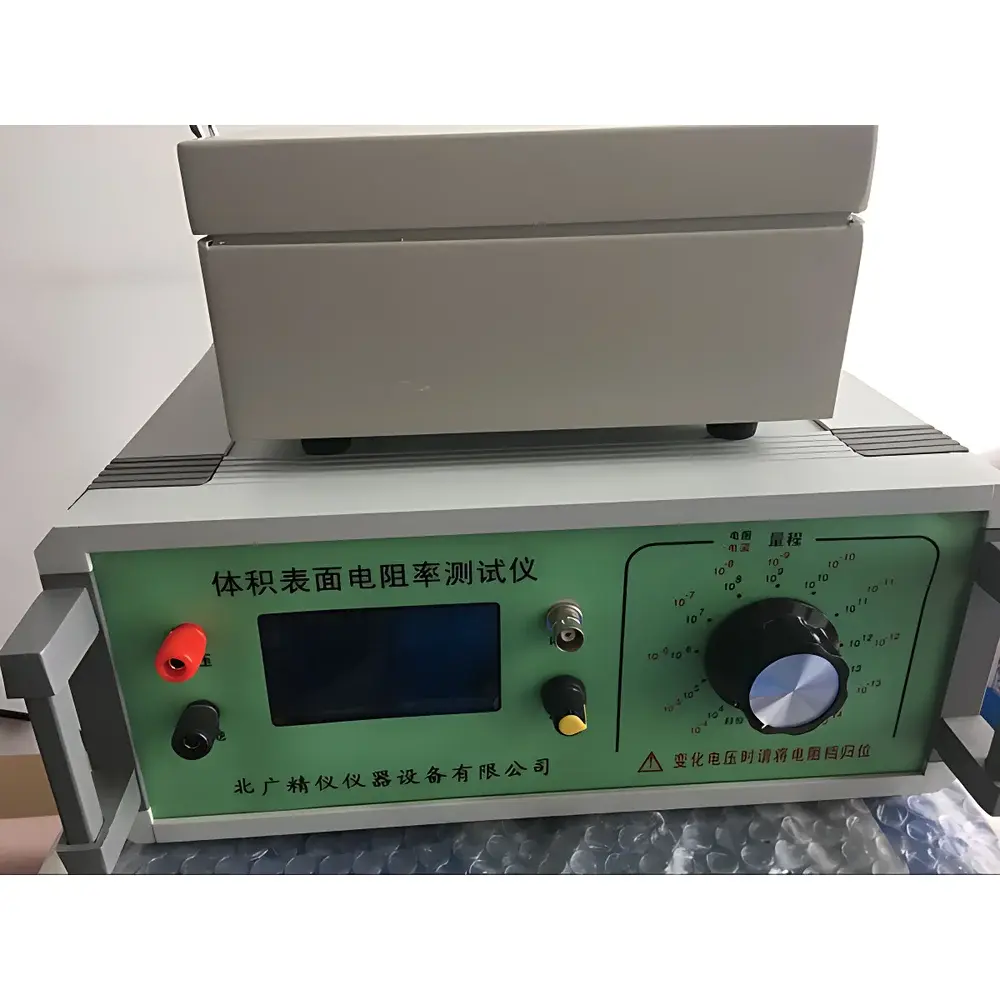
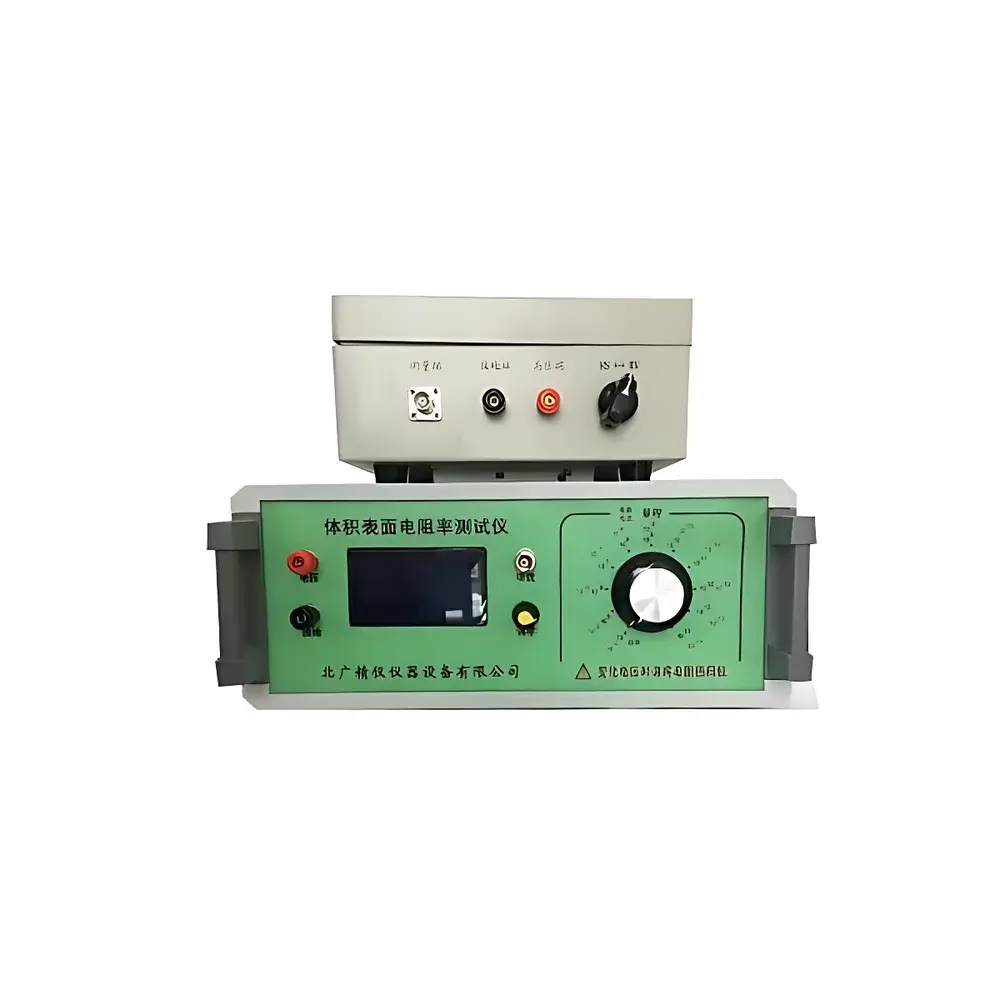
Beijing North Guang Precision Instrument BEST-1211 Volume & Surface Resistivity Tester for Silicone Rubber and Insulating Materials
| Brand | Beijing North Guang Precision Instrument |
|---|---|
| Origin | Beijing, China |
| Manufacturer Type | OEM Manufacturer |
| Product Origin | Domestic (China) |
| Model | BEST-1211 |
| Price | USD 1,050 (FOB Beijing) |
| Test Voltage Range | DC 10 V / 50 V / 100 V / 500 V / 1000 V |
| Resistance Measurement Range | 1×10⁴ Ω to 1×10¹⁸ Ω |
| Current Measurement Range | 2×10⁻⁴ A to 1×10⁻¹⁶ A |
| Operating Temperature | 0–40 °C |
| Relative Humidity | ≤70 % RH |
| Power Supply | AC 220 V ±10 %, 50 Hz |
| Dimensions | 285 mm × 245 mm × 120 mm |
| Weight | 6 kg (main unit) |
Overview
The Beijing North Guang Precision Instrument BEST-1211 Volume & Surface Resistivity Tester is a precision electrometric instrument engineered for the quantitative characterization of electrical insulation properties in elastomeric, polymeric, and composite materials—particularly silicone rubber, antistatic polymers, and dielectric substrates. It operates on the fundamental principle of Ohm’s Law (R = U/I) combined with standardized electrode configurations defined in ASTM D257, IEC 60093, and GB/T 1692–2008. The system measures both volume resistivity (ρv, in Ω·m) and surface resistivity (ρs, in Ω/sq) by applying a stable, calibrated DC voltage across precisely spaced electrodes and quantifying the resulting leakage current under controlled electrostatic conditions. Its dual-mode architecture enables traceable, high-impedance measurements up to 10¹⁸ Ω—critical for evaluating charge dissipation behavior in ESD-sensitive environments, cleanroom flooring, aerospace gaskets, and medical-grade silicone components.
Key Features
- High-accuracy dual-range electrometer based on Intel® large-scale integrated circuit architecture, ensuring low noise, minimal drift, and long-term stability.
- Direct digital display with dual 3½-digit readouts: simultaneous real-time indication of resistance (Ω) and current (A) without manual scaling.
- Selectable test voltages: 10 V, 50 V, 100 V, 500 V, and 1000 V DC—fully compliant with material-specific test protocols including GB/T 1692–2008 (vulcanized rubber), ASTM D991 (elastomers), and IEC 61340–2–3 (electrostatics).
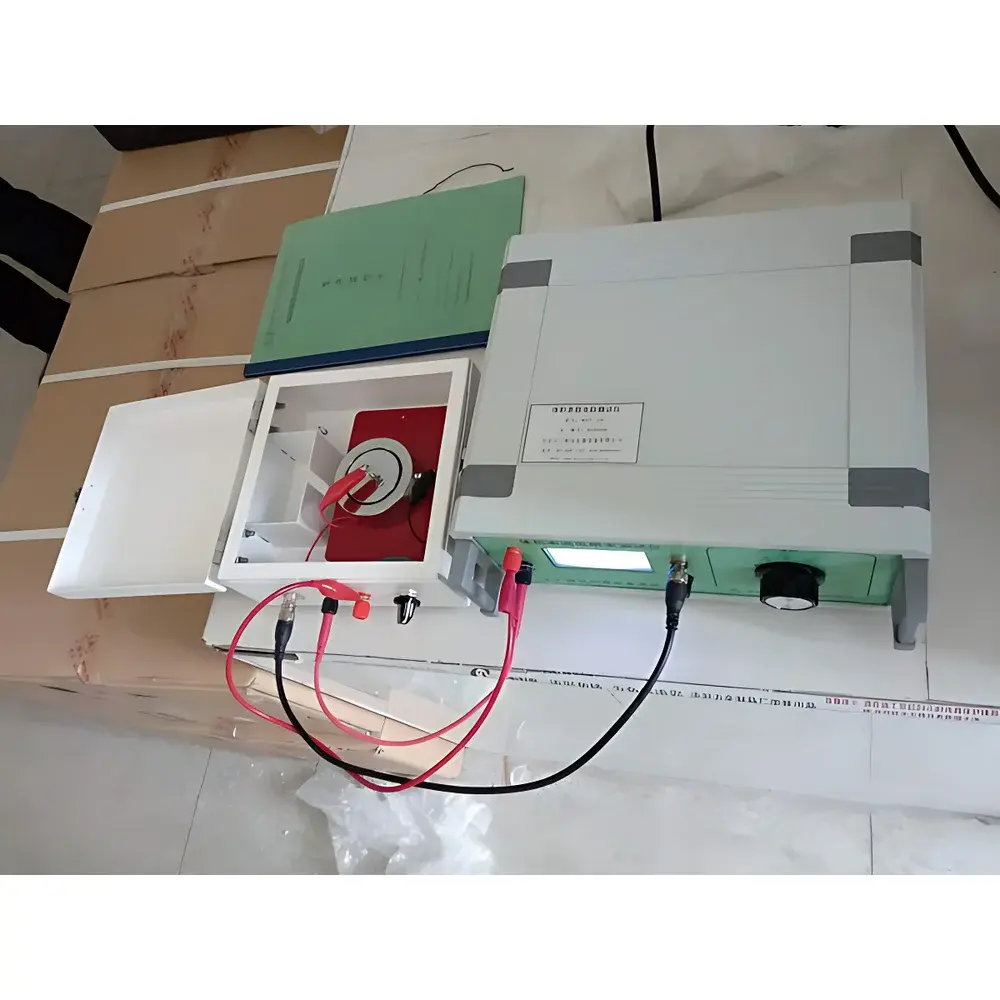
- Three-electrode configuration (guarded/unguarded/protective) supports both volume and surface resistivity determinations per ISO 3915 and ASTM D257 Annex A3.
- Integrated shielded test enclosure minimizes electromagnetic interference and stray capacitance—essential for sub-picoampere current resolution (down to 1×10⁻¹⁶ A).
- Robust mechanical design: compact footprint (285 × 245 × 120 mm), lightweight chassis (6 kg), and low power consumption (~10 W) enable benchtop deployment in QC labs, R&D facilities, and production line testing stations.
Sample Compatibility & Compliance
The BEST-1211 is validated for use with solid insulating materials ≥0.5 mm thick, including silicone rubber sheets, EPDM, fluorosilicone, polyimide films, antistatic plastics, and conductive composites. Electrode geometry conforms to standard circular three-terminal arrangements (e.g., 50 mm diameter guarded electrode, 60 mm outer ring). All measurements adhere to internationally recognized metrological frameworks: calibration traceability to national standards (CNAS-accredited), compliance with GLP documentation requirements, and full alignment with test method validity criteria in ASTM D257–22, IEC 60093:1980+A1:2016, and GB/T 1692–2008. For regulated industries—including medical device manufacturing and aerospace component qualification—the instrument supports audit-ready data recording when used with external logging software meeting FDA 21 CFR Part 11 electronic record integrity requirements.
Software & Data Management
While the BEST-1211 operates as a standalone hardware platform, its analog/digital output interfaces (RS-232 or optional USB-to-serial adapter) allow integration with third-party data acquisition systems. Users may export time-stamped resistance and current values into CSV or Excel formats for post-test statistical analysis (e.g., coefficient of variation, confidence intervals per ISO/IEC 17025). When deployed in GxP-regulated environments, the instrument supports manual entry of sample IDs, operator initials, environmental logs (temperature/humidity), and test voltage settings—enabling full traceability during internal audits or regulatory inspections. No proprietary software is bundled; instead, compatibility is maintained with industry-standard platforms such as LabVIEW™, MATLAB®, and custom Python-based QA dashboards.
Applications
- Quality control of silicone rubber formulations for automotive seals, medical tubing, and high-voltage insulation components.
- ESD compliance verification of antistatic footwear, workbench mats, and raised access floor systems per ANSI/ESD S20.20 and IEC 61340–4–1.
- Volume resistivity mapping of polymer blends during formulation development and aging studies (thermal/UV exposure).
- Surface resistivity validation of coated substrates—e.g., conductive ink patterns on flexible electronics or antifouling marine coatings.
- Low-current characterization in optoelectronic research: dark current measurement of photodiodes, leakage analysis of OLED encapsulation layers.
- Academic and industrial research in dielectric physics, space charge dynamics, and charge transport modeling in soft matter.
FAQ
What standards does the BEST-1211 comply with?
It meets the electrical measurement requirements of ASTM D257, IEC 60093, GB/T 1692–2008, and ISO 3915 for volume and surface resistivity testing of solid insulating materials.
Can it measure both volume and surface resistivity on the same sample?
Yes—via physical reconfiguration of the three-electrode set: volume resistivity uses the guarded electrode configuration, while surface resistivity employs the unguarded pair with protective ring grounding.
Is calibration required before each test?
Zero adjustment is performed once per session with “Rx” terminals open; full recalibration is recommended annually or after repair, using NIST-traceable high-resistance standards.
Does the instrument support automated voltage ramping or timed measurements?
No—it is manually operated per standardized dwell times (e.g., 60 s polarization per ASTM D257); however, external programmable power supplies can be synchronized via trigger input.
What safety precautions are essential during operation?
Operators must avoid contact with HV terminals during energized tests, ensure proper grounding of the shielded enclosure, never short-circuit the “Rx” terminals, and always de-energize and discharge before electrode handling.



