
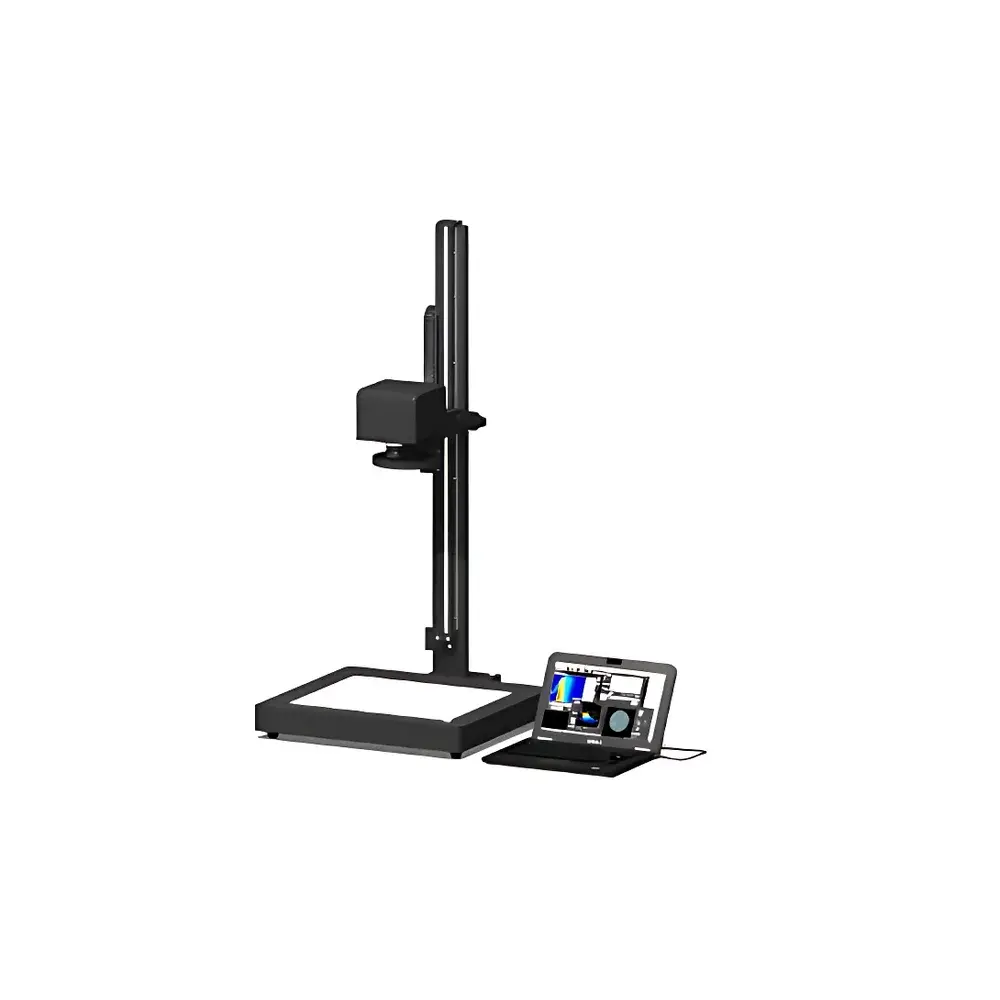
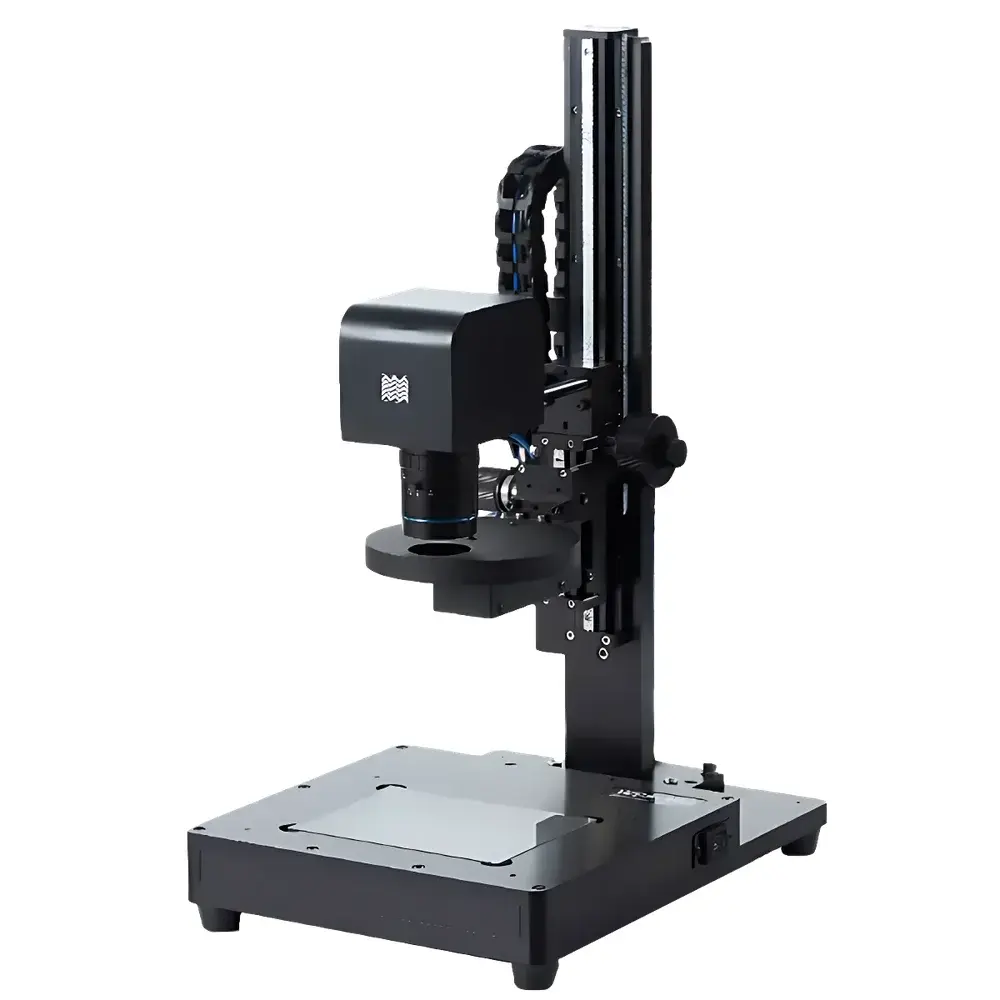
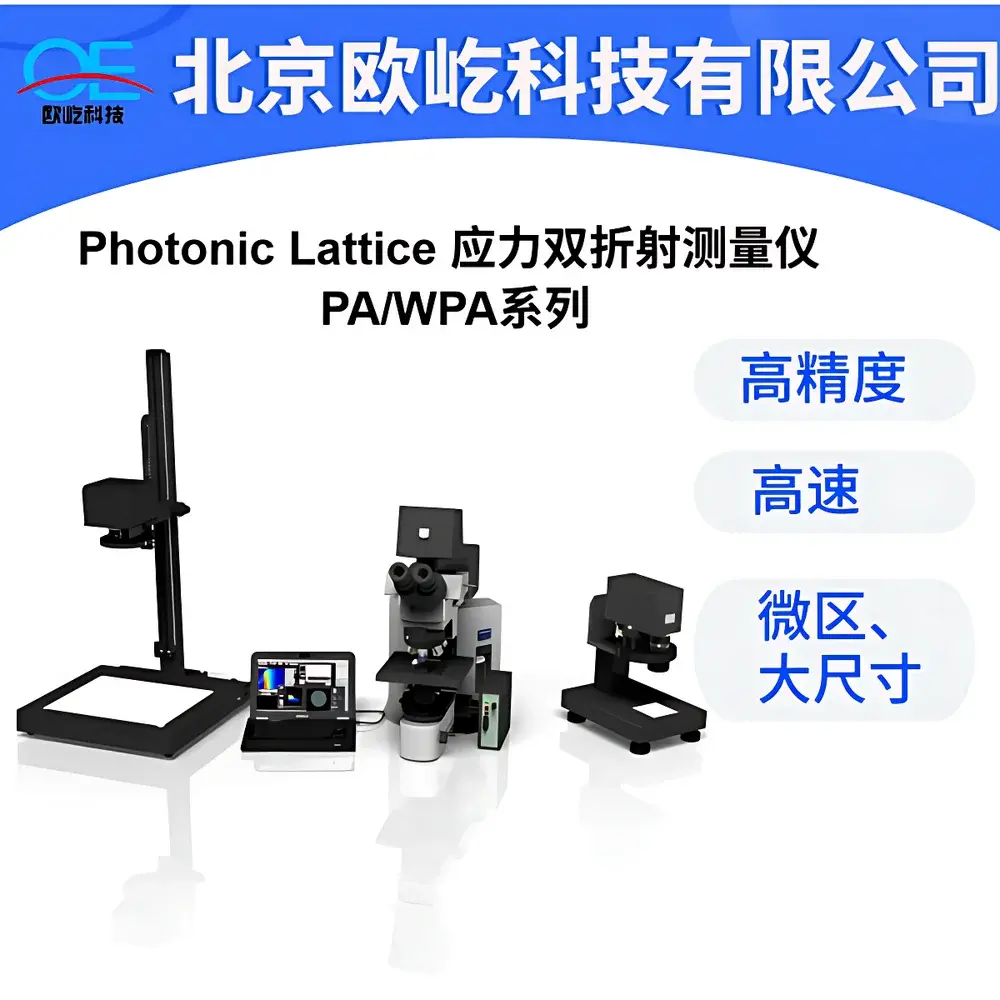
Photonic Lattice WPA-200 Photoelastic Stress Analyzer
| Brand | Photonic Lattice |
|---|---|
| Origin | Japan |
| Model | WPA-200 |
| Measurement Principle | Full-field quantitative photoelasticity via monochromatic polarized light imaging |
| Phase Retardation Range | 0–3500 nm |
| Wavelength Options | 520 nm, 543 nm, 575 nm |
| Minimum Resolution | 0.001 nm |
| Repeatability (σ) | < 0.1 nm |
| Field of View (Standard) | 218 × 290 mm to 360 × 480 mm |
| Output Data | Retardation (nm), Slow Axis Orientation (°), Optional Stress Conversion (MPa) |
| Imaging Sensor | High-sensitivity CCD camera |
| Measurement Time per Frame | ≤ 3 s |
| Software Options | Real-time analysis, Lens-specific evaluation module, External control interface, CD mode |
Overview
The Photonic Lattice WPA-200 Photoelastic Stress Analyzer is a full-field, non-contact optical instrument engineered for quantitative birefringence measurement in transparent and semi-transparent materials. It operates on the principle of quantitative photoelasticity—utilizing precisely controlled monochromatic polarized light at selectable wavelengths (520 nm, 543 nm, or 575 nm) to detect phase retardation induced by internal mechanical stress. Unlike point-scanning or interferometric systems, the WPA-200 captures the entire field of view simultaneously using a high-resolution CCD sensor, enabling spatially resolved, two-dimensional mapping of both retardation magnitude (0–3500 nm) and slow-axis orientation (±0.1° accuracy). This capability supports direct correlation between optical path difference and residual stress distribution—particularly critical in precision optics, injection-molded polymer components, and thin-film laminates where localized stress gradients affect optical performance, durability, and dimensional stability.
Key Features
- Full-field acquisition: Single-shot, simultaneous measurement across standard FOV dimensions of 218 × 290 mm up to 360 × 480 mm—eliminating mechanical scanning artifacts and reducing measurement uncertainty.
- Sub-nanometer resolution: Achieves 0.001 nm minimum retardation resolution with repeatability better than ±0.1 nm (1σ), validated under controlled thermal and vibration-isolated conditions.
- Multi-wavelength operation: Three discrete LED-based illumination sources enable wavelength-dependent birefringence characterization—essential for dispersion-corrected stress analysis in multi-layered or chromatic-sensitive substrates.
- Zero-moving-part optical architecture: No rotating waveplates or motorized polarizers—ensuring long-term calibration stability and minimal maintenance requirements over extended operational cycles.
- Real-time visualization: Live 2D retardation maps rendered with color-coded iso-retardation contours and vector-aligned slow-axis overlays—supporting immediate qualitative assessment during process monitoring or QC inspection.
- Modular software suite: Includes optional lens-specific evaluation algorithms compliant with ISO 10110-5 for optical element certification, as well as external trigger and API support for integration into automated production lines.
Sample Compatibility & Compliance
The WPA-200 is validated for use with isotropic and anisotropic dielectric materials exhibiting measurable photoelastic response, including but not limited to optical-grade polymers (PC, PET, PVA, COP, PMMA, APEL, COC), fused silica, crystalline quartz, sapphire, single-crystal diamond, and multilayer AR/HR coatings. Its measurement protocol aligns with established standards for residual stress evaluation in transparent media—including ASTM D1003 (haze/transmittance correlation), ISO 11475 (optical quality of plastic sheets), and JIS K 7104 (birefringence testing of plastics). When configured with stress conversion firmware, output values are traceable to calibrated photoelastic coefficients (Cp) per material specification—enabling MPa-level quantification consistent with ISO 4892-2 environmental aging validation workflows.
Software & Data Management
The native WPA Control Suite provides comprehensive data acquisition, post-processing, and reporting functionality. All measurements are stored in vendor-neutral HDF5 format with embedded metadata (wavelength, exposure time, lens ID, calibration timestamp). The software supports GLP-compliant audit trails—including user login logging, parameter change history, and electronic signature capture for QA/QC documentation. Optional modules include CD Mode for comparative delta-analysis across production lots, batch export to CSV/Excel for SPC charting, and DICOM-compatible export for integration with metrology data lakes. External control via TCP/IP or USB-serial protocols allows synchronization with environmental chambers, load frames, or robotic handling systems—facilitating in situ stress evolution studies under thermal cycling or mechanical loading.
Applications
- Optical component manufacturing: Quantitative verification of stress-induced wavefront distortion in molded lenses, prisms, light guides, and AR-coated display substrates prior to assembly.
- Automotive and aerospace transparency: Residual stress profiling in polycarbonate glazing, head-up display (HUD) combiners, and IR-transmissive windows subjected to thermoforming or adhesive lamination.
- Pharmaceutical packaging: Birefringence screening of cyclic olefin copolymer (COC) vials and syringes to ensure mechanical integrity and minimize leachables risk under sterilization conditions.
- Microelectronics substrate qualification: Stress mapping on glass or quartz wafers used in MEMS packaging, where thermal mismatch-induced birefringence compromises photolithography alignment fidelity.
- Academic and industrial research: In-situ observation of stress relaxation kinetics in polymer melts, crystallization fronts in semicrystalline films, and defect propagation in transparent ceramics under controlled strain.
FAQ
What is the typical calibration interval for the WPA-200?
Photonic Lattice recommends annual factory recalibration; however, daily verification using NIST-traceable reference retarders (e.g., Berek-type standards) is supported via built-in calibration routines.
Can the WPA-200 measure through curved or thick samples?
Yes—provided the sample exhibits sufficient transmission (>15% at selected wavelength) and surface flatness within ±2 µm over the measured area; curvature compensation is available in Lens Analysis Module v3.2+.
Is FDA 21 CFR Part 11 compliance available?
Full Part 11 functionality—including role-based access control, electronic signatures, and immutable audit logs—is enabled when operating the WPA Control Suite in validated GxP mode with network authentication server integration.
Does the system require darkroom conditions?
Ambient light rejection is achieved via narrow-band spectral filtering and synchronous lock-in detection; operation under typical laboratory lighting (≤500 lux) is fully supported without enclosure.
How is stress quantification performed?
Stress values (MPa) are derived from retardation using the material-specific stress-optic coefficient (Cp) entered manually or loaded from a certified database; no empirical fitting or curve interpolation is applied to raw pixel data.



