
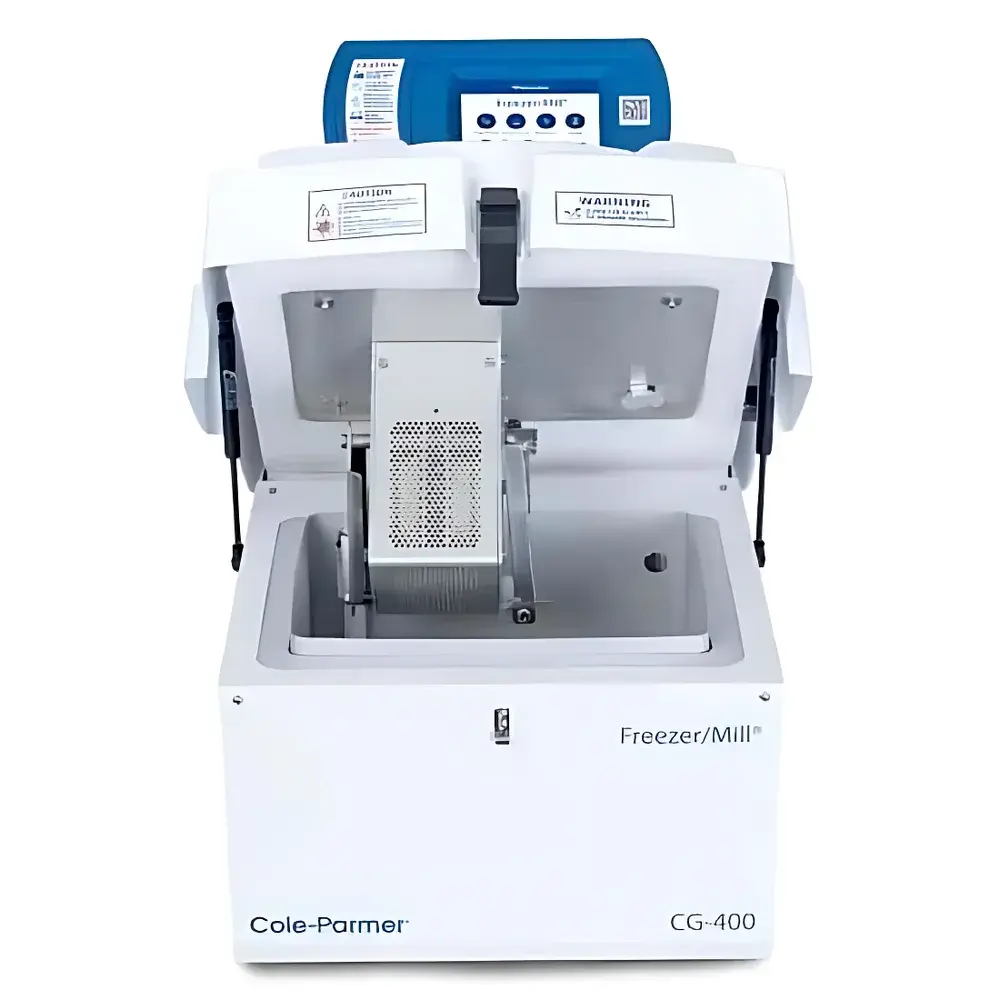
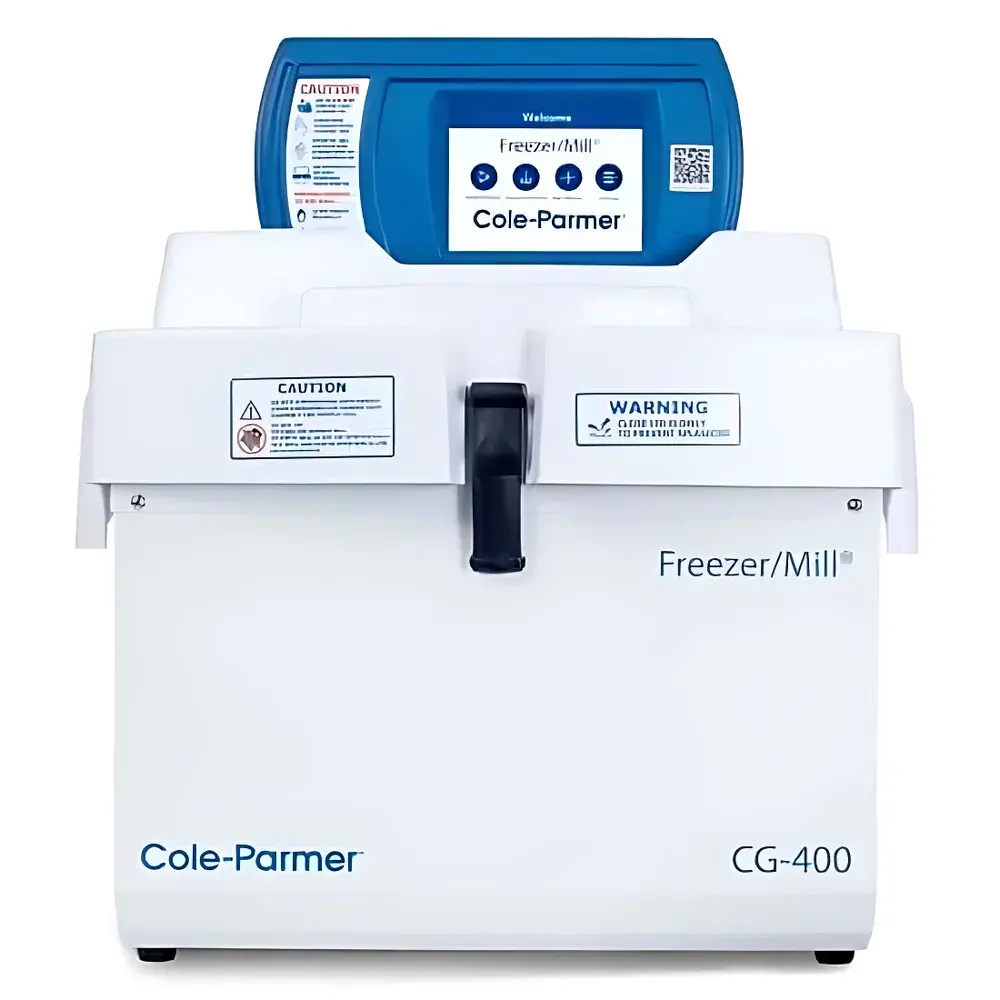
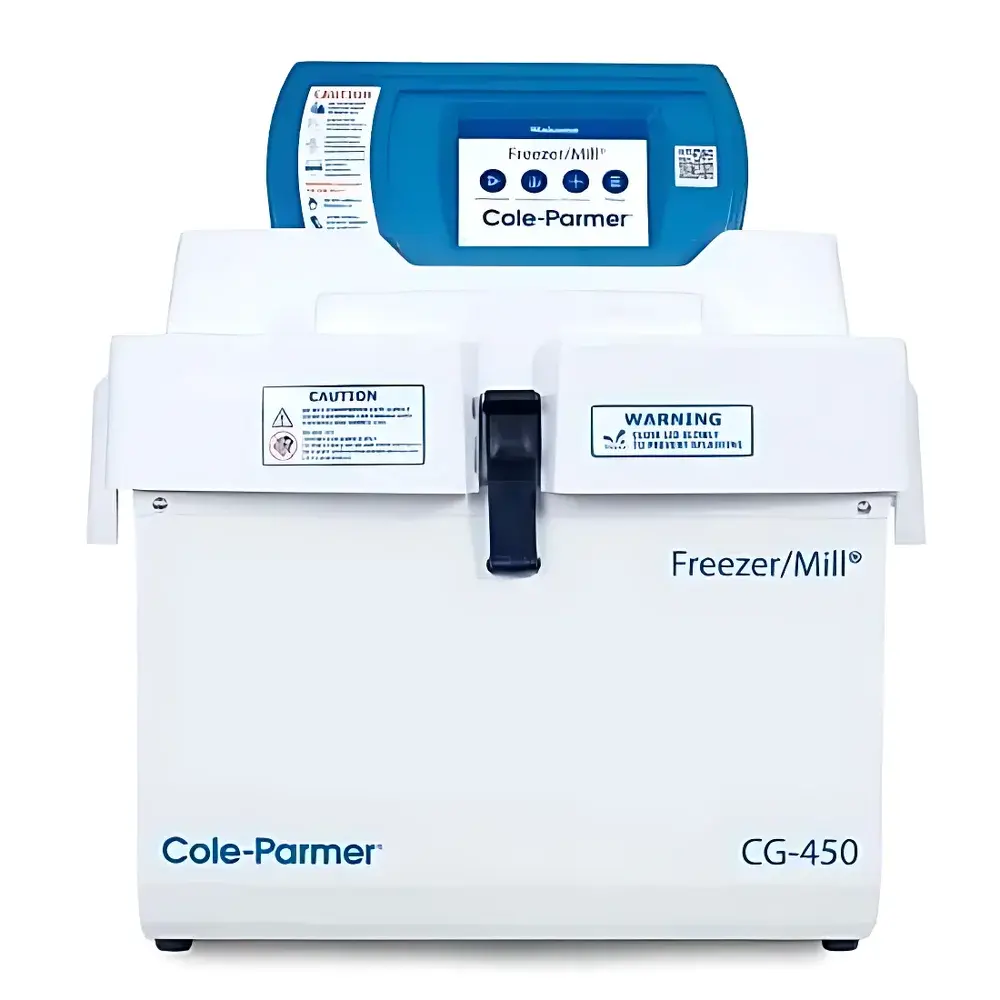
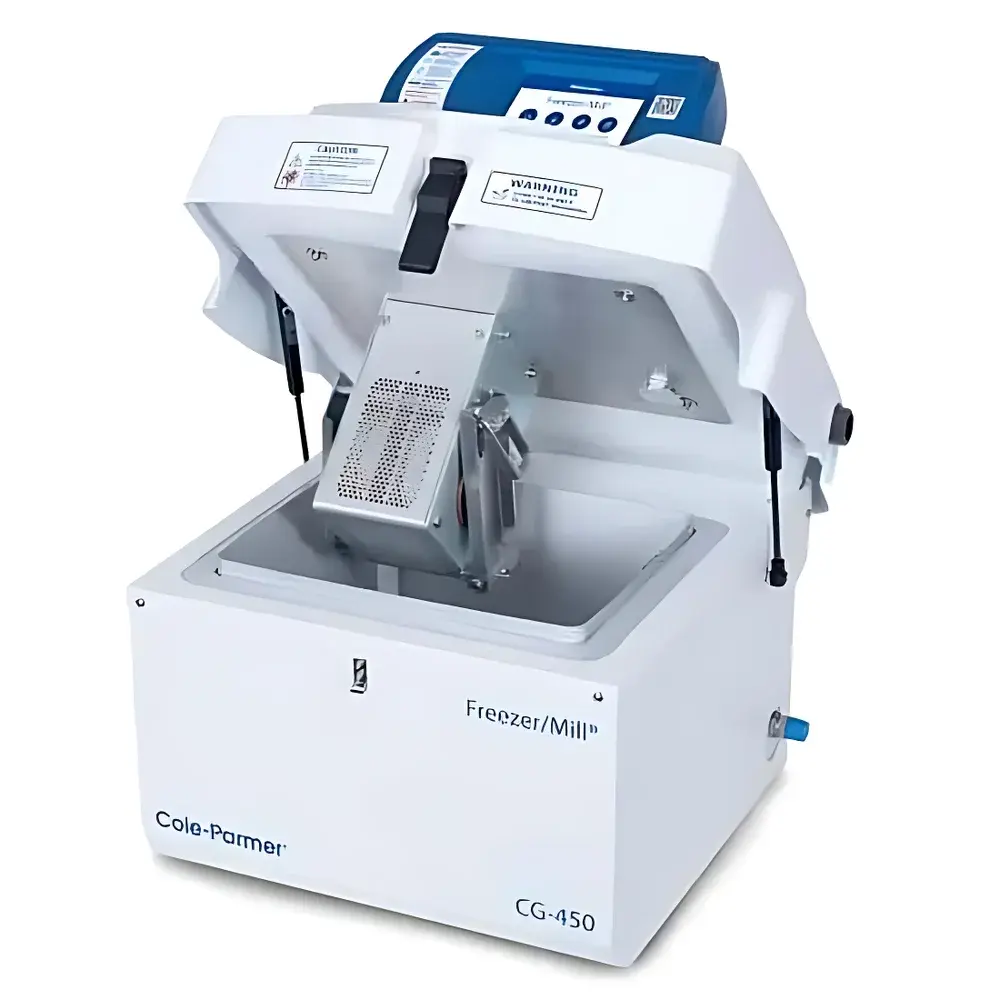
Cole-Parmer Spex Freezer/Mill® CG-400 and CG-450 Cryogenic Grinder
| Brand | Cole-Parmer |
|---|---|
| Origin | USA |
| Manufacturer Type | Authorized Distributor |
| Product Category | Imported Instrument |
| Model | CG-400 / CG-450 |
| Instrument Type | Cryogenic Grinder |
| Sample Compatibility | Frozen or Temperature-Sensitive Materials |
| Operating Principle | Electromagnetic Drive with Liquid Nitrogen Cooling |
Overview
The Cole-Parmer Spex Freezer/Mill® CG-400 and CG-450 are high-performance cryogenic grinders engineered for reproducible, ultra-low-temperature sample pulverization. Based on the legacy Spex Freezer/Mill® platform—first introduced in the 1960s—the CG-400 and CG-450 models utilize electromagnetic drive technology to accelerate a stainless-steel impactor within a sealed, liquid nitrogen–cooled grinding chamber. Unlike mechanical or rotary grinders, this system eliminates rotating shafts, belts, or motors in direct contact with the grinding assembly, minimizing heat generation and vibration. Samples are placed inside cryo-resistant grinding vials (e.g., stainless steel or hardened alloy), which are fully immersed in liquid nitrogen during operation—ensuring sustained sub-196 °C conditions without direct LN₂ contact with the sample. This thermal isolation preserves thermolabile analytes, prevents polymer chain mobility, suppresses enzymatic activity, and inhibits nucleic acid degradation—critical for genomic, proteomic, and metabolomic workflows.
Key Features
- Electromagnetic impactor drive: No gears, bearings, or motor couplings—reducing mechanical wear, acoustic noise (<75 dBA), and thermal drift.
- Integrated liquid nitrogen level sensor with auto-fill interlock: Halts operation and triggers LN₂ replenishment when reservoir falls below safe threshold, preventing sample warming or instrument damage.
- Full-touchscreen programmable interface: Configurable parameters include pre-chill duration (0–300 s), impact frequency (1–10 Hz), grind cycle time (1–10 min), cooling interval between cycles (0–600 s), and total cycle count (1–99).
- Dual-chamber design (CG-450): Includes dedicated pre-cooling chamber for rapid sample equilibration prior to grinding—improving throughput for high-volume labs.
- Interlocked safety door and pressure-relief venting: Complies with IEC 61010-1 for laboratory equipment safety; prevents accidental exposure during LN₂ handling.
- Traceable audit trail capability (via optional software module): Supports GLP/GMP environments requiring 21 CFR Part 11–compliant electronic records.
Sample Compatibility & Compliance
The CG-400/CG-450 accommodates diverse biological, polymeric, mineral, and forensic specimens—including hair, bone, cartilage, rubber, PTFE, nylon, plant tissue, pharmaceutical tablets, and electronic components. Its consistent sub-196 °C operating environment meets ASTM E1847 (Standard Practice for Cryogenic Grinding of Polymers) and ISO 17025 requirements for method validation in accredited testing laboratories. For life science applications, it satisfies USP recommendations for low-temperature homogenization of biologics and supports RNA Integrity Number (RIN)-preserving protocols validated per MIQE guidelines. All grinding vials conform to ISO 8573-1 Class 0 compressed air purity standards when used with certified LN₂ sources.
Software & Data Management
The embedded control firmware logs all run parameters—including actual LN₂ consumption, ambient temperature, vial ID (via optional RFID reader), and real-time impact energy estimation—to internal non-volatile memory. Exportable CSV reports include timestamps, operator ID, and deviation flags for out-of-spec conditions (e.g., LN₂ level drop >15% during cycle). Optional Spex Connect™ software enables remote monitoring via Ethernet/Wi-Fi, centralized method library management across multi-instrument sites, and integration with LIMS platforms through HL7 or ASTM E1384 interfaces. Audit trails record user logins, parameter changes, and emergency stops—fully compliant with FDA 21 CFR Part 11 for regulated QC/QA operations.
Applications
These instruments serve as critical front-end tools in analytical workflows demanding molecular integrity: DNA/RNA extraction from calcified tissues (e.g., ancient bone fragments, dental pulp); RoHS-compliant polymer screening for brominated flame retardants; forensic toxicology sample prep (hair, nails); pharmaceutical blend uniformity analysis; and elemental speciation in geological matrices. Documented use cases include mitochondrial DNA profiling from 5,300-year-old Tyrolean Iceman remains, post-disaster human identification (e.g., 9/11 WTC victims), and trace-level pesticide residue analysis in cereal grains. In materials science, they enable XRD- and SEM-compatible particle size reduction of brittle ceramics and battery cathode composites without phase transformation.
FAQ
How does the electromagnetic drive differ from conventional motor-driven grinders?
It eliminates rotational inertia and friction-based heating by using pulsed magnetic fields to oscillate a single impactor rod—resulting in lower thermal load, higher impact consistency, and extended maintenance intervals.
Can the CG-400/CG-450 process samples containing volatile organic compounds (VOCs)?
Yes—continuous LN₂ immersion maintains sample temperatures below −190 °C, suppressing VOC evaporation and ensuring quantitative recovery for GC-MS or TD-GC-MS workflows.
What vial materials are compatible?
Standard options include 13 mL and 25 mL stainless steel vials; optional hardened alloy (Cr-Mo-V) vials are available for abrasive mineral samples.
Is method transfer between CG-400 and CG-450 straightforward?
Yes—identical impact mechanics, vial geometry, and control architecture ensure full parameter portability; only pre-chill capacity differs.
Does the system support IQ/OQ/PQ documentation packages?
Cole-Parmer provides vendor-validated installation qualification (IQ) and operational qualification (OQ) templates aligned with ISO/IEC 17025 and GAMP 5 principles—customizable for site-specific PQ execution.



