
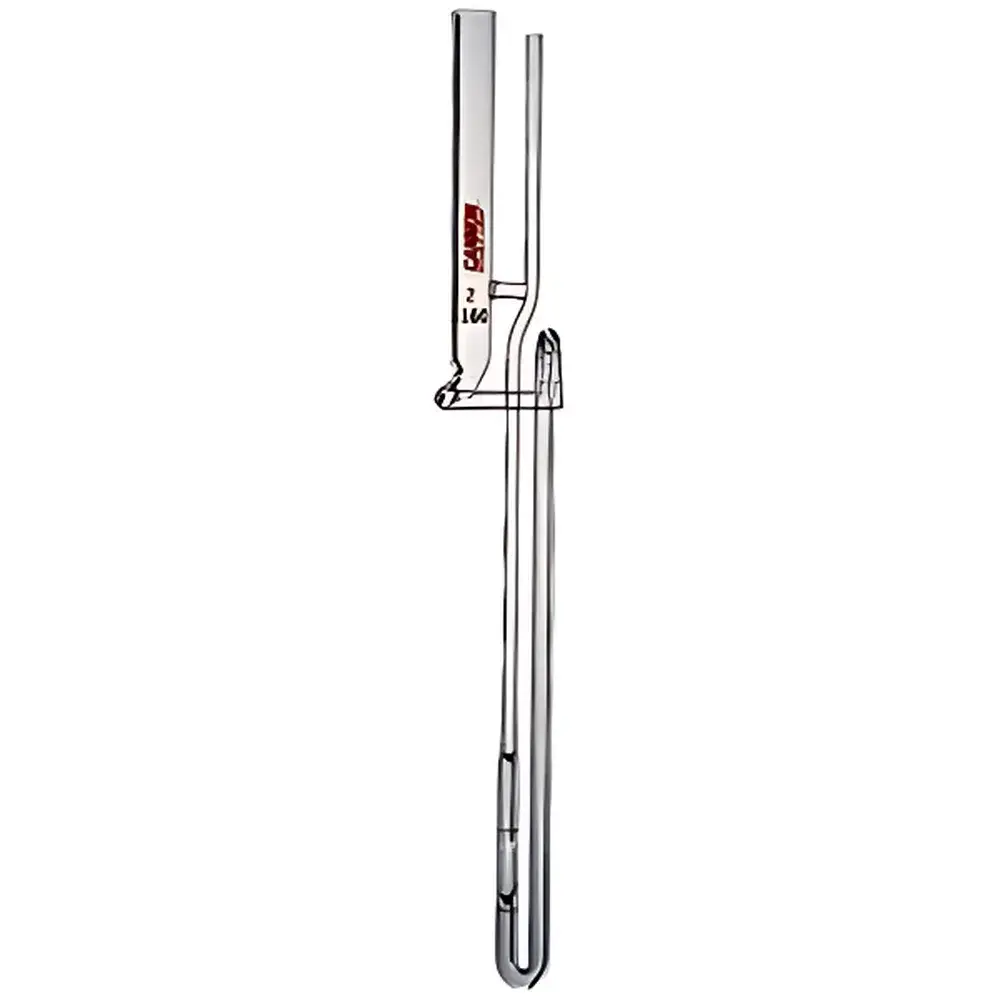
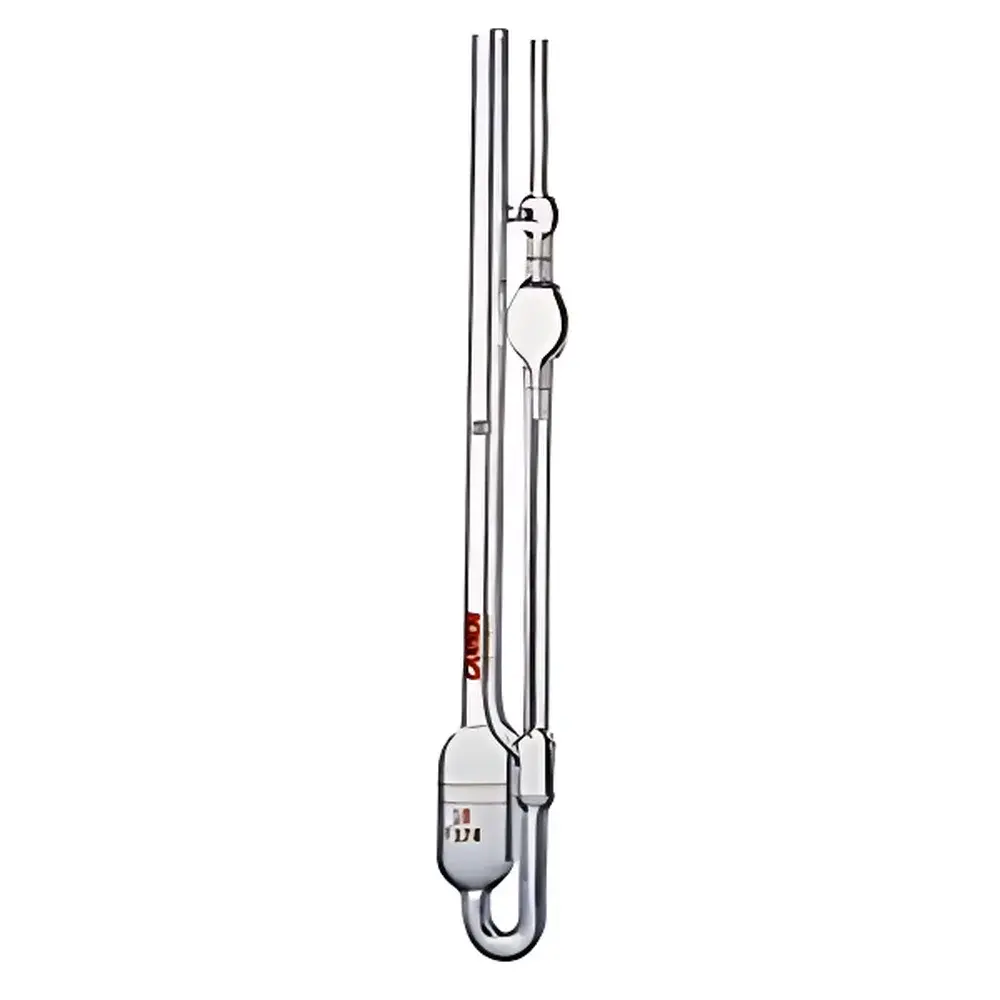
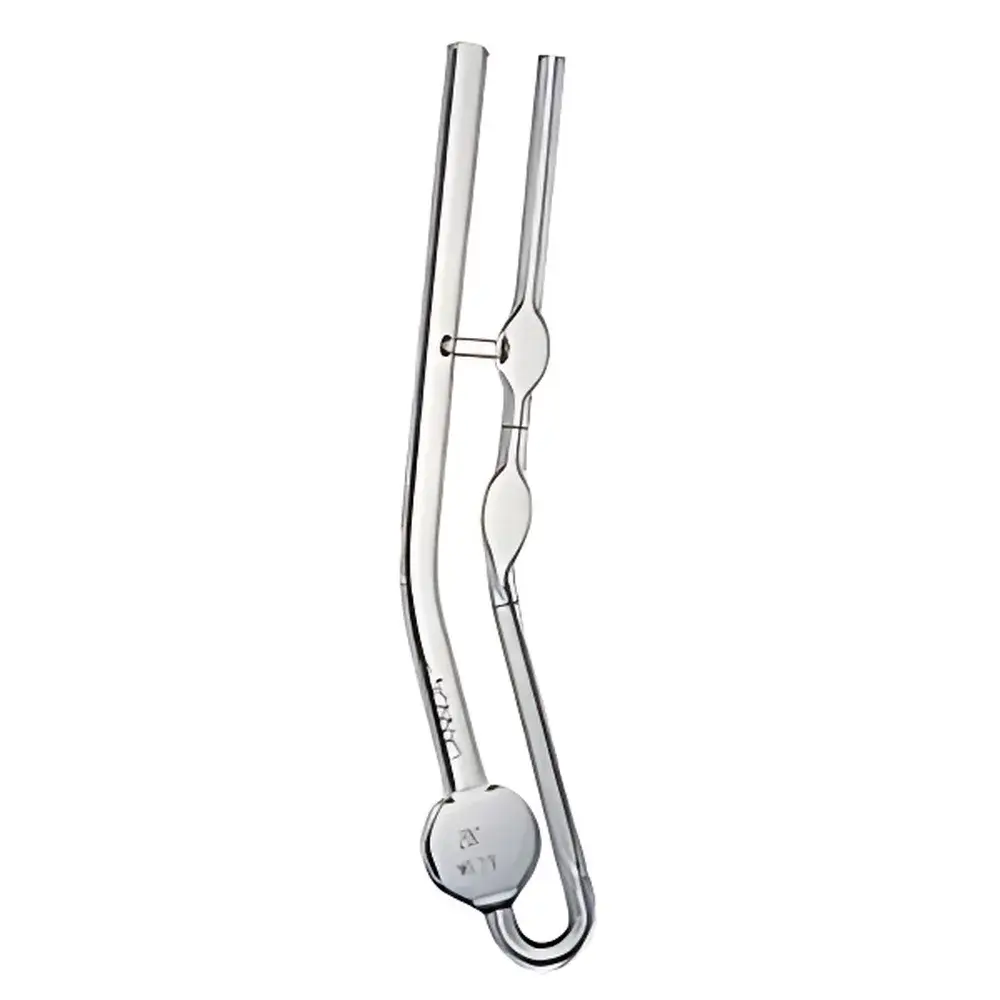
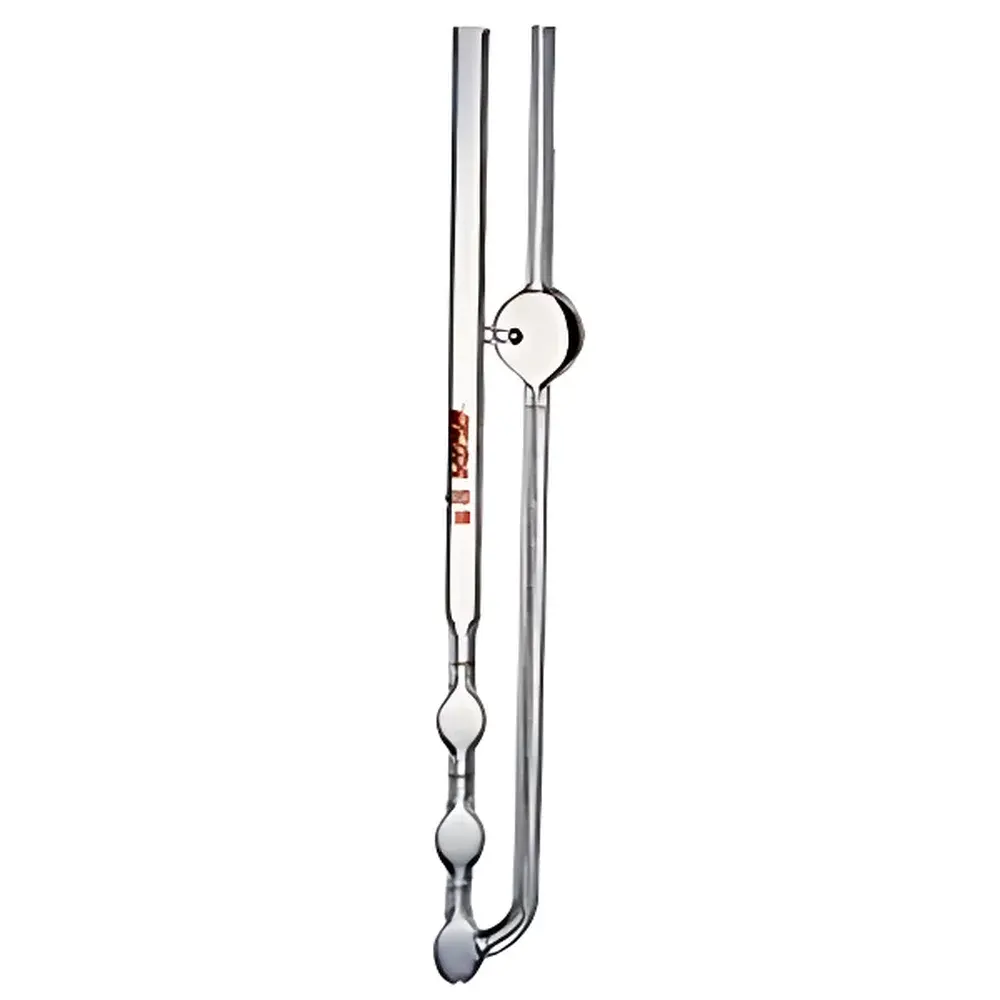
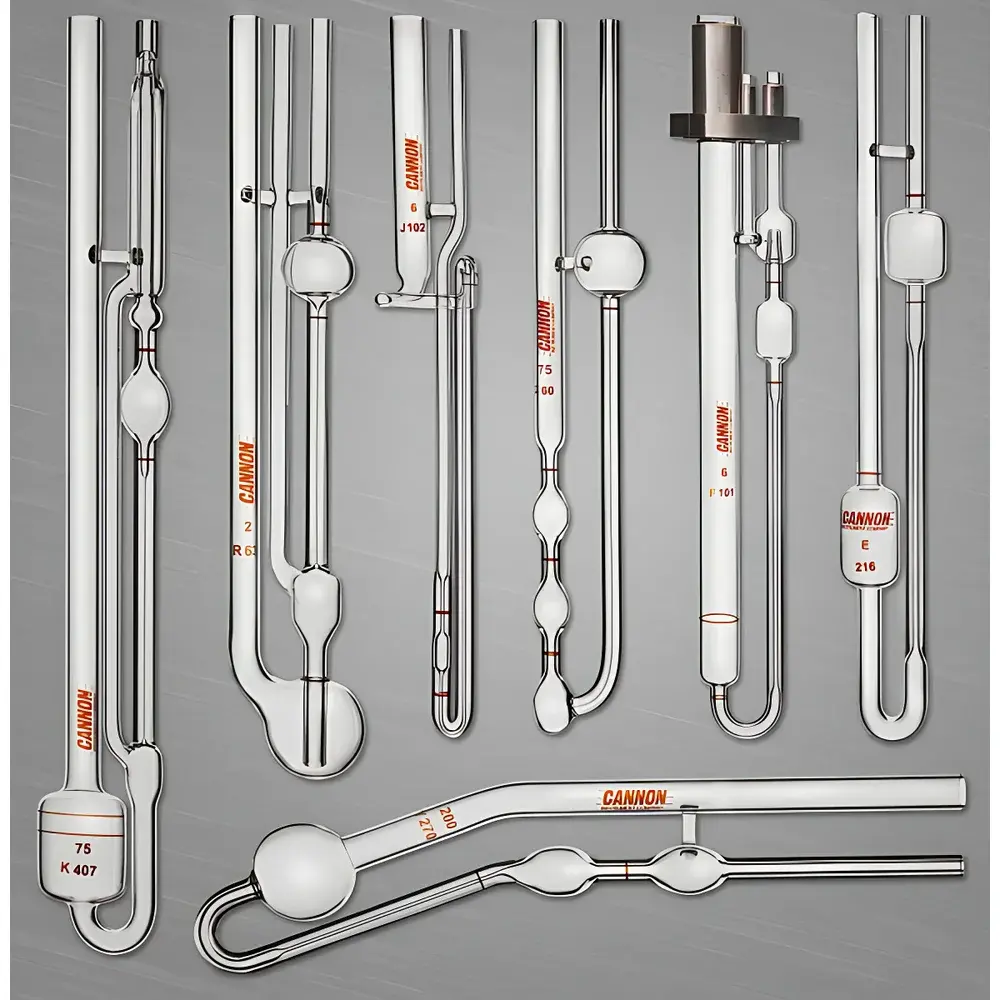
CANNON 9721-B62 Cannon-Fenske Routine Viscometer
| Brand | CANNON |
|---|---|
| Origin | USA |
| Model | 9721-B62 |
| Compliance | ASTM D445, ASTM D446, ISO 3104, ISO 3105 |
| Sample Volume | 7 mL |
| Accuracy | ±0.3% |
| Capillary Constant Range | 0.035 cSt/sec (nominal), Kinematic Viscosity Range: 7–35 cSt |
Overview
The CANNON 9721-B62 is a precision glass capillary viscometer engineered for kinematic viscosity measurement of transparent Newtonian liquids in petroleum, lubricant, and chemical laboratories. It operates on the fundamental principle of gravity-driven laminar flow through a calibrated capillary tube, where kinematic viscosity (ν) is calculated from the efflux time (t) and instrument-specific capillary constant (C): ν = C × t. This method conforms strictly to ASTM D445 (Standard Test Method for Kinematic Viscosity of Transparent and Opaque Liquids) and ISO 3104, ensuring traceable, internationally recognized results. Designed for routine QC and R&D applications, the 9721-B62 belongs to the Cannon-Fenske Routine series — optimized for rapid, operator-independent measurements without kinetic energy correction across its designated range. Its robust U-tube geometry, fused-joint construction, and thermally stable borosilicate glass (3.3) ensure long-term dimensional integrity under repeated thermal cycling in constant-temperature baths (e.g., 40 °C, 100 °C per ASTM D445).
Key Features
- Manufactured in the USA to exacting CANNON specifications, with individual calibration per ASTM D446 and certified capillary constant provided on traceable calibration certificate
- Optimized for transparent Newtonian fluids including base oils, jet fuels, hydraulic fluids, and solvents — validated for use at standard test temperatures (e.g., 40 °C and 100 °C)
- Capillary constant of 0.035 cSt/sec (nominal), supporting kinematic viscosity measurement from 7 to 35 cSt with ±0.3% repeatability under controlled bath conditions
- Requires only 7 mL sample volume — minimizing reagent consumption and enabling efficient high-throughput testing
- Fused-joint construction eliminates seal degradation and bubble entrapment risks; etched timing marks and reservoir geometry comply with ASTM D445 dimensional tolerances
- Compatible with automated timing systems (e.g., Cannon ViscoTimer™ or third-party photogate interfaces) for GLP-compliant data capture and audit trail generation
Sample Compatibility & Compliance
The 9721-B62 is validated exclusively for Newtonian, low-volatility, transparent liquids exhibiting laminar flow behavior under gravity-driven conditions. It is not suitable for non-Newtonian, particulate-laden, or highly volatile samples. All units are supplied with full compliance documentation verifying conformance to ASTM D445 (kinematic viscosity determination), ASTM D446 (specification for glass capillary viscometers), ISO 3104 (petroleum products — determination of kinematic viscosity), and ISO 3105 (calibration of glass capillary viscometers). Units intended for regulated environments support 21 CFR Part 11 readiness when paired with compliant timing and data acquisition software — including electronic signature capability, user access control, and immutable audit logs for GMP/GLP audits.
Software & Data Management
While the 9721-B62 is a passive glass instrument requiring external timing, it integrates seamlessly into digital laboratory workflows. When used with Cannon’s ViscoTimer™ system or validated third-party photogate timers, viscosity calculations are performed automatically using the certified capillary constant and temperature-corrected efflux time. Raw timing data, ambient bath temperature, operator ID, and instrument ID are logged in structured CSV or XML format. Data export supports LIMS integration and satisfies FDA 21 CFR Part 11 requirements for electronic records when deployed with appropriate validation protocols, role-based permissions, and electronic signature modules. Calibration certificates are digitally archived with version control and expiry tracking.
Applications
- Quality control of aviation turbine fuels (Jet A, JP-8) per ASTM D1655 and DEF STAN 91-91
- Viscosity grading of engine oils (SAE J300) and hydraulic fluids (ISO VG classification)
- Stability assessment of formulated lubricants during oxidation or additive depletion studies
- Batch release testing of white mineral oils and synthetic esters in pharmaceutical excipient manufacturing (USP )
- Method transfer and reference standard verification in ISO/IEC 17025-accredited testing laboratories
- Teaching and demonstration of fundamental rheological principles in university physical chemistry and petroleum engineering labs
FAQ
Is the 9721-B62 suitable for measuring dark or opaque oils?
No — this model is designed exclusively for transparent Newtonian liquids. For opaque samples such as asphaltene-containing residuals or heavily dyed lubricants, the Cannon-Fenske Opaque (Inverted) viscometer (e.g., model 9721-F62) is required.
Does the capillary constant change with temperature?
No — the capillary constant is a geometric property determined at 25 °C and remains invariant; however, kinematic viscosity itself is temperature-dependent, necessitating precise bath temperature control per ASTM D445.
Can this viscometer be used above 100 °C?
Yes — borosilicate glass construction permits operation up to 150 °C, though bath stability and vapor pressure management become critical; use with Cannon high-temperature oil baths and pressure-equalized caps is recommended.
What maintenance is required to sustain accuracy?
Routine cleaning with appropriate solvents (e.g., toluene for hydrocarbons, acetone for polar residues), followed by nitrogen purge and visual inspection for capillary bore integrity; recalibration is recommended annually or after mechanical shock or thermal overexposure.
How is traceability ensured for regulatory submissions?
Each unit ships with an NIST-traceable calibration certificate issued by Cannon’s ISO/IEC 17025-accredited calibration lab, listing certified capillary constant, uncertainty budget, and compliance statement against ASTM D446 — fully admissible in FDA, EPA, and EU REACH dossiers.
Related Products





