
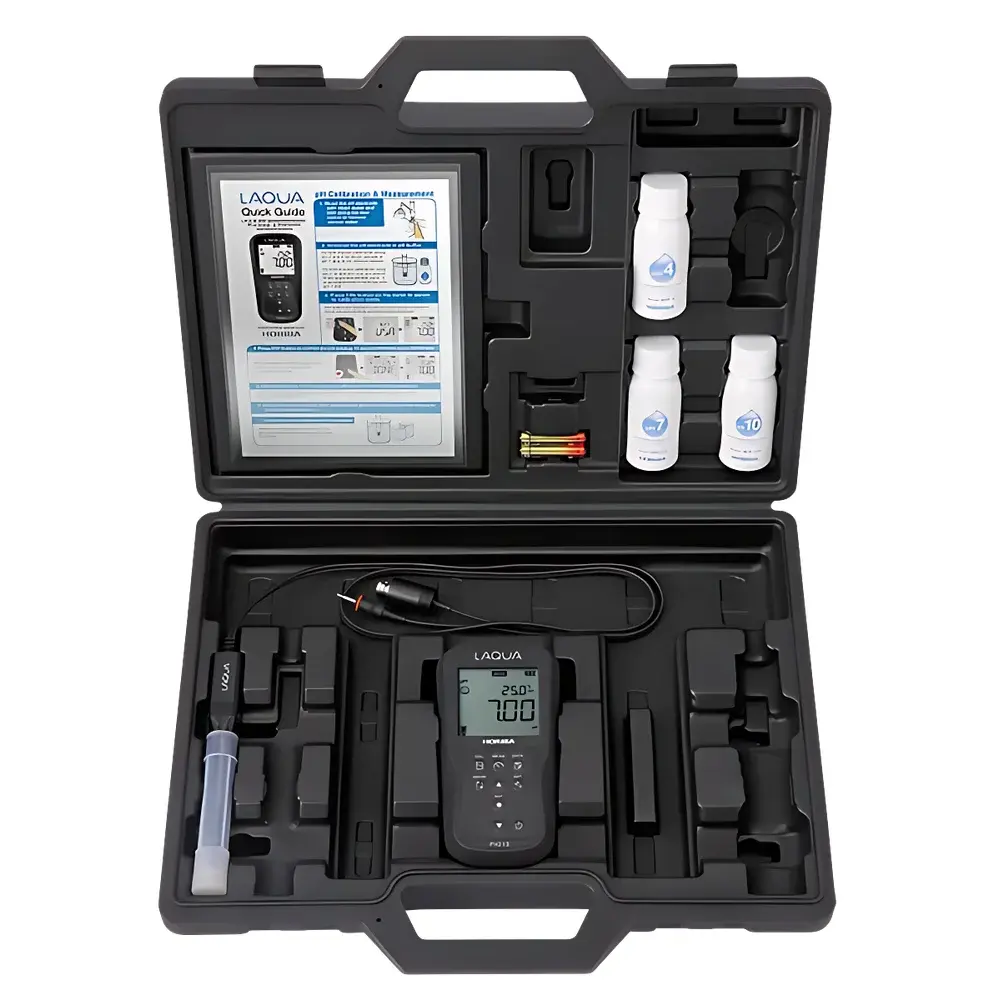
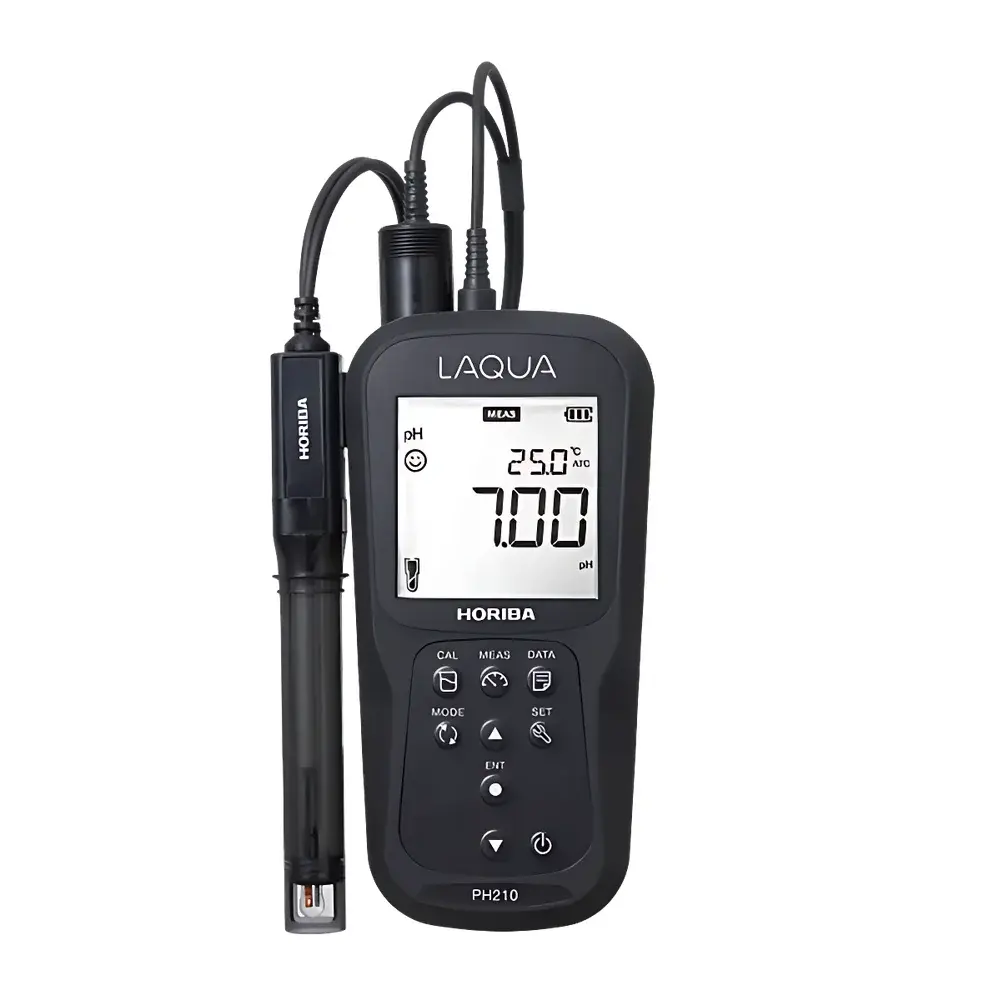
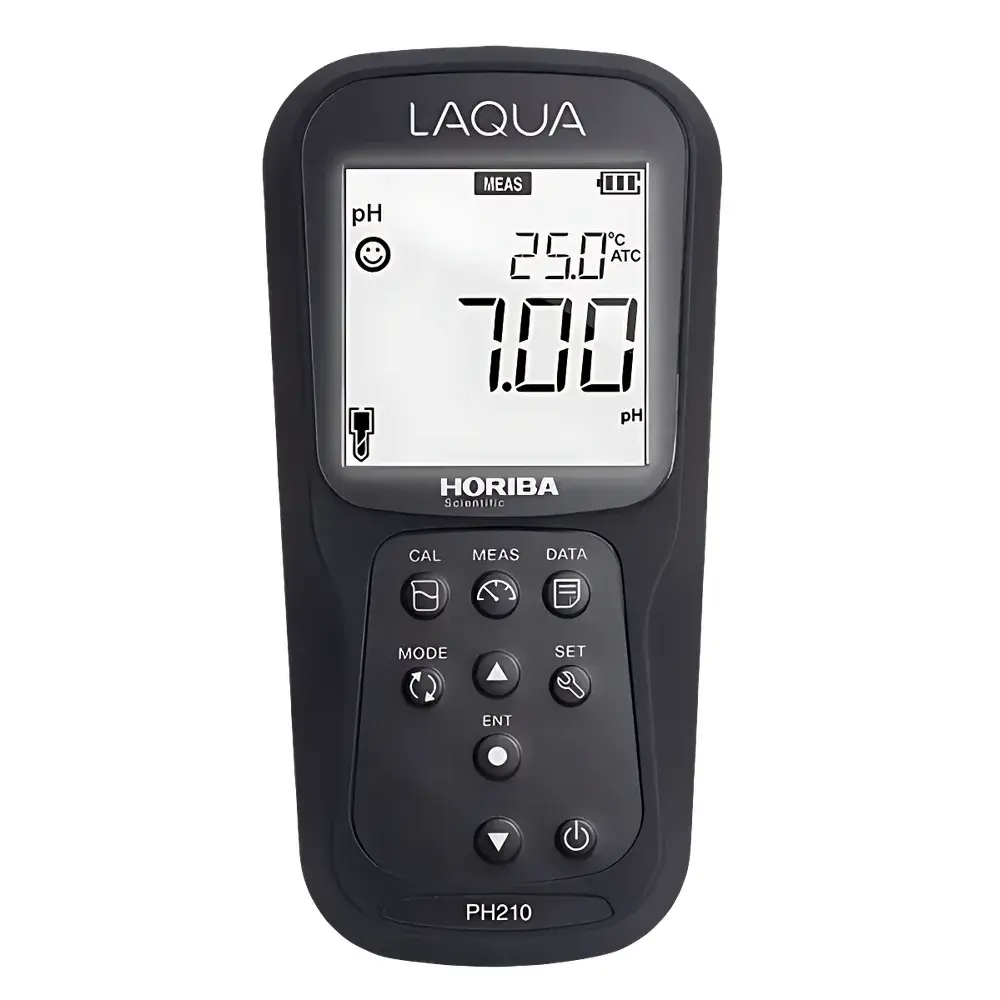
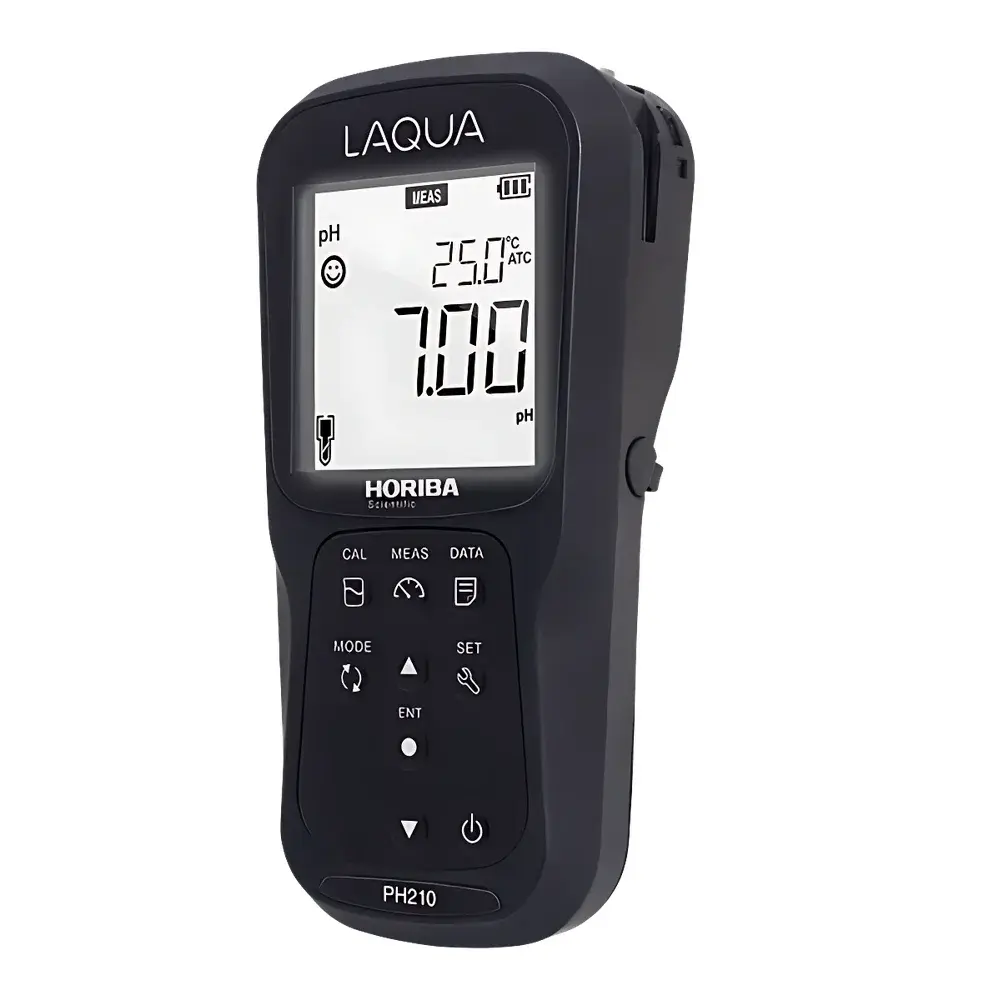
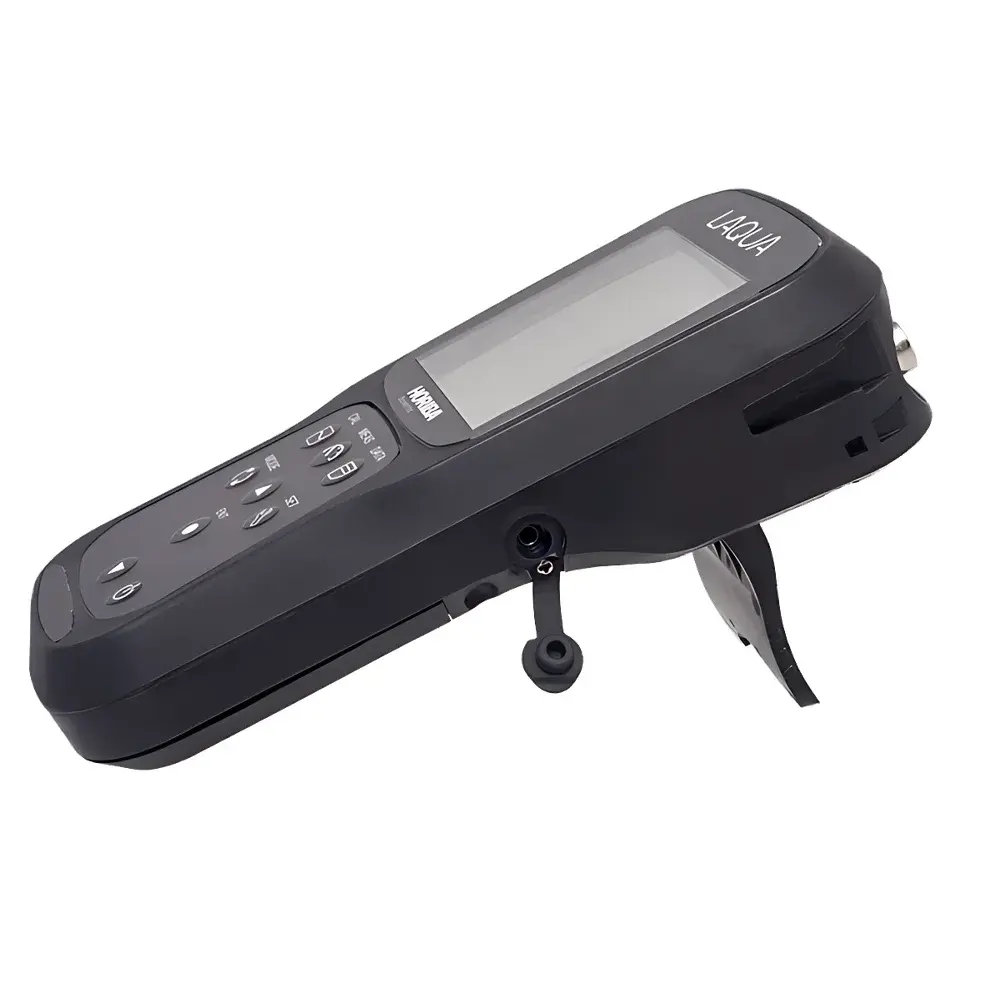
HORIBA LAQUA PH210 Portable pH/ORP/Temperature Meter
| Brand | HORIBA |
|---|---|
| Origin | Japan |
| Model | PH210 |
| Instrument Type | Portable |
| Parameter Type | Single-Parameter (pH/ORP/Temp) |
| pH Range | -2.00 to 16.00 |
| pH Resolution | 0.01 |
| pH Accuracy | ±0.01 |
| ORP Range | ±2000 mV |
| ORP Resolution | 0.1 mV (<±1000 mV), 1 mV (≥±1000 mV) |
| ORP Accuracy | ±0.3 mV (<±1000 mV), ±0.3% of reading (≥±1000 mV) |
| Temperature Range | -30.0 to 130.0°C / -22.0 to 266.0°F |
| Temp Resolution | 0.1°C/°F |
| Temp Accuracy | ±0.5°C / ±0.9°F |
| Calibration Standards | USA, NIST, DIN |
| Max Calibration Points | 5 (USA/NIST), 6 (DIN) |
| Data Storage | 500 readings |
| Auto-Off | Programmable up to 30 min |
| IP Rating | IP67 |
| Power | 2 × AA batteries (>500 h life) |
| Dimensions | 160 × 80 × 40.6 mm |
| Weight | 260 g (with batteries) |
Overview
The HORIBA LAQUA PH210 is a rugged, field-deployable portable meter engineered for high-precision electrochemical measurement of pH, ORP (oxidation-reduction potential), and temperature in demanding laboratory, environmental, industrial, and educational settings. Based on potentiometric measurement principles, the PH210 employs a stable reference electrode system and high-impedance input circuitry to ensure accurate, low-drift voltage detection across its extended pH range of –2.00 to 16.00. Its design complies with fundamental electrochemical metrology standards, supporting traceable calibration against internationally recognized buffer systems—including NIST-traceable, USP-grade, and DIN-certified pH standards. The instrument’s dual-input architecture (BNC for pH electrodes, phono for integrated temperature sensors) enables simultaneous, compensated measurements—critical for applications where thermal drift or non-aqueous media affect electrode response.
Key Features
- High-resolution display: Monochrome LCD (50 × 50 mm) with white LED backlight for legibility under low-light or outdoor conditions.
- Multi-standard calibration: Supports up to five-point calibration using USA/NIST buffers or six-point calibration using DIN buffers; includes automatic slope and offset diagnostics during calibration.
- Intelligent measurement modes: Auto-hold (stabilized reading capture), auto-stabilize (dynamic endpoint detection), and real-time continuous monitoring—each configurable via intuitive menu navigation.
- Robust mechanical design: IP67-rated enclosure provides full protection against dust ingress and immersion in water up to 1 m for 30 minutes; shock-, scratch-, and slip-resistant housing meets MIL-STD-810G handling requirements.
- Extended operational endurance: Powered by two standard AA batteries with >500 hours of typical use; programmable auto-power-off (up to 30 minutes) preserves battery life without compromising workflow continuity.
- Comprehensive electrode management: On-screen electrode status indicator, diagnostic alerts (e.g., high impedance, junction clogging), and programmable calibration due-date reminders (up to 90 days).
Sample Compatibility & Compliance
The PH210 is validated for use with a broad spectrum of aqueous and semi-aqueous samples—including wastewater, process streams, soil extracts, food matrices, and pharmaceutical formulations. Its gel-filled, plastic-body pH electrode (model 9652-10D) features an integrated Pt1000 temperature sensor and optimized liquid junction for stable performance in low-ionic-strength or viscous media. Calibration traceability aligns with ISO/IEC 17025–accredited practices when used with certified reference materials (CRM) from NIST SRM 186, NIST SRM 187, or DIN 19266 buffers. While not inherently 21 CFR Part 11–compliant, the device supports GLP/GMP-aligned workflows through audit-ready calibration logs, timestamped data storage, and user-defined calibration interval enforcement.
Software & Data Management
Data acquisition and instrument configuration are managed via USB connection (cable PN 3200779639) to Windows-based desktop software—enabling firmware updates, calibration certificate export, and batch data retrieval. All 500 stored measurements include pH/ORP values, temperature, date/time stamps, electrode ID (if encoded), and calibration metadata (slope, offset, buffer IDs). Export formats include CSV and Excel-compatible .xls, facilitating integration into LIMS or statistical process control (SPC) platforms. No proprietary cloud service is required; local data sovereignty is maintained per institutional IT policy.
Applications
- Environmental monitoring: Field verification of effluent pH compliance per EPA Method 150.1 and ISO 10523.
- Water treatment: Real-time tracking of coagulation/flocculation pH setpoints and disinfection efficacy via ORP.
- Food & beverage QA: Batch consistency checks for acidic beverages (e.g., soft drinks, juices) and alkaline cleaning solutions (CIP).
- Academic research: Teaching electrochemical fundamentals, buffer characterization, and electrode kinetics experiments.
- Pharmaceutical manufacturing: In-process testing of buffer preparation and rinse water quality per USP and EP 2.2.3.
FAQ
Does the PH210 support automatic temperature compensation (ATC)?
Yes—ATC is enabled by default when a compatible temperature probe (e.g., integrated sensor in 9652-10D electrode) is connected; manual temperature entry is also supported.
Can I use non-HORIBA pH electrodes with this meter?
Yes—the BNC input accepts any standard pH electrode with compatible output impedance and reference system (e.g., Ag/AgCl, double-junction). Performance validation is recommended for critical applications.
Is the internal memory password-protected or encrypted?
No—the 500-entry memory is unencrypted and accessible via USB export; data security relies on physical device control and host-system policies.
What is the recommended recalibration frequency?
Calibration intervals must be risk-assessed per application; the built-in alarm allows programming of reminders up to 90 days, consistent with ISO/IEC 17025 clause 7.7.1.
Does the PH210 meet explosion-proof or intrinsically safe certification requirements?
No—it is not rated for hazardous locations (ATEX, IECEx, or UL Class I Div 1); use only in general-purpose environments.




