
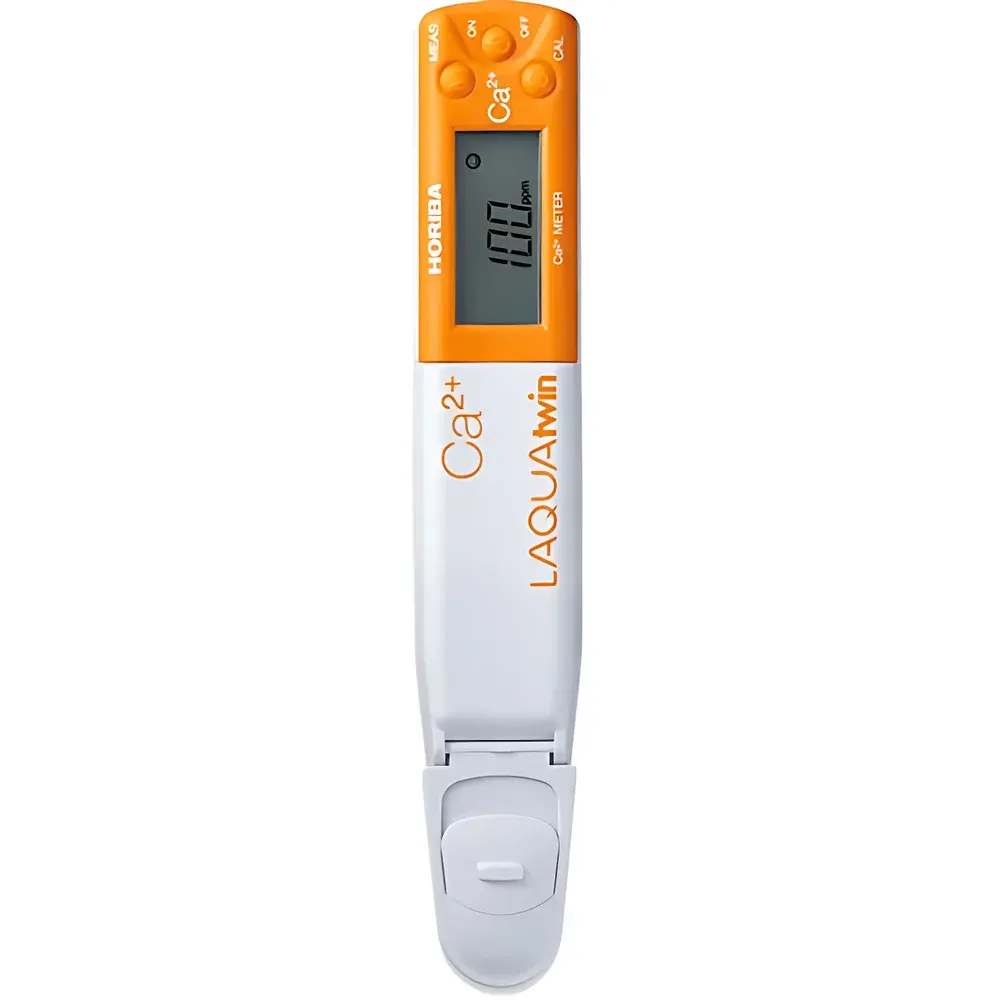
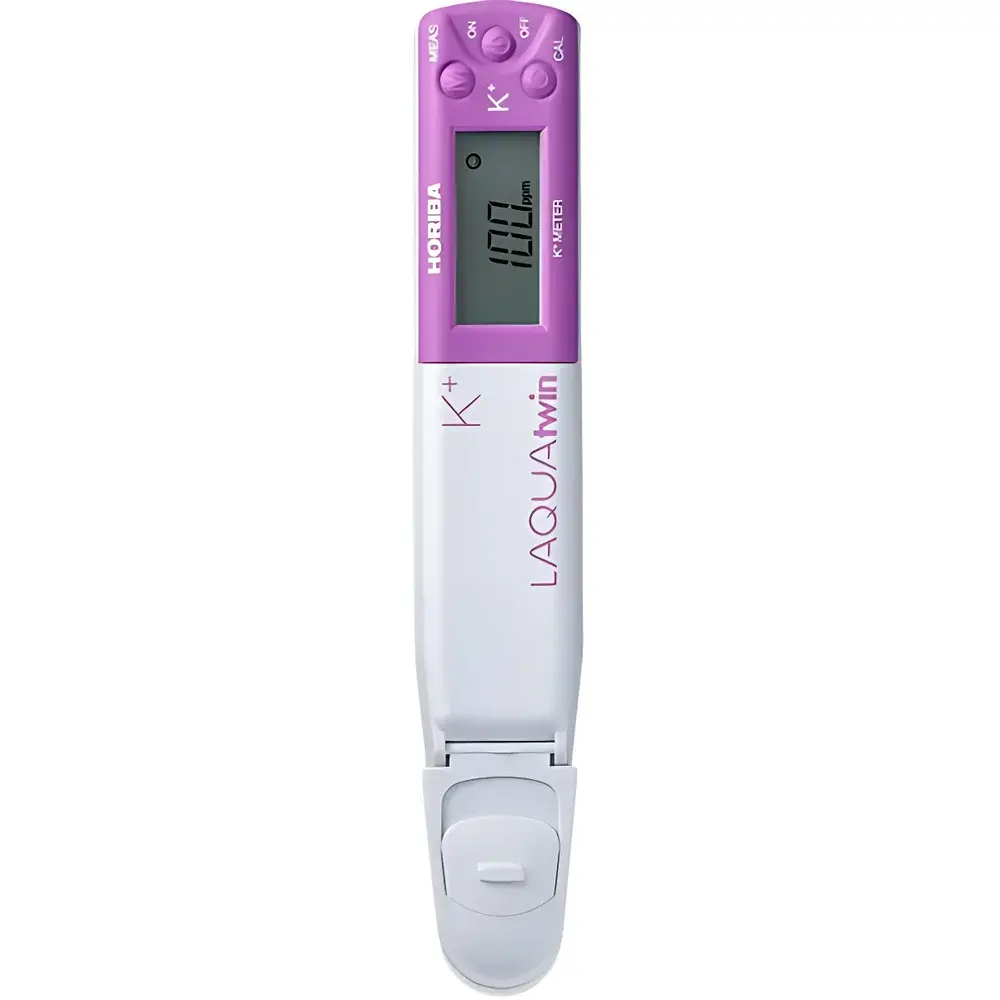
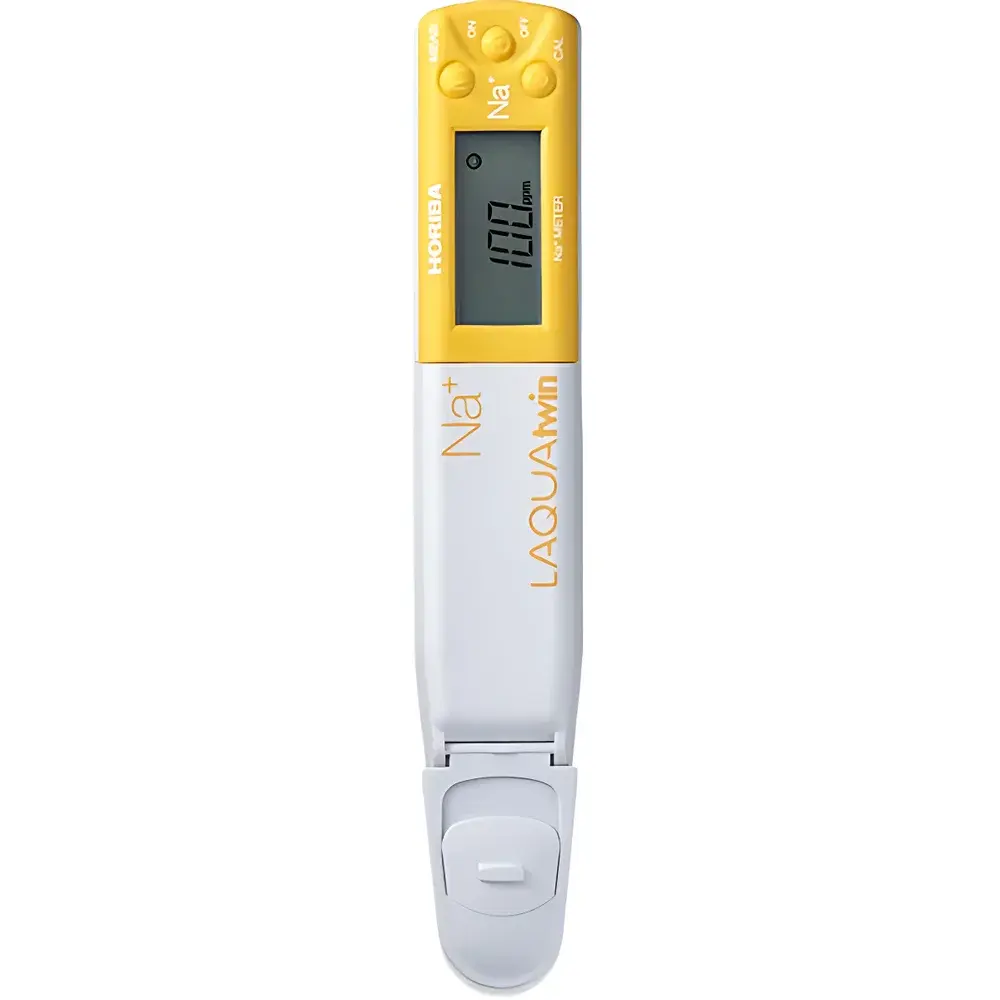
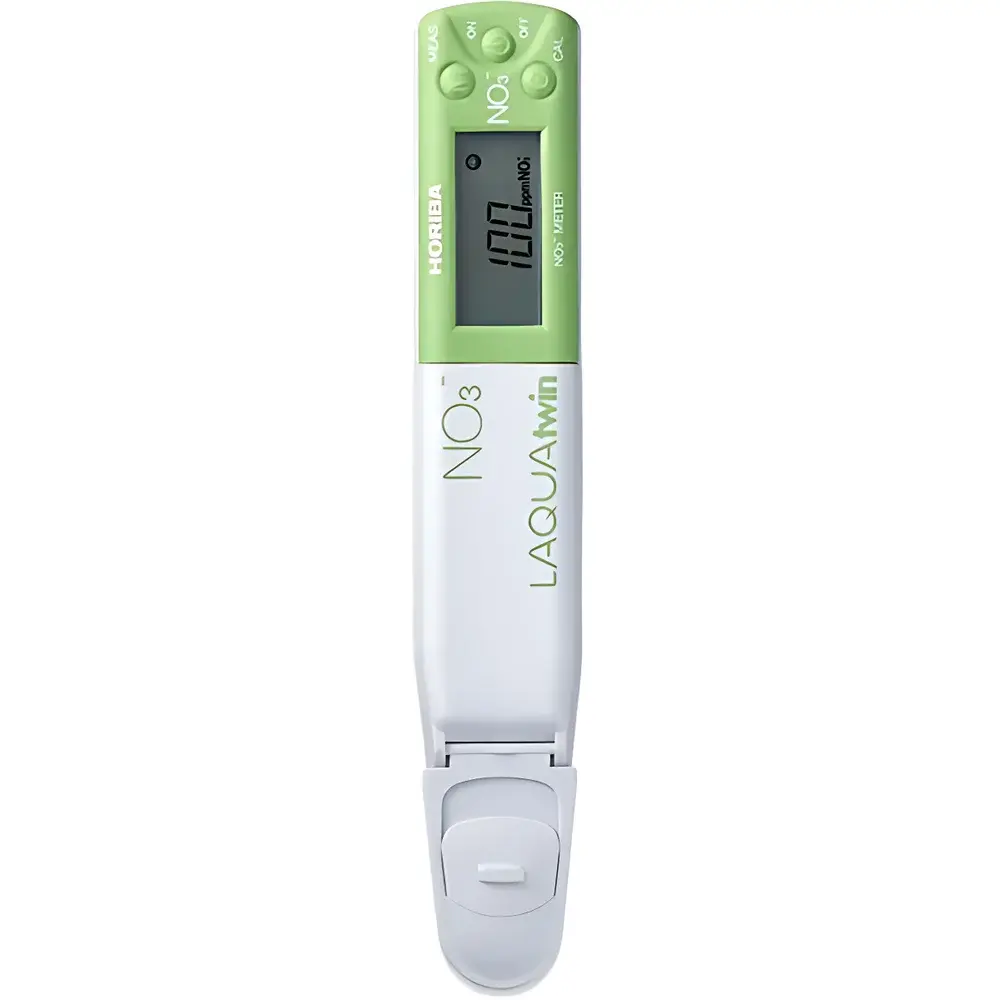
HORIBA LAQUAtwin B-722/B-731/B-743/B-751 Portable Ion Meter
| Brand | HORIBA |
|---|---|
| Origin | Japan |
| Model Series | B-722 (Na⁺), B-731 (K⁺), B-743 (NO₃⁻), B-751 (Ca²⁺) |
| Type | Handheld Ion-Specific Electrode Meter |
| Measurement Principle | Solid-State Ion-Selective Electrode (ISE) |
| Sample Volume | 0.05 mL (with Sampling Sheet B) to 0.3 mL |
| Range | 10⁻³–10⁻¹ mol/L (ion-specific, e.g., Na⁺: 23–2300 ppm) |
| Accuracy | ±10% of reading (Na⁺/K⁺/Ca²⁺) |
| Resolution | 0.1–100 ppm (auto-ranging) |
| Calibration | 2-point, manual or guided |
| Temperature Compensation | Automatic (5–40 °C) |
| IP Rating | IP67 |
| Power | 2 × CR2032 (≈400 h operation) |
| Dimensions | 164 × 29 × 20 mm |
| Weight | ~50 g (instrument only) |
Overview
The HORIBA LAQUAtwin series—comprising models B-722 (sodium), B-731 (potassium), B-743 (nitrate), and B-751 (calcium)—is a family of handheld, ion-selective electrode (ISE)-based meters engineered for rapid, field-deployable quantitative analysis of aqueous ionic species. Unlike conventional benchtop ISE systems requiring bulky reference electrodes, liquid junctions, and temperature-controlled cells, the LAQUAtwin integrates a proprietary flat-sensor architecture—developed over six decades of HORIBA sensor engineering—into a monolithic, sub-1-mm-thick chip. This solid-state sensor employs potentiometric detection based on Nernstian response principles, delivering reproducible mV-to-concentration conversion without flowing electrolyte or external reference elements. Designed explicitly for environmental monitoring, agricultural water testing, food quality screening, and educational fieldwork, the device operates across a broad dynamic range (10⁻³–10⁻¹ mol/L) with minimal sample volume requirements—enabling reliable measurement from a single droplet (as low as 0.05 mL when used with Sampling Sheet B). Its compact form factor, sealed construction, and intuitive interface eliminate dependency on laboratory infrastructure while maintaining metrological traceability to standard ISE methodology.
Key Features
- Flat, integrated solid-state ion-selective sensor chip—no liquid-filled reference, no clogging, no refilling.
- Seven-parameter platform architecture supporting pH, EC, TDS, salinity, and four ion-specific configurations (Na⁺, K⁺, NO₃⁻, Ca²⁺).
- IP67-rated housing ensures full protection against dust ingress and immersion in water up to 1 m for 30 minutes—validated for outdoor, riverside, greenhouse, and industrial site use.
- Auto-ranging display with adaptive resolution: 0.1 ppm (0–1.0 ppm), 1 ppm (1–99 ppm), 10 ppm (100–990 ppm), and 100 ppm (1000–9900 ppm).
- Two-point calibration with visual guidance—smiley icon confirms optimal stabilization prior to reading capture.
- Automatic temperature compensation (ATC) using built-in thermistor (5–40 °C operating range; ≤85% RH, non-condensing).
- Low-power design powered by two CR2032 coin cells (typical service life: 400 hours).
Sample Compatibility & Compliance
The LAQUAtwin accommodates diverse sampling modalities without modification: direct droplet deposition, immersion, scoop sampling (e.g., river water), surface wipe analysis (using hydrated Sampling Sheet B), semi-solid food matrix contact, dry powder reconstitution, and absorbent substrate testing (paper, fabric, film). Each mode maintains electrochemical integrity through controlled hydration kinetics and defined sample-to-electrolyte ratio (1:100 standard dilution protocol recommended for high-ionic-strength matrices). While not certified for regulated clinical diagnostics, the instrument complies with general-purpose environmental monitoring requirements under ISO 17025-accredited laboratory support protocols. Its measurement principle aligns with ASTM D1129 (standard terminology relating to water), ASTM D512 (chloride), and ISO 10523 (pH of water), and supports GLP-aligned documentation when paired with external logging software. No FDA 21 CFR Part 11 compliance is claimed; however, raw mV output and timestamped readings are accessible via optional data export.
Software & Data Management
The LAQUAtwin operates as a standalone, embedded-system meter with no onboard memory or Bluetooth/Wi-Fi connectivity. All data handling occurs manually: users record values directly from the monochrome LCD display. The device supports automatic hold (freeze-on-stabilization), auto-power-off after 15 minutes of inactivity, and user-defined multiplication factors (0.01–9.90) or offset coefficients (−1000 to +1000) for matrix-specific correction. For traceable workflows, laboratories commonly integrate LAQUAtwin measurements into LIMS or ELN platforms via manual entry or spreadsheet ingestion. HORIBA provides printable calibration logs and QC checklists in the included Quick Guide and Instruction Manual—facilitating audit readiness in ISO 17025 or EPA-compliant environmental testing environments.
Applications
- On-site monitoring of irrigation water Na⁺/Ca²⁺ ratios to assess sodicity risk (SAR calculation support).
- Rapid nitrate screening in surface runoff and groundwater—critical for nutrient management planning and regulatory reporting (e.g., EU Nitrates Directive).
- Quality control of hydroponic nutrient solutions via real-time K⁺ and NO₃⁻ tracking.
- Food safety verification: salt content (Na⁺) in processed meats, cheese brines, and canned vegetables.
- Educational field labs—demonstrating ion activity, Nernst equation behavior, and sensor selectivity in undergraduate chemistry and environmental science curricula.
- Soil extract analysis (1:5 water:soil ratio) using B-743 for NO₃⁻-N quantification per USDA NRCS protocols.
FAQ
What sample volume is required for accurate measurement?
Minimum volume is 0.05 mL when using Sampling Sheet B; 0.3 mL is recommended for standard droplet mode. Volumes below 0.05 mL may yield unstable potential due to insufficient electrolyte bridging.
Can the sensor be replaced in the field?
Yes—each LAQUAtwin model uses a user-replaceable flat sensor cartridge. Replacement kits (e.g., B-722-S for sodium) are available separately and require no tools or calibration reset.
Does the device compensate for ionic strength effects?
No—LAQUAtwin applies only temperature compensation. For samples with variable ionic strength (e.g., seawater, wastewater), users must apply matrix-matched calibration or use the built-in multiplier function with empirically derived correction factors.
Is it suitable for measuring ions in soil extracts?
Yes—B-743 (NO₃⁻) and B-751 (Ca²⁺) are routinely used with 1:5 water:soil extracts per standard agronomic protocols. Ensure extract filtration (0.45 µm) prior to measurement to prevent sensor fouling.
How often does calibration need to be performed?
Calibration is recommended before each measurement session and after prolonged storage (>24 h). Two-point calibration using supplied low/high standard solutions ensures optimal slope and offset stability across the working range.
Related Products







